
⏱️ 8 min read
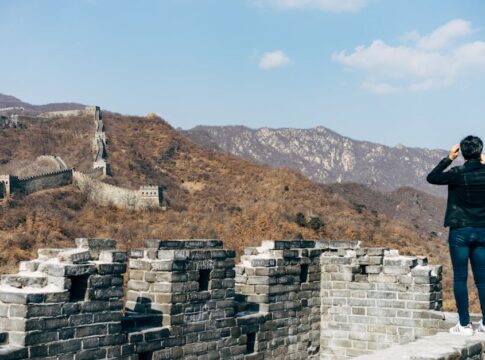
The Great Wall of China stands as one of humanity’s most remarkable architectural achievements, stretching across the Chinese landscape like a stone dragon. While many people know it as an ancient fortification, the Wall holds countless fascinating secrets and surprises that reveal the ingenuity, determination, and complexity of Chinese civilization. From its construction methods to its modern-day status, these remarkable facts illuminate why this UNESCO World Heritage Site continues to captivate millions of visitors and historians alike.
Discovering the Mysteries of the Great Wall
1. The Wall Is Actually Multiple Walls Built Over Different Dynasties
Contrary to popular belief, the Great Wall is not a single continuous structure built during one period. Instead, it represents multiple walls and fortifications constructed, rebuilt, and connected over approximately 2,000 years. Various Chinese dynasties built different sections, beginning with walls erected by individual states during the 7th century BCE. The most famous sections that tourists visit today were primarily built during the Ming Dynasty (1368-1644 CE), but earlier dynasties including the Qin, Han, and Sui all contributed significantly to the wall’s construction.
2. The Total Length Exceeds 13,000 Miles
According to an archaeological survey conducted by China’s State Administration of Cultural Heritage in 2012, the total length of all the wall’s sections measures an astounding 21,196 kilometers, or approximately 13,171 miles. This measurement includes all branches, secondary sections, and associated fortifications. The Ming Dynasty portion alone, which represents the most well-preserved and visited sections, extends for about 5,500 miles. To put this in perspective, the wall could stretch more than halfway around the Earth’s equator.
3. Sticky Rice Mortar Provided Incredible Strength
One of the most ingenious aspects of the Great Wall’s construction was the use of sticky rice mortar, particularly during the Ming Dynasty. Engineers mixed glutinous rice flour with standard mortar consisting of lime and water, creating an incredibly strong binding compound. This organic-inorganic composite has proven so durable that many sections of the wall have survived for centuries, and the mortar is actually stronger than the bricks themselves. Modern scientists have studied this ancient technique, finding that the amylopectin from the rice creates a highly compact, water-resistant material that inhibits plant growth and erosion.
4. Construction Materials Varied by Regional Availability
The Great Wall was not uniformly constructed from the same materials throughout its length. Builders used whatever resources were locally available, resulting in remarkable variation. In mountainous regions, workers utilized stone from nearby quarries. In plains areas where stone was scarce, they employed rammed earth—layers of compressed soil, gravel, and sand. Desert sections incorporated materials like willow reeds and even tamarisk branches held together with sand. This adaptive construction strategy allowed the wall to span diverse geographical terrains while remaining structurally sound.
5. Millions of Workers Perished During Construction
The human cost of building the Great Wall was staggering and tragic. Historical records suggest that hundreds of thousands of workers died during its construction over the centuries, with some estimates placing the total death toll at over one million. Workers included soldiers, peasants, and prisoners who labored under harsh conditions, facing dangers from falling rocks, harsh weather, exhaustion, and disease. According to legend and some historical accounts, many workers were buried within or near the wall itself, though archaeological evidence for mass burials directly inside the structure remains limited. The wall has consequently earned the somber nickname “the longest cemetery on Earth.”
6. The Wall Features Sophisticated Military Defense Systems
Beyond being a simple barrier, the Great Wall incorporated an elaborate military defense infrastructure. The structure included watchtowers positioned at regular intervals (typically every few hundred yards), which served multiple purposes: troop housing, surveillance posts, and signal stations. Beacon towers used smoke signals during the day and fire signals at night to communicate enemy movements, allowing messages to travel hundreds of miles within hours. The wall also featured battlements, garrison stations, and fortified gates. Some sections included elaborate defensive features like crenellations, ramparts, and areas where defenders could pour hot oil or shoot arrows at attackers from protected positions.
7. Visibility from Space Is a Modern Myth
One of the most persistent myths about the Great Wall claims it’s the only man-made structure visible from space or the moon. This assertion is categorically false, as confirmed by numerous astronauts, including China’s own Yang Liwei. From low Earth orbit, many human-made structures are visible under the right conditions, including highways, cities, and airports, but the Great Wall is extremely difficult to see with the naked eye because its width (typically 15-30 feet) and color blend with the natural landscape. From the moon, no human-made structures are visible without powerful magnification. This myth likely originated from a 1938 claim made before space travel was even possible.
8. The Wall Failed to Stop Major Invasions
Despite its imposing presence and enormous investment of resources, the Great Wall ultimately failed in its primary defensive purpose on several critical occasions. The Manchu invasions of the 17th century successfully breached the wall, leading to the fall of the Ming Dynasty and the establishment of the Qing Dynasty. Genghis Khan’s Mongol forces also found ways around or through various sections during their campaigns. Military historians note that the wall’s effectiveness depended heavily on adequate manning and maintenance; when dynasty power weakened, so did the wall’s defensive capabilities. In some cases, invaders simply bribed gatekeepers to allow passage, demonstrating that human factors could negate even the most impressive fortifications.
9. Extensive Restoration Began Only in the 1980s
For much of the 20th century, the Great Wall fell into severe disrepair and neglect. During the Cultural Revolution (1966-1976), sections were even damaged as symbols of old China. Systematic restoration and preservation efforts began in earnest only in the 1980s under Deng Xiaoping’s leadership, who launched the “Love Our China, Restore Our Great Wall” campaign. Today, various sections undergo continuous conservation work, though this presents challenges as restoration teams must balance preservation with tourism demands. Many remote sections remain unrestored, slowly crumbling due to natural erosion, plant growth, and weather damage.
10. The Wall Harbors Unique Ecosystems
The Great Wall has become an unintended habitat corridor for various plant and animal species. Scientists have documented unique ecosystems that have developed along its length, with certain plants taking root in cracks and crevices while animals use the structure for shelter and migration routes. The wall passes through multiple climatic zones and geographical regions, from desert to mountain forests, creating diverse ecological niches. Some conservationists now study the wall not just as a cultural artifact but as an important feature in understanding landscape ecology and wildlife movement patterns across northern China.
11. Tourism Threatens the Structure’s Integrity
While tourism has brought economic benefits and increased awareness of the Great Wall’s cultural significance, the millions of annual visitors also pose serious preservation challenges. Popular sections near Beijing, such as Badaling and Mutianyu, experience severe foot traffic that causes erosion of steps and walkways. Tourists have removed bricks as souvenirs, carved graffiti into stones, and created unauthorized paths that damage original structures. Chinese authorities have implemented visitor limits at some sections, installed surveillance systems, and increased penalties for vandalism. Conservation experts debate how to balance accessibility with preservation, as closing the wall entirely would eliminate its role in cultural education and tourism revenue needed for maintenance.
12. The Wall Influences Modern Chinese Identity
Beyond its physical presence, the Great Wall holds profound symbolic importance in contemporary Chinese culture and national identity. It appears on currency, in literature, art, and political discourse as a representation of Chinese resilience, ingenuity, and unity. The government has promoted the wall as a symbol of national pride and the enduring spirit of the Chinese people. Phrases like “not reaching the Great Wall is not being a true man” reflect its cultural significance. This symbolic role has evolved over time; once seen primarily as a military fortification, it now represents China’s historical continuity and its connection between past achievements and modern aspirations.
A Living Monument to Human Achievement
The Great Wall of China transcends its original military purpose to stand as a testament to human ambition, engineering prowess, and the complex forces that shape civilizations. These twelve facts reveal that the wall is far more than simply an ancient barrier—it’s a multifaceted historical artifact that continues to evolve in meaning and significance. From the tragic human cost of its construction to its surprising ineffectiveness against determined invaders, from its innovative building techniques to its modern conservation challenges, the Great Wall embodies both the triumphs and limitations of grand human endeavors. As it continues to weather the forces of nature and the pressures of modern tourism, the Great Wall remains an invaluable link to understanding China’s past while facing the challenges of preserving this irreplaceable heritage for future generations.