
⏱️ 8 min read
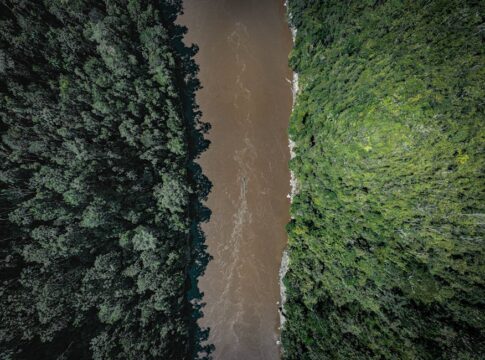
The Amazon Rainforest stands as one of Earth’s most extraordinary natural wonders, spanning across nine South American countries and harboring secrets that continue to astound scientists and nature enthusiasts alike. This vast green expanse, often called the “lungs of the Earth,” contains biological and ecological phenomena that challenge our understanding of nature’s capabilities. From its unparalleled biodiversity to its crucial role in global climate regulation, the Amazon holds remarkable characteristics that reveal the intricate complexity of our planet’s ecosystems.
Astonishing Discoveries from the World’s Largest Tropical Rainforest
1. The Amazon’s Massive Geographic Footprint
Covering approximately 5.5 million square kilometers, the Amazon Rainforest represents an area larger than the entire European Union. This immense jungle stretches across Brazil, Peru, Colombia, Venezuela, Ecuador, Bolivia, Guyana, Suriname, and French Guiana, with Brazil containing roughly 60% of the total forest area. To put this in perspective, the Amazon is so vast that the United Kingdom and Ireland could fit inside it seventeen times over.
2. Unmatched Biodiversity Concentrations
The Amazon houses approximately 10% of all species found on Earth, making it the most biodiverse place on the planet. Scientists estimate that the rainforest contains around 390 billion individual trees divided into 16,000 species, along with 40,000 plant species, 1,300 bird species, 3,000 types of fish, and over 430 species of mammals. Remarkably, a single hectare of Amazon rainforest can contain more tree species than all of North America.
3. The Oxygen Production Myth
Contrary to popular belief, the Amazon Rainforest produces approximately as much oxygen as it consumes through respiration and decomposition. While often called the “lungs of the Earth,” the forest operates in a nearly balanced cycle where the oxygen generated by photosynthesis is largely offset by the consumption of oxygen by the forest’s plants, animals, and decomposing organic matter. The Amazon’s true value lies more in carbon storage than oxygen production.
4. A Massive Carbon Storage System
The Amazon stores between 150-200 billion tons of carbon in its biomass and soil, making it one of the planet’s most critical carbon sinks. This stored carbon represents decades of atmospheric carbon dioxide absorption. When trees are burned or decompose due to deforestation, this carbon is released back into the atmosphere, contributing significantly to climate change and making forest preservation essential for global climate stability.
5. The River That Rivals Seas
The Amazon River, which flows through the rainforest, discharges approximately 209,000 cubic meters of water per second into the Atlantic Ocean—more than the next seven largest rivers combined. This massive flow represents roughly 20% of all freshwater entering the world’s oceans. During the wet season, parts of the river can exceed 190 kilometers in width.
6. An Underground River System
Scientists discovered in 2011 that beneath the Amazon River lies another massive river system flowing approximately 4 kilometers underground. Named the Rio Hamza after the scientist who led the research, this subterranean river flows in the same direction as the Amazon but at an extremely slow rate, taking hundreds of years to travel distances the surface river covers in months.
7. Flying Rivers of Moisture
The Amazon Rainforest releases approximately 20 billion tons of water into the atmosphere every day through transpiration—a process where plants release water vapor through their leaves. These “flying rivers” of moisture travel through the atmosphere, influencing rainfall patterns across South America and even affecting weather systems thousands of kilometers away, demonstrating the forest’s continental-scale impact on climate.
8. Indigenous Populations and Ancient Civilizations
Approximately 400-500 indigenous tribes call the Amazon home, with around 50 of these groups having had no contact with the outside world. Recent archaeological evidence suggests that before European colonization, the Amazon may have supported sophisticated civilizations of up to 5 million people who managed the forest through complex agricultural systems, challenging the notion that the rainforest was pristine wilderness.
9. Medicinal Treasure Trove
Over 25% of modern pharmaceutical drugs contain ingredients derived from Amazon rainforest plants, yet scientists have tested less than 1% of the tropical plants found there for medicinal properties. Indigenous peoples have used thousands of plant species for medicinal purposes for centuries, and this traditional knowledge continues to guide pharmaceutical research into potential treatments for cancer, malaria, and numerous other diseases.
10. The Pink River Dolphin Phenomenon
The Amazon River hosts the largest freshwater dolphin species in the world—the pink river dolphin, or boto. These remarkable creatures can grow up to 2.5 meters long and weigh 185 kilograms. Their distinctive pink coloration becomes more pronounced with age and activity level. Unlike oceanic dolphins, pink river dolphins have unfused neck vertebrae, allowing them to turn their heads 90 degrees to navigate through flooded forests.
11. Trees That Create Their Own Rain
Amazon trees don’t just respond to rainfall—they help create it. Through transpiration and the release of organic compounds, the forest generates atmospheric conditions that trigger precipitation. This self-sustaining system means the Amazon partially creates its own weather patterns, and large-scale deforestation could disrupt this cycle, potentially transforming portions of the rainforest into savanna.
12. Terra Preta: Ancient Amazonian Super Soil
Scattered throughout the Amazon are patches of incredibly fertile dark earth called terra preta, created by pre-Columbian indigenous peoples through a sophisticated process of adding charcoal, bone, and organic matter to naturally poor rainforest soil. This engineered soil remains fertile today, centuries after its creation, and could hold secrets to sustainable agriculture and carbon sequestration.
13. The Boiling River Mystery
Deep in the Peruvian Amazon flows the Shanay-timpishka, known as the “Boiling River,” where water temperatures reach up to 93 degrees Celsius. For years dismissed as legend, this geothermal river spans 6.4 kilometers and is hot enough to make tea or kill any animal unfortunate enough to fall in. The heat source remains partially mysterious, as the river lies far from any volcanic activity.
14. Canopy Highways and Vertical Ecosystems
The Amazon Rainforest operates as multiple ecosystems stacked vertically, with the canopy layer—reaching heights of 30-45 meters—hosting entirely different species than the forest floor. Many canopy-dwelling creatures never descend to the ground, and scientists estimate that up to 70% of rainforest life exists in the canopy layer, creating highways of interconnected branches used by monkeys, sloths, and countless other species.
15. Piranha Misconceptions and Reality
While piranhas have a fearsome reputation, mass attacks on humans are extremely rare in the Amazon. These fish are generally omnivorous and scavenging, feeding primarily on insects, plants, and fish. Of approximately 30 piranha species, only a few are considered dangerous to humans, and attacks typically occur only when the fish are trapped in shrinking pools during droughts or protecting nesting areas.
16. The Amazon’s Massive Fungal Networks
Beneath the Amazon’s surface lies an extensive network of mycorrhizal fungi connecting tree roots in a “wood wide web” that facilitates nutrient and information exchange. This underground network allows trees to share resources, warn each other of pest attacks, and even support younger or weaker trees, revealing a level of forest interconnectedness that transforms our understanding of plant communication and cooperation.
17. Saharan Dust as Rainforest Fertilizer
The Amazon Rainforest receives a crucial fertilizer delivery from an unlikely source: dust from the Sahara Desert in Africa. Approximately 27 million tons of Saharan dust cross the Atlantic Ocean annually, depositing phosphorus and other nutrients that replenish minerals washed away by heavy rainfall. This transcontinental connection demonstrates how Earth’s ecosystems are interconnected on a global scale.
18. Electricity-Generating Eels
The Amazon’s waters host electric eels capable of generating shocks of up to 860 volts—enough to stun a horse or potentially kill a human. Despite their name, these creatures are actually a type of knifefish rather than true eels. They use their electrical abilities not just for defense and hunting, but also for navigation and communication in murky waters.
19. The Deforestation Crisis Accelerates
Approximately 17% of the original Amazon Rainforest has been lost to deforestation over the past 50 years, with an area roughly the size of a football field disappearing every single minute. This destruction releases stored carbon, destroys habitats, disrupts indigenous communities, and pushes the forest toward a potential tipping point where it could transition to grassland, triggering catastrophic climate consequences.
20. Undiscovered Species Abundance
Scientists discover an average of one new species in the Amazon every two days, including plants, mammals, birds, fish, reptiles, and amphibians. Experts estimate that thousands of species remain undocumented, and tragically, many may go extinct before ever being studied due to habitat destruction. This ongoing discovery rate underscores both the Amazon’s incredible biodiversity and how much remains unknown.
Conclusion
The Amazon Rainforest represents far more than just a collection of trees and wildlife—it functions as a complex, interconnected system that influences global climate patterns, harbors invaluable biodiversity, and holds secrets we are only beginning to understand. From underground rivers and flying moisture highways to ancient civilizations and undiscovered species, the Amazon continues to reveal its extraordinary nature. As deforestation threatens this irreplaceable ecosystem, these remarkable facts underscore the urgent need for conservation efforts to protect not just a forest, but a vital planetary life-support system whose influence extends far beyond its geographic boundaries.