






































1 / 40 Questions
0 Points

What percentage of broccoli is typically thrown away despite being edible?

0.4

0.25

0.5

0.65

Points won
0
Correct score
0%

More Quizzes

More Articles

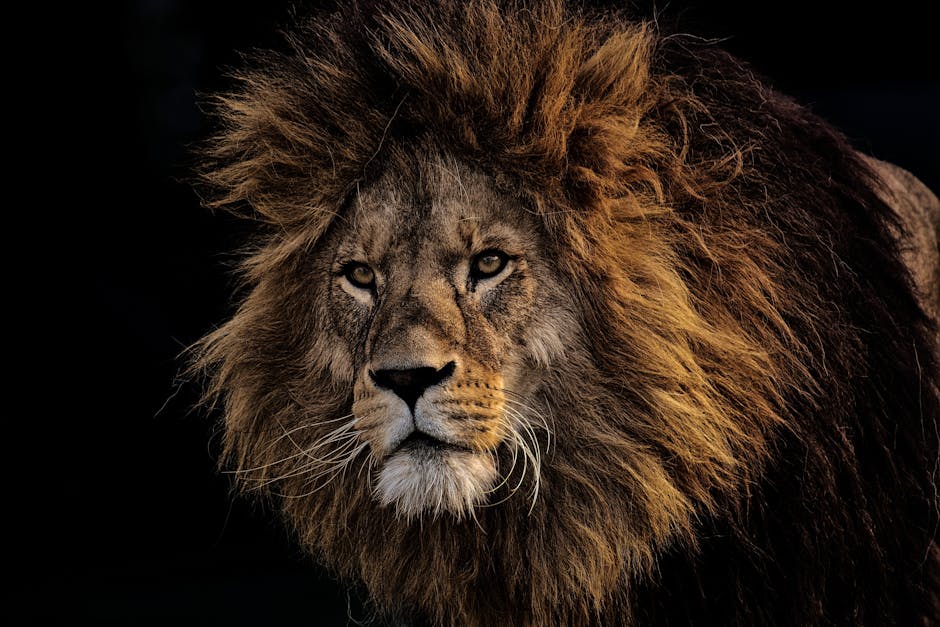
Did You Know The Lion in MGM’s Logo Was a Real Animal?

Did You Know The Lion in MGM’s Logo Was a Real Animal?

⏱️ 5 min read

When moviegoers settle into their seats and the lights dim, one of the most recognizable symbols in cinema history often appears on screen: a majestic lion roaring within a circular frame, surrounded by a ribbon of film. This iconic image has represented Metro-Goldwyn-Mayer (MGM) for nearly a century, but what many don't realize is that this famous logo wasn't created through animation or digital effects. The lion featured in MGM's opening credits was indeed a real, living animal—in fact, several real lions have held this prestigious role throughout the studio's history.

The Origins of Leo the Lion

The MGM lion made its debut in 1924, shortly after the formation of Metro-Goldwyn-Mayer through a merger of three separate film companies. The studio needed a powerful symbol to represent its brand, and advertising executive Howard Dietz conceived the idea of using a lion accompanied by the Latin motto "Ars Gratia Artis" (Art for Art's Sake). Dietz drew inspiration from his alma mater, Columbia University, whose athletic teams used a lion as their mascot.

The first lion to appear in the logo was named Slats, who served as MGM's mascot from 1924 to 1928. Unlike his successors, Slats didn't roar on screen—he simply looked regally at the camera. This silent but dignified presence set the foundation for what would become one of the most enduring symbols in entertainment history.

Meet the Lions Who Made History

Over the decades, seven different lions have portrayed the MGM mascot, each bringing their own personality to the role. After Slats came Jackie, who became the first MGM lion to roar on screen in 1928. Jackie also holds the distinction of being one of the most well-traveled lions in history, surviving multiple plane crashes and even a boat sinking during various publicity tours.

The most famous of all MGM lions was Leo, who first appeared in 1957 and whose image is still used today. This particular Leo's roar became synonymous with MGM's brand identity during Hollywood's golden age and continues to be featured in modern productions. His recording session required careful planning and the expertise of animal trainers to capture the perfect, commanding roar that audiences know today.

Other Notable Lions in the Legacy

  • Tanner: Served as the MGM lion from 1928 to 1932 and appeared in several Technicolor tests
  • Coffee: Used briefly in the 1920s as an alternative to the main logo lion
  • Telly: Appeared in the logo during the 1920s and 1930s
  • George: Featured in the 1950s alongside other lions
  • Born Free lion: Occasionally used in the 1960s

The Technical Challenge of Filming a Lion

Creating the iconic roaring lion footage presented significant technical and logistical challenges in the early days of cinema. Filming had to take place in controlled environments with experienced animal handlers present at all times. The lions were trained to look toward the camera and produce their impressive roars on cue, though the audio was often recorded separately and synchronized with the visual footage.

The circular frame surrounding the lion required precise camera work and compositing techniques that were sophisticated for their era. Early versions used hand-painted backgrounds and carefully constructed sets to achieve the desired effect. As technology advanced, the studio refined the logo's presentation, but the core element—a real lion's authentic roar—remained constant.

Safety and Animal Welfare Considerations

Working with wild animals in the entertainment industry has always required strict safety protocols and ethical considerations. MGM employed professional animal trainers who specialized in big cats, ensuring both human safety and animal welfare during filming sessions. The lions used for the logo were typically raised in captivity and accustomed to working with human handlers from a young age.

These animals lived in specialized facilities designed to meet their physical and psychological needs. Between filming sessions, they received proper veterinary care, appropriate nutrition, and enrichment activities. Modern standards for animal actors have evolved significantly since the early days of Hollywood, and historical productions must be viewed within their contemporary context.

The Lasting Impact on Brand Recognition

The decision to use a real lion rather than an illustrated or symbolic representation proved to be a masterstroke in branding. The authenticity and power of an actual animal's roar created an emotional impact that resonated with audiences across generations. This choice established MGM as a studio associated with grandeur, strength, and prestige.

Market research has consistently shown that the MGM lion ranks among the most recognized corporate symbols worldwide, competing with logos from companies far larger and more diverse than a film studio. The logo's longevity—spanning silent films, talkies, television, and digital streaming—demonstrates the timeless appeal of this authentic imagery.

From Film Reels to Digital Screens

As technology evolved, so did the presentation of the MGM lion, but the studio has carefully preserved the essence of the original footage. Digital restoration techniques have enhanced the clarity and quality of Leo's roar while maintaining its authentic character. Modern audiences watching MGM productions on streaming platforms still see footage of a real lion, connecting them to nearly a century of cinematic tradition.

The MGM lion serves as a reminder of Hollywood's golden age, when studios sought to create larger-than-life imagery that would captivate audiences and define their brand identity for generations. In an era of computer-generated imagery and digital effects, the fact that this iconic logo featured real animals adds to its historical significance and enduring charm.
20 Interesting Facts About the Earth’s Continents

20 Interesting Facts About the Earth’s Continents

⏱️ 6 min read

The continents that make up our planet's landmasses hold countless geological wonders, historical mysteries, and fascinating characteristics that shape life as we know it. From massive tectonic movements to surprising size comparisons, these seven major land divisions contain remarkable features that continue to intrigue scientists and explorers alike. Understanding these continental facts provides insight into Earth's past, present, and future transformations.

Remarkable Facts About Earth's Continental Landmasses

1. Asia Dominates as the Largest Continent

Asia covers approximately 44.58 million square kilometers, making it the largest continent by both land area and population. This massive landmass accounts for roughly 30% of Earth's total land area and is home to over 4.6 billion people, representing about 60% of the global population. The continent stretches from the Arctic Ocean in the north to the Indian Ocean in the south, encompassing diverse climates from Siberian tundra to tropical rainforests.

2. Australia Is the Flattest Continent

Australia holds the unique distinction of being the world's flattest continent, with an average elevation of only 330 meters above sea level. Unlike other continents with towering mountain ranges, Australia's landscape is dominated by vast plains and low plateaus, a result of millions of years of erosion wearing down ancient rock formations.

3. Africa Is Splitting Apart

The African continent is literally tearing itself apart along the East African Rift System. This geological phenomenon is creating a new ocean as the Somali and Nubian tectonic plates slowly separate at a rate of approximately 7 millimeters per year. Scientists predict that in about 50 million years, East Africa will split completely, creating a new continent and ocean basin.

4. Antarctica Contains 90% of Earth's Ice

Antarctica, the southernmost continent, holds approximately 90% of all ice on Earth and about 70% of the planet's fresh water. If all this ice were to melt, global sea levels would rise by an estimated 58 meters, dramatically reshaping coastlines worldwide. The ice sheet averages 2,160 meters in thickness.

5. Europe and Asia Share the Same Landmass

Europe and Asia are actually part of one continuous landmass called Eurasia, with no natural water boundary separating them. The division is primarily cultural and historical rather than geographical, with the Ural Mountains, Ural River, and Caucasus Mountains traditionally marking the boundary between the two continents.

6. South America Has the World's Highest Waterfall

Angel Falls in Venezuela, South America, plunges 979 meters from the top of Auyán-tepui mountain, making it the world's tallest uninterrupted waterfall. The falls are so high that much of the water turns into mist before reaching the ground, especially during the dry season.

7. North America Once Had Giant Inland Seas

During the Cretaceous Period, approximately 100 million years ago, the Western Interior Seaway divided North America from north to south, creating two separate landmasses. This shallow sea stretched from the Arctic Ocean to the Gulf of Mexico and was home to numerous marine reptiles.

8. The Sahara Desert Spans Multiple Time Zones

Africa's Sahara Desert is so vast that it covers an area larger than the continental United States, spanning approximately 9 million square kilometers across eleven countries. This makes it the world's largest hot desert and roughly equivalent to the size of China.

9. Australia Is Both a Continent and a Country

Australia is the only landmass that functions as both a continent and a single nation. While sometimes referred to as part of Oceania, Australia proper is the smallest continent but the sixth-largest country by total area, covering approximately 7.69 million square kilometers.

10. Antarctica Has No Native Human Population

Antarctica remains the only continent without an indigenous human population or permanent residents. The only people living there are researchers and support staff at scientific research stations, with numbers ranging from about 1,000 in winter to 5,000 during summer months.

11. Continents Drift Several Centimeters Annually

All continents are constantly moving due to plate tectonics, typically at rates of 2 to 10 centimeters per year—about the same rate that fingernails grow. North America and Europe, for example, are moving apart at approximately 2.5 centimeters annually as the Atlantic Ocean continues to widen.

12. Asia Contains the Highest and Lowest Points on Land

Asia boasts both Earth's highest point above sea level, Mount Everest at 8,849 meters, and the lowest exposed point on land, the Dead Sea shore at 430.5 meters below sea level. This range of over 9,200 meters demonstrates the continent's extreme topographical diversity.

13. South America Produces 20% of Earth's Oxygen

The Amazon Rainforest in South America generates approximately 20% of the world's oxygen through photosynthesis. This massive forest covers about 5.5 million square kilometers across nine countries, making it the largest tropical rainforest on Earth.

14. Europe Has the Longest Coastline Relative to Its Size

Despite being the second-smallest continent, Europe has an extraordinarily long and complex coastline exceeding 38,000 kilometers when including islands. This extensive coastal access has profoundly influenced European history, trade, and cultural development.

15. Africa Straddles All Four Hemispheres

Africa is the only continent that extends into all four hemispheres—Northern, Southern, Eastern, and Western. The equator runs through the middle of the continent, while the Prime Meridian passes through Ghana, creating this unique geographic distinction.

16. Antarctica's Ice Contains Ancient Climate Records

Ice cores drilled from Antarctica's ice sheet provide climate data dating back 800,000 years. These cylindrical samples contain trapped air bubbles and particles that reveal historical atmospheric composition, temperatures, and even volcanic eruptions from hundreds of thousands of years ago.

17. Continents Were Once United as Pangaea

Approximately 335 million years ago, all continents were joined together in a supercontinent called Pangaea, surrounded by a single global ocean named Panthalassa. This massive landmass began breaking apart about 175 million years ago, gradually forming the continents we recognize today.

18. North America Contains the World's Oldest Rocks

The Canadian Shield in North America contains some of Earth's oldest exposed rock formations, with samples from the Acasta Gneiss dating back approximately 4.03 billion years. These ancient rocks provide crucial evidence about the early formation of Earth's crust.

19. Asia and North America Were Once Connected

The Bering Land Bridge, also called Beringia, connected Asia and North America during ice ages when sea levels dropped. This land connection, which existed as recently as 11,000 years ago, allowed human migration from Asia to the Americas and facilitated animal movement between continents.

20. Continental Crust Is Less Dense Than Oceanic Crust

Continental crust, which forms the continents, is less dense than oceanic crust, with an average density of 2.7 grams per cubic centimeter compared to oceanic crust's 3.0 grams per cubic centimeter. This lower density causes continents to "float" higher on the underlying mantle, explaining why they rise above sea level.

Conclusion

The Earth's continents represent dynamic geological features that have evolved over billions of years and continue changing today. From Antarctica's massive ice reserves to Africa's splitting rift valley, these landmasses demonstrate the powerful forces shaping our planet. Understanding these continental characteristics helps us appreciate Earth's geological history, predict future changes, and recognize how these vast landmasses influence climate, biodiversity, and human civilization across the globe.