

















1 / 20 Questions
0 Points

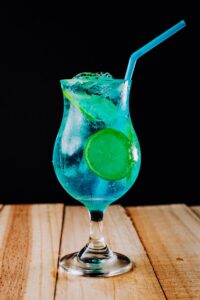
What is the main spirit used in a classic Mojito?

White Rum

Tequila

Gin

Vodka

Points won
0
Correct score
0%

More Quizzes

More Articles

Did You Know? 10 Celebrities with Hidden Talents

Did You Know? 10 Celebrities with Hidden Talents

⏱️ 5 min read

Hollywood stars are known for their acting prowess, musical abilities, or athletic achievements, but many celebrities harbor surprising talents that rarely make headlines. Beyond the glitz and glamour of their public personas, these entertainers possess remarkable skills that might leave fans astounded. From impressive athletic abilities to unexpected artistic gifts, these hidden talents reveal the multifaceted nature of some of the world's most recognizable personalities.

Stars with Surprising Skills Beyond the Spotlight

1. Mike Tyson's Pigeon Racing Passion

The former heavyweight boxing champion known for his ferocious punches in the ring has a surprisingly gentle hobby: pigeon racing and breeding. Tyson has been passionate about pigeons since childhood, maintaining coops with hundreds of birds. He's extensively knowledgeable about different breeds and has even starred in a documentary series about pigeon racing. This unexpected interest showcases a tender side of the intimidating athlete, demonstrating his dedication to nurturing and caring for these birds with the same intensity he brought to boxing.

2. Geena Davis's Olympic-Level Archery

The Academy Award-winning actress isn't just talented in front of the camera. Geena Davis nearly qualified for the U.S. Olympic archery team in 1999, placing 24th out of 300 competitors at the U.S. Olympic Archery Team trials. She took up the sport in her early forties and trained rigorously, demonstrating exceptional hand-eye coordination and focus. Her near-Olympic achievement proves that talent and dedication can lead to extraordinary accomplishments, even when starting a sport later in life.

3. Neil Patrick Harris's Professional Magic Skills

The "How I Met Your Mother" star is an accomplished magician who serves on the Board of Directors of Hollywood's Magic Castle, the exclusive magician's clubhouse. Harris has been practicing magic since childhood and regularly performs elaborate illusions at private events. His passion for prestidigitation has led him to host magic specials and incorporate illusions into his stage performances. He's so skilled that professional magicians consider him one of their own, respecting his technical proficiency and showmanship.

4. Steve Martin's Bluegrass Banjo Mastery

The legendary comedian and actor is also a Grammy-winning banjo player who has released multiple bluegrass albums. Martin began playing banjo as a teenager and has studied the instrument seriously for decades. He's toured with bluegrass bands, collaborated with renowned musicians like Earl Scruggs, and won a Grammy for Best Bluegrass Album. His technical skill is so impressive that he's considered a legitimate force in the bluegrass community, not merely a celebrity dabbler.

5. Natalie Portman's Multilingual Abilities

The Oscar-winning actress is fluent in six languages: English, Hebrew, French, Japanese, German, and Spanish. Born in Israel and raised in multiple countries, Portman's linguistic talents extend beyond mere conversational ability—she's conducted interviews and given speeches in several of these languages. Her language skills reflect not just natural ability but dedicated study, including her time at Harvard University where she pursued psychology while maintaining her acting career. This intellectual prowess complements her artistic achievements perfectly.

6. Pierce Brosnan's Fire-Eating Performances

Before becoming James Bond, Pierce Brosnan worked as a fire-eater in a circus. The Irish actor trained in circus arts during his time at drama school and performed the dangerous act professionally. While this talent rarely appears in his mainstream film work, it represents his theatrical background and willingness to take risks. The physical control and courage required for fire-eating certainly prepared him for the demanding stunts of his action-hero roles.

7. Taylor Swift's Talent for Painting and Visual Arts

The multi-platinum recording artist is also a skilled visual artist who has created paintings that have been displayed in galleries. Swift has painted several pieces that appeared in her album artwork and promotional materials, demonstrating genuine artistic ability beyond music. She's mentioned using painting as a creative outlet and emotional expression tool, showing that her artistic talents span multiple mediums. Her visual art complements her songwriting, both serving as methods of storytelling and emotional communication.

8. Lupita Nyong'o's Fluency in Swahili, Spanish, and Luo

The Academy Award-winning actress speaks six languages fluently, including English, Spanish, Swahili, and Luo. Born in Mexico to Kenyan parents and raised in Kenya, Nyong'o's multilingual abilities reflect her multicultural upbringing. She's used these language skills in her advocacy work and has served as a cultural bridge in international projects. Her linguistic talents have also opened doors for diverse roles and allowed her to connect with global audiences in their native languages.

9. Viggo Mortensen's Published Poetry and Painting

The "Lord of the Rings" star is an accomplished poet, painter, photographer, and musician who has published numerous books of poetry and exhibited his artwork in galleries worldwide. Mortensen founded his own publishing company, Perceval Press, which releases his creative works along with those of other artists. His paintings have sold for significant sums, and his photography has been critically acclaimed. This Renaissance man approach to creativity demonstrates that his talent extends far beyond acting into multiple artistic disciplines.

10. Mayim Bialik's Neuroscience PhD

The "Big Bang Theory" actress isn't just playing a scientist on television—she holds a PhD in neuroscience from UCLA. Bialik completed her doctoral dissertation on Prader-Willi syndrome while working as an actress, demonstrating exceptional intellectual capability. She's published scientific papers and continues to advocate for science education. Her genuine scientific credentials add authenticity to her portrayal of scientists on screen and prove that Hollywood success and academic achievement aren't mutually exclusive.

The Depth Behind Celebrity

These ten celebrities demonstrate that fame in one area doesn't preclude excellence in completely different fields. Their hidden talents reveal dedication, curiosity, and the pursuit of personal passions beyond professional obligations. Whether it's mastering musical instruments, excelling in athletics, achieving academic credentials, or developing artistic skills, these stars prove that talent and hard work can manifest in multiple dimensions. Their diverse abilities remind us that public personas often represent just one facet of complex, multitalented individuals who continue to challenge themselves and grow beyond their primary careers. These hidden talents make these celebrities not just entertainers, but truly remarkable individuals worth admiring for reasons that extend far beyond their famous works.

The Most Polarizing Artworks Ever Made

The Most Polarizing Artworks Ever Made

⏱️ 5 min read

Throughout art history, certain works have sparked intense debates, divided critics and audiences, and challenged the very definition of what art can be. These polarizing pieces often push boundaries, confront societal norms, or employ techniques that make viewers uncomfortable. While some hail them as revolutionary masterpieces, others dismiss them as offensive or meaningless. Understanding these controversial artworks provides insight into the evolving relationship between art, society, and culture.

Duchamp's Readymades and the Concept of Art Itself

When Marcel Duchamp submitted a standard porcelain urinal titled "Fountain" to the Society of Independent Artists exhibition in 1917, he fundamentally challenged centuries of artistic tradition. Signed with the pseudonym "R. Mutt," this readymade object sparked outrage and confusion. Critics questioned whether simply selecting an everyday object and placing it in a gallery context constituted art. The work was rejected from the exhibition, yet it became one of the most influential artworks of the 20th century.

Duchamp's gesture questioned the role of craftsmanship, originality, and aesthetic beauty in art. Supporters argued that he liberated art from technical constraints and elevated conceptual thinking. Detractors maintained that this approach degraded art into mere provocation without skill or meaning. The debate continues today, with "Fountain" representing a pivotal moment when art shifted from object-making to idea-generation.

Piero Manzoni's Artist's Excrement

Italian artist Piero Manzoni created one of art history's most notorious works in 1961 with "Merda d'artista" (Artist's Shit). The piece consists of 90 tin cans, each allegedly containing 30 grams of the artist's feces, labeled and sold by weight at the current price of gold. This provocative work satirized the art market's willingness to commodify anything bearing an artist's signature.

The piece generates extreme reactions ranging from disgust to admiration. Some view it as brilliant commentary on consumerism and the arbitrary nature of artistic value. Others see it as juvenile shock tactics devoid of genuine artistic merit. The ongoing mystery of the cans' actual contents—some claim they contain plaster rather than feces—only adds to the controversy surrounding authenticity and artistic intention.

Andres Serrano's Religious Provocation

"Piss Christ," photographed by Andres Serrano in 1987, depicts a small plastic crucifix submerged in a glass of the artist's urine. The glowing, amber-toned image sparked outrage among religious groups and conservative politicians, leading to vandalism, death threats, and debates about government funding for controversial art.

Religious communities condemned the work as blasphemous and deeply offensive to Christian faith. Art supporters defended it as a legitimate exploration of religious iconography in contemporary culture, with some interpreting it as commentary on the commercialization of religious symbols. The controversy raised fundamental questions about artistic freedom, respect for religious beliefs, and the role of public funding in supporting provocative art.

Chris Ofili's The Holy Virgin Mary

British artist Chris Ofili's 1996 painting featuring a Black Madonna adorned with elephant dung and cutouts from pornographic magazines became the center of a cultural firestorm when exhibited at the Brooklyn Museum in 1999. New York Mayor Rudy Giuliani threatened to cut city funding to the museum, calling the work "sick" and "disgusting."

Critics of the work focused primarily on the use of elephant dung and sexually explicit imagery in depicting the Virgin Mary. However, defenders noted that Ofili, who has Nigerian heritage, incorporated elephant dung as a reference to African artistic traditions where the material symbolizes fertility and spiritual power. The controversy highlighted tensions between cultural perspectives, religious sensibilities, and artistic expression.

Carl Andre's Minimalist Controversy

"Equivalent VIII," created by Carl Andre in 1966, consists of 120 unaltered firebricks arranged in a rectangular formation. When the Tate Gallery purchased this minimalist sculpture in 1972, British tabloids erupted with headlines mocking the acquisition, with one famously asking what came next: "Bricks on the rates?"

The public outcry reflected widespread skepticism about minimalist art's accessibility and value. Critics argued that anyone could arrange bricks in a pattern, questioning what justified its place in a major museum. Supporters emphasized the work's engagement with space, materials, and perception, arguing that its apparent simplicity masked profound conceptual complexity about sculpture's fundamental nature.

Tracey Emin's Intimate Installations

"My Bed," exhibited by Tracey Emin in 1998, presented the artist's unmade bed surrounded by debris including condoms, underwear with menstrual stains, and empty vodka bottles. The installation documented a depressive episode in raw, unfiltered detail, dividing audiences between those who found it courageously honest and others who dismissed it as self-indulgent exhibitionism.

The work challenged traditional boundaries between public and private, art and life. Supporters praised its vulnerability and feminist reclamation of domestic space. Critics questioned whether personal detritus qualified as art or simply exploited shocking imagery for attention. The controversy intensified when the work was shortlisted for the Turner Prize, Britain's prestigious contemporary art award.

The Lasting Impact of Controversial Art

Polarizing artworks serve crucial functions beyond mere provocation. They force societies to examine their values, assumptions, and boundaries. These works often gain historical significance precisely because they challenged prevailing norms and sparked difficult conversations. Whether celebrated or condemned, they demonstrate art's power to disturb, question, and transform cultural dialogue.

The debates surrounding controversial art reveal as much about viewers' perspectives as about the works themselves. What one generation finds shocking, another may find mundane. These shifting reactions demonstrate how art and society continually reshape one another, making controversy an essential element in art's evolution and cultural relevance.