
⏱️ 5 min read
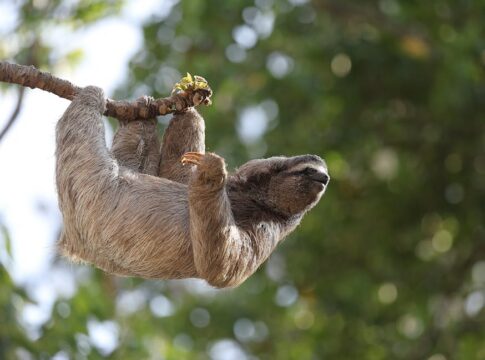
In the animal kingdom, some of the most surprising adaptations often belong to the creatures we least expect. While dolphins are renowned for their aquatic prowess and intelligence, there’s an unlikely champion in the breath-holding department: the three-toed sloth. This seemingly sluggish tree-dweller can hold its breath for up to 40 minutes underwater, significantly outlasting dolphins, which typically surface for air every 8 to 10 minutes. This remarkable ability challenges our assumptions about which animals are best adapted for aquatic activities.
The Science Behind Sloth Breath-Holding
The three-toed sloth’s extraordinary breath-holding capability stems from its exceptionally slow metabolism, which is among the lowest of any mammal on Earth. This metabolic adaptation allows sloths to consume oxygen at an incredibly reduced rate compared to most other mammals. When a sloth enters water, its already sluggish metabolic processes slow down even further, enabling it to conserve oxygen for extended periods.
Research has shown that sloths can reduce their heart rate to just a few beats per minute when submerged. This bradycardia, or slowing of the heart, is a physiological response that minimizes oxygen consumption throughout the body. Additionally, sloths possess the ability to selectively reduce blood flow to non-essential organs, prioritizing oxygen delivery to the brain and heart during submersion.
Dolphins: Built for Speed, Not Endurance
Despite their reputation as aquatic mammals, dolphins are designed for active swimming and frequent surfacing rather than extended breath-holding. Most dolphin species can hold their breath for approximately 8 to 10 minutes, though some larger species may manage up to 15 minutes under certain conditions. This relatively shorter duration is directly related to their high-energy lifestyle.
Dolphins are warm-blooded mammals with high metabolic rates that support their active hunting, social behaviors, and constant movement through the water. They require regular oxygen intake to maintain their body temperature and fuel their energetic activities. Unlike sloths, dolphins cannot afford to slow their metabolism dramatically, as they need to remain alert for predators, prey, and social interactions with their pod members.
Why Sloths Swim in the First Place
Given their arboreal lifestyle, it might seem peculiar that sloths would need to hold their breath at all. However, sloths are surprisingly competent swimmers, and water plays an important role in their natural behavior. In their rainforest habitats, sloths often encounter rivers and flooded areas, particularly during the wet season when water levels rise significantly.
Sloths swim for several practical reasons:
- Crossing rivers to access new feeding territories with fresh leaves
- Seeking mates across waterways during breeding season
- Escaping predators by dropping from trees into water below
- Relocating when their home territory becomes flooded
Interestingly, sloths move faster in water than they do on land or in trees, using a form of dog paddle that propels them efficiently through the water. Their long arms, which seem cumbersome on land, become effective paddles in aquatic environments.
Comparing Breath-Holding Adaptations Across Species
The contrast between sloths and dolphins highlights the diverse evolutionary strategies animals have developed for interacting with aquatic environments. While dolphins evolved from land mammals that returned to the sea millions of years ago, developing specialized respiratory systems and behaviors for marine life, sloths retained their terrestrial body plan while gaining impressive aquatic capabilities as a secondary adaptation.
Other animals demonstrate varying breath-holding abilities based on their ecological niches. Sea turtles can remain submerged for 4 to 7 hours when resting, while seals typically manage 30 minutes to 2 hours depending on the species. The sperm whale holds the record among marine mammals, capable of diving for up to 90 minutes while hunting in the deep ocean. However, what makes the sloth remarkable is achieving this feat despite being primarily a tree-dwelling animal.
The Role of Metabolism in Breath-Holding
The fundamental difference between sloths and dolphins comes down to metabolic requirements. Sloths have evolved an extreme energy-conservation strategy that affects every aspect of their physiology. They digest food incredibly slowly, taking up to a month to fully process a single meal. Their body temperature fluctuates more than most mammals, and they move with deliberate slowness to minimize energy expenditure.
This low-energy lifestyle means sloths require very little oxygen compared to their body size. When underwater, they’re essentially operating in an already oxygen-conserving mode, making extended breath-holding a natural extension of their overall physiological strategy. Dolphins, conversely, maintain high body temperatures, process food quickly, and engage in energy-intensive activities that demand consistent oxygen supply.
Implications for Understanding Animal Adaptations
The sloth’s unexpected aquatic ability reminds us that evolution produces solutions tailored to specific environmental challenges rather than creating universally “superior” adaptations. Dolphins excel at high-speed swimming, echolocation, and complex social behaviors—all of which require metabolic investments that preclude extended breath-holding. Sloths sacrifice speed and activity levels for energy efficiency, gaining unexpected advantages like prolonged submersion capability.
This comparison also illustrates how animals can be surprisingly competent in environments that aren’t their primary habitat. While neither sloths nor dolphins are amphibious in the true sense, both have developed strategies for managing the boundary between air and water that serve their survival needs. Understanding these adaptations helps scientists appreciate the full range of solutions animals have evolved for the challenges of their environments, even when those solutions come from unexpected sources.