
⏱️ 7 min read
The history of life on Earth is marked by countless species that once roamed our planet but have since vanished forever. From massive prehistoric giants to relatively recent casualties of human expansion, extinct animals offer fascinating insights into evolution, ecology, and the fragility of life itself. These creatures represent not just biological curiosities, but important lessons about survival, adaptation, and the consequences of environmental change. Understanding these lost species helps us appreciate the diversity of life that once existed and underscores the importance of conservation efforts today.
Remarkable Facts About Animals Lost to Time
1. The Dodo’s Surprisingly Recent Extinction
The dodo bird, perhaps the most iconic symbol of extinction, disappeared less than 100 years after humans first encountered it. This flightless bird native to Mauritius went extinct around 1681, merely 83 years after Dutch sailors first arrived on the island in 1598. The dodo had evolved without natural predators, making it fearless and easy prey for both humans and the invasive species they introduced, including pigs, rats, and monkeys that destroyed dodo nests.
2. Woolly Mammoths Survived Until the Pyramids Were Built
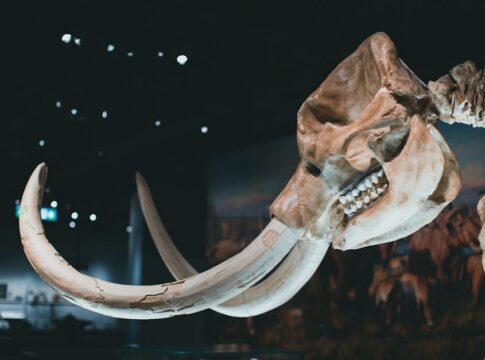
While most woolly mammoths died out around 10,000 years ago, a isolated population survived on Wrangel Island in the Arctic Ocean until approximately 2000 BCE. This means these magnificent creatures were still alive when the ancient Egyptians were constructing the Great Pyramids. These last mammoths were subject to genetic problems due to their small population size, including reduced genetic diversity that likely contributed to their ultimate demise.
3. The Thylacine’s Unique Reproductive System
The thylacine, or Tasmanian tiger, was a marsupial carnivore that went extinct in 1936. One of its most remarkable features was that both males and females possessed a pouch. While females used theirs for carrying young, males had a protective pouch that shielded their external reproductive organs. This unique adaptation made them one of the only known male marsupials with a fully developed pouch.
4. Giant Ground Sloths Were Bigger Than Elephants
Megatherium, the giant ground sloth that roamed South America until about 10,000 years ago, could reach up to 20 feet in length when standing on its hind legs and weighed approximately 4 tons. Despite their massive size, evidence suggests these creatures were primarily herbivorous, using their enormous claws to pull down tree branches. Some scientists believe they may have also been opportunistic scavengers.
5. The Passenger Pigeon’s Staggering Numbers
Before their extinction in 1914, passenger pigeons were possibly the most abundant bird species on Earth, with populations estimated between 3 to 5 billion individuals. Flocks were so large they could darken the skies for hours as they passed overhead. Their migration patterns were spectacular natural phenomena, yet intensive hunting and habitat destruction led to their complete extinction within just a few decades, with the last individual, Martha, dying in captivity.
6. Megalodons Had Teeth the Size of Human Hands
The megalodon, a prehistoric shark that went extinct approximately 3.6 million years ago, possessed teeth that could measure over 7 inches in length. These massive predators grew to estimated lengths of 50-60 feet and had bite forces calculated at over 40,000 pounds per square inch, making them one of the most powerful predators ever to exist. They hunted whales and other large marine mammals in oceans worldwide.
7. The Quagga Was Half Zebra, Half Horse
The quagga, which went extinct in 1883, was a subspecies of plains zebra with a unique appearance—it had zebra stripes on the front half of its body that gradually faded to a solid brown color on its hindquarters. Native to South Africa, the quagga was hunted extensively for its hide. Interestingly, modern scientists have initiated a breeding program called the Quagga Project, attempting to selectively breed plains zebras to recreate the quagga’s distinctive appearance.
8. Irish Elk Had the Largest Antlers Ever
Despite its name, the Irish elk was neither exclusively Irish nor technically an elk—it was actually the largest deer species ever to exist. These magnificent creatures, which went extinct about 7,700 years ago, possessed antlers that could span up to 12 feet from tip to tip and weigh up to 90 pounds. The enormous energy required to grow these massive antlers annually may have contributed to their vulnerability during periods of environmental stress.
9. Steller’s Sea Cow Was Discovered and Extinct Within 27 Years
Steller’s sea cow, a massive relative of modern manatees that could grow up to 30 feet long and weigh up to 10 tons, was discovered by Europeans in 1741. By 1768, just 27 years later, the species was completely extinct due to overhunting by fur traders and seal hunters. These gentle giants were slow-moving, easy to catch, and provided large amounts of meat, making them prime targets despite their small population confined to the Commander Islands.
10. The Bizarre Appearance of the Helicopter Damselfly
Megapodagrion, commonly known as the helicopter damselfly, was a genus that included species with extraordinarily long legs that could extend far beyond their body length. While some species still exist, several extinct species from this group showcased extreme evolutionary adaptations. These prehistoric insects demonstrated how specialized appendages could evolve for specific ecological niches, though such specialization often made species vulnerable to environmental changes.
11. Terror Birds Stood 10 Feet Tall
Phorusrhacids, nicknamed “terror birds,” were massive flightless predatory birds that dominated South America for millions of years until their extinction around 2.5 million years ago. The largest species could stand up to 10 feet tall and possessed enormous hooked beaks capable of killing prey with devastating strikes. These apex predators filled the ecological niche left by large carnivorous dinosaurs and were among the most formidable land predators of their time.
12. The Aurochs Were the Ancestors of Modern Cattle
The aurochs, which went extinct in 1627, were the wild ancestors of all modern domestic cattle. These massive bovines stood about 6 feet tall at the shoulder and possessed forward-curving horns. Unlike their domesticated descendants, aurochs were aggressive and powerful animals. The last recorded aurochs died in Poland’s Jaktorów Forest, and like the quagga, there are modern breeding programs attempting to recreate animals with aurochs-like characteristics through selective breeding of primitive cattle breeds.
13. Glyptodon: The Volkswagen-Sized Armadillo
Glyptodon was a prehistoric relative of modern armadillos that lived in South America until about 10,000 years ago. This creature was roughly the size of a Volkswagen Beetle, measuring up to 11 feet long and weighing approximately 2 tons. Its shell was made of over 1,000 bony plates fused into a rigid dome, and it possessed a heavily armored tail that some species could use like a club for defense or combat.
14. The Great Auk Was the Original Penguin
The great auk, which went extinct in 1844, was a flightless bird of the North Atlantic that was actually the original bird called “penguin”—the name was later transferred to similar-looking Southern Hemisphere birds. These birds were excellent swimmers, using their wings to propel themselves underwater while hunting fish. They were hunted extensively for their feathers, meat, and fat, and were also collected by museums and private collectors, with the last known pair killed on Eldey Island, Iceland.
15. Cave Lions Were Among the Largest Cats Ever
Cave lions, which went extinct around 14,000 years ago, were among the largest cat species ever to exist, possibly 10-25% larger than modern lions. Despite their name, evidence suggests they didn’t primarily live in caves but used them occasionally for shelter. These apex predators ranged across Eurasia and into Alaska, and remarkably, several frozen specimens have been discovered in Siberian permafrost, some with intact soft tissue, providing unprecedented insights into their biology and appearance.
Lessons From Lost Species
These 15 remarkable extinct animals represent just a fraction of the millions of species that have disappeared throughout Earth’s history. Each extinction tells a story—whether of gradual climate change, catastrophic events, evolutionary dead-ends, or human impact. From the recently extinct passenger pigeon to the ancient megalodon, these creatures remind us that extinction is both a natural part of evolution and, increasingly, a consequence of human activity. Understanding these lost animals provides crucial context for modern conservation efforts and highlights the irreplaceable nature of biodiversity. As we face an ongoing extinction crisis, the stories of these vanished species serve as both warnings and inspiration to protect the remarkable diversity of life that still exists on our planet today.