
⏱️ 5 min read
The natural world is home to remarkable creatures that have evolved extraordinary abilities to survive in some of Earth’s harshest environments. From the deepest ocean trenches to the frozen Antarctic wastelands, from scorching deserts to oxygen-deprived mountain peaks, certain animals have developed incredible adaptations that allow them to thrive where most life forms would quickly perish. These resilient species demonstrate nature’s ingenuity and the remarkable plasticity of life on our planet.
Masters of the Frozen World
Arctic and Antarctic regions present some of the most challenging conditions for animal survival, yet several species have mastered life in these frozen realms. The wood frog, found in North America, possesses one of nature’s most astonishing survival mechanisms. During winter, up to 70% of the water in its body can freeze solid. The frog’s liver produces massive amounts of glucose, which acts as a biological antifreeze, protecting its cells and organs from ice crystal damage. When spring arrives, the frog thaws and resumes normal activity as if nothing happened.
Emperor penguins endure the Antarctic winter, where temperatures plummet to -40°C and below, accompanied by winds exceeding 150 kilometers per hour. These birds huddle together in massive groups, constantly rotating positions so each individual gets time in the warmer center. Their dense plumage, consisting of multiple feather layers, provides exceptional insulation, while a thick layer of blubber offers additional protection against the extreme cold.
Desert Survivors: Thriving in Scorching Heat
Desert environments challenge animals with extreme heat, intense solar radiation, and severe water scarcity. The Saharan silver ant holds the record for heat tolerance among land animals, actively foraging when surface temperatures reach 70°C. Its silvery hairs reflect sunlight and dissipate heat, while long legs keep its body elevated above the scorching sand. These ants complete their foraging missions in mere minutes to avoid fatal overheating.
Camels, the iconic desert dwellers, possess numerous adaptations for arid survival:
- The ability to lose up to 25% of body weight through water loss without physiological harm
- Nasal passages that cool exhaled air, condensing and recapturing moisture
- The capacity to drink up to 135 liters of water in one session
- Fat storage in humps that can be metabolized for energy and water
- Body temperature fluctuation that reduces the need for evaporative cooling
Deep Sea Extremophiles
The ocean depths present crushing pressure, complete darkness, near-freezing temperatures, and minimal food resources. Despite these conditions, specialized creatures flourish in this alien environment. The Mariana snailfish holds the record for the deepest-living fish, discovered at depths exceeding 8,000 meters where pressure reaches over 800 times that at sea level. Its body contains special structural proteins that prevent cellular collapse under extreme pressure.
Tube worms inhabiting hydrothermal vents survive in one of Earth’s most extreme environments. These remarkable animals endure temperatures ranging from near-freezing seawater to superheated vent fluids exceeding 400°C. They lack digestive systems entirely, instead hosting symbiotic bacteria that convert chemicals from the vents into nutrients through chemosynthesis.
The Indestructible Tardigrade
No discussion of extreme survival would be complete without mentioning tardigrades, microscopic animals commonly called water bears. These eight-legged creatures, measuring less than one millimeter, are virtually indestructible. Tardigrades can survive:
- Temperatures from near absolute zero (-272°C) to 150°C
- Pressures six times greater than those in the deepest ocean trenches
- Radiation levels hundreds of times higher than what would kill humans
- Decades without water or food
- The vacuum of outer space
When conditions become unfavorable, tardigrades enter a state called cryptobiosis, essentially shutting down all metabolic processes. They expel nearly all water from their bodies, retract their legs, and produce protective proteins and sugars. In this dehydrated state, they can survive for years until environmental conditions improve.
High-Altitude Champions
Mountain peaks present challenges including low oxygen levels, extreme cold, intense ultraviolet radiation, and scarce food resources. The bar-headed goose undertakes one of the animal kingdom’s most impressive feats, migrating directly over the Himalayan mountains at altitudes exceeding 7,000 meters, where oxygen levels are less than half those at sea level. These birds possess larger lungs, more efficient hemoglobin, and the ability to hyperventilate without losing excessive carbon dioxide.
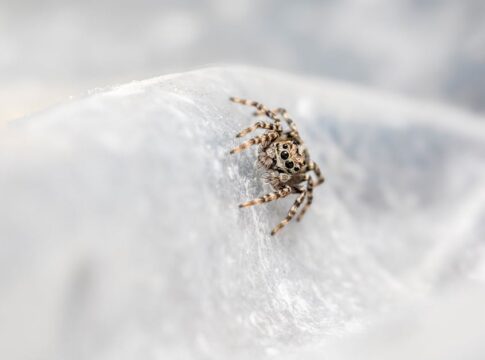
The Himalayan jumping spider has been found living at elevations above 6,700 meters on Mount Everest, making it one of the highest permanent residents on Earth. These tiny predators survive by feeding on insects and other small arthropods blown up the mountain by wind currents.
Chemical Warfare Survivors
Certain environments challenge life with toxic chemicals rather than physical extremes. The Pompeii worm inhabits hydrothermal vent chimneys, enduring water laden with heavy metals and hydrogen sulfide that would be lethal to most organisms. Bacteria living on the worm’s back produce a protective mucus layer that shields it from toxic compounds.
Extremophile fish like the desert pupfish survive in waters with salinity levels three times higher than seawater and temperatures approaching 40°C. These tiny fish have evolved specialized kidneys and gills to handle extreme salt concentrations while maintaining proper cellular function.
The resilience demonstrated by these remarkable animals reveals the incredible adaptability of life on Earth. Their survival strategies provide valuable insights for scientific research, from developing better preservation techniques to understanding the potential for life on other planets. As climate change continues to alter habitats worldwide, studying these extreme survivors may hold keys to understanding how life adapts to rapidly changing environmental conditions.