


⏱️ 8 min read
Throughout history, seemingly impossible coincidences have occurred that defy logical explanation and leave us wondering about the mysterious nature of fate and chance. From parallel lives lived by separated twins to bizarre connections between historical figures, these extraordinary occurrences remind us that reality can sometimes be stranger than fiction. The following collection showcases fifteen of the most remarkable coincidences that have been documented throughout human history.
Astonishing Historical Coincidences That Seem Too Strange to Be True
1. The Lincoln-Kennedy Presidential Parallels
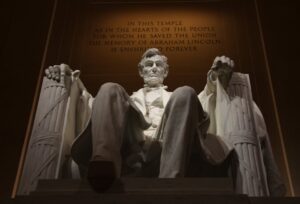
Perhaps the most famous coincidence in American history involves Presidents Abraham Lincoln and John F. Kennedy. Lincoln was elected to Congress in 1846, Kennedy in 1946—exactly 100 years apart. Lincoln became president in 1860, Kennedy in 1960. Both were assassinated on a Friday in the presence of their wives, both were shot in the head from behind, and both successors were named Johnson. Andrew Johnson was born in 1808, while Lyndon Johnson was born in 1908. Lincoln's assassin, John Wilkes Booth, was born in 1839, while Kennedy's assassin, Lee Harvey Oswald, was born in 1939. The list of parallels continues even further, creating one of history's most documented coincidental connections.
2. The Identical Lives of the Jim Twins
In 1939, twin brothers were separated at birth and adopted by different families in Ohio. Both families, unaware of each other, named their sons James. Growing up separately, both boys named their childhood dogs "Toy," married women named Linda, divorced them, and remarried women named Betty. Both had sons—one named James Alan and the other James Allan. They both worked in law enforcement, enjoyed woodworking, and vacationed at the same beach in Florida. When finally reunited at age 39, they discovered these remarkable similarities that suggested either an incredible coincidence or powerful genetic influences on behavior and preference.
3. The Unsinkable Violet Jessop
Violet Jessop, a ship stewardess, survived three major maritime disasters. She was aboard the RMS Olympic when it collided with HMS Hawke in 1911, worked as a stewardess on the RMS Titanic when it sank in 1912, and served as a nurse on the HMHS Britannic when it sank in 1916 during World War I. Despite these three catastrophic events involving sister ships of the White Star Line, Jessop survived them all and continued working at sea, earning her the nickname "Miss Unsinkable."
4. The Curse of the Hoover Dam
The first person to die during the construction of the Hoover Dam was J.G. Tierney, who drowned in the Colorado River on December 20, 1922, while conducting preliminary surveys. The final person to die during construction was Patrick Tierney, J.G. Tierney's son, who fell from one of the intake towers on December 20, 1935—exactly 13 years to the day after his father's death.
5. Mark Twain and Halley's Comet
Author Mark Twain was born on November 30, 1835, just two weeks after Halley's Comet made its closest approach to Earth. In 1909, Twain predicted: "I came in with Halley's Comet in 1835. It is coming again next year, and I expect to go out with it." True to his prediction, Twain died on April 21, 1910, one day after the comet's closest approach to Earth during its return, creating a cosmic bookend to his remarkable life.
6. The Falling Baby and Joseph Figlock
In Detroit during the 1930s, a man named Joseph Figlock was walking down the street when a baby fell from a fourth-story window and landed on him. Both survived with minor injuries. Incredibly, one year later, Figlock was walking down the same street when the same baby fell from the same window and landed on him again. Once more, both escaped serious injury, making Figlock an unlikely two-time savior.
7. The Prophetic Novel of the Titan
In 1898, fourteen years before the Titanic sank, author Morgan Robertson wrote a novel called "Futility, or the Wreck of the Titan." The book described a massive British ocean liner called the Titan that was considered unsinkable. In the novel, the ship struck an iceberg in the North Atlantic in April and sank, with many lives lost due to insufficient lifeboats. The similarities between the fictional Titan and the real Titanic are eerily numerous: both were about 800 feet long, could carry about 3,000 people, had a top speed of 24-25 knots, and were deemed "unsinkable" by their creators.
8. The Golden Gate Bridge Suicide Net Save
In 1985, a man named Kevin Hines survived a jump from the Golden Gate Bridge. Years later, he became an advocate for suicide prevention and mental health awareness. In 2018, while giving a speech about his experience, he met a man named Kevin Berthia, who had also been saved from jumping off the Golden Gate Bridge—coincidentally on the same day Hines had jumped, but at a different time. Both men named Kevin now work together promoting mental health awareness.
9. The Bermuda Triangle Triangle
In December 1945, five U.S. Navy torpedo bombers known as Flight 19 disappeared in the Bermuda Triangle. A rescue plane sent to find them also vanished. Twenty-five years later, to the day, two more aircraft disappeared in the same area under similar circumstances, and a rescue mission launched to find them also lost contact. The double occurrence of disappearances followed by rescue mission losses on the anniversary date remains unexplained.
10. King Umberto I's Double
In 1900, King Umberto I of Italy was dining in a restaurant when he noticed the owner looked exactly like him. Upon conversation, the king discovered the man was also named Umberto, was born on the same day in the same town, had married a woman with the same name as the queen (Margherita), and had opened his restaurant on the same day Umberto became king. The next day, the king learned his double had died in a mysterious shooting, and moments later, the king himself was assassinated.
11. The Three Men Named Bryson
In 1975, a car in Bermuda struck and killed a man riding a moped. One year later, the same car with the same driver struck and killed the victim's brother, who was riding the same moped. The brother was killed on the same street, and remarkably, he was carrying the same passenger who had been with his brother when he died. All individuals involved shared no family relation except the two brothers.
12. The Double Bullet Discovery
Henry Ziegland broke up with his girlfriend in 1883, causing her to take her own life. Her brother, seeking revenge, shot at Ziegland but only grazed his face, with the bullet lodging in a tree. Twenty years later, Ziegland decided to cut down that same tree and used dynamite to help remove it. The explosion propelled the bullet from the tree into Ziegland's head, killing him with the same bullet that had been fired at him two decades earlier.
13. The Poker Hands of Robert Fallon
In 1858, Robert Fallon was shot dead during a poker game in San Francisco because other players accused him of cheating. After his death, the other players considered his money to be unlucky and found a replacement player to continue the game with Fallon's $600 stake. When police arrived to investigate the murder, the replacement player had turned the $600 into $2,200. Police discovered the replacement player was Fallon's son, who hadn't seen his father in seven years and didn't recognize him.
14. The Avenging Taxi of Gavrilo Princip
On June 28, 1914, Archduke Franz Ferdinand of Austria survived an assassination attempt when a bomb was thrown at his motorcade. Later that day, his driver took a wrong turn down a side street where, by pure chance, assassin Gavrilo Princip happened to be standing after the failed bombing. This incredible coincidence gave Princip the unexpected opportunity to shoot and kill the Archduke, an act that triggered World War I and changed the course of human history.
15. The Crossword Puzzle Invasion Leak
In May 1944, just weeks before D-Day, British intelligence officials became alarmed when several crossword puzzles in The Daily Telegraph contained code words related to the planned invasion of Normandy, including "Utah," "Omaha," "Overlord," and "Mulberry." Officials interrogated the puzzle creator, Leonard Dawe, suspecting a security breach. It turned out to be an extraordinary coincidence, though some historians later discovered Dawe had overheard soldiers discussing the operation near his school, and the words had subconsciously influenced his puzzle creation.
The Mystery of Coincidence
These fifteen remarkable coincidences throughout history challenge our understanding of probability and chance. While skeptics might argue that with billions of people and countless events occurring throughout history, some strange overlaps are inevitable, the specificity and complexity of these coincidences continue to captivate our imagination. Whether these events represent mere statistical anomalies, the interconnected nature of human experience, or something more mysterious, they remind us that history is full of surprising connections that defy simple explanation. These stories persist in fascinating us because they suggest that beneath the apparent randomness of existence, patterns and connections exist that we may never fully understand.