

⏱️ 10 min read
On an evening walk in 1883, Norwegian artist Edvard Munch witnessed something that would haunt him for years: a blood-red sky that seemed to scream across the horizon. This wasn't artistic license or a fever dream—the atmosphere itself had been transformed by one of the most violent volcanic eruptions in recorded history, occurring thousands of miles away on the other side of the world.
Quick Facts
- Edvard Munch's iconic painting "The Scream" was created in 1893, inspired by vivid red skies he witnessed a decade earlier in Norway.
- The Krakatoa volcanic eruption in Indonesia on August 27, 1883 ejected 25 cubic kilometers of rock and ash into the atmosphere.
- Krakatoa's eruption was heard 3,000 miles away and caused atmospheric effects visible worldwide for months afterward.
- Munch created four versions of "The Scream" between 1893 and 1910, using oil paint, tempera, pastel, and crayon.
- Scientists confirmed the connection between Krakatoa and "The Scream" through atmospheric studies and Munch's own diary entries.
The Catastrophic Eruption That Changed Global Skies
When Krakatoa exploded with a force equivalent to 200 megatons of TNT on August 27, 1883, it became one of the deadliest volcanic events in human history, killing approximately 36,000 people. The explosion was so powerful that it ruptured the eardrums of sailors 40 miles away and registered on barographs around the world. But beyond the immediate devastation in the Indonesian archipelago, Krakatoa had another lasting impact: it fundamentally altered the appearance of sunsets across the entire planet for nearly three years.
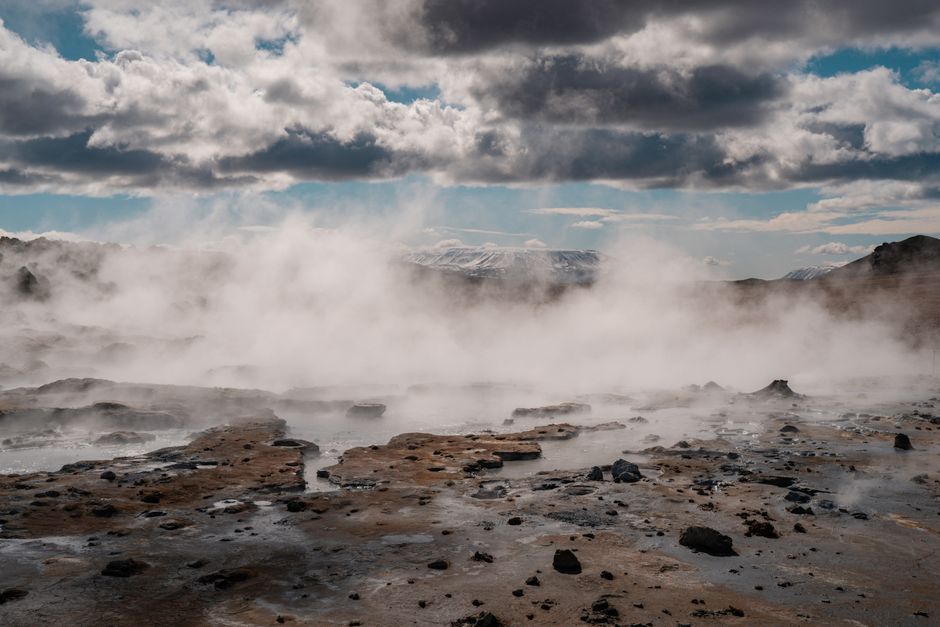
The eruption injected massive quantities of sulfur dioxide and volcanic ash into the stratosphere, reaching heights of 50 miles. These particles circulated in the upper atmosphere, scattering sunlight in ways that produced extraordinarily vivid red, orange, and purple twilights. Atmospheric scientists estimate that global temperatures dropped by an average of 1.2 degrees Celsius in the year following the eruption due to the volcanic winter effect. Fire departments in New York and Connecticut received emergency calls from concerned citizens who believed distant buildings were ablaze, mistaking the crimson glow on the horizon for massive fires.
The phenomenon was so widespread and dramatic that it inspired not only artists but also writers and scientists. Alfred Lord Tennyson referenced the unusual red sunsets in his poetry written during this period. Meteorological societies across Europe documented the atmospheric anomalies with detailed observations, creating a scientific record that would later help researchers connect these events to Munch's famous painting.
Munch's Traumatic Evening Walk
Edvard Munch recorded his experience in his diary on January 22, 1892, nearly a decade after the event that would inspire his most famous work. He wrote: "I was walking along the road with two friends—the sun was setting—suddenly the sky turned blood red—I paused, feeling exhausted, and leaned on the fence—there was blood and tongues of fire above the blue-black fjord and the city—my friends walked on, and I stood there trembling with anxiety—and I sensed an infinite scream passing through nature."
This walk took place along Ekeberg Hill in Oslo (then called Christiania), overlooking the Oslofjord. The specific location is significant because the geography—the elevated viewpoint, the water reflecting the sky, the industrial city below—all contributed to the intensity of what Munch witnessed. At the time, Munch was already struggling with mental health issues, having recently been hospitalized for depression and anxiety. The combination of his psychological state and the genuinely apocalyptic sky created a moment of existential terror that he felt compelled to capture.
Munch's sensitivity to atmospheric conditions wasn't unique to this moment. Throughout his career, he demonstrated an acute awareness of how light and color could convey psychological states. However, the Krakatoa sunsets provided something no imagination could conjure: scientifically verified blood-red skies that turned familiar landscapes into surreal nightmares. The artist spent years attempting to translate that moment onto canvas, creating multiple versions as he refined his vision of existential dread.
Scientific Verification of the Connection
For decades, art historians speculated about various inspirations for "The Scream," including Munch's mental state, a Peruvian mummy he saw in Paris, and German philosopher Friedrich Nietzsche's writings on anxiety. However, in 2003, astronomers Donald Olson, Russell Doescher, and Marilynn Olson from Texas State University published research in Sky & Telescope magazine that provided compelling evidence for the volcanic connection.
The researchers analyzed meteorological records from 1883-1884, cross-referenced them with Munch's diary entries and the known timeline of his time in Oslo, and examined the specific atmospheric effects that Krakatoa produced. They found that the vivid red twilights peaked in intensity over Scandinavia in late 1883 and through 1884, precisely when Munch would have experienced them. The wavelengths of light scattered by volcanic aerosols produce distinctly different colors than normal sunsets—specifically, the deep blood-reds and oranges that appear in "The Scream."
Climate scientists have since used ice core samples from Greenland and Antarctica to measure the exact chemical signature of Krakatoa's eruption. These cores show massive sulfate deposits corresponding to 1883, confirming the global reach of the volcanic material. The atmospheric circulation patterns during that period, reconstructed through historical weather data, show that the aerosol concentrations would have been particularly dense over Northern Europe during the winter months, creating optimal conditions for the dramatic sunsets Munch described.
The Painting's Technical Elements and Variations
Munch created his first version of "The Scream" in 1893 using oil, tempera, pastel, and crayon on cardboard, now housed in the National Gallery of Norway. This version features swirling, undulating lines that dominate the sky, rendered in strokes of orange, red, and yellow that seem to vibrate with energy. The technique deliberately distorts natural forms—the sky appears almost liquid, the landscape bends, and even the wooden railing warps as if reality itself is malleable under the weight of anxiety.
The three subsequent versions, created in 1893, 1895, and 1910, each explore different aspects of the scene. The 1895 pastel version, sold at auction in 2012 for nearly $120 million, became one of the most expensive artworks ever purchased. Each iteration shows Munch refining his approach to color: the earlier versions use more naturalistic tones in the landscape, while later versions push toward increasingly expressionistic color choices that prioritize emotional impact over realistic representation.
Conservators analyzing the paintings have identified specific pigments that help date the works and understand Munch's process. Cadmium yellow and vermillion red appear prominently in the sky sections, applied in directions that create movement and turbulence. Infrared reflectography has revealed underdrawings showing Munch sketched the composition multiple times before settling on the final arrangement, indicating his struggle to capture precisely what he remembered from that evening.
Cultural Impact and Modern Recognition
The revelation that "The Scream" depicts a scientifically verifiable atmospheric phenomenon rather than pure artistic imagination adds a fascinating layer to its interpretation. The painting has become arguably the second most recognizable artwork in Western culture after Leonardo da Vinci's "Mona Lisa," reproduced on everything from coffee mugs to emoji. Its central figure—the sexless, skull-like form with hands pressed to its face—has become shorthand for existential anxiety in the modern age.
Museums have used the volcanic connection as an educational tool, connecting art history with earth science. The Munch Museum in Oslo, which opened a new building in 2021 housing over 26,000 works by the artist, includes exhibits explaining the Krakatoa connection and displaying meteorological records from 1883-1884. This interdisciplinary approach has helped new generations understand that great art often emerges from specific, documentable experiences rather than abstract inspiration.
The painting's influence extends into popular culture in ways that validate Munch's vision of universal human emotion. Director Wes Craven cited "The Scream" as inspiration for the ghost mask in his 1996 horror film franchise. The work has been stolen twice—once in 1994 and again in 2004—testament to its enormous cultural and monetary value. Each theft generated international headlines, demonstrating how deeply this image resonates across boundaries of language and culture.
Other Artists Influenced by Krakatoa
Munch wasn't the only artist affected by Krakatoa's atmospheric legacy. British painter William Ashcroft created over 500 detailed watercolor sketches of the red twilights as seen from London between 1883 and 1886, now preserved in the Royal Meteorological Society archives. These works serve as both artistic responses and scientific documentation, meticulously annotated with dates, times, and meteorological observations.
American landscape painters of the Hudson River School, including Frederic Edwin Church, incorporated the unusual atmospheric effects into their work during this period. Church's painting "Sunset" from 1884 features the characteristic crimson and orange tones that match descriptions of post-Krakatoa skies. Unlike Munch, who transformed the phenomenon into psychological horror, Church treated it as a sublime natural spectacle, reflecting different cultural attitudes toward nature and catastrophe.
The volcanic influence also appeared in illustrated periodicals of the era. Harper's Weekly and The Illustrated London News published engravings showing the spectacular sunsets, often accompanied by scientific explanations. These mass-media representations helped establish the period's unusual skies as a shared cultural experience, one that millions witnessed but few artists captured with the emotional intensity that Munch achieved.
Frequently Asked Questions
When exactly did Edvard Munch see the sunset that inspired The Scream?
Munch witnessed the blood-red sky in late 1883 or early 1884 during an evening walk along Ekeberg Hill in Oslo, Norway. The exact date is uncertain, but it occurred during the period when Krakatoa's volcanic aerosols were producing the most dramatic atmospheric effects over Scandinavia.
How far is Norway from Krakatoa, and how did the eruption affect skies so far away?
Norway is approximately 7,000 miles from Krakatoa in Indonesia. The eruption injected volcanic material into the stratosphere, where high-altitude winds distributed it globally, creating vivid red sunsets visible worldwide for nearly three years after the August 1883 explosion.
Are there other paintings by Munch that reference unusual atmospheric conditions?
Yes, Munch's 1893-1894 painting series including "Anxiety" and "Despair" feature similar wavy, red-orange skies. These works form part of his "Frieze of Life" series, exploring themes of love, anxiety, and death, with the distinctive sky appearing as a recurring motif representing psychological turmoil.
What happened to the original versions of The Scream?
The four versions are held in different locations: two at the Munch Museum in Oslo (the 1893 version and 1910 tempera), one at the National Gallery of Norway (the 1893 oil/pastel version), and one privately owned (the 1895 pastel, sold for $119.9 million in 2012).
Key Takeaways
- Edvard Munch's "The Scream" depicts scientifically verified atmospheric conditions caused by the 1883 Krakatoa eruption, which produced blood-red skies visible worldwide for years.
- The painting's swirling sky isn't purely expressionistic imagination but represents Munch's memory of genuine volcanic atmospheric effects witnessed during an evening walk in Oslo.
- Researchers confirmed the connection through cross-referencing meteorological records, Munch's diary entries, atmospheric science, and ice core data showing Krakatoa's global impact.
- The painting's four versions, created between 1893 and 1910, show Munch's decade-long effort to capture the psychological impact of that moment, combining personal anxiety with environmental catastrophe.