









1 / 10 Questions
0 Points

Which fruit floats because it's 25% air?

Apples

Oranges

Pears

Lemons

Points won
0
Correct score
0%

More Quizzes

More Articles

The Psychology Behind Abstract Art

The Psychology Behind Abstract Art

⏱️ 5 min read

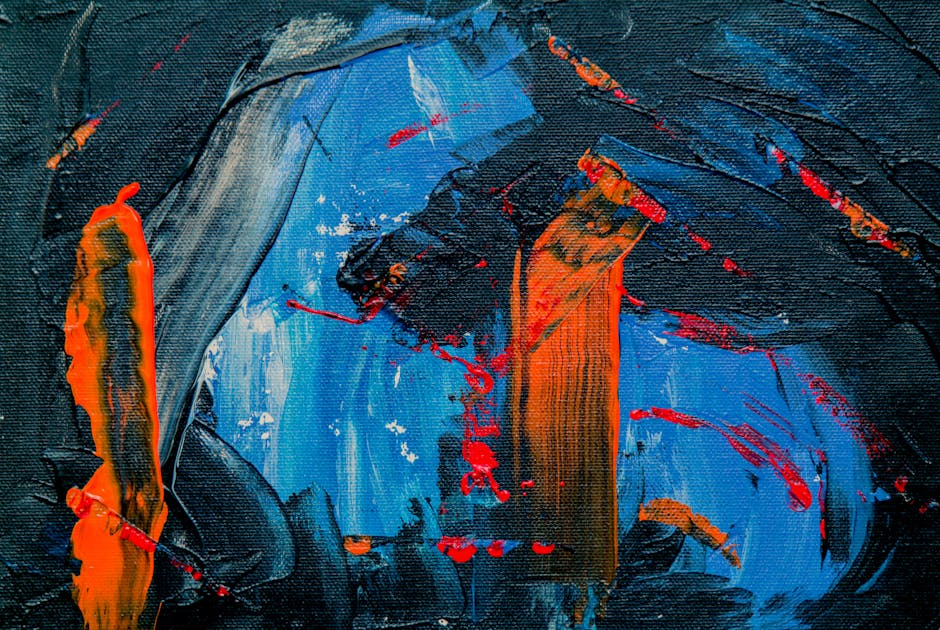
Abstract art has captivated audiences and puzzled critics for over a century, challenging traditional notions of representation and meaning in visual expression. Unlike realistic paintings that depict recognizable subjects, abstract works rely on colors, shapes, lines, and textures to communicate emotions and ideas. The human response to these non-representational forms reveals fascinating insights into how our brains process visual information and construct meaning from seemingly chaotic arrangements.

How the Brain Interprets Non-Representational Forms

When viewing abstract art, the human brain engages in a fundamentally different process than when observing realistic imagery. Neurological studies have shown that abstract art activates regions of the brain associated with pattern recognition, emotional processing, and personal memory retrieval. The prefrontal cortex, responsible for complex cognitive behavior and decision-making, works overtime to find meaning and structure in compositions that lack obvious subject matter.

This cognitive engagement creates what psychologists call "perceptual ambiguity," a state where the brain must work harder to organize visual information. Rather than simply identifying a landscape or portrait, viewers of abstract art become active participants in creating meaning. The visual cortex searches for familiar patterns, while the emotional centers of the brain respond to color combinations, compositional balance, and the energy conveyed through brushstrokes or geometric arrangements.

Emotional Responses and Color Theory

Color plays a pivotal role in the psychological impact of abstract art. Research in color psychology demonstrates that different hues trigger distinct emotional and physiological responses. Warm colors like reds, oranges, and yellows tend to evoke feelings of energy, passion, or warmth, while cool blues and greens often produce calming, contemplative states. Abstract artists like Mark Rothko and Wassily Kandinsky deliberately exploited these psychological associations to create powerful emotional experiences.

The intensity, saturation, and combinations of colors in abstract compositions can influence heart rate, blood pressure, and even hormone levels in viewers. Bold, contrasting color schemes activate the amygdala, the brain's emotional processing center, more intensely than subtle, harmonious palettes. This physiological reality explains why some abstract works feel aggressive or energizing, while others appear meditative and soothing.

The Role of Personal Interpretation and Projection

One of the most psychologically significant aspects of abstract art is its reliance on subjective interpretation. Without a predetermined subject matter, viewers project their own experiences, emotions, and associations onto the artwork. This psychological phenomenon, known as the "Rorschach effect," transforms each viewing experience into a unique interaction between the artwork and the individual's psyche.

Studies have shown that personal background, cultural context, and current emotional state significantly influence how individuals interpret abstract compositions. A viewer experiencing grief might perceive dark, heavy forms as expressions of sorrow, while someone in a joyful state might interpret the same elements as mysterious or intriguing. This subjective nature makes abstract art a powerful tool for self-reflection and psychological exploration.

Gestalt Principles and Visual Organization

The human tendency to seek patterns and organize visual information stems from Gestalt psychology principles, which explain how the mind naturally groups elements into cohesive wholes. Abstract artists often employ these principles, whether consciously or intuitively, to create compositions that feel balanced despite their non-representational nature.

Key Gestalt principles at work in abstract art include:

  • Proximity: Elements placed close together are perceived as related groups
  • Similarity: Similar shapes, colors, or textures are mentally grouped together
  • Continuity: The eye follows lines and curves to create implied connections
  • Closure: The brain fills in gaps to complete incomplete shapes
  • Figure-ground relationships: The mind distinguishes between foreground and background elements

These organizing principles explain why even the most chaotic-appearing abstract compositions often possess an underlying structure that the brain finds satisfying or compelling.

Therapeutic Applications and Mental Health Benefits

The psychological engagement required by abstract art has led to its widespread use in art therapy and mental health treatment. Creating abstract art allows individuals to express emotions and experiences that might be difficult to verbalize. The non-judgmental nature of abstract expression—where there is no "right" or "wrong" representation—provides a safe outlet for processing trauma, anxiety, and complex feelings.

Research indicates that both creating and viewing abstract art can reduce cortisol levels, the hormone associated with stress. The meditative state induced by contemplating abstract compositions activates the default mode network in the brain, associated with self-reflection and psychological restoration. This neurological response explains why many people find spending time with abstract art both relaxing and energizing.

Cognitive Challenge and Aesthetic Appreciation

The "processing fluency theory" in psychology suggests that people generally prefer images that are easy to process and understand. However, abstract art presents an interesting paradox: despite requiring significant cognitive effort, many viewers develop deep appreciation for non-representational works. This contradiction reveals that the human mind finds satisfaction not just in easy comprehension, but also in the challenge of interpretation.

The reward system in the brain activates when viewers successfully derive meaning or emotional connection from abstract art, even if that meaning is entirely personal. This neurological reward reinforces engagement and can lead to increased appreciation over time. Repeated exposure to abstract art has been shown to enhance cognitive flexibility, creative thinking, and tolerance for ambiguity.

Cultural and Educational Influences on Perception

While certain responses to abstract art appear universal—such as basic color associations—cultural background and art education significantly shape how individuals engage with non-representational works. Western audiences, more frequently exposed to abstract art through museums and education, often approach these works with different expectations than those from cultures with stronger representational traditions.

Education in art history and theory can deepen appreciation by providing context for understanding artistic movements, techniques, and intentions. However, psychological studies also confirm that emotional and aesthetic responses to abstract art occur independently of intellectual knowledge, suggesting that the power of abstract expression transcends cultural and educational boundaries.
Top 10 Films That Were Banned in Multiple Countries

Top 10 Films That Were Banned in Multiple Countries

⏱️ 6 min read

Throughout cinema history, filmmakers have pushed boundaries and challenged societal norms, often resulting in their works being censored or outright banned across multiple nations. These controversial films sparked debates about artistic freedom, moral standards, and cultural sensitivities. While some were banned for political reasons, others faced censorship due to explicit content, religious themes, or social commentary that authorities deemed too provocative for public viewing.

Films That Shocked the World

1. A Clockwork Orange - Stanley Kubrick's Dystopian Masterpiece

Stanley Kubrick's 1971 adaptation of Anthony Burgess's novel became one of the most controversial films in cinema history. The film's graphic depictions of violence and sexual assault led to bans in countries including Ireland, South Korea, and Singapore. Even Kubrick himself requested its withdrawal from British cinemas after receiving death threats. The film explores themes of free will, behavioral conditioning, and state control through the story of Alex DeLarge and his gang of droogs. Despite its artistic merit and cultural significance, many nations kept the ban in place for decades, with some restrictions continuing into the 21st century.

2. The Last Temptation of Christ - Religious Controversy Ignited

Martin Scorsese's 1988 biblical drama sparked outrage among religious communities worldwide. The film's portrayal of Jesus Christ experiencing human temptations, including a dream sequence of married life with Mary Magdalene, was deemed blasphemous by many. Countries including Mexico, Chile, Argentina, Turkey, and the Philippines imposed bans on the film. Religious groups organized protests and even attacked theaters showing the film. While the movie was intended as a serious exploration of Christ's humanity, its controversial interpretations led to widespread censorship that lasted years in some nations.

3. Cannibal Holocaust - The Found Footage Horror That Went Too Far

Ruggero Deodato's 1980 horror film remains one of the most banned films globally. The Italian director was actually arrested and charged with murder because authorities believed the film's realistic violence was genuine. The film features graphic scenes of violence, sexual assault, and actual animal killings. Countries including Australia, Iceland, Ireland, Germany, Norway, and Singapore banned the film, with many maintaining restrictions for decades. Despite being recognized as influential in developing the found-footage genre, its extreme content continues to generate controversy and censorship discussions.

4. Salò, or the 120 Days of Sodom - Pier Paolo Pasolini's Final Statement

Released in 1975, Pier Paolo Pasolini's final film remains banned or heavily restricted in numerous countries. The film depicts extreme sexual violence and degradation set during the fascist Salò Republic of World War II Italy. Countries including Australia, New Zealand, Finland, and various others banned the film for its graphic content. While film scholars recognize it as a powerful allegory about fascism and power abuse, its disturbing imagery has kept it from public viewing in many regions. The film's artistic intentions are often overshadowed by its shocking content.

5. The Texas Chain Saw Massacre - The Slasher That Changed Horror

Tobe Hooper's 1974 horror classic was banned in multiple countries including Australia, Brazil, Chile, Finland, France, Iceland, Ireland, Norway, Singapore, Sweden, and West Germany. Despite containing relatively little on-screen blood, the film's intense atmosphere and implications of violence proved too much for many censors. The movie's raw, documentary-style filmmaking and disturbing premise of a family of cannibals terrorizing travelers created widespread moral panic. Some countries didn't lift their bans until the 1990s, decades after its initial release.

6. The Exorcist - Demonic Possession Terrifies Censors

William Friedkin's 1973 supernatural horror film faced bans and restrictions across numerous countries. The film's depiction of a young girl possessed by a demon, including shocking scenes of religious desecration and bodily trauma, proved too controversial for many nations. Countries including the United Kingdom imposed various restrictions, while others banned it outright for periods. The film sparked debates about religious representation, the impact of horror on audiences, and the boundaries of acceptable cinema. Its cultural impact was so significant that reports of audience members fainting or experiencing psychological distress influenced censorship decisions.

7. Natural Born Killers - Oliver Stone's Media Satire

Oliver Stone's 1994 satirical crime film about mass murderers and media exploitation faced bans in Ireland and was heavily censored in numerous other countries. The film's stylized violence, unconventional editing, and controversial themes about media glorification of criminals made censors uncomfortable worldwide. Several real-life crimes were allegedly inspired by the film, leading to increased calls for bans. Countries including the United Kingdom delayed its video release for years. The film's critique of media violence paradoxically became a target of censorship itself, creating ongoing debates about artistic responsibility.

8. Life of Brian - Monty Python's Religious Satire

This 1979 comedy from Monty Python faced bans in Ireland, Norway, and various other locations for its satirical portrayal of religious themes. The film tells the story of Brian Cohen, born on the same day as Jesus Christ, who is mistaken for the Messiah. Religious groups condemned it as blasphemous, leading to widespread censorship. Some towns and cities maintained bans for decades, with certain areas not screening the film until the 21st century. Despite being a comedy, its religious satire proved more controversial than many explicit dramatic films.

9. Battle Royale - Japan's Controversial Youth Violence Epic

Kinji Fukasaku's 2000 film about teenagers forced to fight to the death was banned or restricted in Germany, South Korea, and other nations. The film's premise of state-sanctioned violence against children proved too controversial for many countries. Despite its popularity in Japan and cult status internationally, censors worried about its potential influence on young audiences. The film sparked debates about violence in media and governmental control. Its influence on later works like The Hunger Games demonstrates its cultural significance, yet many countries maintained restrictions on its distribution.

10. Pink Flamingos - John Waters' Transgressive Underground Classic

John Waters' 1972 exploitation film was banned in Australia, Norway, and other countries for its extreme content designed to shock audiences. The film deliberately pushed every boundary of taste with scenes of cannibalism, sexual perversion, and acts too explicit to describe in detail. Waters created the film specifically to be "the most disgusting film ever made," and censors worldwide agreed it crossed acceptable lines. Despite its underground cult status and eventual recognition as a landmark of transgressive cinema, many countries maintained bans or heavy restrictions for years.

The Legacy of Cinematic Censorship

These ten films represent different eras, genres, and reasons for censorship, from political content to religious controversy to extreme violence and sexual content. While many bans have been lifted over time as social attitudes evolved, these films remain testament to the ongoing tension between artistic expression and societal boundaries. They continue to spark discussions about freedom of speech, the role of government in regulating content, and the power of cinema to challenge, disturb, and provoke audiences worldwide.