







1 / 10 Questions
0 Points

What company originally ran taxi services before video games?

Nintendo

Samsung

Sony

LG

Points won
0
Correct score
0%

More Quizzes

More Articles

Top 10 Natural Wonders of the World

Top 10 Natural Wonders of the World

⏱️ 6 min read

Our planet showcases breathtaking natural formations that have captivated humanity for millennia. From cascading waterfalls to vast canyons, these geological and ecological masterpieces represent nature's extraordinary power and beauty. These remarkable sites attract millions of visitors annually and serve as vital reminders of Earth's incredible diversity and the importance of conservation efforts worldwide.

Remarkable Natural Formations Across the Globe

1. The Grand Canyon's Layered Geological History

Carved over millions of years by the Colorado River, the Grand Canyon in Arizona stands as one of Earth's most dramatic geological features. Stretching 277 miles long, up to 18 miles wide, and over a mile deep, this immense gorge reveals nearly two billion years of geological history through its colorful rock layers. The canyon's stratified bands tell stories of ancient seas, volcanic activity, and continental shifts. Visitors can witness the interplay of erosion and geological forces that continue to shape this magnificent landscape, while the Colorado River still actively carves deeper into the canyon floor.

2. The Great Barrier Reef's Living Ecosystem

Located off Australia's northeastern coast, the Great Barrier Reef represents the world's largest coral reef system, comprising over 2,900 individual reefs and 900 islands spanning approximately 1,400 miles. This underwater wonderland hosts an astonishing biodiversity, including over 1,500 fish species, 400 coral varieties, and countless other marine organisms. Visible from space, this living structure was built by billions of tiny coral polyps over thousands of years. The reef plays a crucial role in marine ecosystems and faces ongoing conservation challenges due to climate change and ocean acidification.

3. Victoria Falls' Thundering Waters

Straddling the border between Zambia and Zimbabwe, Victoria Falls ranks among the world's most spectacular waterfalls. Known locally as "Mosi-oa-Tunya" or "The Smoke That Thunders," this natural wonder spans over 5,600 feet in width and drops approximately 355 feet. During peak flow, more than 500 million liters of water cascade over the falls every minute, creating a mist visible from miles away and producing perpetual rainbows. The surrounding rainforest ecosystem thrives on the constant spray, creating a unique microclimate supporting rare plant species.

4. Mount Everest's Towering Peak

Standing at 29,032 feet above sea level, Mount Everest represents Earth's highest point and the ultimate challenge for mountaineers. Located in the Himalayan mountain range on the border between Nepal and Tibet, this massive peak formed approximately 60 million years ago through the collision of the Indian and Eurasian tectonic plates. The mountain continues to grow slightly each year due to ongoing geological activity. Extreme weather conditions, including hurricane-force winds and temperatures plummeting to -76°F, make Everest one of the planet's harshest environments, yet its magnetic appeal draws hundreds of climbers annually.

5. The Northern Lights' Celestial Display

The Aurora Borealis, or Northern Lights, creates one of nature's most mesmerizing spectacles across Arctic regions. This atmospheric phenomenon occurs when charged particles from solar winds collide with gases in Earth's atmosphere, producing luminous displays of green, pink, purple, and red across the night sky. Best viewed in countries like Norway, Iceland, Finland, and Canada, these dancing lights have inspired countless myths and legends throughout human history. The Southern Hemisphere experiences a similar phenomenon called Aurora Australis, though it's less accessible to most observers.

6. Paricutin Volcano's Sudden Emergence

In a Mexican cornfield in 1943, witnesses observed one of geology's rarest events: the birth of a volcano. Paricutin emerged from flat farmland, growing to 1,100 feet within its first year. This cinder cone volcano provided scientists with an unprecedented opportunity to study volcanic formation from inception. The volcano remained active for nine years, eventually covering two villages with lava and ash. Today, Paricutin stands as a dormant monument to Earth's dynamic geological processes, with the church tower of the buried village of San Juan Parangaricutiro still visible above the hardened lava fields.

7. The Harbor of Rio de Janeiro's Natural Beauty

Guanabara Bay in Brazil creates one of the world's most spectacular natural harbors, surrounded by dramatic granite peaks including the iconic Sugarloaf Mountain and Corcovado. This magnificent harbor was formed by erosion and the Atlantic Ocean flooding a river valley. The unique topography combines tropical forests, pristine beaches, and distinctive rock formations sculpted over millions of years. The harbor's strategic location and natural beauty made Rio de Janeiro one of South America's most important cities, while the surrounding landscape continues to define the region's identity.

8. The Amazon Rainforest's Biodiversity Haven

Spanning nine countries across South America, the Amazon Rainforest represents Earth's largest tropical rainforest, covering approximately 2.1 million square miles. This vital ecosystem contains an estimated 390 billion individual trees representing 16,000 species and supports unparalleled biodiversity, including one in ten known species on Earth. The Amazon River system, fed by over 1,100 tributaries, moves more water than the next seven largest rivers combined. This forest generates approximately 20% of the world's oxygen and plays a critical role in regulating global climate patterns.

9. Jeita Grotto's Subterranean Splendor

Located in Lebanon's Nahr al-Kalb valley, Jeita Grotto comprises two separate interconnected limestone caves featuring spectacular stalactite and stalagmite formations. The upper galleries showcase stunning crystalline formations and vast chambers adorned with natural sculptures created over millions of years by water erosion and mineral deposits. The lower cave features an underground river navigable by boat, revealing towering stone curtains and columns. These caves have served various purposes throughout history, from prehistoric shelter to modern tourist attraction, demonstrating the enduring relationship between humans and geological wonders.

10. The Bay of Fundy's Extreme Tides

Located between New Brunswick and Nova Scotia in Canada, the Bay of Fundy experiences the highest tides in the world, with water levels changing up to 56 feet between high and low tide. This extraordinary tidal range results from the bay's unique funnel shape and the resonance between the Atlantic Ocean's tidal period and the bay's natural oscillation period. Twice daily, approximately 160 billion tons of seawater flow in and out of the bay, sculpting dramatic coastal formations and creating unique ecosystems. The Hopewell Rocks, with their distinctive flowerpot shapes, exemplify the bay's erosive power.

Preserving Natural Heritage

These ten natural wonders represent just a fraction of Earth's geological and ecological treasures. Each site demonstrates the planet's dynamic processes, from tectonic movements to water erosion, from atmospheric phenomena to biological diversity. These locations serve as crucial reminders of nature's power and beauty while highlighting the importance of conservation efforts. As human activities increasingly impact natural environments, protecting these irreplaceable wonders becomes essential for future generations to experience and study. Whether formed over billions of years or emerging suddenly, these natural marvels continue to inspire awe and deepen our understanding of the planet we inhabit.

25 Facts About the Oceans That Will Blow Your Mind

25 Facts About the Oceans That Will Blow Your Mind

⏱️ 7 min read

The world's oceans cover more than 70% of Earth's surface, yet they remain one of the most mysterious and unexplored frontiers on our planet. From the deepest trenches to the vast open waters, the oceans hold secrets that continue to astound scientists and researchers. These incredible bodies of water regulate our climate, produce much of the oxygen we breathe, and harbor life forms that seem almost alien in nature. The following facts reveal just how extraordinary and essential our oceans truly are.

Astonishing Ocean Facts That Reveal Nature's Wonders

1. The Ocean Covers More Than Two-Thirds of Our Planet

Approximately 71% of Earth's surface is covered by ocean water, which amounts to about 361 million square kilometers. This massive expanse contains 97% of all water on Earth, making our planet truly a water world. Despite this overwhelming presence, humans have explored less than 5% of the ocean's depths.

2. The Pacific Ocean Could Contain All the Continents

The Pacific Ocean is so vast that all of Earth's landmasses could fit within it with room to spare. Covering approximately 165 million square kilometers, it represents about 46% of the world's water surface and is larger than all the land on Earth combined.

3. Ocean Depths Exceed Mountain Heights

The Mariana Trench in the western Pacific Ocean reaches depths of approximately 11,034 meters at Challenger Deep, making it the deepest known point on Earth. If Mount Everest were placed in this trench, its peak would still be covered by more than 2 kilometers of water.

4. Oceans Produce Most of Earth's Oxygen

Marine phytoplankton and other ocean-dwelling organisms produce between 50% and 80% of the oxygen in Earth's atmosphere. These microscopic organisms are responsible for more oxygen production than all terrestrial forests combined, making the ocean essential for every breath we take.

5. The Ocean Contains Enough Gold to Make Everyone Rich

Scientists estimate that approximately 20 million tons of gold are dissolved in the world's oceans. However, the concentration is extremely low, at about 13 billionths of a gram per liter of seawater, making extraction economically impractical with current technology.

6. Underwater Mountains Outnumber Those on Land

The ocean floor contains more mountains than all the continents combined. The Mid-Ocean Ridge system alone stretches for over 65,000 kilometers, making it the longest mountain range on Earth, though it lies hidden beneath the waves.

7. Ocean Pressure Can Crush Submarines Like Tin Cans

At the deepest parts of the ocean, water pressure exceeds 1,000 atmospheres, or about 8 tons per square inch. This extreme pressure is equivalent to having 50 jumbo jets stacked on top of a person, which is why specialized equipment is required for deep-sea exploration.

8. The Ocean Has Its Own Weather Systems

Underwater weather includes powerful currents, internal waves that can reach heights of 200 meters, and underwater storms. These phenomena operate independently of surface conditions and play crucial roles in ocean circulation and nutrient distribution.

9. Three Percent of Antarctic Ice Is Penguin Urine

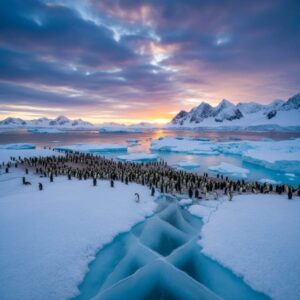
While this fact relates to ocean life, the chemical composition of Antarctic ice reveals the significant impact of penguin colonies on their environment. The ocean receives these nutrients when the ice melts, contributing to the marine ecosystem.

10. Sound Travels Faster in Water Than in Air

Sound waves travel approximately 4.3 times faster through water than through air, reaching speeds of about 1,500 meters per second in seawater. This property allows whales to communicate across entire ocean basins, with some calls traveling thousands of kilometers.

11. The Ocean Floor Has Ancient Artifacts and Shipwrecks

UNESCO estimates that there are over 3 million shipwrecks scattered across ocean floors worldwide. These underwater time capsules contain invaluable historical artifacts and represent billions of dollars in cargo and treasure.

12. Ocean Currents Act as Global Conveyor Belts

The thermohaline circulation, also known as the global ocean conveyor belt, moves water around the entire planet. A single "trip" on this current system takes approximately 1,000 years to complete, distributing heat and nutrients across all ocean basins.

13. Ninety-Four Percent of Life on Earth Is Aquatic

The vast majority of living organisms call the ocean home. From microscopic plankton to massive blue whales, marine environments support an incredible diversity of life forms, many of which remain undiscovered by science.

14. The Ocean Gets Its Blue Color from Water's Optical Properties

Water molecules preferentially absorb red wavelengths of light while scattering blue wavelengths, giving the ocean its characteristic color. This effect intensifies in deeper, clearer waters, creating the stunning blues associated with tropical seas.

15. Tidal Forces Move Trillions of Tons of Water

The gravitational pull of the Moon and Sun creates tides that move astronomical amounts of water twice daily. Some locations experience tidal ranges exceeding 16 meters, creating powerful currents that can be harnessed for renewable energy.

16. The Ocean Contains Underwater Rivers and Lakes

Dense, salty water can form distinct layers on the ocean floor, creating underwater rivers and lakes. These brine pools have different salinity levels and can flow like surface rivers, complete with their own shores and unique ecosystems.

17. Coral Reefs Support a Quarter of Marine Life

Despite covering less than 1% of the ocean floor, coral reefs support approximately 25% of all marine species. These underwater cities provide habitat, food, and breeding grounds for countless organisms, making them among Earth's most biodiverse ecosystems.

18. Ocean Temperatures Regulate Global Climate

The ocean absorbs 90% of the excess heat generated by climate change, acting as a massive thermal buffer for the planet. Ocean currents distribute this heat globally, making many regions habitable that would otherwise experience extreme temperatures.

19. Bioluminescent Organisms Create Underwater Light Shows

Approximately 90% of deep-sea creatures produce their own light through bioluminescence. These living lanterns use chemical reactions to create glowing displays for communication, hunting, and defense in the perpetual darkness of the deep ocean.

20. The Ocean Contains Massive Freshwater Reservoirs

Scientists have discovered enormous freshwater aquifers beneath the ocean floor, containing hundreds of thousands of cubic kilometers of low-salinity water. These hidden reserves could potentially provide drinking water for coastal populations.

21. Ocean Waves Can Travel Thousands of Kilometers

Powerful storms can generate waves that travel across entire ocean basins without significant energy loss. Surfers in California regularly ride swells generated by storms near Antarctica, demonstrating the ocean's remarkable ability to transmit energy over vast distances.

22. The Ocean Has Waterfalls Bigger Than Niagara

Underwater cataracts exist where cold, dense water plunges over underwater cliffs. The Denmark Strait cataract between Greenland and Iceland drops 3,500 meters and carries 175 million cubic feet of water per second, dwarfing any terrestrial waterfall.

23. Marine Snow Feeds the Deep Ocean

A constant rain of organic material falls from surface waters to the ocean floor, providing food for deep-sea organisms. This "marine snow" consists of dead plankton, waste products, and other organic matter that sustains entire ecosystems in the lightless depths.

24. The Ocean's Oldest Water Is 1,000 Years Old

Deep ocean water in the North Pacific has been isolated from the surface for approximately 1,000 years. This ancient water contains dissolved materials and chemical signatures from a time before the Industrial Revolution.

25. Oceanic Dead Zones Are Expanding

Areas of extremely low oxygen, known as dead zones, have quadrupled since 1950. These regions, caused by nutrient pollution and warming waters, cannot support most marine life and represent one of the most serious threats to ocean health.

Conclusion

These twenty-five facts barely scratch the surface of the ocean's incredible complexity and importance. From producing the oxygen we breathe to regulating global climate, housing the majority of Earth's life, and holding secrets yet to be discovered, the oceans remain fundamental to our planet's health and our own survival. As we continue to explore and study these vast waters, we must also recognize our responsibility to protect them. The mysteries and wonders of the ocean remind us that Earth is still a planet of discovery, with countless revelations waiting beneath the waves. Understanding and preserving our oceans is not just about protecting marine life—it is about safeguarding the future of all life on Earth.