









1 / 10 Questions
0 Points

Which French territory sits just 15 miles off Canada's coast yet uses the euro as its currency?

French Guiana

Saint Pierre and Miquelon

Martinique

Guadeloupe

Points won
0
Correct score
0%

More Quizzes

More Articles

Why Bananas Are Curved: The Surprising Science Explained

Why Bananas Are Curved: The Surprising Science Explained

Why Bananas Are Curved: The Surprising Science Explained

By Trivia Daily, Staff Writer — Published July 27, 2026

Table of Contents

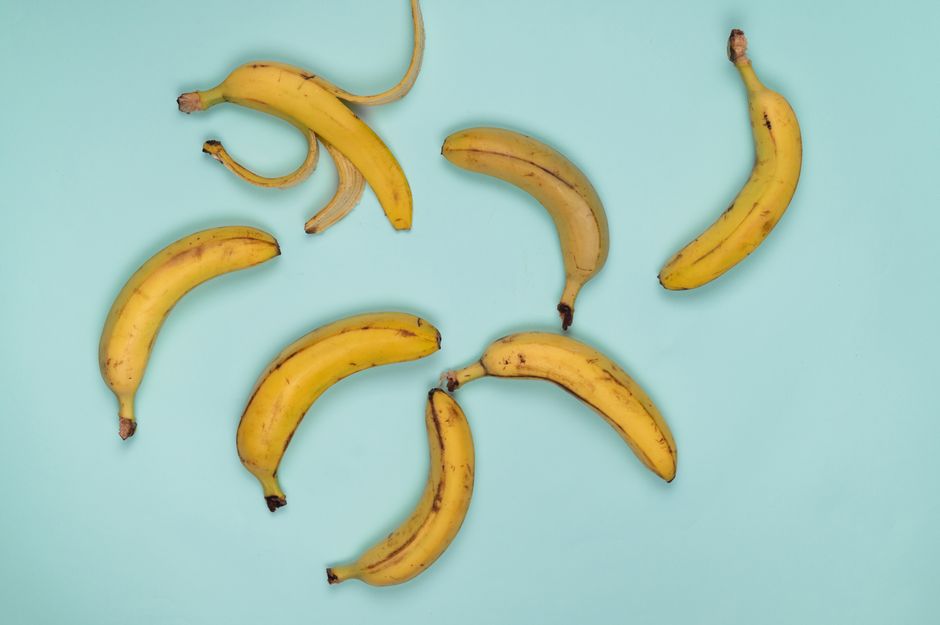
Every banana you've ever peeled shares a distinctive feature: that gentle, upward curve. It's such a familiar sight that most people never stop to wonder why. But the bananas curved science behind this everyday fruit reveals a fascinating story of plant biology, gravity, and survival strategy. Unlike most fruits that simply hang downward, bananas grow in a way that defies your expectations—turning toward the light in a process that transforms straight green fingers into the crescents we recognize instantly.

This curious trivia about banana curvature isn't just a fun fact for your next dinner party. It's a window into how plants respond to their environment, and why the bananas you buy today look nothing like their wild ancestors. Discover the amazing mechanisms that shape these fruits from flower to grocery store.

Key Takeaways

  • Bananas curve upward toward the sun through a process called negative geotropism, the opposite of how roots grow downward.
  • The banana "tree" is actually the world's largest herb, and what looks like a trunk is really tightly packed leaf stalks.
  • Wild bananas are small, straight, and packed with hard seeds—modern curved bananas are the result of thousands of years of cultivation.
  • Each banana bunch can contain 50 to 150 individual fruits, all curving upward in defiance of gravity.
  • The curvature begins within days of the flower appearing, as the fruit responds to light exposure and hormonal signals.
  • Bananas are technically berries in botanical classification, while strawberries are not.

The Bananas Curved Science: How Negative Geotropism Works

The secret to banana curvature lies in a phenomenon botanists call negative geotropism—a plant's tendency to grow away from gravitational pull and toward light. When banana flowers first emerge, they point downward due to their weight. The flowers develop into hands of bananas (yes, that's the technical term for a cluster), which initially hang below the main stalk.

Here's where it gets interesting. As the tiny bananas begin to develop, they don't passively accept their downward fate. Instead, each individual fruit responds to sunlight by growing upward, fighting against gravity. This happens because of differential growth rates on different sides of the fruit. The side facing away from the sun grows faster than the side facing toward it, creating that characteristic curve.

The process is driven by plant hormones called auxins, which accumulate on the shaded side of the developing banana. These auxins stimulate cell elongation, causing the darker side to grow more rapidly. Over the course of several days, what started as a straight, downward-pointing fruit transforms into an upward-curving crescent. It's the same basic mechanism that makes houseplants lean toward windows, but in bananas, the effect is dramatic and consistent.

The Role of Light and Gravity

Phototropism—growth toward light—combines with negative geotropism to create the banana's shape. In the tropical environments where bananas evolved, maximizing sun exposure meant better photosynthesis and faster ripening. Fruits that curved upward toward the canopy gaps received more light than those that simply hung straight down. Over countless generations, this trait became standard.

The banana plant itself displays remarkable directional growth. The pseudostem (that trunk-like structure) grows vertically upward, while the roots spread downward. The flower stalk emerges from the top, arches over, and hangs down under its own weight. Then the individual fruits stage their rebellion, curving back up toward the sky.

From Wild to Wonderful: How Cultivation Changed Banana Shape

Wild bananas tell a different story. These ancestral fruits, still found in parts of Southeast Asia, are small, stubby, and relatively straight. They're also nearly inedible by modern standards, packed with hard, pea-sized seeds that make up most of the fruit's interior. The tiny amount of flesh is often bitter and astringent.

The bananas you know today—specifically the Cavendish variety that dominates global commerce—are the product of thousands of years of selective cultivation. Ancient farmers in Papua New Guinea and Southeast Asia began choosing plants with mutations that produced seedless fruits. These sterile bananas couldn't reproduce sexually, so farmers propagated them through cuttings, creating genetic clones.

As humans selected for larger, sweeter, seedless fruits, the curvature became more pronounced. Bigger bananas had more mass to pull downward, which meant more dramatic upward growth in response. The trait that helped wild bananas catch a bit more sunlight became exaggerated in cultivated varieties, giving us those perfect crescents.

Banana Anatomy: Understanding the Structure

To truly appreciate why bananas curve, you need to understand their unusual anatomy. What most people call a banana tree isn't a tree at all. It's an herbaceous plant—the world's largest herb, in fact. The apparent trunk is a pseudostem made of tightly wrapped leaf bases, with no woody tissue inside.

The actual stem is underground. It sends up this false trunk, which grows rapidly—sometimes adding several inches per day. After about nine months, the plant produces a single enormous flower spike that emerges from the top of the pseudostem. This spike contains hundreds of flowers arranged in clusters called hands, with each individual flower developing into a single banana (technically called a finger).

A complete banana bunch might include 10 to 20 hands, each containing 10 to 20 fingers. That's potentially hundreds of bananas from one flowering. As these fruits develop simultaneously, they all respond to the same environmental cues, creating that uniform upward sweep that makes a banana bunch so visually distinctive.

Comparing Banana Varieties and Their Curves

Banana Type Curve Intensity Size Common Use
Cavendish Pronounced curve 7-8 inches Fresh eating, global export
Plantain Moderate curve 10-12 inches Cooking, staple food
Lady Finger Gentle curve 4-5 inches Fresh eating, sweeter flavor
Wild banana Minimal to no curve 2-3 inches Inedible (too many seeds)
Red banana Pronounced curve 5-6 inches Fresh eating, specialty markets

Common Myths About Banana Curvature

Several misconceptions persist about why bananas curve. Some people believe the curve is purely mechanical—that bananas hang down and then curl up as they ripen and become heavier. This gets the timeline backward. The curvature develops during growth, not after the fruit is fully formed.

Another myth suggests that bananas are deliberately curved by farmers using molds or guides. Commercial banana production involves no such manipulation. The curve happens naturally and uniformly across millions of plants growing in plantations worldwide. Trying to force bananas into a different shape would be economically impractical and agriculturally unnecessary.

Some sources claim bananas curve to fit better in shipping boxes or to make them easier to peel. These are backwards explanations. Shipping boxes are designed to accommodate the natural curve, not the other way around. The peeling convenience is a happy accident, not an evolutionary driver.

Frequently Asked Questions

Do all bananas curve in the same direction?

Yes, virtually all cultivated bananas curve upward toward what was the top of the plant when they were growing. This consistent direction results from their uniform response to light and gravity during development.

Can you grow straight bananas?

Growing straight bananas would require preventing the natural phototropic and geotropic responses, perhaps by rotating the plant constantly or growing it in complete darkness. Neither approach is practical, and the resulting fruit would likely be underdeveloped and poor quality.

Why don't other fruits curve like bananas?

Most fruits either grow upright on branches (like apples) or hang downward without the hormonal response that creates curvature (like grapes). Bananas' unique combination of hanging growth position and strong negative geotropism makes their curvature distinctive.

Are banana curves different in different countries?

Banana curvature is remarkably consistent worldwide because the dominant commercial variety—Cavendish—is genetically identical across all growing regions. Environmental factors have minimal impact on the degree of curvature, which is primarily determined by genetics.

The next time you reach for a banana, take a moment to appreciate that curve. It's not just a convenient shape for fitting in lunch boxes or hanging on display hooks. It's evidence of a plant's sophisticated response to its environment, a trait refined over millions of years of evolution and thousands of years of human cultivation. That simple crescent connects you to the fundamental ways that life on Earth responds to light, gravity, and the endless drive to grow.
Why Basketball Hoops Are Exactly 10 Feet High

Why Basketball Hoops Are Exactly 10 Feet High

Why Basketball Hoops Are Exactly 10 Feet High

By Trivia Daily, Staff Writer — Published July 24, 2026

Table of Contents

Every basketball court in the world, from a packed NBA arena to a suburban driveway, shares one constant: the rim sits exactly 10 feet above the ground. This isn't a coincidence or a carefully calculated ergonomic decision. The height was set in 1891 by pure accident—and it has remained unchanged for more than 130 years. Discover the surprising story behind why basketball hoops exactly match the height they do, and explore the fascinating facts that make this seemingly arbitrary measurement one of sport's most enduring standards.

The 10-foot hoop has survived dramatic changes in player size, athletic ability, and game strategy. It's a measurement that connects modern superstars to the sport's humble beginnings in a Massachusetts gymnasium.

Key Takeaways

  • The 10-foot basketball hoop height was determined by the railing of a running track in 1891, not by deliberate design.
  • James Naismith invented basketball and hung the first peach baskets at whatever height the gym's architecture allowed.
  • The height has remained unchanged despite players growing an average of 4 inches taller since the sport's invention.
  • Youth basketball uses lower hoop heights, ranging from 6 to 9 feet depending on age group.
  • The NBA has never seriously considered changing the regulation height, despite ongoing debates.
  • A 10-foot rim requires players to jump roughly 30 inches to dunk, depending on their height and arm length.

Why Basketball Hoops Exactly Match Their Original Height

1. A Gymnasium Railing Determined Basketball History

When James Naismith invented basketball in December 1891 at the International YMCA Training School in Springfield, Massachusetts, he needed to hang peach baskets for his new indoor game. The gymnasium featured a running track that circled the floor at balcony level. The railing of this track stood exactly 10 feet above the ground. Naismith simply nailed the peach baskets to the railing, and that arbitrary architectural feature became the permanent standard for the sport. No calculations, no ergonomic studies—just convenience.

2. Peach Baskets Had Bottoms That Needed Poking

The original basketball "hoops" weren't hoops at all. They were actual peach baskets with their bottoms intact. Every time a player scored, someone had to climb a ladder or use a long pole to retrieve the ball. This tedious process slowed the game considerably. It wasn't until a year or two later that someone had the sense to remove the basket bottoms, allowing the ball to fall through. Even then, the baskets remained until metal hoops with nets eventually replaced them in the early 1900s.

3. Players Have Grown Significantly Taller

The average height of basketball players has increased dramatically since 1891. Early players averaged around 5 feet 10 inches tall. Today's NBA players average about 6 feet 6 inches. Some positions, particularly centers, routinely feature athletes standing 7 feet tall or more. Despite this substantial change in player physiology, the 10-foot rim has never been adjusted. The game has evolved around the fixed height rather than the other way around.

4. The NBA Has Debated But Never Changed It

Over the decades, basketball authorities have occasionally discussed raising the rim to 11 or 12 feet to make dunking more challenging and restore emphasis on shooting skill. These debates intensify whenever dominant big men seem to make the game too easy. However, every proposal has been rejected. The consensus holds that changing such a fundamental element would alienate fans, invalidate historical records, and require replacing equipment worldwide—a logistical and financial nightmare.

5. Youth Basketball Uses Graduated Heights

While competitive basketball maintains the 10-foot standard, youth leagues recognize that younger players need lower targets. Organizations like USA Basketball recommend 6-foot hoops for children under 7 years old, 8-foot hoops for ages 7-8, 9-foot hoops for ages 9-11, and the full 10-foot height starting around age 12. These graduated heights help young players develop proper shooting form without straining to reach an impossibly high target.

6. The Height Creates a Specific Athletic Challenge

A 10-foot rim sits at a height that requires genuine athleticism but remains achievable for skilled players of various sizes. For an average-height person to dunk, they need a vertical leap of approximately 30 to 36 inches, depending on their standing reach. This threshold creates an interesting balance: tall enough to be impressive and challenging, yet low enough that exceptional athletes of average height can still compete. Players like Spud Webb, standing just 5 feet 7 inches, have won NBA slam dunk contests at the regulation height.

7. International Standards Match American Measurements

When basketball spread globally, the 10-foot height went with it. FIBA, the International Basketball Federation that governs Olympic and international competition, adopted the same 10-foot (3.05 meters) rim height. This universal standard means a player can compete anywhere in the world without adjusting to different hoop heights. The measurement translates precisely to 3.048 meters, though FIBA officially lists it as 3.05 meters.

8. Women's Basketball Uses the Same Height

Unlike some sports that adjust equipment or field dimensions for women's competition, basketball keeps the rim at 10 feet for both men's and women's games. The WNBA, NCAA women's basketball, and international women's competitions all use identical hoop heights. While women's basketball uses a slightly smaller ball (28.5 inches in circumference versus 29.5 inches for men), the target height remains constant.

9. The Measurement Influences Court Design

The 10-foot hoop height dictates other court dimensions and architectural requirements. Gymnasiums must have ceilings at least 16 feet high to accommodate the hoop and allow for high-arcing shots. The backboard measures 6 feet wide by 3.5 feet tall, positioned with its lower edge 9 feet above the floor—all proportions designed around that original 10-foot measurement. Even outdoor courts in parks and driveways maintain these standards.

10. No Scientific Reason Supports the Exact Height

Sports scientists and biomechanics experts have never identified any physiological or physical principle that makes 10 feet the optimal height for basketball. If Naismith's gymnasium railing had been 9 feet or 11 feet high, basketball would have evolved around that measurement instead. The 10-foot hoop represents one of sport's most enduring accidents—a random architectural feature that became sacred through tradition, not science. Yet this arbitrary beginning hasn't prevented basketball from becoming one of the world's most popular sports.

How the Height Affects Modern Gameplay

The 10-foot rim shapes every aspect of basketball strategy and skill development. Three-point shooting has become increasingly important partly because the rim height makes close-range shots contestable by tall defenders. Players spend thousands of hours perfecting their shooting arc to account for the specific distance and height. The fixed measurement also creates clear benchmarks for athletic ability—vertical leap measurements and dunking capability serve as universal standards for evaluating players.

Coaches design plays around the height, calculating angles for alley-oops, bank shots, and defensive positioning. The measurement influences player positions too. Centers and power forwards typically stand closer to the basket because their height gives them an advantage near the 10-foot rim, while guards develop long-range shooting skills to score from farther away.

Comparing Basketball Hoop Heights

Age Group/League Hoop Height Purpose
Ages 5-6 6 feet Introduce basic shooting mechanics
Ages 7-8 8 feet Develop proper form with achievable target
Ages 9-11 9 feet Transition toward regulation height
Ages 12+ / All Professional 10 feet Universal competitive standard

Frequently Asked Questions

Has the basketball hoop height ever been different?

No. Since James Naismith hung the first peach baskets in 1891, the height has remained 10 feet for competitive play. The measurement was never officially different, though early games sometimes used makeshift goals at varying heights in informal settings.

Why don't they raise the hoop for taller modern players?

Changing the height would invalidate more than a century of records, require replacing millions of hoops worldwide, and fundamentally alter the game's character. The sport has adapted to taller players through rule changes and strategy rather than adjusting the rim height.

What is the lowest basketball hoop used in organized play?

Youth leagues for children ages 5-6 use 6-foot hoops, exactly 4 feet lower than regulation height. These shorter hoops help young children develop proper shooting technique without straining to reach an impossibly high target.

Do wheelchair basketball hoops have a different height?

No. Wheelchair basketball uses the same 10-foot hoop height as standard basketball. Players compete on regulation courts with standard equipment, demonstrating remarkable shooting accuracy and ball-handling skills from their chairs.

The next time you watch a basketball game or shoot hoops in your driveway, remember that every player in history has aimed at the same height—not because it's perfect, but because a gymnasium railing happened to be there when the sport was born. Sometimes the most enduring standards come from the simplest accidents.