









⏱️ 5 min read
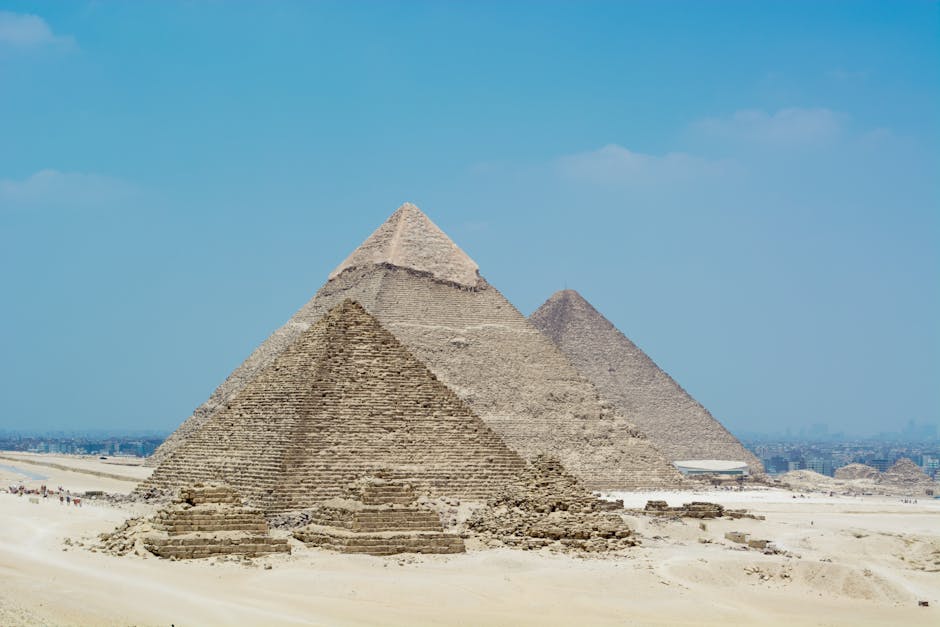
The iconic pyramids of Egypt stand today as weathered monuments of golden-brown limestone, blending seamlessly with the desert sands that surround them. However, these ancient structures once presented a dramatically different appearance. When first completed over 4,500 years ago, the Great Pyramids gleamed brilliant white under the Egyptian sun, their polished limestone casing creating a spectacle that would have been visible for miles across the landscape.
The Brilliant White Casing of Ancient Egypt
The pyramids were originally covered in highly polished white limestone casing stones, known as Tura limestone, quarried from the hills across the Nile River. These casing stones were cut with remarkable precision, fitted together so tightly that a blade could not be inserted between them. The outer surface was polished to a mirror-like finish, creating a smooth, gleaming white façade that reflected the intense Egyptian sunlight with dazzling brilliance.
Historical accounts from ancient travelers and scholars confirm this spectacular appearance. Arab historian Abd al-Latif al-Baghdadi, who visited the pyramids in the 12th century, described the casing stones as being so smooth and precisely fitted that they appeared as though the entire structure was carved from a single piece of stone. The surfaces were so polished that they could reflect light like mirrors, and it was nearly impossible to insert even a thin blade between the stones.
The Magnificent Capstone
Adding to their splendor, many pyramids were crowned with a pyramidion or capstone, often made of granite, limestone, or even covered in electrum—a naturally occurring alloy of gold and silver. The Great Pyramid of Khufu is believed to have had such a capstone, which would have caught the first and last rays of the sun each day, creating a beacon visible from vast distances. This golden or silver point atop the brilliant white structure would have made the pyramid appear as a monumental sundial and a symbol of divine power connecting earth to the heavens.
What Happened to the White Limestone?
The transformation from brilliant white monuments to the stepped, brownish structures we see today occurred gradually over millennia. The primary cause was human activity rather than natural erosion. The fine white Tura limestone casing stones were highly prized building materials, and over centuries, they were systematically removed and repurposed for other construction projects.
This process of stone removal accelerated significantly during the Middle Ages. Following a major earthquake in 1303 CE that loosened many of the casing stones, Cairo's rulers ordered the removal of the limestone blocks to rebuild mosques, fortresses, and other structures throughout the city. The famous Mosque of Sultan Hassan in Cairo, completed in 1363, was constructed partly using limestone stripped from the pyramids.
Timeline of Deterioration
- Ancient Period: The pyramids maintained their white casing throughout most of ancient Egyptian civilization
- Medieval Era: Systematic removal began, particularly after the 1303 earthquake
- 14th-15th Centuries: Massive quantities of casing stones were harvested for Cairo's building projects
- Modern Era: Only small sections of original casing remain visible today
Evidence That Remains Today
While the Great Pyramid of Khufu has lost nearly all its casing stones, small sections remain near the base, offering glimpses of the pyramid's original appearance. These surviving blocks demonstrate the incredible craftsmanship of ancient Egyptian masons, with their smooth surfaces and precise angles still impressive after thousands of years.
The Pyramid of Khafre retains a more substantial portion of its original casing near its apex, providing clear evidence of how all the pyramids once appeared. This preserved section of white limestone stands in stark contrast to the rough, stepped appearance of the exposed core blocks below, illustrating the dramatic transformation these monuments have undergone.
The Pyramid of Menkaure, the smallest of the three main Giza pyramids, also preserves some of its original casing stones, including sections of red granite that covered the lower portion of the structure, demonstrating that some pyramids featured multiple colors in their original design.
The Original Visual Impact
Reconstructing the original appearance of the pyramids in their gleaming white glory helps us understand their intended impact on ancient viewers. These structures were not merely tombs but powerful symbols of pharaonic authority and religious significance. The brilliant white surfaces would have made the pyramids visible from extraordinary distances, dominating the landscape and serving as constant reminders of the pharaoh's power and divine connection.
During certain times of day, particularly at sunrise and sunset, the reflected light from the polished limestone would have created an almost supernatural glow. Ancient Egyptians associated this brilliant whiteness with purity and divinity, making the pyramids literal beacons of the pharaoh's divine nature and eternal presence.
Scientific Analysis and Modern Understanding
Modern archaeological and geological studies have provided detailed information about the original construction and appearance of the pyramids. Analysis of the surviving casing stones has revealed the sophisticated techniques used to achieve such smooth, reflective surfaces. Researchers have determined that the ancient Egyptians used copper and bronze tools, along with sand and water, to polish the limestone to its mirror-like finish.
Chemical analysis of the Tura limestone has also helped scientists understand why this particular stone was chosen. Its fine grain and uniform composition made it ideal for achieving the desired smooth finish, while its brilliant white color when freshly cut and polished created the striking appearance that the pyramid builders sought.
Cultural and Historical Significance
Understanding that the pyramids were originally white fundamentally changes our perception of these ancient monuments. They were not designed to blend with the desert but to stand apart from it—brilliant, gleaming structures that dominated the landscape and proclaimed the power and eternal nature of the pharaohs. This knowledge enriches our appreciation of ancient Egyptian engineering, aesthetics, and the symbolic importance these structures held in their society.
The loss of the white casing also serves as a reminder of how monuments can be transformed over time, not just by natural processes but by human actions and changing cultural values. What ancient Egyptians built to last for eternity became, in later centuries, a convenient quarry for building materials, fundamentally altering these iconic structures forever.