











1 / 10 Questions
0 Points

Melted Chocolate In A Scientist's Pocket Invented Which Appliance?

Microwave oven

Toaster

Blender

Coffee maker

Points won
0
Correct score
0%

More Quizzes

More Articles

Experiments That Changed Scientific Thinking

Experiments That Changed Scientific Thinking

⏱️ 5 min read

Throughout history, certain experiments have fundamentally altered our understanding of the natural world and revolutionized scientific thinking. These pivotal moments not only answered critical questions but often challenged prevailing beliefs and opened entirely new fields of inquiry. The scientific method itself has been refined and validated through these groundbreaking investigations, demonstrating the power of empirical observation and rigorous testing.

The Michelson-Morley Experiment and the Nature of Light

In 1887, Albert Michelson and Edward Morley conducted what is often called the most famous "failed" experiment in physics. Scientists at the time believed that light waves traveled through an invisible medium called the "luminiferous ether" that permeated all space. The experiment used an interferometer to detect differences in the speed of light traveling in different directions as Earth moved through this supposed ether.

The unexpected result was that no difference could be detected—light traveled at the same speed regardless of Earth's motion. This null result baffled the scientific community and ultimately contributed to Einstein's development of special relativity in 1905. The experiment demonstrated that the ether did not exist and that the speed of light is constant in all reference frames, fundamentally reshaping our understanding of space and time.

Galileo's Inclined Plane Experiments

Galileo Galilei's systematic experiments with inclined planes in the early 17th century marked a turning point in how science was conducted. Rather than relying solely on philosophical reasoning, as Aristotle had done, Galileo performed careful measurements and mathematical analysis. By rolling balls down inclined planes at various angles, he discovered the laws of uniformly accelerated motion.

These experiments revealed that all objects fall at the same rate regardless of their mass, contradicting Aristotelian physics that had dominated for nearly 2,000 years. Galileo's work established the importance of quantitative experimentation and mathematical description in physics, laying the groundwork for the scientific revolution and Newton's laws of motion.

The Double-Slit Experiment and Quantum Mechanics

Thomas Young's original double-slit experiment in 1801 demonstrated that light behaves as a wave, creating interference patterns when passed through two narrow slits. However, when the experiment was later performed with individual photons and electrons in the 20th century, it revealed something far more profound and puzzling.

The quantum version showed that individual particles create an interference pattern over time, suggesting they somehow pass through both slits simultaneously. Even more mysteriously, when detectors are placed to observe which slit the particle goes through, the interference pattern disappears. This experiment illustrated several fundamental quantum mechanical principles:

  • Wave-particle duality: matter and energy exhibit both wave and particle properties
  • The observer effect: the act of measurement affects the system being observed
  • Quantum superposition: particles exist in multiple states until measured
  • Quantum indeterminacy: there are fundamental limits to what can be known simultaneously

This experiment continues to challenge our intuitive understanding of reality and remains central to debates about the interpretation of quantum mechanics.

Pasteur's Swan-Neck Flask Experiment

In 1859, Louis Pasteur designed an elegant experiment that definitively disproved the theory of spontaneous generation—the belief that living organisms could arise from non-living matter. He created special flasks with long, curved necks that allowed air to enter but trapped airborne particles in the curve.

Pasteur boiled broth in these flasks and left them exposed to air. The broth remained sterile indefinitely, but when he tilted the flask to allow the trapped particles to reach the broth, microbial growth occurred rapidly. This demonstrated that microorganisms came from other microorganisms in the air, not from the broth itself. The experiment established the germ theory of disease and revolutionized medicine, food preservation, and our understanding of biology.

Rutherford's Gold Foil Experiment

In 1909, Ernest Rutherford and his colleagues Hans Geiger and Ernest Marsden conducted an experiment that completely overturned the prevailing model of atomic structure. They fired alpha particles at a thin sheet of gold foil and observed the scattering patterns on a fluorescent screen.

According to the "plum pudding model" of the time, which proposed that atoms were diffuse spheres of positive charge with electrons embedded within, the alpha particles should have passed through with minimal deflection. Instead, while most particles went straight through, some were deflected at large angles, and a few even bounced straight back.

Rutherford famously remarked that this was "as if you had fired a 15-inch shell at a piece of tissue paper and it came back and hit you." This led to the nuclear model of the atom, with a tiny, dense, positively charged nucleus surrounded by mostly empty space where electrons orbit. This discovery fundamentally changed atomic physics and chemistry.

Pavlov's Classical Conditioning Experiments

Ivan Pavlov's experiments with dogs in the 1890s revolutionized psychology and our understanding of learning. While studying digestion, he noticed that dogs began salivating before food was presented, merely at the sight of lab assistants who normally fed them. This led him to systematically investigate conditioned responses.

By pairing a neutral stimulus (a bell) with food repeatedly, Pavlov demonstrated that dogs could be trained to salivate at the sound of the bell alone. This established the principle of classical conditioning and showed that complex behaviors could be understood through measurable, mechanical processes. His work influenced behaviorism, learning theory, and therapeutic techniques still used today.

The Lasting Impact of Paradigm-Shifting Experiments

These experiments share common characteristics: they challenged established thinking, employed rigorous methodology, and produced results that demanded new theoretical frameworks. They demonstrate that scientific progress often comes not from confirming what we think we know, but from being open to unexpected results that force us to reconsider fundamental assumptions. The legacy of these experiments continues to influence research methodology and reminds us that the most important scientific discoveries often come from questioning what seems obviously true.
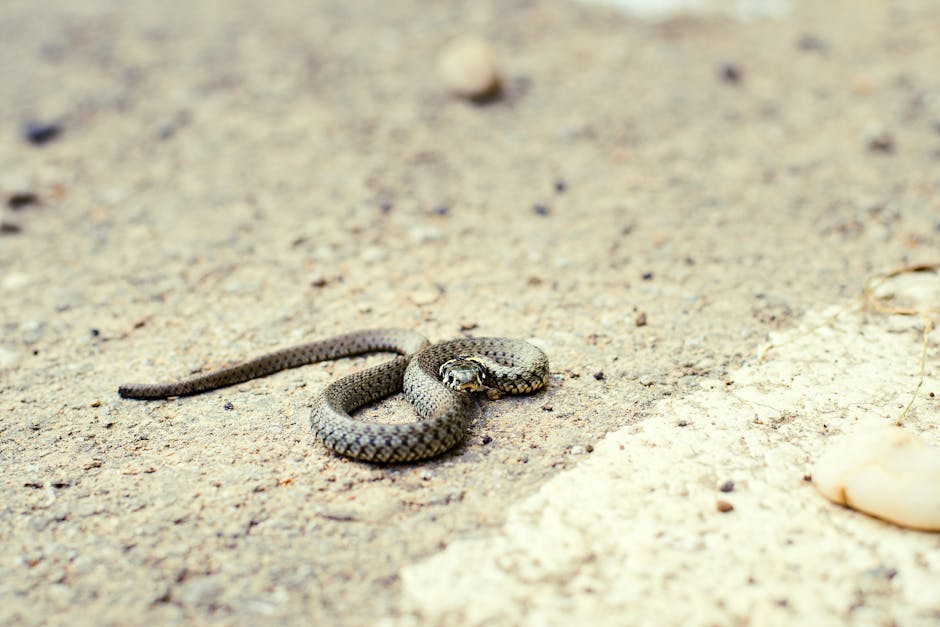
How to Treat a Snake Bite in the Wild

How to Treat a Snake Bite in the Wild

⏱️ 5 min read

When venturing into wilderness areas, understanding proper snake bite treatment can mean the difference between life and death. Venomous snake bites occur thousands of times each year in remote locations, and knowing how to respond immediately while arranging evacuation is crucial for survival. Contrary to popular media depictions, treating a snake bite requires specific knowledge and careful action rather than dramatic interventions that can cause more harm than good.

Recognizing Venomous Snake Bites

The first critical step in treating a snake bite is determining whether the snake was venomous. In North America, venomous snakes include rattlesnakes, copperheads, cottonmouths, and coral snakes. Venomous bites typically present with immediate, intense pain at the bite site, followed by rapid swelling and discoloration. Two distinct puncture marks are often visible, though not always. The victim may experience nausea, difficulty breathing, numbness around the face and mouth, and changes in vision within minutes to hours after the bite.

Non-venomous snake bites generally cause minor puncture wounds or scratches without significant swelling or systemic symptoms. However, all snake bites should be treated seriously due to infection risk and the possibility of misidentification in stressful situations.

Immediate Actions Following a Snake Bite

The moments immediately following a snake bite are critical for the victim's survival outcome. First, move away from the snake to prevent additional strikes, but maintain a safe distance where the snake can still be observed if possible. Identifying the snake species helps medical professionals determine appropriate treatment, but never attempt to capture or kill the snake, as this creates additional risk for secondary bites.

Keep the victim calm and still. Physical activity and elevated heart rate increase the circulation of venom throughout the body. Have the victim sit or lie down immediately, positioning the bitten extremity below heart level if possible. Remove any jewelry, watches, or tight clothing near the bite site before swelling begins, as these items can constrict blood flow and cause severe complications.

Critical Treatment Steps in the Field

Proper field treatment focuses on slowing venom spread and preventing complications while evacuating to medical facilities. Clean the wound gently with soap and water if available, or with clean water alone. Apply a clean, dry dressing to the bite area. If the bite is on an arm or leg, create a splint to immobilize the limb, which helps reduce venom circulation through decreased muscle movement.

For certain snake species in Australia and some other regions, pressure immobilization technique is recommended, but this method is NOT appropriate for North American pit viper bites. The treatment protocols vary significantly based on snake type and geographic location, making regional knowledge essential for wilderness travelers.

Monitoring Vital Signs

Continuously monitor the victim's vital signs including pulse, breathing rate, and consciousness level. Watch for signs of shock, including pale or clammy skin, rapid pulse, shallow breathing, and confusion. Note the progression of swelling by marking its edge on the skin with a pen every fifteen minutes, which provides valuable information to medical personnel about venom spread rate.

Dangerous Myths and Practices to Avoid

Numerous folk remedies and outdated practices for snake bite treatment persist despite medical evidence proving their harm. Understanding what NOT to do is equally important as knowing proper treatment protocols.

  • Never apply a tourniquet, as this can cause tissue death and limb loss
  • Do not cut the wound or attempt to suck out venom, which causes additional tissue damage and infection risk
  • Avoid applying ice or cold packs, which can worsen tissue damage
  • Never give the victim alcohol, caffeine, or pain medications without medical guidance
  • Do not use electric shock therapy, which is ineffective and dangerous
  • Avoid letting the victim eat or drink anything, as surgery may be required

Evacuation Protocols and Medical Transport

Getting the victim to professional medical care is the primary goal of wilderness snake bite treatment. All venomous snake bites require hospital evaluation, even if symptoms seem mild initially. Venom effects can develop over many hours, and antivenom administration is most effective when given early.

If possible, carry the victim rather than having them walk, as movement increases venom circulation. In remote areas, activate emergency services immediately using satellite phones, emergency beacons, or sending runners for help. Provide dispatchers with precise location information, victim status, and snake description if available.

Helicopter Evacuation Considerations

In serious cases involving respiratory distress, severe swelling, or altered consciousness, helicopter evacuation may be necessary. Identify suitable landing zones away from trees, power lines, and steep terrain. Use bright materials or signal mirrors to mark the location, and prepare to communicate with rescue personnel via radio or phone.

Prevention Strategies for Snake Encounters

Preventing snake bites is far preferable to treating them. When traveling through snake habitat, wear sturdy boots and long pants. Watch where you place hands and feet, especially when climbing over rocks or logs. Use a walking stick to probe ahead on trails and make noise while hiking, as most snakes will retreat from vibrations.

Never reach into holes, under rocks, or into hollow logs without visual confirmation of contents. At campsites, shake out sleeping bags and check shoes before use. Keep tents zipped and use ground tarps to create barriers. Avoid hiking at dawn, dusk, or night when many venomous snakes are most active.

Preparing for Wilderness Travel in Snake Country

Proper preparation significantly improves outcomes if snake bites occur. Carry a comprehensive first aid kit including sterile dressings, bandages, and splinting materials. Take a wilderness first aid course that includes snake bite treatment specific to your region. Research the venomous snake species in your destination area and understand their habits and appearance. Ensure your group has reliable communication devices and evacuation insurance for remote areas. By combining prevention knowledge, proper field treatment, and rapid evacuation planning, wilderness travelers can confidently manage snake bite emergencies while minimizing risks and complications.