




1 / 10 Questions
0 Points

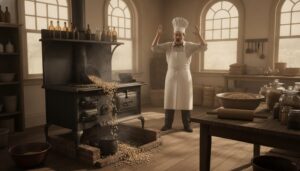
Which Breakfast Cereal Was Born From A Sanitarium Kitchen Accident?

Cheerios

Rice Krispies

Corn Flakes

Shredded Wheat

Points won
0
Correct score
0%

More Quizzes

More Articles

Scientific Breakthroughs That Started as Failures

Scientific Breakthroughs That Started as Failures

⏱️ 5 min read

The path to scientific discovery is rarely linear. Throughout history, some of the most significant breakthroughs emerged from experiments gone wrong, accidental observations, and results that initially seemed like complete failures. These serendipitous moments remind us that persistence, curiosity, and the willingness to look beyond expected outcomes often lead to revolutionary advances that transform our understanding of the world.

Penicillin: From Contaminated Petri Dishes to Life-Saving Medicine

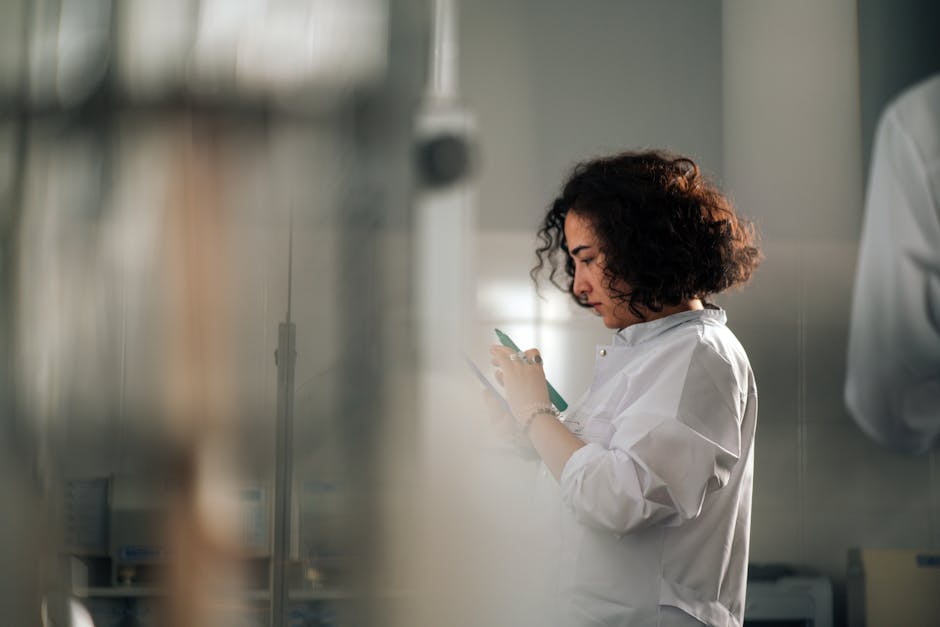
In 1928, bacteriologist Alexander Fleming returned from vacation to find his laboratory in disarray. One of his petri dishes containing Staphylococcus bacteria had been accidentally contaminated by mold. Rather than simply discarding the ruined experiment, Fleming noticed something remarkable: the bacteria surrounding the mold had been destroyed. This contamination, which would have been considered a failure by most standards, led to the discovery of penicillin, the world's first widely used antibiotic.

Fleming's observation revolutionized medicine and has saved countless millions of lives since its development. The discovery earned him the Nobel Prize in Physiology or Medicine in 1945, shared with Howard Florey and Ernst Boris Chain, who developed methods for mass-producing the antibiotic. What began as laboratory negligence became one of the most important medical breakthroughs of the 20th century.

The Microwave Oven: A Melted Chocolate Bar Changes Kitchen Technology

Percy Spencer, an engineer working for Raytheon in 1945, was conducting routine tests on a magnetron, a vacuum tube that generates microwave radiation for radar systems. During his work, he noticed that a chocolate bar in his pocket had melted. Rather than attributing this to body heat alone, Spencer's curiosity led him to investigate further.

He began experimenting with other foods, placing popcorn kernels and an egg near the magnetron. The popcorn popped, and the egg exploded. Spencer realized that microwave radiation could rapidly heat food, leading to the development of the microwave oven. This accidental discovery transformed food preparation worldwide and demonstrated how military technology could be repurposed for civilian applications.

Viagra: From Heart Medication to Blockbuster Drug

Pharmaceutical researchers at Pfizer in the early 1990s were developing a compound called sildenafil citrate, intended to treat angina and high blood pressure by improving blood flow to the heart. Clinical trials showed disappointing results for its intended purpose, and the drug appeared to be a failure. However, researchers noticed an unusual side effect reported by male participants.

The drug was causing increased blood flow in other areas of the body, leading to its eventual approval in 1998 as Viagra, the first oral treatment for erectile dysfunction. This "failed" heart medication became one of the most commercially successful drugs in pharmaceutical history, generating billions in revenue and helping millions of people worldwide.

Post-It Notes: When Weak Adhesive Becomes a Strength

In 1968, Dr. Spencer Silver, a scientist at 3M, was attempting to develop a super-strong adhesive. Instead, he created a weak, pressure-sensitive adhesive that could stick to surfaces but be easily removed without leaving residue. For years, this seemed like a useless failure with no practical application.

The breakthrough came in 1974 when Silver's colleague, Art Fry, was frustrated with bookmarks falling out of his hymnal during choir practice. He remembered Silver's weak adhesive and realized it could create repositionable bookmarks. This connection between a failed experiment and a practical problem led to the creation of Post-It Notes, which launched nationally in 1980 and became an indispensable office supply worldwide.

Saccharin: The Sweet Taste of Accidental Discovery

In 1879, chemist Constantin Fahlberg was researching coal tar derivatives at Johns Hopkins University. After a long day in the laboratory, he went home for dinner without thoroughly washing his hands—a dangerous practice by today's standards. He noticed that his bread tasted unusually sweet and traced the sweetness back to a chemical compound on his unwashed hands.

Fahlberg had accidentally discovered saccharin, the first artificial sweetener. This laboratory mistake led to a product that would benefit millions of people, particularly diabetics seeking sugar alternatives. Saccharin became especially important during World Wars I and II when sugar was rationed.

Pacemakers: An Oscillator Mistake Saves Hearts

In 1956, Wilson Greatbatch was building an oscillator to record heart rhythms when he pulled the wrong resistor from a box and installed it in the circuit. Instead of recording rhythms, the device produced electrical pulses that mimicked the human heartbeat. Greatbatch immediately recognized the potential medical application of his mistake.

He spent the next two years developing the first implantable cardiac pacemaker. His accidental discovery has extended and improved the lives of millions of people with heart rhythm disorders. The modern pacemaker industry exists because an engineer grabbed the wrong component from his parts box.

Lessons from Failure: The Importance of Observation and Flexibility

These examples illustrate several crucial principles in scientific research:

  • Unexpected results deserve investigation rather than immediate dismissal
  • Maintaining curiosity about anomalies can lead to breakthrough discoveries
  • Failure in one context may represent success in another
  • Preparation and knowledge enable scientists to recognize opportunities when accidents occur
  • Persistence and willingness to explore tangential paths often yield unexpected rewards

The history of science demonstrates that rigid adherence to original hypotheses and planned outcomes can blind researchers to potentially revolutionary discoveries. The most successful scientists maintain intellectual flexibility, allowing them to recognize significance in unexpected places. These accidental breakthroughs continue to inspire researchers to remain open-minded, document unusual observations, and understand that today's failure might be tomorrow's world-changing discovery.
The Real Story Behind the First Thanksgiving

The Real Story Behind the First Thanksgiving

⏱️ 9 min read

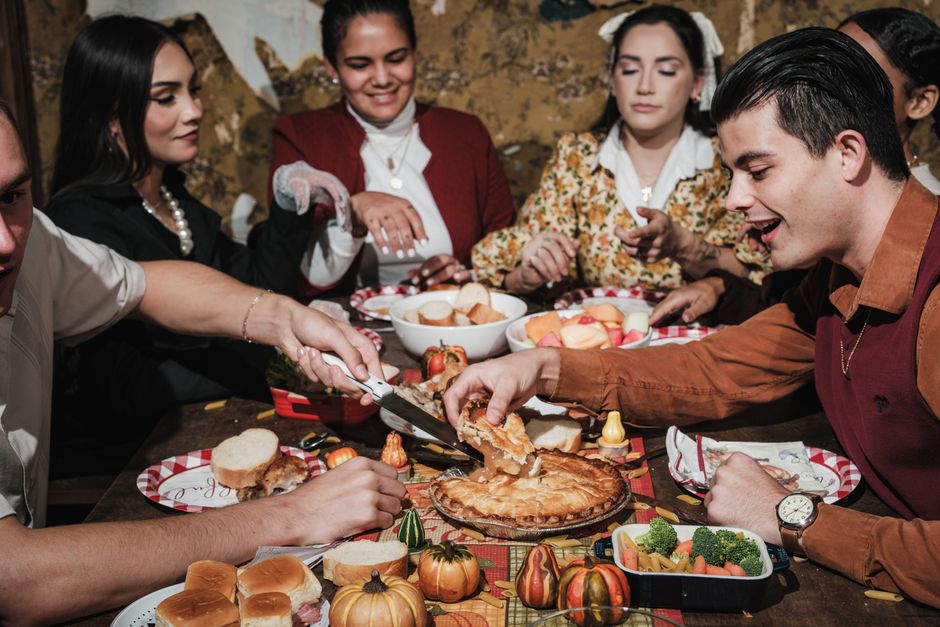
Most Americans picture the first Thanksgiving as a peaceful celebration between Pilgrims and Native Americans in 1621, complete with turkey, cranberries, and pumpkin pie. While a feast did occur that autumn in Plymouth Colony, the historical reality differs dramatically from the Norman Rockwell imagery embedded in our cultural memory. The event we now commemorate annually was actually a three-day harvest festival attended by approximately 90 Wampanoag men and only 53 English colonists, featuring foods like venison, seafowl, and eels rather than the traditional fare on modern tables.

Quick Facts

  • The 1621 harvest celebration lasted three days and included approximately 90 Wampanoag people and 53 English settlers
  • Turkey may not have been served; documented foods included venison, waterfowl, fish, and shellfish
  • The feast wasn't called "Thanksgiving" by participants and wasn't repeated as an annual tradition
  • President Abraham Lincoln established the modern national holiday in 1863, over 240 years after the original event
  • The Wampanoag provided five deer and likely contributed the majority of the food served

The Political Alliance Behind the Feast

The gathering in autumn 1621 emerged from a complex political alliance rather than simple neighborly goodwill. When the Mayflower passengers arrived in December 1620, they established their settlement on Patuxet, a Wampanoag village that had been completely devastated by disease between 1616 and 1619. The epidemic, likely introduced by earlier European explorers, had killed an estimated 90 percent of the coastal Native population in southern New England.

Massasoit, the sachem (political leader) of the Wampanoag Confederacy, faced a strategic dilemma. His people had been severely weakened by disease, and rival tribes—particularly the Narragansett to the west—posed a military threat. In March 1621, Massasoit negotiated a mutual defense treaty with the Plymouth colonists. This alliance offered the Wampanoag protection against their enemies while providing the struggling English settlers with crucial agricultural knowledge and access to trade networks.

The harvest celebration occurred within this framework of political calculation. Edward Winslow, one of only two firsthand accounts we possess, wrote that the colonists conducted military exercises during the festivities, firing weapons to demonstrate their strength. When Massasoit heard the gunfire, he arrived with 90 men—a show of force that roughly doubled the population of Plymouth for three days. This wasn't the intimate dinner party depicted in later artwork; it was a diplomatic gathering where both parties negotiated power dynamics.

What Was Actually on the Menu

Contemporary accounts and archaeological evidence paint a menu vastly different from modern Thanksgiving dinner. Winslow recorded that Governor William Bradford sent four men on a "fowling" expedition, and the Wampanoag contributed five deer. The waterfowl would likely have been ducks, geese, and swans rather than turkey, though wild turkeys native to the region may have been included.

The colonists had successfully cultivated barley and peas but noted their corn harvest was modest. Wheat had failed entirely. They had no potatoes—which hadn't yet been introduced to North America from South America—and no cranberry sauce, as sugar was a rare luxury. Pumpkin pie wasn't possible without wheat flour, butter, and an oven, though the colonists did consume pumpkin and squash, likely boiled or roasted.

Seafood dominated the Plymouth diet. Archaeological excavations at Plymouth Colony sites have uncovered vast quantities of fish bones, shellfish remains, and evidence of eel consumption. The colonists' writings confirm they regularly ate cod, bass, and shellfish including mussels, lobsters, and clams. Chestnuts, walnuts, and beechnuts gathered from surrounding forests probably appeared at the feast. Corn was prepared in Native American styles, including a porridge the English called "samp."

The cooking methods bore little resemblance to modern techniques. Without ovens, foods were roasted on spits over fires, boiled in kettles, or stewed in pottage—a thick soup that was a European staple. The Wampanoag likely prepared venison in their traditional methods, possibly including nasaump (cornmeal porridge with dried fruit) and sobaheg (a stew of meat and vegetables).

The Wampanoag Perspective

For the Wampanoag, harvest celebrations were traditional and frequent, not unprecedented events. They held at least six thanksgiving ceremonies throughout the year to honor the Creator and mark seasonal changes. Their participation in the 1621 feast reflected diplomatic protocol—Massasoit was honoring an alliance and maintaining the relationship that served his people's strategic interests.

Tisquantum, known to the English as Squanto, played a complex role that historians still debate. A Patuxet man who had been kidnapped by English explorers in 1614, sold into slavery in Spain, escaped to England, and finally returned to find his entire village dead, Tisquantum served as interpreter and agricultural advisor to the Plymouth colonists. Some historians argue he manipulated both sides to enhance his own power, reportedly telling other Native groups that he controlled English weapons and could unleash plague.

The Wampanoag today emphasize that the 1621 gathering preceded decades of devastating conflict. King Philip's War (1675-1678), named for Massasoit's son Metacom, resulted in the deaths of approximately 40 percent of the remaining Native population in southern New England and effectively ended indigenous sovereignty in the region. Many Wampanoag observe the modern Thanksgiving as a National Day of Mourning, gathering in Plymouth since 1970 to remember their ancestors and the subsequent history of colonization.

How the Modern Holiday Emerged

The 1621 feast wasn't repeated the following year and didn't establish an ongoing tradition. The Pilgrims observed religious days of thanksgiving irregularly, usually as solemn prayer days rather than feasts. Different colonies and states proclaimed thanksgiving days sporadically, often to mark military victories or other specific events.

Sarah Josepha Hale, editor of the influential magazine Godey's Lady's Book, campaigned for 17 years to establish a national Thanksgiving holiday. She wrote editorials and sent letters to governors and presidents, arguing that a unified celebration would help heal sectional divisions. President Abraham Lincoln finally proclaimed a national Thanksgiving Day in October 1863, during the Civil War, designating the last Thursday in November.

The modern mythology largely developed in the 19th and early 20th centuries. In 1841, Reverend Alexander Young published a collection of historical documents and added a footnote describing the 1621 gathering as "the first Thanksgiving." Victorian-era paintings depicted Pilgrims and Native Americans sharing an elaborate meal at formal tables—images contradicted by historical evidence but powerful in shaping public imagination. These romanticized depictions served nationalistic purposes, creating an origin story of cross-cultural harmony while obscuring the violence and displacement that characterized much of colonial history.

President Franklin D. Roosevelt moved the holiday to the fourth Thursday in November in 1939 to extend the Christmas shopping season, though Congress didn't make this change permanent until 1941. The National Football League established Thanksgiving games as a tradition, and Macy's Thanksgiving Day Parade, begun in 1924, became a cultural fixture. Each addition layered new meanings onto the holiday, further distancing it from the historical event.

Archaeological and Documentary Evidence

Only two primary sources describe the 1621 event: a passage in Edward Winslow's letter "Mourt's Relation" published in 1622, and a brief mention in William Bradford's journal "Of Plymouth Plantation," written between 1630 and 1651 but not published until 1856. Winslow's account totals merely 115 words describing the celebration. Neither author used the word "Thanksgiving," and both devoted far more text to other concerns like agriculture, trade, and relations with various Native groups.

Archaeological work at Plymouth Plantation and Wampanoag sites has provided material evidence to supplement sparse written records. Excavations have revealed food remains, cooking implements, and architectural details that help historians understand daily life. Analysis of fish bones, for instance, demonstrates that cod made up approximately 60 percent of the colonists' protein intake during their first year, information absent from written accounts.

Wampanoag oral history, passed through generations, offers perspectives not captured in colonial documents. These traditions emphasize the initial cooperation but also preserve memories of what followed: disease, land loss, warfare, and cultural suppression. Contemporary Wampanoag scholars work to ensure their ancestors' perspectives inform public understanding of this history.

Frequently Asked Questions

Did the Pilgrims and Wampanoag actually eat turkey at the first Thanksgiving?

While wild turkey was native to the region and may have been consumed, the only documented foods were waterfowl (likely ducks and geese), venison, fish, and shellfish. Turkey became associated with Thanksgiving much later, as it was domesticated and more widely available by the 19th century when the holiday became formalized.

Why did the first Thanksgiving last three days instead of one?

The extended celebration reflected both Wampanoag harvest festival traditions, which typically lasted several days, and the practical reality that preparing food for 140 people without modern conveniences required significant time. The gathering also served diplomatic purposes, allowing both groups to demonstrate strength and negotiate their ongoing alliance.

How many years passed before Thanksgiving became a regular holiday?

The 1621 feast wasn't repeated annually, and 242 years elapsed before President Lincoln proclaimed a national Thanksgiving in 1863. Various colonies and states observed occasional thanksgiving days throughout this period, but no consistent, nationwide tradition existed until the Civil War era.

What is the Wampanoag perspective on modern Thanksgiving celebrations?

Many Wampanoag observe Thanksgiving as a National Day of Mourning, gathering in Plymouth since 1970 to honor ancestors and acknowledge the colonization, disease, and warfare that followed the 1621 feast. The tribe emphasizes educating the public about accurate history while maintaining their own cultural traditions and sovereignty.

Key Takeaways

  • The 1621 harvest celebration was a diplomatic gathering within a military alliance, not the peaceful multicultural feast of popular imagination, involving 90 Wampanoag and 53 colonists over three days
  • Documented foods included venison, waterfowl, fish, and shellfish, with no turkey, potatoes, cranberry sauce, or pumpkin pie—staples that entered the tradition centuries later
  • The modern Thanksgiving holiday emerged from 19th-century nation-building efforts, particularly Sarah Josepha Hale's 17-year campaign and Lincoln's 1863 proclamation during the Civil War
  • Understanding the complex historical reality—including the Wampanoag perspective and the devastating conflicts that followed—provides a more complete and honest picture than simplified traditional narratives