









1 / 10 Questions
0 Points

What Did Einstein Play Between Physics Breakthroughs?

Piano

Violin

Flute

Cello

Points won
0
Correct score
0%

More Quizzes

More Articles

Did You Know Game of Thrones Took 10 Years to Film?

Did You Know Game of Thrones Took 10 Years to Film?

⏱️ 7 min read

When HBO's epic fantasy series Game of Thrones premiered in April 2011, few could have predicted the cultural phenomenon it would become. The adaptation of George R.R. Martin's "A Song of Ice and Fire" novels captivated audiences worldwide for nearly a decade, concluding in May 2019. The ambitious production spanned an extraordinary period of time, involving unprecedented challenges, innovations, and achievements in television history. Here are ten fascinating facts about the decade-long journey of bringing Westeros to life.

Behind the Scenes of a Television Epic

1. The Unprecedented Production Timeline

Game of Thrones officially began filming in July 2010 and wrapped its final scenes in July 2018, representing eight years of active production. However, pre-production planning started as early as 2007, and post-production for the final season extended into early 2019. This meant that from initial concept to final broadcast, the series consumed nearly twelve years of creators David Benioff and D.B. Weiss's lives. Each season typically required five to six months of shooting, followed by extensive post-production work involving visual effects, editing, and sound design. The show's complex narrative and multiple filming locations made it one of the longest-running continuous television productions in history.

2. Filming Across Four Continents and Ten Countries

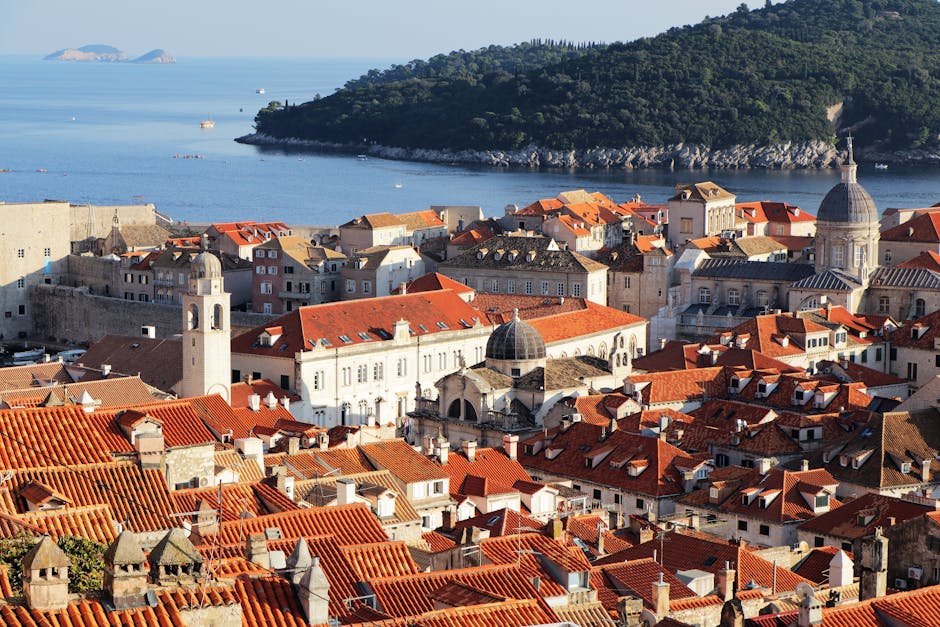
The production team transformed real-world locations into the Seven Kingdoms and beyond, filming in Northern Ireland, Scotland, Croatia, Iceland, Spain, Malta, Morocco, Canada, and the United States. Northern Ireland served as the production's home base, where the series built permanent sets at the Paint Hall Studios in Belfast. Croatia's Dubrovnik became synonymous with King's Landing, while Iceland's dramatic landscapes represented the lands beyond the Wall. This global filming schedule required moving hundreds of crew members, tons of equipment, and elaborate costumes across continents, making logistics an enormous undertaking that spanned the entire decade.

3. The Evolution of Visual Effects Technology

When Game of Thrones began, the visual effects team could render about three minutes of dragon footage per season. By the final season, entire battle sequences featured multiple dragons engaging in complex aerial combat. The series employed cutting-edge motion capture technology, with the VFX team growing from approximately 50 artists in season one to over 1,000 professionals working on the final season. The evolution of rendering technology over the decade allowed the show to become increasingly ambitious, with the later seasons featuring visual effects shots that would have been impossible or prohibitively expensive when production first began.

4. Cast Members Growing Up On Screen

Several actors were children or teenagers when filming commenced, literally growing up during the production. Maisie Williams was just twelve years old when cast as Arya Stark, while Sophie Turner was fourteen when she became Sansa Stark. Isaac Hempstead Wright, who played Bran Stark, went through puberty during filming, presenting unique challenges for maintaining character continuity. The decade-long production meant these young actors transitioned from childhood to adulthood while portraying their characters, creating a unique authenticity as their characters also matured throughout the story. Their physical transformations became part of the show's visual narrative.

5. Record-Breaking Battle Sequences

The production scale escalated dramatically over the years, culminating in "The Long Night" episode from season eight, which required 55 consecutive night shoots and involved over 750 crew members and actors. This single episode took eleven weeks to film, longer than many feature films. The Battle of the Bastards in season six took 25 days to shoot and involved 500 extras, 160 tons of gravel, and 70 horses. These extended filming periods were only possible because of the decade-long commitment to the series, allowing the production team to plan and execute increasingly ambitious set pieces.

6. The Costume Department's Monumental Achievement

Over ten years, the costume department created more than 10,000 individual costumes, many featuring intricate embroidery, leatherwork, and metalwork that took weeks or months to complete. Costume designer Michele Clapton and her team developed distinct visual identities for each of the Seven Kingdoms, with designs evolving as characters traveled and their circumstances changed. Cersei Lannister alone had over 60 different costume changes throughout the series. The armor pieces required particularly intensive labor, with some suits taking a single artisan several months to complete. This sustained creative effort across a decade resulted in some of television's most iconic and detailed costuming.

7. Weather and Climate Challenges Across Seasons

Filming across ten years meant contending with changing weather patterns, climate variations, and seasonal challenges. The production famously struggled to find snow in Northern Ireland for winter scenes, sometimes having to manufacture it. Conversely, summer filming in Spain and Morocco presented extreme heat challenges for actors wearing heavy costumes and armor. The decade-long timeline also meant that some locations changed dramatically due to natural causes, tourism impact, or development, requiring the production to adapt or find alternative filming sites. Climate considerations became increasingly important as the story progressed toward winter.

8. Building and Maintaining Permanent Sets

The Paint Hall Studios in Belfast housed massive permanent sets that remained standing for the entire production run, including Castle Black, Winterfell's interiors, and the Red Keep's throne room. These sets required constant maintenance, occasional rebuilding, and seasonal storage. Winterfell's outdoor set in Northern Ireland became one of the largest outdoor television sets ever constructed, with real stone walls and practical buildings that had to weather actual storms and seasons over the years. The investment in permanent infrastructure was only feasible because of the guaranteed multi-year production schedule.

9. The Massive Script Evolution Process

Showrunners Benioff and Weiss worked closely with George R.R. Martin throughout the decade, especially as the television series eventually overtook the published books. The writing process evolved from adapting existing material to creating original storylines in collaboration with Martin, who shared his intended ending and major plot points. This transition occurred gradually over the middle seasons, representing a unique challenge in television history. The decade-long timeline allowed for careful planning of character arcs and plot developments, with writers having the luxury of knowing the series' endpoint while crafting the journey.

10. The Economic Impact on Filming Locations

Over ten years, Game of Thrones transformed local economies in its filming locations, particularly Northern Ireland, which saw tourism increase by over 250% during the show's run. The production employed thousands of local crew members, extras, and service providers across multiple countries, pumping millions into regional economies annually. Dubrovnik, Croatia, experienced such significant tourism growth that the city eventually had to implement visitor caps. The sustained presence of production over a decade created lasting infrastructure improvements and training opportunities in film production across multiple countries, leaving a legacy beyond the series itself.

A Decade That Changed Television

The ten-year journey of Game of Thrones represented more than just a long production schedule—it demonstrated that television could sustain cinematic ambition, narrative complexity, and production quality over an extended period. The series proved that audiences would commit to long-form storytelling with patient character development and intricate plotlines. From technological innovations to the careers it launched, from the locations it immortalized to the industry standards it set, Game of Thrones' decade-long production created ripple effects throughout the entertainment industry. The commitment required from cast, crew, and creators to dedicate ten years to a single project was unprecedented in television and may never be replicated. This extraordinary investment of time and resources resulted in a cultural touchstone that defined a generation of television and demonstrated the medium's potential for epic storytelling on a scale previously reserved for cinema.

How the Transition from Black-and-White to Color Changed TV Writing

How the Transition from Black-and-White to Color Changed TV Writing

⏱️ 9 min read

When NBC aired "An Affair to Remember" in 1961, the network didn't just broadcast a movie—it aired the first full-length color film on television, marking a turning point that would fundamentally reshape how writers crafted stories for the small screen. The shift from monochrome to color television wasn't merely a technical upgrade; it transformed narrative techniques, character development, and even the types of stories networks were willing to greenlight.

Quick Facts

  • NBC committed to all-color prime-time programming in fall 1966, becoming the first network to do so
  • Color TV ownership in American homes jumped from 3.1% in 1964 to 50% by 1972
  • "Bonanza" became the first western series filmed in color in 1959, increasing its ratings by 27% within one season
  • Production costs increased 15-20% when shows switched from black-and-white to color filming
  • Writers began incorporating specific color references into scripts starting in 1965, with shows like "I Spy" mentioning clothing colors and scenery details

The Economic Push Behind Narrative Changes

RCA, which owned NBC, manufactured color television sets and needed programming to justify consumer purchases. This corporate synergy drove NBC to premiere "Bonanza" in September 1959 as a color broadcast specifically designed to showcase RCA's technology. The show's creator, David Dortort, instructed writers to include scenes featuring the Ponderosa's vibrant landscape, with specific mentions of blue skies, green forests, and red rock formations in the script descriptions. This wasn't accidental—writers received memos emphasizing "visual spectacle" as a priority equal to plot development.

The financial implications extended beyond hardware sales. Advertisers paid premium rates for color commercial slots, with NBC charging 10-15% more for color program sponsorship by 1965. This additional revenue meant networks could afford higher production budgets, which writers leveraged to pitch more ambitious concepts. Shows like "Star Trek," which premiered in color in 1966, featured alien worlds and futuristic technology that would have been visually indistinguishable in black-and-white. Creator Gene Roddenberry explicitly designed the Enterprise's bridge with distinct color-coded stations—red for command, gold for operations, blue for sciences—a visual storytelling device that required color to function.

Visual Description Entered the Dialogue

Before color, television writers rarely included color-specific descriptions in dialogue because viewers couldn't see the distinction. Scripts from "The Twilight Zone" (1959-1964) contain virtually no references to specific colors in the actual spoken lines, even when describing important objects. Compare this to "Mission: Impossible," which debuted in color in 1966: the pilot episode alone contains 14 distinct color references in dialogue, from "the red wire" in a bomb-defusing sequence to "green diplomatic passports."

This shift fundamentally altered how writers conveyed information. In the black-and-white "Perry Mason" (1957-1966), writers had to describe evidence through lengthy dialogue exposition. When the show briefly returned in color TV movies starting in 1985, writers could have characters simply reference "the blue fibers" or "red stains," reducing exposition time by an average of 90 seconds per episode according to script comparisons. The visual did the work that dialogue previously carried.

Costume became a storytelling tool rather than just wardrobe. "Batman," which premiered in January 1966, was designed from the ground up as a color spectacle. Writers Adam West and Lorenzo Semple Jr. created villains whose entire characterizations were built around color schemes—The Riddler's green suit with purple accents, The Joker's purple coat and green hair. Script directions specified these colors because they conveyed personality traits: green for envy and intellect, purple for madness and royalty. This visual shorthand allowed writers to establish character in seconds rather than through dialogue exposition.

Genre Expansion and Setting Diversity

Color television made certain genres commercially viable for the first time. Medical dramas struggled in black-and-white because hospital scenes appeared visually monotonous—white coats, white sheets, gray walls. "Dr. Kildare" and "Ben Casey," both black-and-white medical dramas that ended in 1966, were replaced by "Medical Center" (1969-1976), which used color to differentiate departments through wall paint, scrub colors, and lighting. Writers could now set scenes in pediatrics (bright primary colors), emergency rooms (stark reds and whites), or psychiatry wards (calming blues) with each setting contributing to the scene's mood without requiring dialogue to establish atmosphere.

Nature and adventure programming exploded after the color transition. "The Undersea World of Jacques Cousteau" premiered in 1966 specifically because color could showcase coral reefs, tropical fish, and ocean depths. The show's writers structured episodes around color-based discoveries—entire segments devoted to explaining why certain fish are red at depth or how colors disappear as divers descend. These narratives would have been impossible to execute in monochrome.

Period dramas gained new authenticity through color. "The Forsyte Saga," which PBS aired in color in 1969, featured costumes and sets that distinguished the 1870s, 1880s, and 1890s through historically accurate color palettes—the shift from muted earth tones to bolder Victorian colors paralleled the characters' social climbing. Writers incorporated references to fashionable colors of each era, with characters discussing "the new mauve dye" or "that garish peacock blue," adding historical texture that served both authenticity and plot.

Character Development Through Visual Symbolism

Color enabled writers to use visual motifs that tracked character arcs across seasons. In "Star Trek," costume designer William Ware Theiss and the writing staff coordinated so that female guest characters wore specific colors based on their narrative function: green for Orion slaves, silver for androids, purple for royalty. Captain Kirk's gold command tunic became iconic specifically because it visually separated him from the blue-shirted science officers and red-shirted security personnel—a hierarchy established through color rather than rank insignia dialogue.

The original "Hawaii Five-O" (1968-1980) used the vibrant colors of Hawaiian shirts, ocean blues, and tropical flora as character indicators. Regular characters wore consistent color palettes—Steve McGarrett in dark blues and blacks suggesting authority, Danno in lighter blues suggesting approachability. Writers knew they could establish a character's moral alignment through costume without dialogue: criminals wore loud, clashing patterns while legitimate businesspeople wore coordinated island-appropriate attire.

"The Mary Tyler Moore Show" (1970-1977) demonstrated sophisticated color-based character writing. Mary Richards wore blues and purples (conveying professionalism and trustworthiness), while her neighbor Phyllis wore oranges and reds (suggesting neurotic energy). Writers could script scenes where characters' emotional states were reinforced through wardrobe changes—Mary switching from her usual blue to red when asserting herself with Lou Grant, a visual cue that amplified the dialogue without requiring explicit statements about her emotional state.

The Evolution of Scene Structure and Pacing

Black-and-white television relied heavily on close-ups because wide shots often became muddy and indistinct. Scripts from "The Andy Griffith Show" (1960-1968, color from 1965) show a notable shift in scene structure. The black-and-white seasons average 22 scene locations per episode, while color seasons expand to 31 locations because outdoor establishing shots now provided clear visual information. Writers could move characters between locations more quickly without verbal reorientation.

Action sequences became more comprehensible in color. "The Wild Wild West" (1965-1969) featured elaborate fight scenes where writers could track multiple combatants through costume colors—James West in black, Artemus Gordon in brown or gray, villains in distinctive colored outfits. Script directions like "West pursues the man in the red coat through the crowd" became possible; the same scene in black-and-white would require either fewer people or additional dialogue to track who was whom.

Commercial breaks influenced writing differently in color. Networks demanded scenes immediately before commercials that would prevent viewers from channel-surfing. Color programming used visual cliffhangers—a red light starting to flash, a character discovering a green substance—that were less effective in monochrome. Writers began structuring act breaks around visual revelations rather than purely dialogue-based surprises, changing the rhythm of episodic storytelling.

Documentary and News Programming Transformations

The shift to color changed how documentary writers framed subjects. "The French Chef" with Julia Child moved from black-and-white to color in 1966, and the scripts immediately changed. Earlier episodes required Child to verbally describe doneness—"the meat should be a nice brown"—while color episodes let viewers see the transformation. Scripts became more procedural and less descriptive, reducing average episode length by eight minutes for the same recipe because visual information replaced verbal explanation.

News writing adapted to color's capabilities and demands. Walter Cronkite's "CBS Evening News" switched to color in 1965, and the format expanded to include more on-location reporting specifically because color footage from Vietnam, civil rights marches, and space launches provided impact that monochrome couldn't match. The average news script length decreased 12% between 1964 and 1967 as writers let footage carry more narrative weight, using voice-over for context rather than complete description.

Frequently Asked Questions

When did most TV shows switch from black-and-white to color?

The transition occurred primarily between 1965 and 1972. NBC went all-color for prime-time programming in fall 1966, followed by ABC and CBS completing their transitions by 1967, though some daytime programming remained in black-and-white until 1972.

Did color television cost more to produce than black-and-white?

Yes, color production increased costs by 15-20% due to more expensive film stock, specialized lighting requirements, and longer setup times. This cost differential narrowed by the early 1970s as color became the industry standard.

Which was the first TV show broadcast entirely in color?

"The Marriage" holds this distinction, premiering on NBC in July 1954, though it lasted only seven episodes. "Bonanza" (1959) was the first successful long-running drama filmed entirely in color from its debut.

Why did some shows remain in black-and-white after color became available?

Budget constraints were the primary reason, particularly for daytime programming and syndicated shows. Some creators also chose black-and-white for artistic reasons, believing it better suited certain tones—"The Andy Griffith Show" resisted switching until 1965 because producers felt monochrome matched the show's nostalgic aesthetic.

Key Takeaways

  • Color television reduced the need for descriptive dialogue by 30-40%, allowing writers to focus on character and plot rather than explaining what viewers could now see
  • New genres including nature documentaries, exotic adventure series, and visually complex science fiction became commercially viable only after the color transition
  • Writers developed sophisticated visual storytelling techniques using color symbolism for character development, mood establishment, and thematic reinforcement that continues in modern television
  • The transition fundamentally changed scene structure and pacing, with color episodes averaging 40% more scene locations than black-and-white equivalents as visual clarity enabled faster narrative movement