










1 / 10 Questions
0 Points

Mount Rushmore Was Originally Designed To Show Presidents Down To Where?

Heads to waists

Full bodies standing

Heads and shoulders

Just the heads

Points won
0
Correct score
0%

More Quizzes

More Articles

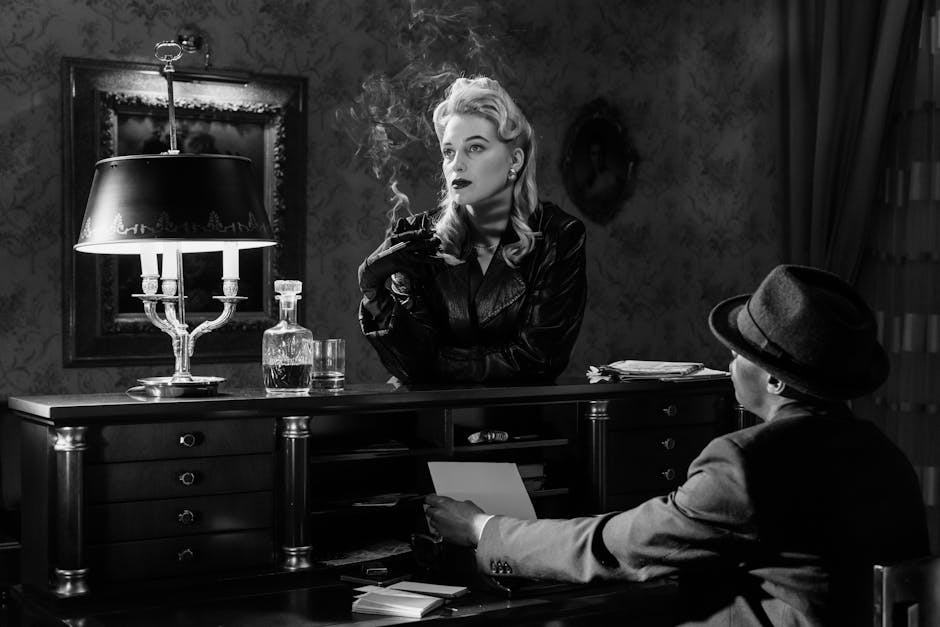
Films That Were Box Office Failures but Later Became Classics

Films That Were Box Office Failures but Later Became Classics

⏱️ 5 min read

The film industry has a long history of misjudging its own creations. Throughout cinema's evolution, numerous movies have opened to empty theaters, scathing reviews, and financial disasters, only to be rediscovered years or decades later as groundbreaking masterpieces. These late bloomers prove that commercial success and artistic merit don't always align, and that time can be the ultimate critic.

The Phenomenon of Delayed Recognition

Box office performance has traditionally been the primary metric for measuring a film's success in Hollywood. However, this immediate financial verdict often fails to account for innovation, cultural impact, or artistic vision that audiences may not be ready to embrace. Films that challenge conventions, introduce unfamiliar genres, or arrive at the wrong cultural moment frequently struggle to find their audience during initial release. The rise of home video, streaming platforms, repertory theaters, and film criticism communities has created new pathways for these overlooked works to find appreciation.

Iconic Science Fiction Failures

Science fiction cinema is particularly rich with examples of box office disappointments that later achieved classic status. "Blade Runner" (1982) stands as perhaps the most famous case study. Ridley Scott's neo-noir meditation on humanity and artificial intelligence earned only $33 million against its $28 million budget during its theatrical run. Audiences found it slow and confusing, while critics were divided. Today, it's considered one of the greatest science fiction films ever made, influencing countless filmmakers and spawning an entire subgenre of cyberpunk aesthetics.

"The Thing" (1982) suffered an even harsher fate. John Carpenter's paranoid horror masterpiece was released just two weeks after "E.T. the Extra-Terrestrial," and audiences rejected its bleak, nihilistic vision of alien contact. Critics called it disgusting and nihilistic. The film failed to recoup its budget theatrically, yet it has since been recognized as a pinnacle of practical effects work and psychological horror, regularly appearing on best-of lists.

Cult Comedies That Found Their Audience

"The Big Lebowski" (1998) earned a modest $46 million worldwide and received mixed reviews from critics who found it lesser Coen Brothers work. Two decades later, the film has inspired academic conferences, an annual festival called Lebowski Fest, and a devoted following that quotes its dialogue religiously. Its laid-back philosophy and quotable screenplay have made it a cultural touchstone for multiple generations.

"Office Space" (1999) barely made back its production budget during its theatrical run, earning just $12 million. Mike Judge's satire of corporate culture resonated deeply with audiences who discovered it on home video and cable television. The film's portrayal of workplace frustration became increasingly relevant as corporate culture evolved, turning phrases like "case of the Mondays" into common vernacular.

Visionary Directors and Misunderstood Art

"The Shawshank Redemption" (1994) has become synonymous with films that flopped theatrically but found immortality through other means. Despite critical acclaim and seven Academy Award nominations, the prison drama earned only $28 million domestically. Its title was considered unmarketable, and it faced competition from "Pulp Fiction" and "Forrest Gump." However, through cable television airings and word-of-mouth, it eventually became the highest-rated film on IMDb and is now considered one of cinema's greatest achievements.

"It's a Wonderful Life" (1946) lost money upon release and contributed to the bankruptcy of Liberty Films. Frank Capra's Christmas tale was considered overly sentimental and old-fashioned. Its transformation into a holiday staple occurred decades later when its copyright lapsed, allowing television stations to broadcast it freely during the 1970s and 1980s. This exposure turned it into an annual tradition and eventually a recognized masterpiece of American cinema.

Genre-Defining Disasters

"Fight Club" (1999) was a commercial disappointment that shocked studio executives who had invested $63 million in David Fincher's adaptation. It earned mixed reviews and struggled to find its audience amid controversy over its violent content. Home video sales and DVD releases allowed viewers to engage with its complex narrative structure and social commentary, transforming it into a defining film of late 1990s cinema and a touchstone for discussions about masculinity and consumerism.

"The Wizard of Oz" (1939) is now considered one of the greatest films ever made, but it initially failed to recoup its expensive production costs. While critically praised, the costly production of the Technicolor musical meant it didn't turn a profit during its first release. Only through re-releases and eventually television broadcasts did it become the beloved classic that defined childhood for generations.

The Role of Home Media and Streaming

The evolution of how audiences consume films has been crucial to the redemption of box office failures. VHS tapes, DVDs, and streaming platforms have democratized access to cinema, allowing films to find audiences far beyond their theatrical windows. This extended lifespan means that word-of-mouth can build over years rather than weeks, and niche audiences can discover films that might never have played in their local theaters.

Lessons for the Industry

These redemption stories reveal important truths about art and commerce. Innovation often requires time for audiences to adjust their expectations and understanding. Marketing challenges, poor release timing, or cultural unreadiness can doom even exceptional films to initial failure. The works that endure typically share certain qualities: artistic integrity, thematic depth, distinctive vision, and the ability to speak to fundamental human experiences. Box office receipts measure immediate popularity, but cultural impact and artistic achievement operate on different timescales. The films that become classics often do so precisely because they refused to conform to the commercial expectations of their moment.

Why Abstract Expressionism Emerged in New York

Why Abstract Expressionism Emerged in New York

⏱️ 6 min read

The rise of Abstract Expressionism in New York during the 1940s and 1950s marked a pivotal shift in the art world, transferring the center of artistic innovation from Paris to the United States. This revolutionary movement, characterized by its emphasis on spontaneous, gestural brushwork and non-representational imagery, did not emerge in isolation. Rather, it was the product of a unique convergence of historical circumstances, cultural forces, and individual talents that made New York the ideal incubator for this transformative artistic movement.

The Impact of World War II and European Migration

World War II fundamentally altered the global artistic landscape, creating conditions that would prove essential to Abstract Expressionism's development in New York. As Nazi persecution intensified throughout Europe in the 1930s and early 1940s, numerous influential artists, intellectuals, and dealers fled to the United States, particularly to New York City. This exodus included prominent figures such as Piet Mondrian, Max Ernst, André Breton, Marcel Duchamp, and many others who brought with them the theories and practices of European modernism.

The presence of these European masters in New York created an unprecedented opportunity for American artists to engage directly with avant-garde ideas. Surrealism, with its emphasis on the unconscious mind and automatic creation, proved particularly influential on the emerging Abstract Expressionist movement. The informal gatherings, exhibitions, and dialogues between European expatriates and American artists fostered a cross-pollination of ideas that would have been impossible had the war not displaced so many cultural figures.

Economic Support Through Government Programs

The establishment of the Federal Art Project under the Works Progress Administration during the Great Depression provided crucial economic support that allowed artists to survive and continue working. Between 1935 and 1943, this program employed thousands of artists, including future Abstract Expressionists such as Jackson Pollock, Willem de Kooning, Mark Rothko, and Arshile Gorky. This financial stability enabled these artists to experiment and develop their artistic voices without the immediate pressure of commercial success.

The government sponsorship fostered a sense of legitimacy and professional identity among American artists. It created a community of working artists who shared studios, ideas, and mutual support, establishing the networks that would later coalesce into the Abstract Expressionist movement. Furthermore, the program's democratic ethos influenced the movement's eventual rejection of European artistic hierarchies and traditions.

New York's Growing Cultural Infrastructure

By the 1940s, New York had developed the institutional framework necessary to support a major art movement. The Museum of Modern Art, founded in 1929, had become a powerful force in shaping artistic taste and validating modernist approaches. The museum's exhibitions introduced American audiences to European modernism and provided a platform for contemporary art that was unmatched elsewhere in the United States.

The proliferation of commercial galleries in New York created a market for contemporary art. Pioneering dealers such as Peggy Guggenheim, Betty Parsons, and Samuel Kootz championed Abstract Expressionist artists, providing exhibition opportunities and financial support. Guggenheim's Art of This Century gallery, which operated from 1942 to 1947, was particularly significant in launching the careers of Pollock, Rothko, and others.

The Quest for American Artistic Identity

Abstract Expressionism emerged partly from a desire to create a distinctly American form of modern art, free from European dominance. American artists had long struggled with feelings of cultural inferiority relative to European traditions. The crisis of World War II and its aftermath created both the necessity and the opportunity to assert American cultural independence.

The movement's practitioners sought to develop an artistic language that was universal rather than regional, yet distinctly born from American experience. The scale, ambition, and radical innovation of Abstract Expressionist works reflected American confidence and the nation's emerging role as a global superpower. This art was bold, uncompromising, and unapologetically new—qualities that resonated with America's post-war self-image.

Intellectual and Philosophical Foundations

The philosophical climate in New York during the 1940s provided fertile ground for Abstract Expressionism's development. Artists engaged seriously with existentialist philosophy, which emphasized individual experience, authenticity, and the confrontation with fundamental questions of existence. These themes aligned perfectly with the Abstract Expressionist emphasis on personal expression and the artist's direct engagement with materials and process.

The influence of psychoanalytic theory, particularly Jungian concepts of the collective unconscious and archetypal imagery, encouraged artists to explore universal human experiences through non-representational means. Many Abstract Expressionists viewed their work as a form of psychological and spiritual exploration, seeking to express truths that transcended rational discourse and representational imagery.

The Role of Critical Support and Intellectual Discourse

The emergence of sophisticated art criticism and theoretical discourse in New York proved essential to Abstract Expressionism's success. Critics such as Clement Greenberg and Harold Rosenberg provided intellectual frameworks for understanding and appreciating the new art. Greenberg's formalist theories emphasized the medium-specific qualities of painting, while Rosenberg's concept of "action painting" highlighted the existential drama of artistic creation.

Publications such as Partisan Review and ARTnews created forums for serious discussion of contemporary art. The Cedar Tavern and the Artists' Club became legendary gathering places where artists, critics, and intellectuals engaged in passionate debates about art, philosophy, and culture. This vibrant intellectual community provided the theoretical scaffolding that helped Abstract Expressionism gain recognition as a serious, significant artistic movement.

Geographic and Social Concentration

New York's geographic concentration of artists, galleries, museums, critics, and collectors created a critical mass that was essential for the movement's development and promotion. The proximity of these various elements allowed for rapid exchange of ideas, immediate feedback, and the development of a coherent artistic community with shared goals and aesthetic principles.

The specific neighborhoods where artists gathered—particularly Greenwich Village and later the Lower East Side—fostered a bohemian atmosphere that encouraged experimentation and nonconformity. The relatively low cost of living in these areas during the 1940s and early 1950s allowed artists to maintain studios and survive on minimal income, creating the practical conditions necessary for artistic innovation.

Abstract Expressionism's emergence in New York was thus the result of multiple converging factors: historical accident, economic support, institutional development, cultural ambition, philosophical inquiry, and social concentration. This unique combination of circumstances transformed New York into the epicenter of the post-war art world and established Abstract Expressionism as one of the twentieth century's most influential artistic movements.