
Why Russia Has 11 Time Zones But China Has Only One
By Trivia Daily, Geography Desk — Published September 13, 2026
Table of Contents
- Key Takeaways
- Russia’s Geographic Enormity and Time Zones
- China’s Political Decision for Unity
- Comparing Russia and China’s Approaches
- Frequently Asked Questions
Spanning more than 6,000 miles from east to west, Russia stretches across eleven time zones—more than any other country on Earth. When the sun rises in Vladivostok on the Pacific coast, Muscovites are still fast asleep in the middle of the night. Yet China, the world’s fourth-largest country by land area, operates on a single time zone despite spanning a geographic width that would naturally accommodate five. This striking difference reveals how nations balance geography, politics, and practicality when organizing their clocks.
The contrast between russia time zones and China’s unified system offers a fascinating glimpse into how countries approach timekeeping. Russia’s vast expanse across the Eurasian continent makes multiple time zones a geographic necessity, while China’s decision reflects political priorities that override the natural rhythms of the sun. Both approaches come with distinct advantages and challenges that affect millions of people daily.
Key Takeaways
- Russia spans eleven time zones, from UTC+2 to UTC+12, covering nearly half the globe’s longitudinal distance.
- China uses a single time zone (UTC+8) despite being wide enough to span five natural time zones.
- Russia’s time zone count decreased from eleven to nine in 2010, then returned to eleven in 2014 after regional complaints.
- In western China, the sun can rise as late as 10 a.m. due to the single-time-zone policy.
- The Trans-Siberian Railway crosses seven time zones on its journey from Moscow to Vladivostok.
- Time zones were first proposed in 1879 and became widely adopted after an international conference in 1884.
Russia’s Geographic Enormity and Time Zones
Russia is the world’s largest country by land area, covering more than 6.6 million square miles across two continents. This enormous expanse stretches from the Baltic Sea in the west to the Pacific Ocean in the east, crossing nearly 170 degrees of longitude. To put this in perspective, that’s almost halfway around the planet. The sheer distance means that when it’s noon in Kaliningrad on the western edge, it’s already 10 p.m. in Kamchatka on the far eastern peninsula.
The eleven russia time zones range from UTC+2 (Kaliningrad Time) to UTC+12 (Kamchatka Time). Each time zone typically spans 15 degrees of longitude, corresponding to one hour of Earth’s rotation. Russia’s geography makes multiple time zones unavoidable—attempting to use a single time would create absurd situations where the sun might rise at midnight in some regions. The country’s time zone boundaries generally follow administrative borders of federal subjects rather than strict longitudinal lines, making coordination easier for regional governments.
China’s Political Decision for Unity
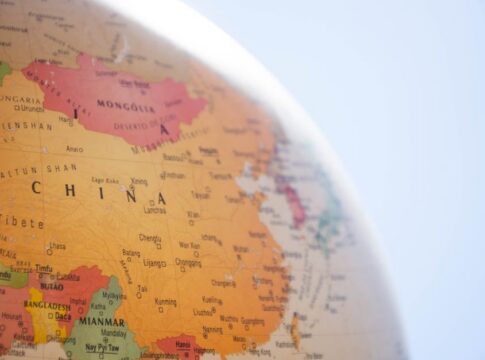
China made a deliberate political choice in 1949 to unify the entire country under Beijing Time (UTC+8). Before this, the Republic of China had used five different time zones, which seemed logical given that the country spans roughly 60 degrees of longitude from its western border with Afghanistan to its eastern coast. The Communist government, seeking to emphasize national unity and centralized control, abolished these regional differences in favor of a single standard.
This decision creates some peculiar situations on the ground. In Xinjiang province, located in China’s far west, the sun doesn’t rise until 10 a.m. during winter months, and sunset can occur as late as midnight in summer. Many residents and local businesses informally use “Xinjiang Time,” which runs two hours behind Beijing Time, for daily activities. Schools and government offices, however, officially operate on Beijing Time, creating a dual-time system that exists unofficially but is widely understood.
1. Russia’s Time Zone Count Has Changed Recently
Russia hasn’t always had eleven time zones. In 2010, then-President Dmitry Medvedev reduced the number from eleven to nine, arguing that having fewer zones would improve business efficiency and communication across the vast nation. The change proved unpopular in several regions where residents complained about disrupted sleep patterns and daily routines that no longer aligned with natural daylight. In 2014, Russia restored two of the abolished zones, bringing the total back to eleven, demonstrating that geographic reality often trumps administrative convenience.
2. The Trans-Siberian Railway Operates on Moscow Time
The legendary Trans-Siberian Railway, one of the world’s longest continuous rail lines, presents a unique timekeeping challenge. The journey from Moscow to Vladivostok covers roughly 5,772 miles and crosses seven time zones. To avoid confusion, all Trans-Siberian trains operate on Moscow Time regardless of their physical location. Passengers must mentally adjust when planning stops, as the station clock might show local time while the train schedule follows Moscow Time. This system has been in place for over a century and remains the standard for Russian Railways.
3. Geographic Width Alone Doesn’t Determine Time Zones
While Russia’s immense east-west span necessitates multiple time zones, geographic width isn’t the only factor countries consider. Political unity, economic coordination, and administrative simplicity all play roles. France technically uses twelve time zones when counting its overseas territories spread across the Atlantic, Indian, and Pacific oceans, though metropolitan France uses just one. The United States spans six time zones in its main territory, from Eastern to Hawaii-Aleutian Time, reflecting both geography and the practical needs of distinct regions.
4. Xinjiang’s Informal Time Creates a Dual System
The westernmost regions of China have developed an interesting workaround to the single-time-zone policy. In Xinjiang, particularly among the Uyghur population, an unofficial “Xinjiang Time” operates two hours behind Beijing Time. Shops might post two sets of opening hours, one for Beijing Time and one for local time. Television schedules, news broadcasts, and government operations follow Beijing Time, while social gatherings and local businesses often run on Xinjiang Time. This dual system exists in a gray area—acknowledged but not officially sanctioned.
5. Time Zones Follow Political Boundaries, Not Just Longitude
Theoretically, time zones should follow lines of longitude in neat 15-degree strips around the globe. Reality is far messier. Countries adjust time zone boundaries to keep cities, provinces, or entire nations together. Russia’s time zones follow the borders of its federal subjects—oblasts, krais, and republics—rather than strict longitudinal lines. China’s single zone keeps the entire nation synchronized. Spain uses Central European Time despite being geographically aligned with Britain, a decision made during World War II that was never reversed.
6. Daylight Saving Time Adds Another Layer of Complexity
Russia experimented with permanent daylight saving time from 2011 to 2014, keeping clocks one hour ahead year-round. The policy proved unpopular, particularly in northern regions where winter mornings became unbearably dark. In 2014, Russia switched to permanent standard time, eliminating the clock changes that many countries still practice. China has never used daylight saving time under Communist rule, maintaining year-round consistency. The absence of seasonal time changes simplifies scheduling but means sunrise and sunset times vary more dramatically with the seasons.
7. The International Date Line Creates a 24-Hour Difference
Russia’s easternmost regions sit just west of the International Date Line, where the calendar date changes. The Diomede Islands in the Bering Strait illustrate this dramatically—Big Diomede (Russia) and Little Diomede (United States) are only 2.4 miles apart but separated by 21 hours due to the date line and time zones. When it’s noon on Tuesday in Alaska, it’s 9 a.m. Wednesday in Russia’s Kamchatka region. This creates the peculiar situation where Russia’s far east greets each new day before almost anywhere else on Earth.
8. Economic Coordination Challenges Differ Between Systems
Russia’s multiple time zones complicate business operations, television broadcasting, and government coordination. A live news broadcast from Moscow airs at different local times across the country. Conference calls require careful scheduling to avoid catching participants too early or too late in their day. China’s single time zone eliminates these scheduling headaches for national coordination but creates them locally—workers in western China might commute in darkness both to and from work during winter months.
9. Historical Time Zone Reforms Shaped Modern Systems
The concept of standardized time zones emerged in the late 19th century as railroads made long-distance travel common. Before this, cities kept their own local solar time, creating chaos for train schedules. The International Meridian Conference of 1884 in Washington, D.C., established Greenwich, England, as the prime meridian and created the framework for worldwide time zones. Russia adopted its time zone system in 1919, while China’s multiple zones were established in 1912 and later unified in 1949.
10. Arctic Regions Face Unique Timekeeping Challenges
Russia’s northernmost territories experience polar night in winter and midnight sun in summer, making solar time less relevant for months at a time. In cities like Murmansk and Norilsk, residents live in darkness for weeks during winter regardless of what the clock says. The assigned time zone matters more for coordination with the rest of the country than for aligning with daylight. These extreme latitude locations demonstrate that time zones serve social and economic functions beyond simply tracking the sun’s position.
11. Border Regions Experience Abrupt Time Changes
Countries sharing borders with Russia or China can experience dramatic time jumps. Crossing from Kazakhstan into China means jumping forward two hours despite minimal geographic movement. The border between Russia and China creates similar shifts. Mongolia, sandwiched between the two giants, uses a single time zone (UTC+8) like its southern neighbor, though it historically used multiple zones. These abrupt changes at borders remind travelers that time zones are human constructs rather than natural features of our world’s geography.
Comparing Russia and China’s Approaches
| Aspect | Russia | China |
|---|---|---|
| Number of Time Zones | 11 (UTC+2 to UTC+12) | 1 (UTC+8) |
| Longitudinal Span | ~170 degrees | ~60 degrees |
| Primary Motivation | Geographic necessity | Political unity |
| Daylight Saving Time | Not used (permanent standard time) | Not used |
| Local Variations | Official zones follow administrative borders | Informal “Xinjiang Time” in western regions |
Frequently Asked Questions
Which country has the most time zones in the world?
France holds the record with twelve time zones when counting all its overseas territories, including French Polynesia, Réunion, and Guadeloupe. Russia has the most time zones within a single contiguous landmass with eleven zones spanning its vast territory from Europe to the Pacific.
Why doesn’t China use multiple time zones like other large countries?
China adopted a single time zone in 1949 to promote national unity and centralized governance under Communist rule. The government prioritized political cohesion over the practical challenges created by having sunrise at 10 a.m. in western regions.
Do all of Russia’s time zones observe the same date?
Yes, all of Russia’s time zones fall on the same calendar date at any given moment. The International Date Line runs through the Pacific Ocean east of Russia’s Kamchatka Peninsula, so while there’s a significant time difference across Russia, it’s always the same day throughout the country.
Has any country switched from multiple time zones to one?
Yes, besides China, India unified its time zones in 1947 despite spanning a geographic width that could accommodate two zones. Argentina also moved from multiple zones to a single time zone in 1969, and has maintained that system since then with brief exceptions.
The next time you schedule a video call with someone across the globe or marvel at a sunrise photo from another continent, remember that our division of time into zones is a surprisingly recent human invention. Russia’s eleven zones honor the planet’s rotation and the reality of continental distances, while China’s single zone demonstrates that national identity can override the sun itself. Both systems work, just differently—and both remind us that even something as seemingly absolute as time bends to human needs and political will.