

















1 / 20 Questions
0 Points

How long does a heat wave usually last?

Several days to weeks

Several months

Less than a day

A few hours

Points won
0
Correct score
0%

More Quizzes

More Articles

14 Fun Facts About Baseball

14 Fun Facts About Baseball

⏱️ 8 min read

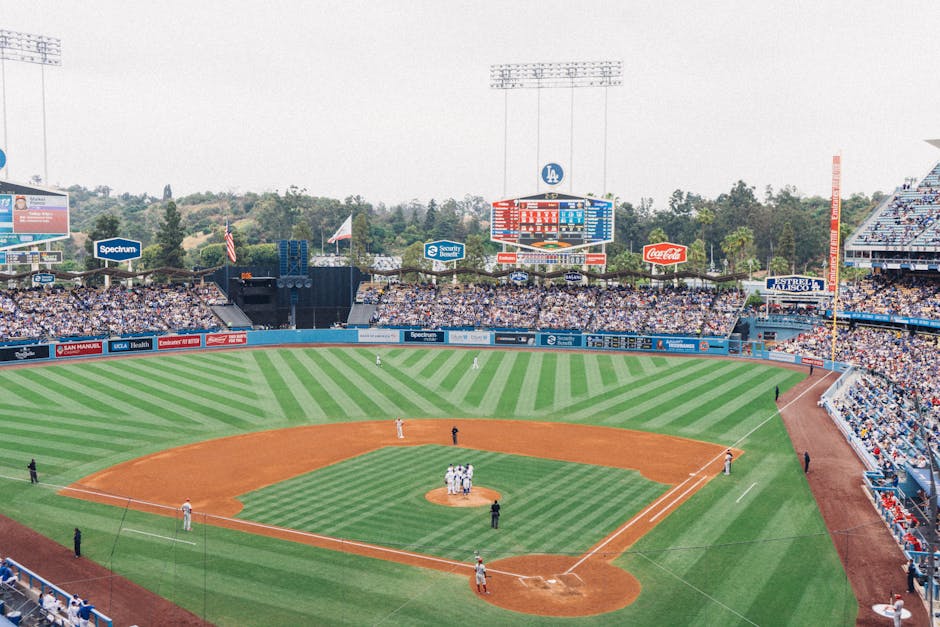
Baseball has captivated fans for over a century, becoming America's beloved pastime and spreading its influence across the globe. Beyond the crack of the bat and the roar of the crowd, this sport is filled with fascinating historical tidbits, quirky traditions, and surprising statistics that even die-hard fans might not know. From its mysterious origins to record-breaking achievements, baseball's rich tapestry includes stories that illuminate why this game continues to hold a special place in sports culture.

Fascinating Baseball Facts That Will Change How You See the Game

1. The Mysterious Origins of Baseball's Invention

Contrary to popular belief, Abner Doubleday did not invent baseball in Cooperstown, New York, in 1839. This myth was created by a commission in 1907 seeking to establish baseball as a purely American sport. In reality, baseball evolved from various bat-and-ball games played in England, including rounders and cricket. The modern version of baseball gradually developed in the northeastern United States during the early 19th century, with the New York Knickerbockers establishing the first formal set of rules in 1845.

2. The Shortest Professional Baseball Player in History

Eddie Gaedel holds the unique distinction of being the shortest player to ever appear in a Major League Baseball game. Standing at just 3 feet 7 inches tall, Gaedel was sent to bat by St. Louis Browns owner Bill Veeck in 1951 as a publicity stunt. Wearing number 1/8, Gaedel walked on four pitches due to his impossibly small strike zone. Major League Baseball immediately banned the stunt, but Gaedel's single plate appearance remains one of baseball's most memorable moments.

3. The Perfect Game Rarity

A perfect game occurs when a pitcher retires all 27 batters without allowing anyone to reach base through any means. This incredibly rare feat has only been accomplished 23 times in Major League Baseball history since 1900. To put this in perspective, more people have walked on the moon than have pitched a perfect game in the major leagues. The combination of skill, luck, and defensive excellence required makes this achievement one of sports' most elusive accomplishments.

4. Baseball's Connection to Hot Dogs

Americans consume approximately 20 million hot dogs at baseball stadiums each year. This culinary tradition began in the 1890s when German immigrant vendors started selling frankfurters at ballparks. The term "hot dog" itself may have originated at a baseball game, when sports cartoonist Tad Dorgan couldn't spell "dachshund sausage" and simply wrote "hot dog" instead. Today, the hot dog remains synonymous with the baseball experience, with some stadiums offering exotic variations that have become attractions in themselves.

5. The Seven-Inning Stretch Tradition

The seventh-inning stretch has become an integral part of baseball culture, but its origins are debated. One popular story credits President William Howard Taft, who allegedly stood up to stretch during the seventh inning of a 1910 game, prompting the crowd to respectfully rise as well. Another tale attributes it to Brother Jasper of Manhattan College in the 1880s, who let his students stand and stretch during games. Regardless of its true origin, this tradition now includes singing "Take Me Out to the Ball Game" at stadiums across the country.

6. Baseball's Impact on American Vocabulary

Baseball has contributed more phrases to American English than perhaps any other sport. Common expressions like "touch base," "cover all the bases," "throw someone a curve," "out of left field," "ballpark figure," and "batting a thousand" all originated from baseball terminology. These phrases have become so embedded in everyday language that many people use them without realizing their baseball origins, demonstrating the sport's profound cultural influence beyond the diamond.

7. The Longest Professional Baseball Game Ever Played

The longest game in professional baseball history lasted 33 innings and took place between the Pawtucket Red Sox and Rochester Red Wings in 1981. The game began on April 18 and was suspended at 4:07 AM after eight hours and seven minutes with the score tied 2-2. When play resumed on June 23, it took just 18 minutes to complete the 33rd inning, with Pawtucket winning 3-2. Future Hall of Famer Cal Ripken Jr. played all 33 innings for Rochester.

8. The Unique Design of Baseball Stitching

Every official Major League Baseball contains exactly 108 stitches of waxed red thread. These stitches are hand-sewn in a specific pattern that creates the ball's distinctive figure-eight design. The precise stitching isn't just for aesthetics—it affects how pitchers grip the ball and influences pitch movement. A single ball takes approximately 15 minutes to stitch by hand, and Major League Baseball uses roughly 900,000 balls per season.

9. Babe Ruth's Called Shot Mystery

One of baseball's most legendary moments occurred during the 1932 World Series when Babe Ruth allegedly pointed to center field before hitting a home run to that exact location. While witnesses disagree about whether Ruth actually called his shot, the story has become part of baseball mythology. Some spectators claimed he was pointing at the pitcher or gesturing at hecklers in the dugout, while others swear he predicted the home run. The truth remains one of baseball's greatest unsolved mysteries.

10. The Unusual Dimensions of Baseball Fields

Unlike most sports, baseball fields don't have standardized outfield dimensions. While the distance between bases and the pitcher's mound are regulated, outfield fence distances and heights vary dramatically between stadiums. Boston's Fenway Park features the 37-foot Green Monster in left field just 310 feet from home plate, while some stadiums have center field fences over 420 feet away. This variation means that a home run in one park might be a routine fly out in another, adding strategic complexity to the game.

11. The Fastest Pitch Ever Recorded

Cincinnati Reds pitcher Aroldis Chapman holds the record for the fastest pitch ever recorded in Major League Baseball, throwing a 105.1 mph fastball in 2010. At this speed, the ball reaches home plate in approximately 0.4 seconds, giving batters an incredibly small window to react. Modern radar technology has made it possible to accurately measure pitch speeds, revealing that today's pitchers throw harder than ever before, though some historians believe legendary pitchers like Nolan Ryan may have thrown equally hard during an era with less precise measurement tools.

12. Baseball's Influence on World War II

During World War II, over 500 Major League Baseball players served in the military, including stars like Ted Williams, Joe DiMaggio, and Bob Feller. President Franklin D. Roosevelt insisted that baseball continue during the war to maintain national morale, writing his famous "Green Light Letter" encouraging Commissioner Kenesaw Mountain Landis to keep the game going. This decision helped preserve the sport's continuity and provided Americans with a comforting connection to normalcy during turbulent times. Many players who served made significant sacrifices, with some losing prime years of their careers.

13. The Curse of the Bambino

After the Boston Red Sox sold Babe Ruth to the New York Yankees in 1919, the team failed to win a World Series for 86 years, spawning the legendary "Curse of the Bambino." During this drought, the Yankees won 26 championships while the Red Sox experienced heartbreaking defeats, including the infamous 1986 World Series when Bill Buckner's error contributed to their loss. The curse was finally broken in 2004 when the Red Sox won their first championship since 1918, completing an unprecedented comeback from a 3-0 deficit against the Yankees in the American League Championship Series.

14. The Baseball Hall of Fame's Strict Standards

Election to the Baseball Hall of Fame in Cooperstown requires approval from 75% of voting members of the Baseball Writers' Association of America. Players become eligible five years after retirement and remain on the ballot for up to ten years. This stringent requirement means that many excellent players never gain induction, making Hall of Fame membership one of sports' most exclusive honors. Only about 1% of players who have appeared in Major League Baseball have been inducted, with approximately 330 players enshrined since the Hall opened in 1939.

The Enduring Legacy of Baseball's Rich History

These fourteen facts merely scratch the surface of baseball's fascinating history and cultural significance. From its evolution as a sport to the quirky traditions that define the game day experience, baseball continues to generate stories that captivate fans across generations. Whether it's the statistical improbability of a perfect game, the linguistic legacy embedded in everyday speech, or the human drama of curses and legendary moments, baseball proves itself to be much more than just a game. Understanding these facts enriches the experience of watching baseball, connecting modern fans to the sport's storied past while appreciating the ongoing evolution of America's pastime. As baseball continues into its third century, new facts and stories will undoubtedly emerge, adding to the rich tapestry that makes this sport endlessly compelling.
Did You Know Mozart and Salieri Were Actually Friends, Not Rivals?

Did You Know Mozart and Salieri Were Actually Friends, Not Rivals?

⏱️ 8 min read

The 1984 film Amadeus captivated millions with its portrayal of Antonio Salieri as a bitter, jealous composer who plotted Mozart's downfall. Peter Shaffer's screenplay earned an Academy Award, but it also cemented one of classical music's most enduring myths. Historical documents reveal a strikingly different relationship between these two composers—one marked by mutual respect, professional collaboration, and genuine friendship.

Quick Facts

  • Antonio Salieri conducted the premiere of Mozart's opera The Magic Flute in 1791 and praised it enthusiastically.
  • Mozart entrusted Salieri to teach his own son, Franz Xaver Wolfgang Mozart, composition lessons.
  • Salieri held a prestigious position as Imperial Kapellmeister in Vienna for 36 years, from 1788 to 1824.
  • Contemporary accounts describe Mozart and Salieri attending each other's concerts and operas regularly throughout the 1780s.
  • The rivalry myth originated decades after both composers died, gaining traction through Alexander Pushkin's 1830 play Mozart and Salieri.

The Historical Evidence of Their Friendship

Primary sources from the late 18th century paint a picture of cordial professional relations between Wolfgang Amadeus Mozart and Antonio Salieri. In October 1791, just weeks before Mozart's death, he wrote to his wife Constanze describing an evening at the opera. Mozart had invited Salieri and the soprano Caterina Cavalieri to attend a performance of The Magic Flute, and he noted with obvious pleasure that Salieri "heard and saw with all his attention, and from the overture to the last choir there was not a piece that didn't elicit a 'Bravo!' or 'Bello!' from him." This letter, preserved in the Mozarteum Foundation in Salzburg, demonstrates not only their friendship but Salieri's genuine admiration for Mozart's work.

Further evidence appears in Mozart's own correspondence throughout the 1780s. When Mozart premiered his opera Der Schauspieldirektor (The Impresario) in 1786 at Schönbrunn Palace, it was performed on a double bill with Salieri's Prima la musica e poi le parole (First the Music, Then the Words). Rather than viewing this as a competition, Mozart described the event matter-of-factly in letters to his father Leopold, with no hint of professional animosity. Both composers received the same fee of 50 ducats for their work—a substantial sum equivalent to approximately three months' salary for a court musician.

Salieri's Actual Position in Viennese Musical Life

Understanding the real relationship between Mozart and Salieri requires recognizing Salieri's legitimate standing in European music. Born in Legnago, Italy, in 1750, Salieri arrived in Vienna at age 16 and studied under Florian Gassmann, the imperial court composer. When Gassmann died in 1774, Salieri succeeded him, eventually becoming Imperial Kapellmeister in 1788—a position that made him the most powerful musician in the Habsburg Empire. His operas premiered in Vienna, Paris, Rome, and other major European cities, with works like Les Danaïdes (1784) and Tarare (1787) achieving significant success.

Salieri's influence extended beyond composition. He taught an extraordinary roster of students who became the next generation's musical giants: Ludwig van Beethoven studied counterpoint with him, Franz Schubert took composition lessons from him, and Franz Liszt received instruction from him as a child prodigy. This teaching legacy alone would have secured Salieri's reputation, regardless of any supposed rivalry with Mozart. His pedagogical methods emphasized rigorous technical training combined with sensitivity to dramatic text setting—principles evident in his students' later works.

Where the Rivalry Myth Originated

The fiction of Mozart and Salieri as bitter enemies emerged gradually after both composers had died. Salieri outlived Mozart by 34 years, passing away in 1825 at age 74. During his final years, as he suffered from dementia, rumors circulated in Vienna that he had confessed to poisoning Mozart. These claims were investigated and thoroughly dismissed by authorities at the time, but the sensational nature of the accusation proved irresistible to storytellers.

Russian poet Alexander Pushkin transformed the rumors into art with his 1830 verse drama Mozart and Salieri, which depicted Salieri deliberately poisoning his rival out of envy. Pushkin explicitly acknowledged his work was fiction, yet audiences received it as plausibly based on truth. Nikolai Rimsky-Korsakov adapted Pushkin's play into an opera in 1898, further embedding the poisoning narrative in popular culture. By the 20th century, the myth had calcified into accepted "common knowledge," despite contradicting the historical record.

Peter Shaffer's play Amadeus, first performed in 1979 and adapted for film in 1984, represents the apotheosis of this fictional tradition. Shaffer never claimed historical accuracy—he deliberately crafted a morality play about mediocrity confronting genius. The film's Salieri, brilliantly portrayed by F. Murray Abraham, is a fictional character bearing little resemblance to the historical Antonio Salieri. Nevertheless, the movie's cultural impact has been so profound that generations now unconsciously assume Mozart and Salieri were enemies.

Documented Instances of Professional Collaboration

Beyond mutual attendance at performances, Mozart and Salieri participated in Vienna's collaborative musical culture. In 1785, both composers contributed to a cantata performed for the visiting Prince Kaunitz. Such collaborative projects were common in Vienna's court musical life, where composers routinely worked together on occasional pieces for state functions, weddings, and celebrations. The fragmentary historical record suggests several other joint projects that have not survived or remain unattributed.

Most significantly, Mozart's decision to have Salieri instruct his younger son demonstrates profound trust. Franz Xaver Wolfgang Mozart, born in 1791 just months before his father's death, studied with Salieri as a boy and went on to a respectable career as a composer and pianist. Constanze Mozart, Wolfgang's widow, maintained cordial relations with Salieri for decades after her husband's death, arranging for these lessons and never suggesting any animosity between the two composers. If she had harbored any suspicion that Salieri contributed to Mozart's death or career difficulties, she would not have entrusted her son to his instruction.

The Reality of Competition in Vienna's Musical World

While Mozart and Salieri were indeed friends, this does not mean they operated in a friction-free environment. Vienna's musical world in the 1780s was intensely competitive, with limited patronage positions and constant jockeying for imperial favor. Mozart struggled financially throughout his Vienna years, often borrowing money from fellow Freemasons and taking on additional students to supplement his income. His letters frequently complain about perceived slights and the success of composers he considered inferior.

However, Mozart's frustrations targeted the system itself rather than Salieri personally. When Mozart sought the position of second Kapellmeister in 1787, Salieri's established seniority made him the natural first Kapellmeister. Mozart did eventually receive an appointment as Imperial Chamber Composer in 1787, though at a salary of only 800 florins annually—considerably less than his predecessors had earned. Mozart attributed these financial difficulties to court economics and the preferences of Emperor Joseph II rather than to any interference by Salieri.

Other composers genuinely did face opposition from Salieri. The Italian composer Giovanni Paisiello, for instance, experienced difficulties obtaining performances in Vienna during periods when Salieri's influence was strongest. But even these professional disagreements remained within the bounds of normal competition for limited resources. The historical record contains no evidence of sabotage, deliberate undermining, or personal vendettas—merely the ordinary professional rivalries of ambitious artists competing for patronage.

Frequently Asked Questions

Did Salieri actually poison Mozart?

No, this is a complete myth with no factual basis. Mozart died of an acute illness in December 1791, most likely rheumatic fever or another infectious disease. Contemporary medical records and investigations have thoroughly debunked the poisoning theory, which only emerged years after Mozart's death during Salieri's final illness.

Why did the rivalry myth become so popular?

The story of a jealous mediocrity destroying a brilliant genius appeals to timeless dramatic themes about envy and injustice. Pushkin's 1830 play gave literary form to vague rumors, and the myth was reinforced by Rimsky-Korsakov's opera and especially the 1984 film Amadeus, which won eight Academy Awards and reached a global audience.

Was Salieri actually a good composer?

Yes, Salieri was highly respected in his time and composed over 40 operas plus numerous sacred works and orchestral pieces. His music has been successfully revived in recent decades, revealing a skilled craftsman with particular talent for dramatic vocal writing, though his reputation suffered from 19th-century preference for Germanic music over Italian styles.

What did Salieri think of Mozart's music?

Contemporary accounts indicate Salieri genuinely admired Mozart's work. In addition to his enthusiastic response to The Magic Flute documented in Mozart's own letter, Salieri conducted performances of Mozart's operas and incorporated some of Mozart's compositional innovations into his own teaching methods.

Key Takeaways

  • Historical documents, including Mozart's personal letters, demonstrate that Mozart and Salieri maintained a friendly professional relationship marked by mutual respect and collaboration.
  • The rivalry narrative originated decades after both composers died, evolving from unsubstantiated rumors into literary fiction that eventually became mistaken for historical fact.
  • Salieri was a legitimately accomplished composer and the most influential music teacher of his generation, instructing Beethoven, Schubert, and Liszt among many others.
  • Mozart's financial difficulties in Vienna resulted from court economics and limited patronage opportunities rather than sabotage by Salieri or any other individual composer.