









1 / 10 Questions
0 Points

What toxic gas was commonly used in early American refrigerators before safer alternatives were developed?

Helium

Sulfur dioxide

Oxygen

Nitrogen

Points won
0
Correct score
0%

More Quizzes

More Articles

Historical Turning Points Few People Notice

Historical Turning Points Few People Notice

⏱️ 5 min read

History is often remembered through its most dramatic moments: wars, revolutions, and the rise and fall of empires. Yet some of the most profound shifts in human civilization occurred quietly, noticed by few at the time, but ultimately reshaping the world in ways that continue to influence modern life. These overlooked turning points demonstrate that transformative change doesn't always announce itself with fanfare.

The Standardization of Shipping Containers

In 1956, a trucking entrepreneur named Malcom McLean loaded fifty-eight metal containers onto a refitted tanker ship in Newark, New Jersey. This seemingly mundane event revolutionized global trade more than any single treaty or agreement. Before standardized containers, loading and unloading cargo was labor-intensive, taking weeks and accounting for as much as 50% of shipping costs. Goods were handled individually, creating bottlenecks at every port.

The introduction of uniform containers transformed shipping from a local craft into a global system. Port times dropped from weeks to hours. Transportation costs plummeted by more than 90% in some cases. This single innovation made possible the interconnected global economy, enabling manufacturers to source materials and labor from anywhere in the world. The container ship quietly became the foundation of modern international commerce, yet few people today recognize McLean's contribution or understand how profoundly this standardization changed economic geography.

The Adoption of Arabic Numerals in Medieval Europe

Around the 13th century, European merchants and scholars gradually began replacing Roman numerals with the Arabic numeral system. This transition occurred over centuries rather than in a single dramatic moment, making it easy to overlook its revolutionary impact. Roman numerals, while functional for recording quantities, made complex calculations extraordinarily difficult. Try multiplying MCXLIV by DCCCXVII without converting to modern numbers.

The Arabic system, with its place-value notation and inclusion of zero, transformed mathematics from an elite practice into a practical tool accessible to merchants, engineers, and scientists. This shift enabled the development of double-entry bookkeeping, which revolutionized commerce and banking. It facilitated advances in navigation, astronomy, and eventually the scientific revolution itself. The adoption of these numerals was a cognitive technology transfer that fundamentally expanded human capacity for calculation and abstract thought.

The 1847 Discovery of Handwashing's Medical Benefits

Hungarian physician Ignaz Semmelweis noticed in 1847 that mortality rates in his Vienna hospital's maternity ward dropped dramatically when doctors washed their hands with chlorinated lime solutions before examining patients. At the time, medical professionals routinely moved from autopsies to patient care without cleaning their hands, considering themselves too educated to transmit disease.

Semmelweis's observation predated germ theory and was largely rejected by the medical establishment during his lifetime. He died in 1865, ironically from an infection, before his ideas gained acceptance. Yet this discovery, initially dismissed and forgotten, became foundational to modern medicine. The simple practice of hand hygiene has saved more lives than perhaps any other medical intervention in history. This overlooked moment represents a cognitive shift from traditional authority to empirical observation that would characterize modern medical science.

The Introduction of Guano as Fertilizer

In the 1840s, European farmers began importing guano—accumulated bird droppings—from islands off the coast of Peru. This development receives little attention in standard history curricula, yet it fundamentally altered agricultural productivity and global demographics. For millennia, soil depletion had limited agricultural output and population growth. Traditional farming methods exhausted nutrients, requiring farmers to leave fields fallow or accept declining yields.

Guano provided concentrated nitrogen and phosphorus that dramatically increased crop yields. This fertilizer boom contributed to population explosions in Europe and enabled the growth of industrial cities no longer constrained by local food production capacity. The guano trade also sparked international conflicts and influenced the development of chemical industries seeking synthetic alternatives, eventually leading to the Haber-Bosch process for nitrogen fixation. This obscure commodity trade was actually a turning point in humanity's relationship with natural resource constraints.

The 1912 International Conference on Time Zones

Before standardized time zones, thousands of local times existed based on solar noon in each community. The 1884 International Meridian Conference established the framework, but implementation took decades. The full adoption of standard time zones fundamentally changed how societies coordinated activities across distances.

This standardization was essential for railroad scheduling, telecommunications, and eventually the synchronized global economy. It represented a shift from natural, local time-keeping to abstract, coordinated systems. While seemingly technical, this change altered human consciousness itself—separating clock time from solar time and enabling the 24/7 operations that characterize modern industrial society. Few recognize that our current relationship with time is a relatively recent human construction.

The Quiet Revolution of Eyeglasses

The invention of corrective lenses in 13th-century Italy extended the productive lives of scribes, scholars, and craftsmen whose work required detailed vision. Before eyeglasses, presbyopia—the age-related decline in near vision—effectively ended careers for those whose work required close reading or precision handwork, typically by their forties.

Eyeglasses effectively extended intellectual and productive life spans by decades. This enabled the accumulation of expertise and the transmission of knowledge by experienced practitioners who would otherwise have been forced into retirement. The implications for preserving and advancing human knowledge were profound, yet this assistive technology is rarely discussed as the transformative innovation it was.

These overlooked turning points remind us that history's most consequential changes often occur incrementally, through technical innovations and practical adaptations rather than dramatic events. Understanding these quiet revolutions provides perspective on how contemporary developments might be reshaping civilization in ways we won't fully appreciate for generations to come.
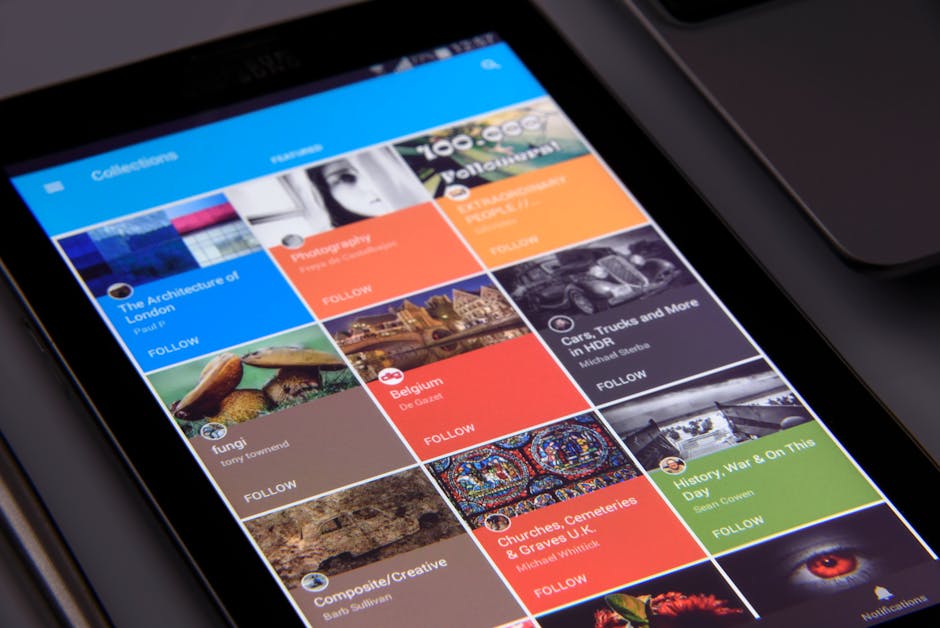
Did You Know? 15 Crazy Facts About Internet History

Did You Know? 15 Crazy Facts About Internet History

⏱️ 7 min read

The internet has transformed every aspect of modern life, from how we communicate to how we conduct business. Yet behind this ubiquitous technology lies a fascinating history filled with surprising twists, unexpected origins, and quirky moments that shaped the digital world we know today. From the first email to accidental inventions that changed everything, the evolution of the internet is far more interesting than most people realize.

Surprising Origins and Unexpected Developments

1. The First Email Predated the Internet

Ray Tomlinson sent the first email in 1971, a full decade before the internet as we know it existed. Working on ARPANET, the precursor to the modern internet, Tomlinson chose the "@" symbol to separate the user name from the computer name. Ironically, he doesn't remember what the first message said, describing it as "something like QWERTYUIOP." This seemingly mundane moment revolutionized communication forever, yet the creator himself considered it so unremarkable that he didn't bother documenting the content.

2. The Internet Was Designed to Survive Nuclear War

ARPANET, developed by the U.S. Department of Defense in the late 1960s, was specifically designed to maintain communication even if parts of the network were destroyed in a nuclear attack. The decentralized structure meant that information could route around damage, ensuring that no single point of failure could bring down the entire system. This Cold War paranoia inadvertently created the foundation for the most resilient communication system ever built.

3. The First Webcam Monitored a Coffee Pot

In 1991, computer scientists at Cambridge University created the first webcam not for video conferencing or security, but to monitor their department's coffee pot. Researchers were tired of walking to the break room only to find an empty pot, so they set up a camera that broadcast three images per minute. The "Trojan Room Coffee Pot" became an internet sensation when it went live online in 1993, attracting millions of viewers worldwide who watched to see if there was coffee available.

Surprising Internet Milestones

4. The First Thing Ever Purchased Online Was Pizza

In August 1994, a Pizza Hut website became the first to accept online orders for food delivery. A large pepperoni, mushroom, and extra cheese pizza holds the distinction of being the first secure online transaction for a retail item. This simple purchase opened the floodgates for e-commerce, proving that people would trust the internet with their credit card information for convenience.

5. Google's Name Was a Spelling Mistake

The founders Larry Page and Sergey Brin originally intended to name their search engine "Googol," a mathematical term for the number 1 followed by 100 zeros, representing the vast amount of information they wanted to organize. However, when investor Sean Anderson checked if the domain was available, he accidentally spelled it as "Google." The founders liked the simplicity and registered the misspelled version, which became one of the most recognized brand names in history.

6. The First Website Is Still Online

Created by Tim Berners-Lee in 1991 at CERN, the first website explained what the World Wide Web was and how to use it. The site, hosted at info.cern.ch, provided instructions on creating web pages and setting up a web server. CERN restored the original site to its first address in 2013, allowing anyone to visit a piece of internet history and see how basic and text-focused the early web truly was.

Quirky Facts About Early Internet Culture

7. Spam Email Got Its Name From Monty Python

The term "spam" for unwanted emails comes from a 1970 Monty Python sketch where Vikings repeatedly chant "spam, spam, spam," drowning out all other conversation. Early internet users in chat rooms adopted the term to describe people who flooded channels with repetitive messages. The first actual spam email was sent in 1978 by Gary Thuerk, a marketer at Digital Equipment Corporation, who sent unsolicited messages to 400 ARPANET users promoting computers.

8. The Inventor of the Web Made It Free for Everyone

Tim Berners-Lee could have patented the World Wide Web and become one of the wealthiest people on Earth. Instead, in 1993, CERN announced that the web technology would be free for anyone to use without fees or licensing. Berners-Lee believed that making it freely available was essential for the web to reach its full potential. This decision accelerated internet adoption exponentially and shaped the open, accessible nature of the web we use today.

9. The First YouTube Video Featured the Zoo

Co-founder Jawed Karim uploaded "Me at the zoo" on April 23, 2005, making it the first video ever posted to YouTube. The 18-second clip shows Karim standing in front of elephants at the San Diego Zoo, discussing their trunks. This humble beginning launched a platform that would fundamentally change entertainment, education, and how people share experiences, now hosting hundreds of millions of videos.

Technical Oddities and Infrastructure Surprises

10. Most Internet Traffic Crosses Oceans Through Undersea Cables

Despite satellite technology, approximately 99% of international data travels through fiber optic cables lying on the ocean floor. These submarine cables, some as thick as garden hoses, span hundreds of thousands of miles across the seabed. Sharks have been known to bite these cables, possibly mistaking them for prey, which is why modern cables include protective wrapping. Without these physical connections, the "wireless" internet age would be impossible.

11. North Korea Has Only 28 Websites

While most countries have millions of websites, North Korea's internet—called Kwangmyong—is essentially a closed intranet with approximately 28 government-approved sites. Only a tiny elite has access to the global internet, while most citizens can only access this severely restricted national network. This stands in stark contrast to the global internet's 1.7 billion websites, highlighting how different internet experiences can be around the world.

12. The Original Internet Had Only Four Computers

When ARPANET first went live on October 29, 1969, it connected just four computers at UCLA, Stanford Research Institute, UC Santa Barbara, and the University of Utah. The first message sent was supposed to be "LOGIN," but the system crashed after transmitting only "LO." This inauspicious beginning—a crashed system sending only two letters—evolved into the network connecting billions of devices today.

Modern Internet Phenomena Origins

13. Emoticons Were Invented to Prevent Misunderstandings

Carnegie Mellon professor Scott Fahlman created the first emoticon :-) on September 19, 1982, in a message board post. He suggested using the symbol to mark jokes because people kept misinterpreting humorous posts as serious statements. This simple punctuation combination solved a fundamental problem of text-based communication—the lack of tone and facial expression—and evolved into the emoji-filled messages we send today.

14. Alaska Has the First Internet in the United States

The University of Alaska became the first civilian institution in the U.S. to gain internet access in 1981, even before many major universities in the continental states. The remote location made the internet particularly valuable for communication and research. Alaska's early adoption demonstrated how the internet could bridge geographical isolation, a principle that continues driving connectivity efforts worldwide.

15. China Has More Internet Users Than the U.S. Has People

With over 1 billion internet users, China's online population exceeds the entire population of the United States. This massive user base has created a parallel internet ecosystem with platforms like WeChat and Weibo that most Western users have never encountered. The sheer scale demonstrates how the internet has evolved from a Western-dominated network to a truly global phenomenon with distinct regional characteristics.

The Ongoing Evolution

These fifteen facts reveal that internet history is filled with accidents, creative solutions to mundane problems, and decisions that changed the world in unexpected ways. From a coffee pot camera to submarine cables bitten by sharks, the internet's development has been anything but straightforward. Understanding these origins helps us appreciate both how far we've come and how the quirks and choices of early pioneers continue influencing our digital lives today. The internet's evolution from four connected computers to a global network supporting billions of devices happened through innovation, luck, and the willingness to share technology freely—principles that continue shaping its future.