









1 / 10 Questions
0 Points

Which insect's compound eye structure inspired the design of modern digital camera sensors?

Honeybee

Butterfly

Dragonfly

Mosquito

Points won
0
Correct score
0%

More Quizzes

More Articles

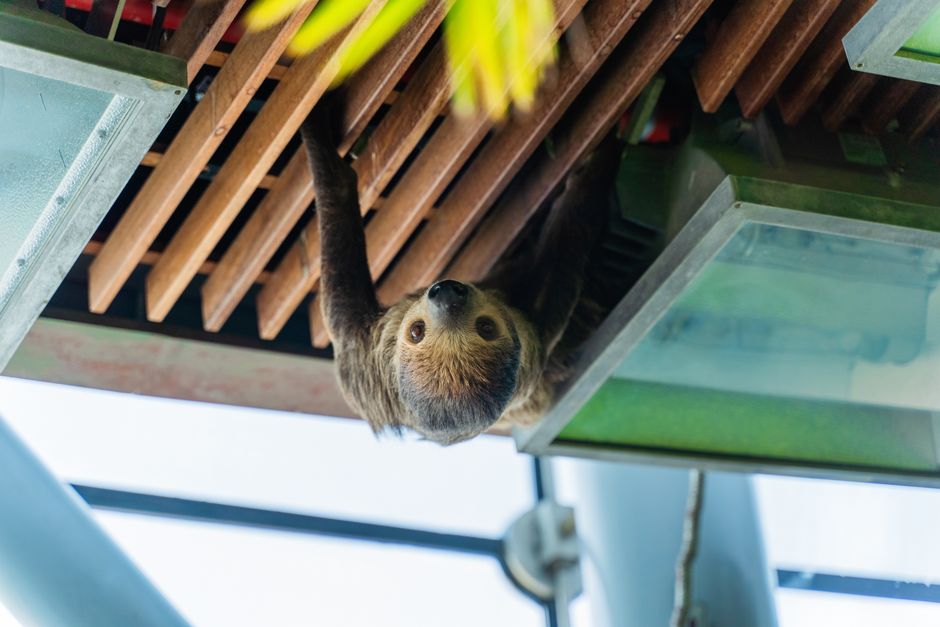
Did You Know? Sloths Can Move Faster in Water

Did You Know? Sloths Can Move Faster in Water

⏱️ 5 min read

Sloths have long been synonymous with extreme slowness, spending most of their lives moving at a leisurely pace through the rainforest canopy. However, these remarkable creatures harbor a surprising secret that challenges their reputation as nature's slowest mammals. When sloths enter water, they transform into surprisingly capable swimmers, moving up to three times faster than they do on land or in trees. This unexpected aquatic ability reveals a fascinating dimension of sloth biology and behavior that often surprises even seasoned wildlife enthusiasts.

The Remarkable Swimming Abilities of Sloths

While sloths typically move at speeds of approximately 0.15 miles per hour through the trees, they can reach speeds of up to 0.5 miles per hour when swimming. This threefold increase in velocity represents a dramatic shift in their locomotion capabilities. Both two-toed and three-toed sloths are proficient swimmers, using their long arms to propel themselves through water with a breaststroke-like motion that appears surprisingly graceful compared to their awkward terrestrial movements.

The swimming prowess of sloths stems from several anatomical advantages. Their long, muscular arms that seem cumbersome on land become powerful paddles in water. Additionally, their light body weight relative to their size provides natural buoyancy, allowing them to stay afloat with minimal effort. Their thick fur, which typically harbors algae and provides camouflage, also traps air bubbles that enhance flotation.

Why Sloths Enter Water in Their Natural Habitat

In the tropical rainforests of Central and South America, sloths regularly encounter water bodies and have evolved to navigate these aquatic environments effectively. Several important reasons drive sloths to take to the water:

  • Crossing rivers and streams to access new feeding territories with fresh foliage
  • Reaching isolated trees or forest patches separated by waterways
  • Fleeing from predators, as water can provide a temporary escape route
  • Navigating flooded forests during seasonal high-water periods
  • Occasionally seeking mates in different territories across water barriers

During the rainy season, when rivers swell and portions of the rainforest become temporarily flooded, swimming becomes an essential skill for sloth survival. Sloths have been observed swimming considerable distances, sometimes crossing rivers that are several hundred meters wide.

Anatomical Adaptations That Enable Aquatic Locomotion

Limb Structure and Muscle Distribution

The same anatomical features that make sloths appear ungainly on the ground serve them well in water. Their elongated limbs provide an extended reach, allowing for powerful strokes that propel them efficiently through water. Unlike their slow, energy-conserving movements in trees, sloths can maintain sustained swimming efforts for extended periods. The muscle distribution in their arms, designed primarily for hanging and climbing, translates effectively to swimming motions.

Respiratory Adaptations

Sloths possess an unusually slow metabolism, which extends to their respiratory system. They can hold their breath for up to 40 minutes by slowing their heart rate, an ability that proves advantageous when swimming or diving to avoid predators. This remarkable breath-holding capacity far exceeds that of most terrestrial mammals and rivals some semi-aquatic species.

The Contrast Between Terrestrial and Aquatic Movement

The stark difference between a sloth's land speed and swimming speed highlights the challenges these animals face in different environments. On the ground, sloths must drag themselves forward using their claws, a laborious process that leaves them vulnerable to predators. Their low muscle mass—approximately half that of similarly sized mammals—means terrestrial locomotion requires enormous effort relative to their physical capabilities.

In contrast, water provides several advantages. The buoyancy eliminates the need to support their body weight against gravity, while the resistance of water actually works in their favor, giving their arm strokes something substantial to push against. The swimming motion more closely resembles their natural tree-climbing movements than walking does, making it a more natural form of locomotion for their body structure.

Predator Avoidance and Swimming Behavior

While jaguars, ocelots, and harpy eagles prey on sloths in their arboreal habitat, the water presents both opportunities and dangers. Sloths can use swimming as an escape mechanism, as some predators may be reluctant to pursue them into water. However, aquatic predators such as caimans and anacondas pose significant threats to swimming sloths, making water crossings a calculated risk.

Interestingly, sloths typically swim with their heads held well above water, maintaining visual awareness of their surroundings. This behavior suggests an acute awareness of potential threats and demonstrates that their swimming ability is not merely accidental but rather an evolved survival strategy.

Conservation Implications and Human Impact

Understanding sloth swimming behavior has important implications for conservation efforts. As deforestation fragments rainforest habitats, waterways increasingly serve as barriers between isolated forest patches. The ability of sloths to swim means that maintaining water quality and ensuring safe river crossings becomes crucial for population connectivity.

Climate change and altered rainfall patterns that affect river levels and flooding frequencies may also impact sloth populations. Conservation strategies must account for the aquatic corridors that sloths use to move between habitat fragments, protecting not just the forests but also the waterways that connect them.

Scientific Research and Ongoing Discoveries

Despite decades of study, sloth behavior continues to reveal surprises. Researchers using camera traps and GPS tracking have documented swimming behavior more extensively in recent years, providing quantitative data on swimming speeds, distances, and frequencies. These studies confirm that swimming is a regular, not exceptional, behavior for wild sloths in their natural habitat.

The discovery that sloths move faster in water than on land or in trees challenges simplistic characterizations of these animals as merely "slow." Instead, it reveals them as creatures specifically adapted to an arboreal lifestyle, with swimming representing an important secondary locomotion mode that expands their ecological niche and enhances their survival capabilities in the complex rainforest environment.
Top 10 Mammals That Lay Eggs

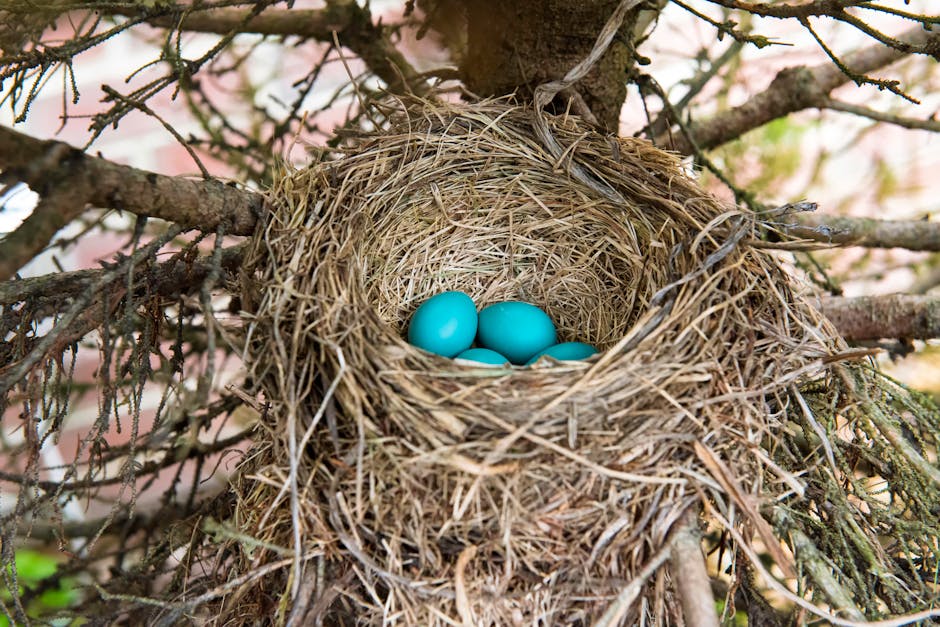
Top 10 Mammals That Lay Eggs

⏱️ 5 min read

In the vast and diverse world of mammals, there exists a remarkable group that defies the typical expectation of live birth. These extraordinary creatures, known as monotremes, represent one of nature's most fascinating evolutionary branches. While the overwhelming majority of mammals give birth to live young, monotremes have retained the ancient characteristic of laying eggs—a trait that offers scientists invaluable insights into mammalian evolution and the transition from reptilian ancestors.

Understanding Monotremes: The Egg-Laying Mammals

Monotremes are found exclusively in Australia and New Guinea, making them geographically restricted and scientifically precious. Only five species of egg-laying mammals exist in the world today, divided into two distinct families: the Ornithorhynchidae (platypuses) and the Tachyglossidae (echidnas). Despite the limited number of species, each monotreme displays unique adaptations and characteristics worthy of detailed exploration.

The Ten Most Important Egg-Laying Mammals

1. The Duck-Billed Platypus (Ornithorhynchus anatinus)

The platypus stands as perhaps the most iconic of all monotremes, captivating scientists and the public alike since its discovery. Native to eastern Australia and Tasmania, this semi-aquatic mammal possesses a beaver-like tail, otter-like feet, and a distinctive duck-like bill. Female platypuses lay one to three eggs, which they incubate for approximately ten days by curling around them. The platypus is also one of the few venomous mammals, with males sporting venomous spurs on their hind legs.

2. The Short-Beaked Echidna (Tachyglossus aculeatus)

The short-beaked echidna, also called the spiny anteater, is the most widespread monotreme species, found throughout Australia, Tasmania, and New Guinea. Covered in coarse hair and spines, these solitary creatures use their long, sticky tongues to capture ants and termites. Females develop a temporary pouch during breeding season where they lay a single leathery egg. The egg hatches after approximately ten days, and the tiny, underdeveloped young, called a puggle, remains in the pouch for several weeks.

3. Sir David's Long-Beaked Echidna (Zaglossus attenboroughi)

Named after renowned naturalist Sir David Attenborough, this critically endangered species is found only in the Cyclops Mountains of Papua New Guinea. It is the smallest of the long-beaked echidnas and one of the rarest mammals on Earth. Little is known about their reproductive behavior, but like other echidnas, they are presumed to lay a single egg. Their preferred diet consists primarily of earthworms, which they extract from the soil using their elongated snouts.

4. The Eastern Long-Beaked Echidna (Zaglossus bartoni)

The eastern long-beaked echidna inhabits the highland forests of New Guinea at elevations between 2,000 and 3,000 meters. Larger than their short-beaked cousins, these echidnas have longer snouts and fewer spines, with fur more prominently covering their bodies. They are nocturnal creatures that feed primarily on earthworms. Females lay one egg per breeding season, typically incubating it in their pouch for about ten days before it hatches.

5. The Western Long-Beaked Echidna (Zaglossus bruijnii)

Found in the northwestern regions of New Guinea, the western long-beaked echidna is the largest of all monotremes, weighing up to 16.5 kilograms. Their distinctive downward-curving snout helps them probe the forest floor for invertebrates. Like other echidnas, females lay a single egg that develops in a temporary pouch. The species faces significant threats from habitat loss and hunting, leading to its classification as critically endangered.

6. The Platypus Subspecies of Northern Australia

While taxonomically considered part of the same species as the common platypus, the northern Australian populations exhibit distinct characteristics adapted to warmer climates. These platypuses tend to be slightly smaller and have adapted their breeding cycles to the different seasonal patterns of tropical and subtropical regions. They maintain the same egg-laying reproductive strategy, but their nesting behaviors may vary slightly based on environmental conditions and water temperature.

7. The Tasmanian Platypus Population

Tasmanian platypuses represent a genetically distinct population that has adapted to the island's cooler climate and unique waterways. These individuals tend to be larger than their mainland counterparts and have developed specific behaviors suited to Tasmania's environmental conditions. Female Tasmanian platypuses construct elaborate nesting burrows in riverbanks where they lay their eggs, and these burrows can extend several meters into the bank, providing protection from predators and temperature fluctuations.

8. The Highland Echidna Populations of New Guinea

In the highest elevations of New Guinea's mountain ranges, specialized populations of short-beaked echidnas have adapted to alpine conditions. These highland dwellers face unique challenges, including cold temperatures and limited food availability during certain seasons. Their egg-laying and rearing strategies have adapted accordingly, with females potentially timing reproduction to coincide with optimal environmental conditions for puggle survival.

9. The Kangaroo Island Echidna

Kangaroo Island, off the coast of South Australia, hosts a distinctive population of short-beaked echidnas that have been isolated from mainland populations. This isolation has resulted in subtle genetic and behavioral differences, making them particularly valuable for conservation and evolutionary studies. These echidnas maintain the characteristic single-egg reproductive strategy while adapting to the island's specific ecological conditions and food sources.

10. The Ancient Monotreme Ancestors

While not a living species, understanding the fossil record of ancient monotremes completes the picture of egg-laying mammals. Prehistoric monotremes like Steropodon and Teinolophos, which lived during the Cretaceous period, provide crucial evidence of how these remarkable creatures evolved and survived when most other mammalian lineages transitioned to live birth. These ancestors help scientists understand why and how the egg-laying trait persisted in this unique mammalian group.

Conservation and Future Prospects

The survival of these extraordinary egg-laying mammals faces numerous challenges, including habitat destruction, climate change, and human activity. Several species, particularly the long-beaked echidnas, are critically endangered and require immediate conservation attention. Protecting these unique creatures preserves not only biodiversity but also living links to our evolutionary past, offering continued opportunities for scientific discovery and understanding of mammalian evolution.

The study of monotremes continues to reveal surprising information about mammalian biology, genetics, and evolution, making their conservation essential for both ecological and scientific reasons.