
⏱️ 7 min read
The Paralympic Games stand as one of the world’s most inspiring sporting events, showcasing the incredible athleticism, determination, and skill of athletes with disabilities. While millions tune in to watch these remarkable competitions, there are countless fascinating aspects of the Paralympics that remain lesser-known. From its unexpected origins to groundbreaking innovations, the Paralympic movement has a rich history filled with surprising stories and achievements that have transformed not only sports but also global perceptions of disability and human potential.
The History and Evolution of the Paralympic Games
1. Born from Post-War Medical Rehabilitation
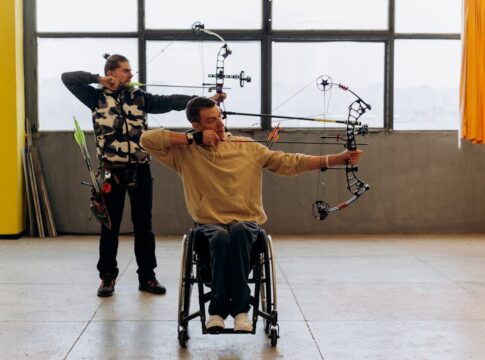
The Paralympic Games originated from a revolutionary approach to treating injured World War II veterans. In 1948, Dr. Ludwig Guttmann, a German-British neurologist, organized a sports competition for British World War II veterans with spinal cord injuries at Stoke Mandeville Hospital in England. This event coincided with the opening ceremony of the 1948 London Olympics and featured 16 injured servicemen and women competing in archery. Dr. Guttmann believed that sport was instrumental in the rehabilitation process, both physically and psychologically. His vision transformed medical treatment practices and laid the foundation for what would become the Paralympic movement. By 1960, the first official Paralympic Games were held in Rome, Italy, with 400 athletes from 23 countries participating.
2. The Name Has a Dual Meaning
Many people assume “Paralympic” simply means “paraplegic Olympics,” but the name actually carries a more inclusive meaning. While the Games did initially focus on athletes with spinal cord injuries, the prefix “para” comes from the Greek preposition meaning “beside” or “alongside.” This reflects the Paralympics’ position as a parallel event to the Olympic Games. The International Paralympic Committee officially adopted this interpretation in the late 1980s to better represent the expanding range of disabilities included in the competition. Today, the Paralympics encompasses athletes with physical, visual, and intellectual impairments, making the “alongside” interpretation far more accurate and meaningful.
3. Paralympic Athletes Compete in the Same Venues
Since the 1988 Seoul Summer Games and the 1992 Albertville Winter Games, the Paralympics have been held in the same host city and venues as the Olympics, typically following a few weeks after the Olympic Games conclude. This arrangement, formalized through agreements between the International Olympic Committee and International Paralympic Committee, ensures that Paralympic athletes compete in world-class facilities and receive comparable media coverage and public attention. The shared venues also demonstrate the commitment to accessibility in sports infrastructure and help reduce costs for host cities while maximizing the legacy of Olympic investments.
Athletic Excellence and Classification
4. A Complex Classification System Ensures Fair Competition
The Paralympic classification system is one of the most sophisticated in sports, designed to ensure athletes compete against others with similar functional abilities. Unlike the Olympics, where athletes are grouped primarily by gender and sometimes weight, Paralympic athletes are classified based on how much their impairment affects their performance in a specific sport. Classifications consider factors such as muscle strength, range of motion, limb length, and coordination. Each sport has its own classification system, with athletes undergoing evaluation by trained classifiers who assess their abilities through physical and technical assessments. For example, track and field events include over 50 different classifications, ensuring that competition remains fair while celebrating the diverse abilities of all participants.
5. Paralympic Records Sometimes Surpass Olympic Times
In certain events, Paralympic athletes have achieved times and distances that rival or even exceed some Olympic performances. South African sprinter Oscar Pistorius, competing on carbon-fiber prosthetic legs, qualified for the 2012 Olympic Games in addition to the Paralympics, demonstrating that Paralympic athletes can compete at the highest levels. In swimming, some Paralympic athletes in specific classifications have recorded times faster than Olympic qualifying standards. These achievements challenge preconceptions about disability and highlight the extraordinary training, technique, and athletic prowess of Paralympic competitors. The performances underscore that these athletes are elite competitors who push the boundaries of human capability.
Technological Innovation and Global Impact
6. Cutting-Edge Technology Drives Athletic Innovation
The Paralympic Games have become a powerful catalyst for technological advancement in assistive devices and adaptive equipment. Competition wheelchairs, prosthetic limbs, and adaptive skiing equipment developed for Paralympic sports have influenced mainstream medical and assistive technology. Racing wheelchairs can reach speeds of 30 kilometers per hour, featuring aerodynamic designs and advanced materials like carbon fiber and titanium. Prosthetic running blades, known as Flex-Foot Cheetahs, utilize energy storage and return principles inspired by the hind legs of fast-running animals. These innovations, refined through Paralympic competition, eventually benefit wider communities of people with disabilities in their daily lives, improving mobility, independence, and quality of life far beyond the sporting arena.
7. More Countries Participate in Paralympics Than Olympics
In recent Paralympic Games, the number of participating nations has approached or sometimes exceeded Olympic participation when considering proportional representation. The Tokyo 2020 Paralympics featured 162 delegations, demonstrating the truly global nature of the movement. Many smaller nations that struggle to field competitive Olympic teams find success and representation through Paralympic sports. Additionally, the Refugee Paralympic Team, introduced in 2016, provides athletes displaced by conflict and persecution the opportunity to compete on the world stage. This broad participation reflects the universal appeal of Paralympic sports and the commitment of nations worldwide to supporting athletes with disabilities.
Cultural Significance and Recognition
8. The Paralympics Has Its Own Unique Symbol
The Paralympic symbol consists of three “agitos” (Latin for “I move”) in red, blue, and green—the three colors most widely represented in national flags worldwide. Introduced in 2004, these asymmetric crescents encircle a central point, symbolizing motion, emphasizing the role of the Paralympic Movement in bringing athletes together from all corners of the world. The design replaced the previous symbol of five tae-geuks, differentiating the Paralympic brand while maintaining its connection to global unity. The agitos represent the Paralympic motto: “Spirit in Motion,” capturing the dynamic nature of Paralympic athletes and the movement’s mission to enable Paralympic athletes to achieve sporting excellence and inspire the world.
9. Boccia Exists Exclusively as a Paralympic Sport
While most Paralympic sports are adapted versions of existing Olympic sports, boccia was specifically designed for athletes with severe physical disabilities and has no Olympic equivalent. Similar to bocce and pétanque, boccia involves throwing or rolling colored balls as close as possible to a white target ball. Athletes with cerebral palsy, muscular dystrophy, or other conditions affecting motor skills compete in this precision sport, which requires strategic thinking, muscle control, and concentration. Some athletes use assistive devices called ramps to propel the balls when they cannot throw or roll them with sufficient force. Boccia’s inclusion in the Paralympics since 1984 demonstrates the Games’ commitment to providing competitive opportunities for athletes with the most significant impairments.
10. Paralympic Champions Have Become Global Icons
Paralympic athletes have transcended sports to become influential advocates, celebrities, and role models worldwide. Italian fencer Beatrice “Bebe” Vio, who lost her arms and legs to meningitis, has become a fashion icon and motivational speaker. British cyclist Dame Sarah Storey holds the record for Britain’s most successful Paralympian with 17 gold medals across swimming and cycling. American swimmer Jessica Long, a 13-time Paralympic gold medalist, has appeared in major advertising campaigns and uses her platform to advocate for adoption and disability rights. These athletes have leveraged their Paralympic success to challenge stereotypes, influence policy, and inspire millions of people with and without disabilities. Their visibility has fundamentally changed public perceptions about disability and athletic achievement.
Conclusion
The Paralympic Games represent far more than athletic competition—they embody a global movement toward inclusion, equality, and recognition of human potential in all its forms. From its humble beginnings as a rehabilitation program for injured veterans to its current status as one of the world’s largest sporting events, the Paralympics has continuously evolved and expanded. These ten fascinating aspects of the Paralympic Games reveal the depth, complexity, and significance of this remarkable event. Understanding the sophisticated classification systems, technological innovations, and cultural impact of the Paralympics deepens appreciation for the athletes who compete and the movement they represent. As the Paralympics continues to grow in popularity and influence, it challenges societies worldwide to reconsider assumptions about disability, accessibility, and the limitless possibilities of human achievement. The stories, innovations, and triumphs emerging from the Paralympic Games inspire not just athletes but entire communities to reimagine what is possible when barriers are removed and potential is celebrated.