
⏱️ 7 min read
History is often shaped by calculated decisions, strategic planning, and deliberate actions. However, some of the most significant moments in human history occurred entirely by accident. These unexpected discoveries, mishaps, and coincidences have altered the course of civilizations, saved countless lives, and fundamentally changed how we understand our world. From scientific breakthroughs to military blunders that became victories, these fifteen historical accidents remind us that serendipity plays a remarkable role in shaping our past.
Accidental Discoveries That Changed the World
1. The Discovery of Penicillin
In 1928, Scottish scientist Alexander Fleming returned from vacation to find that a petri dish containing Staphylococcus bacteria had been contaminated by mold. Rather than simply discarding the ruined experiment, Fleming noticed something extraordinary: the bacteria surrounding the mold had died. This accidental contamination led to the discovery of penicillin, the world’s first antibiotic. This serendipitous finding revolutionized medicine and has saved countless millions of lives over the past century, fundamentally transforming our ability to treat bacterial infections.
2. Christopher Columbus Landing in the Americas
When Christopher Columbus set sail in 1492, he was attempting to find a western route to Asia for trade purposes. His calculations were fundamentally flawed, and he severely underestimated the Earth’s circumference. Instead of reaching India as intended, he accidentally stumbled upon the Americas. This navigational error would lead to one of history’s most significant encounters between civilizations, forever changing the course of world history, though with devastating consequences for indigenous populations.
3. The Invention of the Microwave Oven
Percy Spencer, an engineer working with radar technology for Raytheon in 1945, noticed something peculiar while standing near a magnetron. The chocolate bar in his pocket had melted. Intrigued by this phenomenon, Spencer began experimenting with other foods, including popcorn kernels and an egg, which famously exploded. This accidental observation led to the development of the microwave oven, a kitchen appliance that would become ubiquitous in households worldwide within a few decades.
4. The Popsicle’s Sweet Creation
In 1905, eleven-year-old Frank Epperson left a mixture of powdered soda, water, and a stirring stick on his porch overnight during a particularly cold San Francisco evening. The next morning, he discovered the world’s first popsicle, frozen solid with the stick perfectly positioned as a handle. Though it took nearly two decades before Epperson patented and commercialized his accidental invention, the frozen treat became a beloved staple of childhood summers everywhere.
Military Accidents That Altered Wars
5. The Mongolian Invasion of Europe Halted by Death
In 1241, Mongol forces under Batu Khan were sweeping through Europe with seemingly unstoppable momentum, having conquered Hungary and Poland. European armies were no match for the sophisticated Mongol military tactics. However, the sudden death of Ögedei Khan, the Great Khan in distant Karakorum, required all Mongol princes to return for the selection of a new leader. This accidental timing saved Western Europe from potential conquest, as the Mongols never returned with the same force.
6. The Spanish Armada’s Destruction by Weather
In 1588, Spain’s “Invincible Armada” sailed to invade England with 130 ships. While English naval tactics played a role in the conflict, it was a series of unexpected storms—nicknamed the “Protestant Wind” by the English—that accidentally decimated the Spanish fleet. These storms were completely unpredictable and unplanned by English forces, yet they accomplished what military strategy alone might not have achieved, preserving England’s independence and Protestant monarchy.
Scientific Breakthroughs Born from Mistakes
7. The Discovery of X-Rays
Wilhelm Röntgen was experimenting with cathode rays in 1895 when he noticed a mysterious glow coming from a nearby chemically-coated screen, even though his cathode tube was covered. This accidental observation led him to discover X-rays, a form of electromagnetic radiation that could pass through solid objects. This serendipitous finding revolutionized medical diagnostics and earned Röntgen the first Nobel Prize in Physics in 1901.
8. Vulcanized Rubber’s Heat Treatment
Charles Goodyear spent years trying to make rubber more durable and useful, facing poverty and ridicule for his obsession. In 1839, he accidentally dropped a mixture of rubber and sulfur onto a hot stove. Instead of melting as expected, the rubber charred like leather, maintaining its elasticity. This accidental discovery of vulcanization made rubber practical for countless applications, from tires to industrial equipment, transforming modern manufacturing.
9. Radioactivity Discovered Through Fogged Photographic Plates
French physicist Henri Becquerel was studying phosphorescence in uranium salts in 1896. He placed the salts on photographic plates wrapped in black paper and left them in a drawer during cloudy weather. When he developed the plates days later, expecting nothing, he found they had been exposed despite never being in sunlight. This accidental discovery revealed radioactivity, opening entirely new fields of physics and chemistry.
Political and Social Accidents
10. The Fall of the Berlin Wall Announcement
On November 9, 1989, East German official Günter Schabowski accidentally triggered the fall of the Berlin Wall through a miscommunication. During a press conference, he announced new travel regulations but, unfamiliar with the details, incorrectly stated they were effective immediately when asked. Thousands of East Germans rushed to border crossings, overwhelming guards who had received no instructions. This bureaucratic accident precipitated the collapse of the Soviet bloc far sooner than anyone anticipated.
11. The Great Fire of London’s Urban Renewal
In September 1666, a small fire that started accidentally in a bakery on Pudding Lane rapidly spread through London’s medieval wooden buildings, ultimately destroying much of the city. While devastating at the time, this accident led to London’s reconstruction with wider streets, brick and stone buildings, and improved urban planning. The disaster also helped end the Great Plague by destroying the unsanitary conditions where disease thrived.
Archaeological and Cultural Accidents
12. The Discovery of the Dead Sea Scrolls
In 1947, a young Bedouin shepherd named Muhammed edh-Dhib was searching for a lost goat near Qumran when he accidentally threw a rock into a cave and heard pottery breaking. Investigating the sound, he discovered clay jars containing ancient scrolls. These Dead Sea Scrolls proved to be among the most significant archaeological finds of the twentieth century, containing the oldest known biblical manuscripts and revolutionizing our understanding of ancient Judaism and early Christianity.
13. Teflon’s Slippery Invention
In 1938, chemist Roy Plunkett was attempting to create a new refrigerant for DuPont. When he opened a pressurized canister of tetrafluoroethylene gas, nothing came out, though the weight indicated the canister wasn’t empty. The gas had accidentally polymerized into a white, waxy solid—polytetrafluoroethylene, or Teflon. This slippery, heat-resistant substance would find applications ranging from non-stick cookware to spacecraft components, all from an experimental mishap.
14. The Rosetta Stone’s Military Discovery
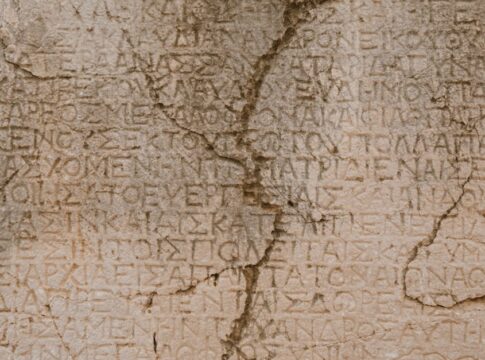
In 1799, French soldiers under Napoleon’s command were digging fortifications near the town of Rosetta in Egypt when they accidentally unearthed a black granite stone covered in inscriptions. The Rosetta Stone, containing the same text in three different scripts, became the key to deciphering Egyptian hieroglyphics. This accidental military discovery unlocked thousands of years of Egyptian history and culture that had been lost to time.
15. Coca-Cola’s Medicinal Origins
Pharmacist John Pemberton was attempting to create a cure for headaches and morphine addiction in 1886 when he accidentally created the syrup that would become Coca-Cola. His bookkeeper, Frank Robinson, accidentally discovered that carbonated water mixed with the syrup created a refreshing beverage. What began as a failed pharmaceutical experiment became the world’s most recognizable soft drink, building a global empire worth billions.
The Unpredictable Nature of History
These fifteen accidental events demonstrate that history is not solely the product of grand plans and deliberate actions. Chance, coincidence, and unexpected circumstances have repeatedly altered humanity’s trajectory in profound ways. From life-saving medicines discovered through contaminated experiments to empires saved by fortuitous storms, accidents have shaped our world as significantly as any intentional human endeavor. These stories remind us to remain observant and open to unexpected possibilities, as today’s accident might become tomorrow’s revolutionary breakthrough. The next time something goes wrong, it’s worth remembering that some of history’s greatest moments began exactly the same way—with an unexpected accident that changed everything.