
⏱️ 5 min read
When most people think about survival skills, they imagine building fires, finding water, or constructing shelters. While these abilities are certainly valuable, there’s an entire category of equally critical survival knowledge that rarely makes it into mainstream preparedness guides. These overlooked skills can mean the difference between merely surviving and truly thriving when facing unexpected challenges, whether in wilderness settings or urban emergencies.
Understanding Thermoregulation Beyond Basic Layering
Most survival education covers the basics of staying warm or cool, but few people understand the nuances of thermoregulation that can prevent life-threatening situations. The body loses heat through five primary mechanisms: radiation, conduction, convection, evaporation, and respiration. Knowing how each works allows for strategic decision-making in crisis situations.
One frequently overlooked principle is managing moisture before it becomes a problem. Many survival situations deteriorate not from external cold, but from sweat accumulation that later chills the body. Learning to recognize the early signs of overheating and removing layers before sweating begins is crucial. Similarly, understanding that the body’s extremities—hands, feet, and head—can be used as “radiators” to dump excess heat without removing core insulation can prevent the dangerous cycle of overheating and subsequent chilling.
Psychological Resilience and the Survival Mindset
Physical skills receive the majority of attention in survival training, yet psychological collapse kills more people in survival situations than lack of practical knowledge. The ability to manage fear, make decisions under extreme stress, and maintain hope through extended hardship is rarely taught systematically.
The “Rule of Threes” gets mentioned frequently—three minutes without air, three hours without shelter in harsh conditions, three days without water, three weeks without food—but the psychological component deserves equal emphasis. Research on survival situations consistently shows that mental fortitude and the will to live are often the determining factors in who survives and who doesn’t.
Developing this resilience involves practicing discomfort in controlled settings, learning to recognize and interrupt panic responses, and building what psychologists call “stress inoculation.” This means deliberately exposing yourself to manageable levels of stress and uncertainty to build confidence in your ability to handle worse situations.
Navigation Without Technology
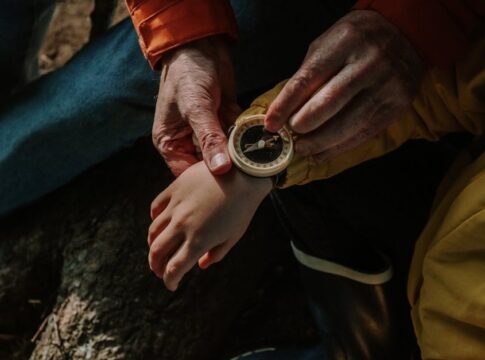
While many people know that moss grows on the north side of trees or that the North Star indicates direction, these methods are unreliable or impractical in many situations. More dependable navigation skills include understanding how to use analog watch faces as improvised compasses, reading terrain features to orient yourself, and recognizing natural indicators that signal cardinal directions.
One particularly valuable skill is learning to recognize and remember terrain features systematically. The military technique of “terrain association” involves constantly maintaining awareness of your position relative to prominent landmarks, elevation changes, and water features. This continuous mental mapping prevents getting lost in the first place, which is far preferable to trying to find your way once disoriented.
Water Procurement Beyond Obvious Sources
Finding water is covered in every survival manual, but most focus on streams, rivers, and lakes. Understanding how to extract water from sources that aren’t immediately obvious dramatically expands your options. Vegetation transpiration bags, solar stills, and dew collection can provide water in environments where surface water is unavailable.
Equally important is understanding water’s movement through landscapes. Water follows gravity and seeks the lowest points, but it also follows geological features that aren’t always visible on the surface. Learning to read vegetation patterns, topographical features, and even insect behavior can lead you to water sources that would otherwise remain hidden.
The Art of Improvised Tool Creation
Survival kits and gear are valuable, but true survival capability means being able to create tools from available materials. This extends beyond the commonly taught skill of knife-making to include cordage creation, container fabrication, and functional tools for specific tasks.
Natural cordage from plant fibers, animal sinew, or even plastic waste can be created through relatively simple techniques that most people never learn. Understanding basic principles of leverage, mechanical advantage, and material properties allows for the creation of surprisingly sophisticated tools from seemingly useless materials.
Reading Weather Patterns and Atmospheric Conditions
Weather awareness in survival contexts typically doesn’t go beyond “dark clouds mean rain.” However, understanding atmospheric pressure changes, cloud formations, wind patterns, and humidity fluctuations can provide hours or even days of advance warning before dangerous weather arrives.
Natural indicators offer remarkably accurate predictions when properly understood. Decreasing air pressure causes certain plants to close their leaves, makes smoke hang low, and creates a distinct feeling of heaviness. Learning to recognize these signs, combined with systematic observation of cloud types and movements, provides actionable intelligence for shelter improvement or location changes before conditions deteriorate.
Proper Caloric Conservation and Energy Management
Survival situations demand careful energy management, yet this skill receives minimal attention in most training. Understanding which activities provide the best return on caloric investment, when to rest versus push forward, and how to ration energy across days or weeks is critical for extended survival scenarios.
The principle of “hurry slowly” applies here—moving deliberately and avoiding unnecessary exertion can extend survival time dramatically. Learning to recognize the signs of energy depletion before reaching exhaustion, understanding the impacts of dehydration on energy efficiency, and knowing when investing calories in shelter or fire building will yield net positive returns are all crucial judgment calls that require experience and knowledge to make correctly.
These overlooked skills complement traditional survival knowledge and address gaps that could prove critical in real emergencies. By expanding survival education beyond the commonly taught basics, individuals gain a more comprehensive toolkit for handling unexpected situations with greater confidence and effectiveness.