


















⏱️ 9 min read
Imagine waking up, going to work, buying groceries, attending school, and visiting the post office—all without ever stepping outside your front door. This isn't science fiction or a futuristic concept. In the remote Alaskan wilderness, an entire community of about 200 residents shares a single address because they all live under one roof in a building that functions as an entire town.
Quick Facts
- Whittier, Alaska's Begich Towers houses approximately 200 residents in a 14-story building that contains apartments, government offices, a school, and businesses.
- The building was constructed in 1956 by the U.S. Army as a Cold War military installation called the Hodge Building.
- Whittier receives an average of 250 inches of snowfall annually and experiences winds exceeding 60 mph, making the single-building design practical.
- The only land access to Whittier is through the Anton Anderson Memorial Tunnel, a 2.5-mile tunnel shared with trains that closes at night.
- Begich Towers contains its own police department, post office, general store, health clinic, and church within its walls.
The Building That Became a Town
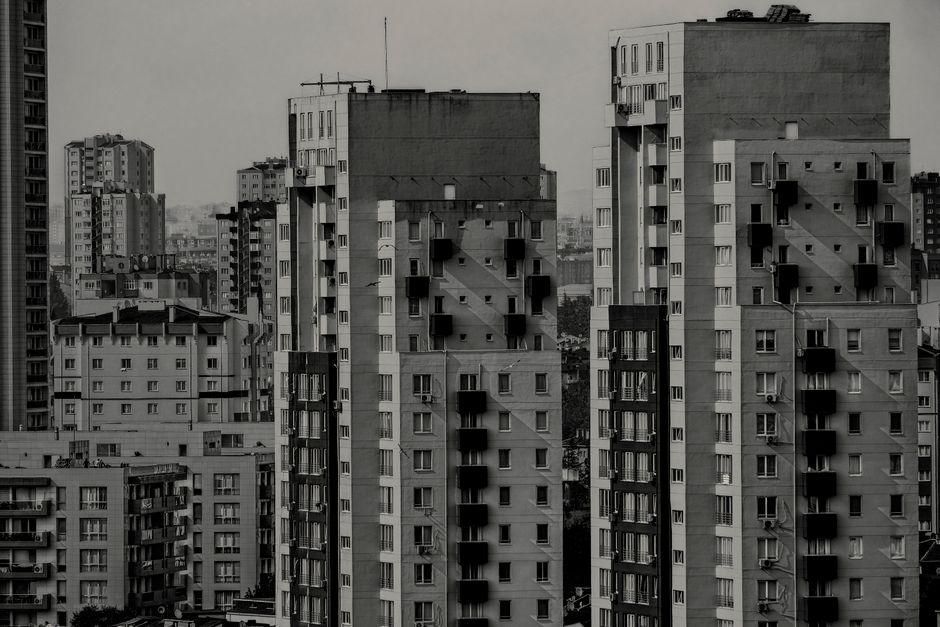
Begich Towers stands as a 14-story concrete monolith in Whittier, Alaska, a small city on the western edge of Prince William Sound. Originally constructed by the United States Army Corps of Engineers in 1956, this Cold War-era structure was designed to house military personnel at a secret military installation. The building was named the Hodge Building during its military years and served as bachelor quarters for soldiers stationed at the Port of Whittier, which was a strategic military outpost during the Cold War.
When the Army pulled out of Whittier in 1960, the building sat largely abandoned until the 1970s, when civilians began moving into the vacant apartments. The structure officially became known as Begich Towers in 1972, renamed after Congressman Nick Begich of Alaska. Today, the building contains approximately 150 apartment units ranging from studios to three-bedroom layouts, though not all units remain occupied. The majority of Whittier's year-round population of roughly 200 people—though some estimates place it closer to 270—calls this single structure home.
The building's design reflects its military origins. Thick concrete walls and narrow hallways characterize the interior, while the exterior presents a stark, utilitarian facade that shows its age. Despite its austere appearance, residents have personalized their spaces over decades, and the building now represents a unique experiment in concentrated community living that has endured for more than 50 years.
Why Everyone Lives Under One Roof
Whittier's extreme climate makes the single-building concept not just unusual but genuinely practical. The town sits in a valley surrounded by mountains that funnel Pacific storms directly into the community, resulting in an average annual precipitation of more than 200 inches—much of it falling as snow. Winter temperatures regularly drop below freezing, and the wind chill can make conditions dangerous for anyone venturing outside.
The building design allows residents to access essential services without braving the elements. Parents can walk their children to school through interior corridors, workers can reach the city offices on the third floor via enclosed staircases, and residents can pick up mail from the post office without putting on winter gear. This arrangement becomes particularly valuable during the winter months when daylight hours shrink dramatically—in December, Whittier receives only about six hours of sunlight per day.
The tunnel that provides the only land access to Whittier reinforces the town's isolation. The Anton Anderson Memorial Tunnel, which opened to vehicle traffic in 2000, stretches 2.5 miles through Maynard Mountain and ranks as the longest highway tunnel in North America. The tunnel operates on a strict schedule because it's only wide enough for a single lane of traffic and must also accommodate Alaska Railroad trains. Vehicles can only pass through during designated times, and the tunnel closes completely at night, effectively cutting off Whittier from the outside world for hours at a stretch.
Life Inside Begich Towers
The first floor of Begich Towers houses many of the town's essential services and businesses. The post office operates from a small space where residents collect mail addressed simply to "Begich Towers, Whittier, AK 99693." A general store stocks groceries, basic supplies, and necessities, though residents often make trips to Anchorage, about 60 miles away, for larger shopping excursions. The Anchor Inn, a small hotel and bar, occupies space on the ground level and serves as a social gathering spot for both residents and the tourists who visit during summer months.
The Whittier School, which serves students from kindergarten through 12th grade, operates on the building's third floor. The school typically enrolls between 15 and 25 students in total, making it one of Alaska's smallest public schools. Teachers often instruct multiple grade levels simultaneously, and the intimate setting creates a unique educational environment where every student receives significant individual attention.
The building also contains the city offices, including the police department and a small health clinic. A Methodist church meets in a conference room, transforming the space for Sunday services. Residents have access to a shared laundry facility, and the building features a small indoor playground where children can burn energy during the long winter months when outdoor play becomes challenging.
Long corridors connect the building's sections, and these hallways serve as the town's "streets." Residents encounter neighbors regularly in these passages, creating a social dynamic unlike typical suburban or urban living. Privacy exists within individual apartments, but the shared spaces foster a sense of community that many residents cite as one of the advantages of this unconventional living arrangement.
The Town's History and Transformation
Whittier's existence as a town traces back to its strategic military importance. The U.S. Army chose the location because it offered deep-water access that rarely froze, making it valuable for year-round port operations. The Alaska Railroad had already established a connection to the site in 1943, bringing supplies and personnel through a railroad tunnel—the same tunnel later converted for vehicle use.
At its peak military occupancy in the late 1950s, Whittier supported more than 1,000 military personnel and their families. The Army constructed two massive residential towers: the Hodge Building (later Begich Towers) and the even larger Buckner Building. The Buckner Building, completed in 1953, once held the title of the largest building in Alaska, spanning 150 acres of floor space across six stories. This structure housed a bowling alley, a movie theater, a gym, a swimming pool, and essentially everything needed for a self-contained military community.
After the 1964 Good Friday earthquake—which registered 9.2 on the Richter scale and remains the most powerful earthquake recorded in North American history—significant damage affected both buildings and hastened the military's withdrawal from Whittier. The Buckner Building was abandoned and remains a massive, decaying structure that looms over the town as a haunting reminder of Whittier's military past. Today, it stands empty and dangerous, its interior off-limits though visible from Begich Towers.
The civilian population that gradually took over Begich Towers created a year-round community, though Whittier's population swells during summer months when seasonal workers arrive to support the cruise ship industry and recreational fishing operations. Prince William Sound attracts tourists who board glacier cruises and kayaking expeditions, and these summer visitors provide crucial economic support for year-round residents.
Modern Challenges and Community Life
Living in Begich Towers presents unique challenges beyond the weather. The building's aging infrastructure requires constant maintenance, and the condominium association that manages the property must coordinate repairs and improvements among residents who own their individual units. Major projects like roof repairs or heating system upgrades require consensus-building in a community where nearly everyone will be affected by the decisions.
The cost of living in Whittier runs higher than most mainland American cities due to transportation expenses. Nearly everything must be shipped in, either by train or truck through the tunnel, or by boat during the ice-free months. A gallon of milk might cost $6 or more, and other groceries carry similar premiums. Many residents maintain employment with the city, the school district, or businesses serving the tourist trade, while others work remotely in an era when internet connectivity has made such arrangements more feasible even in remote locations.
Despite these challenges, residents often speak positively about the strong sense of community that develops when everyone truly is your neighbor. Children grow up with built-in playmates, and residents look out for one another in ways that have become rare in modern American society. During emergencies, help is never more than a few doors away, and the shared experience of living in such an unusual environment creates bonds that extend beyond typical neighborhood relationships.
The building hosts community events in shared spaces, and residents celebrate holidays together with potluck dinners and gatherings. The isolation that might seem oppressive to outsiders becomes familiar to those who choose to make Whittier their permanent home, and many residents report that they wouldn't want to live anywhere else despite the unconventional arrangements.
Frequently Asked Questions
Can anyone move to Whittier and live in Begich Towers?
Yes, apartments in Begich Towers occasionally become available for purchase or rent. Prospective residents should research carefully, as living in Whittier requires adaptation to extreme weather, isolation, and the unique dynamics of sharing a building with the entire town.
Do residents need to go outside at all during winter?
While residents can access many services inside the building, they still need to go outside for some activities and to reach the tunnel for trips to other cities. However, the building's design minimizes necessary outdoor exposure during severe weather.
Are there other towns like Whittier where everyone lives in one building?
Begich Towers represents the most complete example in the United States, though some small communities in extreme climates feature connected buildings. Several towns in the Canadian Arctic and Greenland have similar arrangements designed to combat harsh weather conditions.
What happens if there's a fire or emergency in the building?
The building has fire suppression systems and multiple exits as required by code. The Whittier Volunteer Fire Department maintains equipment and personnel to respond to emergencies, and the building's concrete construction provides some fire resistance, though a major incident would pose significant risks to the concentrated population.
Key Takeaways
- Begich Towers in Whittier, Alaska, houses approximately 200 permanent residents along with essential services, schools, and businesses, making it a functioning town within a single structure.
- The building's design stems from practical necessity—extreme weather with 250 inches of annual snowfall and isolation accessible only through a shared tunnel make concentrated living advantageous.
- Originally a 1956 Cold War military installation, the building transitioned to civilian use after Army withdrawal in 1960 and has served as a residential community for over 50 years.
- Residents develop unusually strong community bonds through shared spaces and the unique experience of living in America's most concentrated town, despite challenges like higher costs and aging infrastructure.