















1 / 20 Questions
0 Points

How tall is the Statue of Liberty from base to torch?

305 feet

151 feet

225 feet

186 feet

Points won
0
Correct score
0%

More Quizzes

More Articles

20 Interesting Facts About the Earth’s Continents

20 Interesting Facts About the Earth’s Continents

⏱️ 6 min read

The continents that make up our planet's landmasses hold countless geological wonders, historical mysteries, and fascinating characteristics that shape life as we know it. From massive tectonic movements to surprising size comparisons, these seven major land divisions contain remarkable features that continue to intrigue scientists and explorers alike. Understanding these continental facts provides insight into Earth's past, present, and future transformations.

Remarkable Facts About Earth's Continental Landmasses

1. Asia Dominates as the Largest Continent

Asia covers approximately 44.58 million square kilometers, making it the largest continent by both land area and population. This massive landmass accounts for roughly 30% of Earth's total land area and is home to over 4.6 billion people, representing about 60% of the global population. The continent stretches from the Arctic Ocean in the north to the Indian Ocean in the south, encompassing diverse climates from Siberian tundra to tropical rainforests.

2. Australia Is the Flattest Continent

Australia holds the unique distinction of being the world's flattest continent, with an average elevation of only 330 meters above sea level. Unlike other continents with towering mountain ranges, Australia's landscape is dominated by vast plains and low plateaus, a result of millions of years of erosion wearing down ancient rock formations.

3. Africa Is Splitting Apart

The African continent is literally tearing itself apart along the East African Rift System. This geological phenomenon is creating a new ocean as the Somali and Nubian tectonic plates slowly separate at a rate of approximately 7 millimeters per year. Scientists predict that in about 50 million years, East Africa will split completely, creating a new continent and ocean basin.

4. Antarctica Contains 90% of Earth's Ice

Antarctica, the southernmost continent, holds approximately 90% of all ice on Earth and about 70% of the planet's fresh water. If all this ice were to melt, global sea levels would rise by an estimated 58 meters, dramatically reshaping coastlines worldwide. The ice sheet averages 2,160 meters in thickness.

5. Europe and Asia Share the Same Landmass

Europe and Asia are actually part of one continuous landmass called Eurasia, with no natural water boundary separating them. The division is primarily cultural and historical rather than geographical, with the Ural Mountains, Ural River, and Caucasus Mountains traditionally marking the boundary between the two continents.

6. South America Has the World's Highest Waterfall

Angel Falls in Venezuela, South America, plunges 979 meters from the top of Auyán-tepui mountain, making it the world's tallest uninterrupted waterfall. The falls are so high that much of the water turns into mist before reaching the ground, especially during the dry season.

7. North America Once Had Giant Inland Seas

During the Cretaceous Period, approximately 100 million years ago, the Western Interior Seaway divided North America from north to south, creating two separate landmasses. This shallow sea stretched from the Arctic Ocean to the Gulf of Mexico and was home to numerous marine reptiles.

8. The Sahara Desert Spans Multiple Time Zones

Africa's Sahara Desert is so vast that it covers an area larger than the continental United States, spanning approximately 9 million square kilometers across eleven countries. This makes it the world's largest hot desert and roughly equivalent to the size of China.

9. Australia Is Both a Continent and a Country

Australia is the only landmass that functions as both a continent and a single nation. While sometimes referred to as part of Oceania, Australia proper is the smallest continent but the sixth-largest country by total area, covering approximately 7.69 million square kilometers.

10. Antarctica Has No Native Human Population

Antarctica remains the only continent without an indigenous human population or permanent residents. The only people living there are researchers and support staff at scientific research stations, with numbers ranging from about 1,000 in winter to 5,000 during summer months.

11. Continents Drift Several Centimeters Annually

All continents are constantly moving due to plate tectonics, typically at rates of 2 to 10 centimeters per year—about the same rate that fingernails grow. North America and Europe, for example, are moving apart at approximately 2.5 centimeters annually as the Atlantic Ocean continues to widen.

12. Asia Contains the Highest and Lowest Points on Land

Asia boasts both Earth's highest point above sea level, Mount Everest at 8,849 meters, and the lowest exposed point on land, the Dead Sea shore at 430.5 meters below sea level. This range of over 9,200 meters demonstrates the continent's extreme topographical diversity.

13. South America Produces 20% of Earth's Oxygen

The Amazon Rainforest in South America generates approximately 20% of the world's oxygen through photosynthesis. This massive forest covers about 5.5 million square kilometers across nine countries, making it the largest tropical rainforest on Earth.

14. Europe Has the Longest Coastline Relative to Its Size

Despite being the second-smallest continent, Europe has an extraordinarily long and complex coastline exceeding 38,000 kilometers when including islands. This extensive coastal access has profoundly influenced European history, trade, and cultural development.

15. Africa Straddles All Four Hemispheres

Africa is the only continent that extends into all four hemispheres—Northern, Southern, Eastern, and Western. The equator runs through the middle of the continent, while the Prime Meridian passes through Ghana, creating this unique geographic distinction.

16. Antarctica's Ice Contains Ancient Climate Records

Ice cores drilled from Antarctica's ice sheet provide climate data dating back 800,000 years. These cylindrical samples contain trapped air bubbles and particles that reveal historical atmospheric composition, temperatures, and even volcanic eruptions from hundreds of thousands of years ago.

17. Continents Were Once United as Pangaea

Approximately 335 million years ago, all continents were joined together in a supercontinent called Pangaea, surrounded by a single global ocean named Panthalassa. This massive landmass began breaking apart about 175 million years ago, gradually forming the continents we recognize today.

18. North America Contains the World's Oldest Rocks

The Canadian Shield in North America contains some of Earth's oldest exposed rock formations, with samples from the Acasta Gneiss dating back approximately 4.03 billion years. These ancient rocks provide crucial evidence about the early formation of Earth's crust.

19. Asia and North America Were Once Connected

The Bering Land Bridge, also called Beringia, connected Asia and North America during ice ages when sea levels dropped. This land connection, which existed as recently as 11,000 years ago, allowed human migration from Asia to the Americas and facilitated animal movement between continents.

20. Continental Crust Is Less Dense Than Oceanic Crust

Continental crust, which forms the continents, is less dense than oceanic crust, with an average density of 2.7 grams per cubic centimeter compared to oceanic crust's 3.0 grams per cubic centimeter. This lower density causes continents to "float" higher on the underlying mantle, explaining why they rise above sea level.

Conclusion

The Earth's continents represent dynamic geological features that have evolved over billions of years and continue changing today. From Antarctica's massive ice reserves to Africa's splitting rift valley, these landmasses demonstrate the powerful forces shaping our planet. Understanding these continental characteristics helps us appreciate Earth's geological history, predict future changes, and recognize how these vast landmasses influence climate, biodiversity, and human civilization across the globe.
18 Fascinating Facts About Africa

18 Fascinating Facts About Africa

⏱️ 6 min read

Africa, the world's second-largest continent, is a land of extraordinary diversity, ancient history, and remarkable natural wonders. From its vast deserts to lush rainforests, from its incredible wildlife to its rich cultural heritage, Africa continues to captivate and surprise those who study it. This exploration reveals lesser-known aspects of this magnificent continent that challenge common misconceptions and highlight its unique characteristics.

Geographic and Natural Wonders

1. The Continent That Touches Four Hemispheres

Africa is the only continent that spans all four hemispheres—Northern, Southern, Eastern, and Western. The prime meridian (0° longitude) and the equator intersect through Africa, making it uniquely positioned on our planet. This geographic distinction means Africa experiences an incredible range of climates and ecosystems simultaneously, from Mediterranean climates in the north to tropical conditions at the equator.

2. Home to the World's Longest River

The Nile River, stretching approximately 6,650 kilometers (4,130 miles), holds the title as the world's longest river. Flowing through eleven countries, including Uganda, Sudan, and Egypt, the Nile has been the lifeblood of civilizations for millennia. Its annual flooding patterns supported ancient Egyptian agriculture and contributed to one of humanity's greatest civilizations.

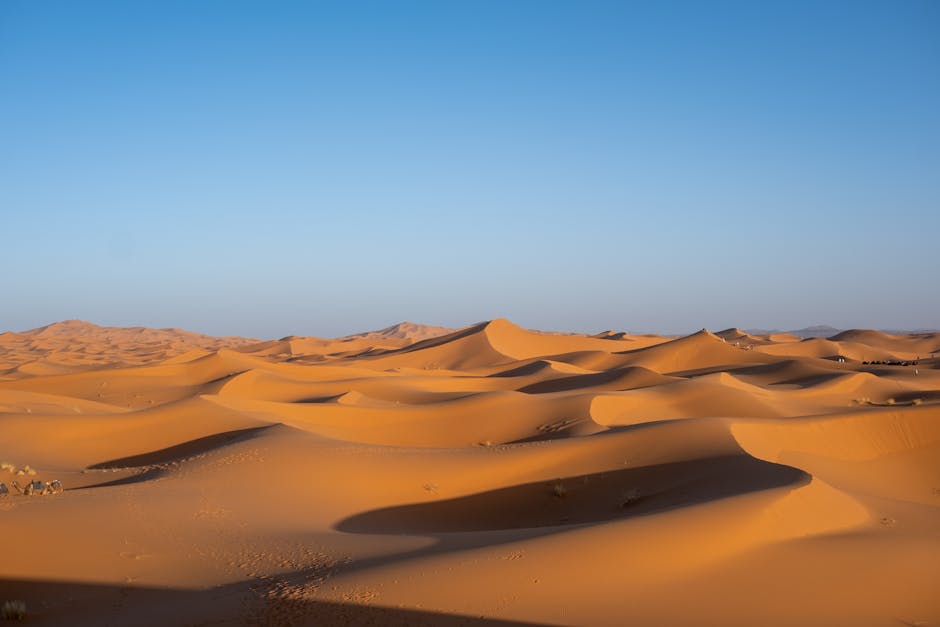
3. The Sahara Desert's Surprising Transformation

The Sahara Desert, covering about 9 million square kilometers, wasn't always an arid wasteland. Between 5,000 and 10,000 years ago, the Sahara was a green, fertile region with lakes, rivers, and vegetation. Ancient rock art depicting giraffes, elephants, and people swimming provides evidence of this dramatic climate shift, reminding us that Earth's environments are constantly evolving.

4. Africa's Unique Continental Rift

The East African Rift System is actively splitting the continent apart. This geological phenomenon is creating new oceanic crust, and scientists predict that in about 50 million years, the eastern portion of Africa could separate completely, forming a new continent. The rift has already created spectacular features like the Great Rift Valley and numerous volcanic mountains.

Wildlife and Biodiversity

5. The Largest Land Animal Migration on Earth

The annual wildebeest migration in East Africa involves over 1.5 million wildebeest, along with hundreds of thousands of zebras and gazelles. This circular journey of approximately 1,800 miles through Tanzania and Kenya is the largest land animal migration on the planet, driven by seasonal rainfall patterns and the search for fresh grazing lands.

6. Madagascar's Evolutionary Isolation

Madagascar, an island nation off Africa's southeastern coast, separated from the continent approximately 165 million years ago. This isolation has resulted in one of the highest rates of endemism in the world—around 90% of Madagascar's wildlife exists nowhere else on Earth. The island is home to unique species like lemurs, fossas, and numerous chameleon varieties.

7. The Congo Basin's Oxygen Production

The Congo Basin rainforest, the world's second-largest rainforest, produces approximately 40% of the world's oxygen outside of the Amazon. This massive ecosystem spans six countries and contains an estimated 10,000 plant species, 1,000 bird species, and 400 mammal species, making it one of the most biodiverse regions on the planet.

Cultural and Linguistic Diversity

8. A Linguistic Treasure Trove

Africa is home to between 1,500 and 2,000 languages—nearly one-third of all languages spoken worldwide. Nigeria alone has over 500 languages, making it one of the most linguistically diverse countries globally. This linguistic richness reflects the continent's complex history and diverse cultural heritage spanning thousands of years.

9. The Cradle of Humankind

Africa is scientifically recognized as the birthplace of humanity. The oldest known human fossils, dating back approximately 300,000 years, were discovered in Morocco. East Africa, particularly Ethiopia and Kenya, has yielded numerous crucial hominin fossils, providing invaluable insights into human evolution and our species' origins.

10. Ancient African Kingdoms and Empires

Long before European colonization, Africa was home to sophisticated kingdoms and empires. The Mali Empire, at its height in the 14th century, was one of the world's wealthiest states, with Mansa Musa considered the richest person in history. The Kingdom of Kush, Great Zimbabwe, and the Axumite Empire all demonstrated advanced governance, architecture, and trade systems.

Unique Resources and Natural Phenomena

11. The Mineral Wealth Beneath African Soil

Africa contains approximately 30% of the world's mineral reserves, including vast deposits of diamonds, gold, platinum, cobalt, and coltan—a mineral essential for modern electronics. The Democratic Republic of Congo alone supplies over 60% of the world's cobalt, crucial for electric vehicle batteries.

12. Lake Tanganyika's Remarkable Depth

Lake Tanganyika, located in the Great Rift Valley, is the world's second-deepest lake at 1,470 meters (4,820 feet) and the longest freshwater lake at 676 kilometers. It holds approximately 16% of the world's available fresh water and is home to over 350 species of fish, most found nowhere else on Earth.

13. The Youngest Population on the Planet

Africa has the world's youngest population, with a median age of approximately 19 years, compared to the global median of 30 years. By 2050, Africa's population is projected to reach 2.5 billion, representing significant demographic and economic potential for the continent's future.

Modern Africa and Global Connections

14. Technological Innovation and Mobile Banking

Africa has become a global leader in mobile banking technology. Kenya's M-Pesa, launched in 2007, revolutionized financial services by allowing people without traditional bank accounts to transfer money via mobile phones. This innovation has since spread globally, demonstrating African ingenuity in solving infrastructure challenges.

15. More Countries Than Any Other Continent

Africa comprises 54 recognized countries, more than any other continent. This political division largely stems from the colonial "Scramble for Africa" in the late 19th century, when European powers divided the continent with little regard for existing ethnic, linguistic, or cultural boundaries.

16. Victoria Falls' Thundering Majesty

Victoria Falls, located on the border between Zambia and Zimbabwe, is considered the world's largest sheet of falling water. At peak flow, over 500 million liters of water cascade over the falls every minute, creating a mist visible from 50 kilometers away. The local name, "Mosi-oa-Tunya," means "The Smoke That Thunders."

17. African Agricultural Origins

Many foods now consumed globally originated in Africa, including coffee from Ethiopia, watermelon from southern Africa, and various grain crops like sorghum and millet. The continent's agricultural diversity has contributed significantly to global food security and culinary traditions worldwide.

18. The Expanding Middle Class

Africa's middle class is rapidly expanding, with the African Development Bank estimating that approximately 350 million Africans now belong to the middle class. This economic shift is driving increased consumer spending, urbanization, and entrepreneurship, fundamentally changing the continent's economic landscape and global position.

Conclusion

These eighteen facts merely scratch the surface of Africa's complexity and richness. From its pivotal role in human evolution to its position as a continent of future global significance, Africa defies simple categorization. Understanding these diverse aspects—geographic, cultural, historical, and economic—helps dispel stereotypes and reveals a continent of immense potential, ancient wisdom, and modern innovation. As Africa continues to shape global trends in technology, demography, and ecology, appreciating its multifaceted nature becomes increasingly important for understanding our interconnected world.