
⏱️ 5 min read
From the spiraling shells of nautiluses to the branching networks of river deltas, nature exhibits recurring patterns that transcend species, ecosystems, and scales. These mathematical and geometric designs appear consistently across the natural world, revealing fundamental principles that govern how organisms grow, how systems organize, and how energy flows through the universe. Understanding these patterns provides insight into the underlying mechanics of nature itself.
The Mathematics of Spirals
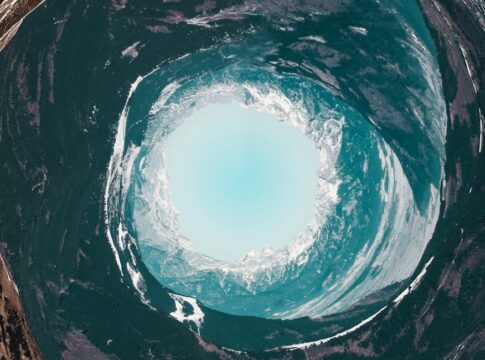
Spirals represent one of the most prevalent patterns in nature, appearing in galaxies, weather systems, seashells, and plant structures. The Fibonacci spiral, based on the famous mathematical sequence where each number equals the sum of the two preceding numbers, manifests in numerous biological forms. Sunflower seed heads arrange themselves in opposing spirals that typically follow Fibonacci numbers, creating an efficient packing system that maximizes seed density.
This spiral pattern emerges because it represents the optimal solution to spatial constraints. Pine cones, succulents, and the unfurling fronds of ferns all employ similar spiral arrangements. The nautilus shell grows in a logarithmic spiral, maintaining the same shape as it expands—a phenomenon known as self-similarity. This pattern allows for continuous growth without changing the fundamental structure, demonstrating how mathematical principles translate into biological advantages.
Branching Networks Throughout Nature
Branching patterns appear with remarkable consistency across vastly different scales and contexts. Trees branch into progressively smaller limbs and twigs, lightning splits into fractal tendrils across the sky, and rivers divide into tributary networks that mirror the branching of blood vessels in animal bodies. This pattern emerges because it efficiently distributes resources or energy across space.
The branching architecture of lungs maximizes surface area for gas exchange within a confined volume. Similarly, tree branching optimizes light capture for photosynthesis while minimizing the material needed for structural support. Neural networks in the brain follow branching patterns to transmit signals efficiently. These structures often exhibit fractal properties, where the same branching pattern repeats at multiple scales, creating self-similar networks that function effectively across different magnifications.
Optimization Through Branching
Nature favors branching because it solves distribution problems elegantly. Whether transporting nutrients, collecting light, or dissipating electrical charge, branching networks provide the shortest paths while maintaining broad coverage. The angle and frequency of branches often follow mathematical rules that minimize energy expenditure while maximizing functional efficiency.
Hexagonal Tessellations
Hexagons appear repeatedly in nature as optimal space-filling shapes. Honeybees construct their combs in hexagonal cells, a configuration that uses the least amount of wax while providing maximum storage space and structural strength. This same pattern appears in the compound eyes of insects, the basalt columns of Giant’s Causeway, and the segmented shells of some turtles.
The prevalence of hexagons stems from physical and mathematical principles. When circles or cylinders press together, they naturally form hexagonal spaces between them. This occurs in bubble foam, where surface tension pulls each bubble into a shape that minimizes its surface area. The result is a stable, efficient structure that distributes stress evenly across the material.
Symmetry in Living Systems
Symmetry pervades the natural world in various forms, from the bilateral symmetry of animals to the radial symmetry of flowers and starfish. Bilateral symmetry—where organisms can be divided into mirror-image halves—dominates the animal kingdom because it facilitates directional movement and streamlined body plans. This symmetry typically aligns with the direction of motion, enhancing efficiency in locomotion.
Radial symmetry, where body parts radiate from a central point, appears in organisms that interact with their environment from all directions. Flowers display radial symmetry to attract pollinators approaching from any angle. Sea anemones and jellyfish employ this pattern to capture prey drifting from any direction in the water column. Even snowflakes exhibit six-fold radial symmetry, determined by the molecular structure of ice crystals.
Wave Patterns and Oscillations
Waves represent another fundamental pattern, manifesting in ocean swells, sand dunes, and the stripes of zebras. These patterns emerge from repeating cycles and periodic forces. Wind creates waves in both water and sand through similar mechanical processes, producing rhythmic peaks and troughs that propagate across surfaces.
Animal coat patterns often result from wave-like chemical processes during embryonic development. Reaction-diffusion systems, where chemicals spread and interact at different rates, generate stripes, spots, and mottled patterns. These same mathematical models explain the markings on seashells, butterfly wings, and tropical fish, demonstrating how similar mechanisms operate across diverse species.
Fractal Geometry in Nature
Fractals, patterns that repeat at progressively smaller scales, appear throughout natural systems. Coastlines exhibit fractal properties—measuring them with increasing precision reveals ever more detail, making precise length measurement impossible. Mountains, clouds, and cauliflower all display fractal characteristics, where zooming in reveals structures similar to the whole.
This self-similarity arises from iterative processes that repeat the same rules at different scales. Each branch of a tree follows similar growth rules as the trunk, creating fractal branching. Fern fronds consist of smaller fronds arranged on a central stem, which themselves bear even smaller fronds, repeating the same pattern through several iterations. This recursive design allows complex structures to emerge from simple, repeated instructions encoded in genetic information.
The Universal Language of Pattern
These recurring patterns reveal that nature operates through a limited set of fundamental principles. Physical laws, mathematical relationships, and optimization pressures shape diverse phenomena into similar forms. Whether through evolutionary selection, physical forces, or chemical processes, nature gravitates toward efficient, stable solutions that appear repeatedly across different contexts. Recognizing these patterns enhances our understanding of natural systems and continues to inspire human innovation in architecture, engineering, and design.