
⏱️ 5 min read
Beneath the surface of our planet lies an intricate network of spaces, caverns, and passageways that form a parallel world largely invisible to those walking above. These subterranean realms possess their own unique geography, ecosystems, and characteristics that rival the complexity of surface landscapes. From natural cave systems to human-made tunnels, the underground world represents a fascinating frontier that continues to reveal new discoveries and challenge our understanding of Earth’s geography.
Natural Cave Systems and Their Formation
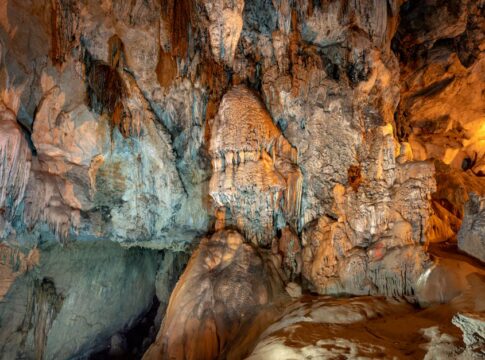
The most extensive underground geographies emerge from natural processes spanning millions of years. Limestone caves, formed through the dissolution of soluble rock by acidic groundwater, create vast networks that can extend for hundreds of kilometers. The Mammoth Cave system in Kentucky, currently mapped at over 650 kilometers, represents the world’s longest known cave system, yet experts believe significant portions remain unexplored.
Karst topography, characterized by sinkholes, underground streams, and disappearing rivers, demonstrates how surface and subsurface geographies interconnect. Regions like the Dinaric Alps in southeastern Europe, the Stone Forest of China, and the Yucatan Peninsula contain some of the most dramatic karst landscapes, where the boundary between above and below ground becomes remarkably fluid.
Lava Tubes and Volcanic Underground Features
Volcanic activity creates another category of underground geography through lava tubes formed when the surface of a lava flow cools and solidifies while molten rock continues flowing beneath. These natural tunnels can extend for dozens of kilometers, with some reaching dimensions large enough to contain buildings. The Kazumura Cave in Hawaii stretches over 65 kilometers, making it the longest lava tube documented worldwide.
Underground Water Systems
Aquifers represent perhaps the most crucial aspect of subterranean geography, serving as vital freshwater reserves for millions of people. These underground layers of water-bearing permeable rock exist at various depths and scales, from shallow water tables to massive systems like the Ogallala Aquifer beneath the Great Plains of North America.
The geography of underground water extends beyond simple storage. Subterranean rivers flow through cave systems, sometimes surfacing as springs or feeding surface water bodies. The Puerto Princesa Underground River in the Philippines and the Sac Actun system in Mexico demonstrate how these hidden waterways can rival surface rivers in scale and importance. Understanding the topography and flow patterns of these underground water systems proves essential for sustainable water management and conservation efforts.
Biological Underground Geography
The subterranean world hosts unique ecosystems adapted to permanent darkness, stable temperatures, and limited nutrients. This specialized field, known as subterranean biology, has identified thousands of troglobitic species—organisms that have evolved specifically for cave environments. These creatures exhibit remarkable adaptations including loss of pigmentation, reduced or absent eyes, and enhanced non-visual sensory capabilities.
Underground ecosystems follow distinct geographic patterns influenced by factors such as cave depth, humidity levels, substrate composition, and connections to surface environments. Certain cave systems act as islands of endemism, hosting species found nowhere else on Earth. The Movile Cave in Romania, sealed from the outside world for over five million years, contains an entire ecosystem based on chemosynthesis rather than photosynthesis, representing a fundamentally different biological geography.
Human-Made Underground Landscapes
Urban underground geography has expanded dramatically as cities grow vertically both upward and downward. Major metropolitan areas now contain extensive networks of tunnels, subway systems, underground shopping complexes, and utility corridors that function as subterranean cities. Tokyo’s underground network extends across multiple levels, integrating transportation, commerce, and infrastructure into a cohesive below-ground urban geography.
Mining operations have created vast underground voids, with some mines descending several kilometers into the Earth’s crust. The TauTona mine in South Africa reaches depths exceeding 3.9 kilometers, where rock temperatures approach 60 degrees Celsius. These operations reveal geological strata and mineral deposits that provide insights into Earth’s formation and composition.
Underground Storage and Strategic Facilities
Governments and industries increasingly utilize underground spaces for storage and protection. Salt caverns store strategic petroleum reserves, while abandoned mines house data centers, archives, and even agricultural facilities. The Svalbard Global Seed Vault, carved into an Arctic mountain, preserves crop diversity against global catastrophes, exemplifying how underground geography serves long-term human interests.
Mapping and Exploration Technologies
Documenting underground geography presents unique challenges requiring specialized techniques. Traditional surveying methods using tape measures and compasses have given way to advanced technologies including LiDAR scanning, ground-penetrating radar, and three-dimensional modeling software. Cave cartographers now create highly detailed maps revealing the complex three-dimensional nature of subterranean passages.
Remote sensing technologies help identify potential underground features from the surface, while robotic explorers access passages too dangerous or narrow for human entry. These technological advances continue expanding our knowledge of underground geography, regularly revealing previously unknown cave systems and extending known passages.
Conservation and Future Challenges
Underground environments face increasing threats from pollution, groundwater extraction, and development activities. Contaminants entering cave systems or aquifers can persist for decades, affecting both subterranean ecosystems and human water supplies. Climate change impacts underground geography through altered recharge rates, changing water tables, and modified cave microclimates.
Protected cave systems and karst regions worldwide recognize the importance of preserving these hidden geographies. Understanding and safeguarding underground worlds becomes increasingly critical as human populations grow and surface resources face greater pressure. The hidden geography beneath our feet represents not only a scientific frontier but also an essential component of planetary health and human sustainability.