
⏱️ 7 min read
The Vikings have captured our imagination for centuries, but many popular beliefs about these Norse seafarers don’t quite match historical reality. Far from being simply brutal raiders, the Vikings were sophisticated traders, explorers, and craftspeople who left an indelible mark on European history. Their influence extended from North America to the Middle East, and their legacy continues to fascinate historians and enthusiasts alike. Here are ten surprising facts that reveal the true complexity of Viking culture and society.
Fascinating Truths About Norse Culture and History
1. Vikings Never Actually Wore Horned Helmets
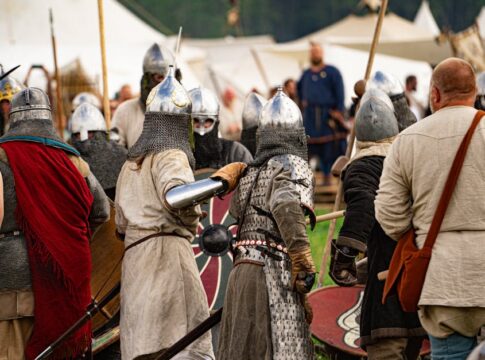
Perhaps the most persistent myth about Vikings is that they wore horned helmets into battle. In reality, there is no archaeological evidence supporting this iconic image. The misconception likely originated in 19th-century Romantic nationalism, particularly through costume designs for Wagner’s opera cycle “Der Ring des Nibelungen.” Actual Viking helmets were simple, practical iron caps, sometimes with nose guards for protection. Horned helmets would have been impractical in combat, providing enemies with easy grab points and adding unnecessary weight. The few ceremonial horned helmets found in Scandinavia actually predate the Viking Age by over a thousand years.
2. The Word “Viking” Was Actually a Job Description
The term “Viking” didn’t refer to an entire civilization or ethnic group, but rather to a specific activity. In Old Norse, “viking” meant a pirate raid or the act of going on an expedition overseas. A person would “go viking” much like someone today might go fishing or hunting. The Norse people who stayed home farming, trading, or crafting were not Vikings. This distinction is important because it highlights that raiding was just one aspect of Norse culture, not its defining characteristic. Most Norse people never went on raids at all, instead living peaceful lives as farmers, merchants, and artisans.
3. Vikings Reached North America Five Centuries Before Columbus
Around the year 1000 CE, Norse explorer Leif Erikson established a settlement called Vinland on the North American continent, roughly 500 years before Christopher Columbus’s famous voyage. Archaeological evidence at L’Anse aux Meadows in Newfoundland, Canada, confirms Norse presence in North America. The Vikings didn’t establish permanent colonies, likely due to conflicts with indigenous peoples and the settlement’s distance from Greenland and Iceland. Nevertheless, this achievement demonstrates the remarkable seafaring capabilities of the Vikings and their willingness to explore far beyond known territories. Their navigational skills, using sun compasses and detailed knowledge of ocean currents, enabled these extraordinary journeys.
4. Norse Women Enjoyed Remarkable Rights and Independence
Compared to many contemporary societies, Viking women held surprisingly progressive rights. They could own property, request divorces, and reclaim their dowries if marriages ended. Women managed household finances and farms when men were away on expeditions, wielding considerable authority. Some women even became wealthy traders in their own right. Archaeological evidence suggests that some women may have been warriors, though this remains debated among scholars. The famous Birka warrior grave, initially assumed to contain a male warrior, was discovered through DNA analysis to actually hold a woman buried with full military honors and weapons. While Viking society was still patriarchal, women’s status was notably higher than in many medieval European cultures.
5. Vikings Were Obsessed With Personal Grooming and Hygiene
Contrary to the popular image of filthy barbarians, Vikings were remarkably clean by medieval standards. Archaeological excavations have uncovered numerous grooming tools including combs, razors, tweezers, and ear cleaners. They bathed at least once a week, which was considerably more frequent than most Europeans at the time. Vikings even had a specific day dedicated to bathing—Saturday, or “laugardagur” in Old Norse, literally meaning “washing day.” English chroniclers actually complained that Viking men were too attractive to English women because of their cleanliness and habit of combing their hair. This focus on appearance extended to their clothing, which was often dyed in bright colors and featured intricate patterns.
6. They Established the World’s First Democratic Parliament
The Icelandic Althing, established in 930 CE, is considered one of the world’s oldest surviving parliaments. This assembly allowed free men to gather annually to settle disputes, pass laws, and make collective decisions. While not democratic by modern standards—women, slaves, and the poor couldn’t participate—it represented a remarkably progressive system of governance for its time. The Althing met at Thingvellir, a dramatic landscape of volcanic rifts where representatives from across Iceland would gather for two weeks each summer. Similar assemblies, called “things,” were established throughout Scandinavian settlements, demonstrating the Vikings’ preference for collective decision-making over pure autocracy.
7. Viking Ships Were Engineering Marvels
The legendary Viking longships represented cutting-edge maritime technology. These vessels were lightweight yet incredibly strong, constructed using clinker-building techniques where overlapping planks were riveted together. Their shallow draft allowed navigation in both deep oceans and shallow rivers, making them perfect for both raiding and exploration. The flexible hull design allowed the ships to flex with waves rather than fighting against them, improving seaworthiness. Vikings could sail these ships or row them, providing remarkable versatility. The symmetrical bow and stern meant ships could reverse direction without turning around, a crucial advantage when making quick escapes. These technological innovations made Vikings the supreme sailors of their age.
8. They Used Crystals for Advanced Navigation
Vikings may have used “sunstones”—calcite crystals that can detect polarized light—to navigate when the sun wasn’t visible. These crystals can locate the sun’s position even through clouds or fog by showing different light patterns when rotated. While no sunstone has been definitively found in a Viking navigation context, a calcite crystal was discovered in an Elizabethan shipwreck alongside navigation equipment, and medieval Icelandic texts reference such stones. Modern experiments have demonstrated that sunstones can accurately determine the sun’s position, which would have been invaluable for maintaining latitude during long ocean voyages. This suggests Vikings possessed sophisticated scientific knowledge that enabled their far-ranging expeditions.
9. Vikings Founded Major European Cities
Many modern cities trace their origins to Viking settlements. Dublin, Ireland’s capital, was founded as a Viking trading post in 841 CE. The name “Dublin” comes from the Irish “Dubh Linn,” meaning “black pool,” where Vikings established their harbor. Vikings also founded or significantly developed cities including York (Jorvik) in England, Limerick and Waterford in Ireland, and established settlements that became parts of modern Kiev and Novgorod in Eastern Europe. These weren’t just military outposts but thriving commercial centers where Vikings traded goods from across their vast network stretching from Baghdad to Byzantium. Their urban planning and trade expertise helped shape medieval European commerce.
10. They Practiced Complex Burial Rituals Including Ship Burials
Viking funeral practices were elaborate and varied, reflecting beliefs about the afterlife. The most famous tradition involved ship burials, where important individuals were interred in ships along with grave goods, sacrificed animals, and sometimes human sacrifices. The Oseberg and Gokstad ship burials in Norway contained remarkably preserved vessels along with furniture, textiles, and everyday items the deceased might need in the afterlife. Not everyone received such grand treatment—cremation was common, as were simpler earth burials. Some Vikings were buried standing up, while others were placed in boats made of stone markers. These practices reveal sophisticated beliefs about death and the afterlife, particularly the concepts of Valhalla for warriors and Hel for those who died of natural causes.
The Complex Legacy of the Norse People
These ten facts reveal that Vikings were far more sophisticated, complex, and innovative than popular culture often suggests. They were not merely raiders but also traders, explorers, lawmakers, and skilled craftspeople who contributed significantly to medieval European development. Their achievements in navigation, shipbuilding, and governance were remarkable for their time. From establishing early democratic institutions to reaching North America centuries before other Europeans, from maintaining high standards of personal hygiene to founding major cities, the Vikings left a multifaceted legacy. Understanding these truths helps us appreciate the Norse people as the complex civilization they truly were, moving beyond simplistic stereotypes to recognize their genuine historical importance and lasting influence on our modern world.