




1 / 10 Questions
0 Points

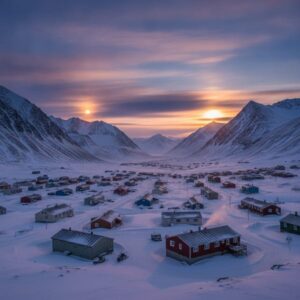
Which Alaska town saw two sunsets in 1986?

Utqiagvik

Fairbanks

Nome

Kotzebue

Points won
0
Correct score
0%

More Quizzes

More Articles

Geographical Borders That Make No Sense

Geographical Borders That Make No Sense

⏱️ 5 min read

Throughout history, political boundaries have been drawn for countless reasons—wars, colonial ambitions, diplomatic negotiations, and treaties. However, some of these borders defy geographical logic, cutting through natural landscapes, dividing communities, and creating bizarre territorial arrangements that continue to perplex observers today. These illogical boundaries often result in practical challenges for the people living along them and serve as lasting reminders of the arbitrary nature of political cartography.

The Straight Lines Across Africa

Perhaps no continent better illustrates the absurdity of arbitrary borders than Africa. During the Berlin Conference of 1884-1885, European colonial powers divided the African continent with little regard for existing ethnic, linguistic, or geographical boundaries. The result is a map filled with unnaturally straight lines that slice through deserts, rivers, and mountain ranges.

The border between Libya and Chad stands as one of the most striking examples, featuring an almost perfectly straight line stretching across hundreds of miles of Saharan desert. This boundary pays no attention to natural features or traditional territories, instead reflecting the colonial interests of France and Italy in the early 20th century. Similarly, the borders of Algeria, Mali, and Mauritania meet at near-perfect right angles in the middle of the Sahara, creating geometric patterns that would be more appropriate on graph paper than a map of human settlements.

These artificial divisions have had lasting consequences. Ethnic groups like the Tuareg people find themselves split across multiple nations, complicating cultural preservation and creating tensions that persist to this day. The Maasai people are similarly divided between Kenya and Tanzania, despite sharing identical cultural practices and traditions.

The Democratic Republic of the Congo's Access Strip

One of the most peculiar territorial arrangements in Africa is the narrow corridor of land that gives the Democratic Republic of the Congo access to the Atlantic Ocean. This thin strip, barely 25 miles wide at its narrowest point, was created during colonial negotiations to ensure the Congo Free State had ocean access. The arrangement wedges the DRC between Angola and the small Angolan exclave of Cabinda, creating a geographic oddity that serves minimal practical purpose given the country's vast size and the relatively small coastline it provides.

The India-Bangladesh Border Complexity

Before the 2015 Land Boundary Agreement, the India-Bangladesh border featured one of the world's most complicated territorial arrangements. The border contained 162 enclaves—pieces of one country's territory completely surrounded by another country's land. Even more remarkably, there were counter-enclaves (enclaves within enclaves) and one counter-counter-enclave.

The most famous was a piece of India inside Bangladesh, which itself contained a piece of Bangladesh, which then contained another piece of India. Residents of these enclaves faced absurd situations: they technically lived in one country but had to cross international borders to reach it. Access to healthcare, education, and basic services became nightmarishly complicated, and people often lived in legal limbo for generations.

Belgium's Baarle-Hertog and Netherlands' Baarle-Nassau

The Belgian-Dutch border reaches peak absurdity in the twin towns of Baarle-Hertog and Baarle-Nassau. Here, Belgian territory exists as 22 separate parcels completely surrounded by the Netherlands, and some of these Belgian parcels contain smaller Dutch enclaves within them. The result is a borderline that zigzags through streets, buildings, and even individual houses.

Residents have adapted to this geographical oddity with remarkable creativity. White crosses on the pavement mark the border, and houses straddling the boundary traditionally determine their nationality by the location of their front door. This arrangement creates practical complications: different tax systems, varying licensing laws, and distinct opening hours for businesses depending on which country they're technically located in.

The United States-Canada Border Through Buildings

The world's longest international border also contains its share of geographic peculiarities. The Haskell Free Library and Opera House intentionally straddles the border between Derby Line, Vermont, and Stanstead, Quebec. A black line runs across the floor marking the international boundary, meaning audience members might watch a performance in Canada while sitting in the United States.

Similarly, the Northwest Angle of Minnesota represents a surveying error that created an isolated portion of American territory accessible by land only through Canada. This geographic oddity resulted from mapmakers' incomplete knowledge of the region's geography when establishing the border following the Treaty of Paris in 1783.

Landlocked Within Landlocked: Uzbekistan

Uzbekistan holds the distinction of being one of only two double-landlocked countries in the world—nations surrounded entirely by other landlocked countries. This geographic predicament results from the Soviet Union's division of Central Asia into separate republics, creating borders that left several nations without access to the sea. The arbitrary nature of these Soviet-era boundaries continues to complicate regional trade and economic development.

The Point Roberts Anomaly

Point Roberts, Washington, demonstrates how rigid adherence to geometric boundaries can create isolated communities. When diplomats established the 49th parallel as the U.S.-Canada border, they failed to account for a small peninsula extending south from Canada below this line. The result is a five-square-mile American community that can only be reached by land by traveling through Canada, requiring residents to cross international borders twice for routine activities like grocery shopping or attending school.

Lasting Consequences of Illogical Borders

These geographical oddities are more than cartographic curiosities—they represent real challenges for millions of people. Illogical borders complicate trade, separate families, create jurisdictional confusion, and sometimes fuel conflicts. They stand as permanent reminders that political boundaries often reflect historical accidents, colonial ambitions, and negotiating compromises rather than geographical common sense or the needs of local populations.
Top 10 Fastest Animals on the Planet

Top 10 Fastest Animals on the Planet

⏱️ 6 min read

Speed in the animal kingdom is a remarkable adaptation that has evolved over millions of years, enabling creatures to hunt prey, escape predators, and survive in competitive environments. From the skies to the savannah, from ocean depths to desert plains, nature has engineered some truly extraordinary speedsters. Understanding which animals hold speed records provides fascinating insights into biology, physics, and the incredible diversity of life on Earth.

The World's Most Incredible Speed Champions

1. The Peregrine Falcon: Unmatched Aerial Velocity

Claiming the title of fastest animal on the planet, the peregrine falcon reaches astonishing speeds of up to 242 miles per hour during its hunting dive, known as a stoop. This raptor achieves these incredible velocities by tucking its wings close to its body and plummeting toward prey from great heights. The peregrine falcon's respiratory system is specially adapted to breathe at such extreme speeds, with bony tubercles in its nostrils that slow incoming air and prevent lung damage. Its keen eyesight allows it to spot prey from over a mile away, and specialized third eyelids protect its eyes during high-speed dives.

2. The Golden Eagle: Powerful Mountain Hunter

The golden eagle ranks as the second-fastest bird in the world, capable of reaching speeds up to 200 miles per hour in a dive. These magnificent raptors combine power with precision, using their speed to hunt prey ranging from rabbits to young deer in mountainous terrain. Unlike the peregrine falcon, golden eagles are built more robustly and can carry prey that weighs up to half their body weight while flying. Their hunting technique involves spotting prey from high altitudes, then diving at tremendous speeds while adjusting trajectory with remarkable accuracy.

3. The Cheetah: Land Speed Supremacy

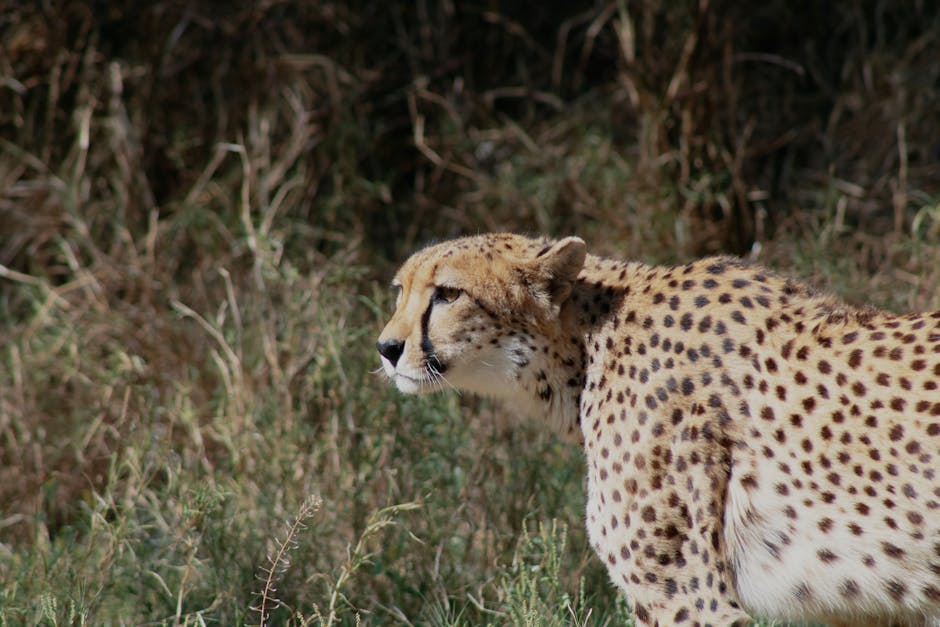
On land, no animal matches the cheetah's acceleration and top speed of 70 miles per hour. This big cat can accelerate from 0 to 60 mph in just three seconds, rivaling most sports cars. The cheetah's body is a masterpiece of evolutionary engineering: an extremely lightweight build, large nasal passages for increased oxygen intake, a flexible spine that acts like a spring, and semi-retractable claws that provide traction like track cleats. However, this incredible speed comes at a cost—cheetahs can only maintain their maximum velocity for about 20-30 seconds before their body temperature becomes dangerously high.

4. The Pronghorn Antelope: Endurance Speed Runner

While the cheetah wins in pure sprint speed, the pronghorn antelope of North America is the fastest land animal over long distances, sustaining speeds of 55 miles per hour for several miles. Capable of reaching 60 mph in short bursts, pronghorns possess exceptionally large hearts and lungs relative to their body size, enabling sustained high-speed running. This endurance evolved as a defense against now-extinct American cheetahs, making modern pronghorns seemingly over-engineered for their current predators. Their speed, combined with exceptional eyesight equivalent to 8x binoculars, makes them extremely difficult prey.

5. The Springbok: Agile Desert Sprinter

Native to southern Africa, the springbok can reach speeds of 55 miles per hour while performing spectacular leaps up to 13 feet high, a behavior called "pronking." These medium-sized antelopes use their speed not only to escape predators like cheetahs and lions but also to demonstrate fitness to potential mates. Springboks have evolved to thrive in arid environments, and their speed allows them to cover large distances quickly in search of scarce water and vegetation. Their acceleration and ability to change direction while running at high speed make them challenging targets for even the fastest predators.

6. The Sailfish: Ocean's Supreme Speedster

In aquatic environments, the sailfish claims the speed record, reaching velocities up to 68 miles per hour. This billfish uses its spectacular dorsal fin not just for display but also for rapid direction changes while hunting. The sailfish's streamlined body, powerful crescent-shaped tail, and specialized bill work together to reduce drag and maximize thrust through water. When hunting schools of sardines or anchovies, sailfish often work cooperatively, using their speed and bills to stun prey. Their upper jaw extends into a distinctive bill that slashes through fish schools at incredible speeds.

7. The Black Marlin: Powerful Oceanic Athlete

The black marlin is another contender for fastest fish, with recorded speeds reaching 65 miles per hour. These massive fish, which can weigh over 1,500 pounds, generate tremendous power through their crescent-shaped tails and torpedo-shaped bodies. Black marlins migrate vast distances across oceans, using their speed both for efficient travel and for hunting tuna and other large fish. Sport fishermen prize them for their speed and fighting ability, often requiring hours to land a single specimen. Their dark blue-black coloration provides camouflage when viewed from above in deep ocean waters.

8. The Brazilian Free-Tailed Bat: Mammalian Flight Record Holder

Holding the record for fastest flying mammal, the Brazilian free-tailed bat can reach horizontal flight speeds of 99 miles per hour. These small bats achieve such velocities using long, narrow wings and flying at high altitudes where air resistance is lower. Unlike birds that can dive at extreme speeds, bats achieve their velocity through powered flight, making this accomplishment even more remarkable. Brazilian free-tailed bats emerge from caves by the millions at dusk, creating spectacular wildlife displays while departing to hunt insects across vast territories.

9. The Spur-Winged Goose: Heavyweight Speed Champion

The spur-winged goose of Africa is the world's fastest waterfowl and one of the heaviest flying birds, reaching speeds of 88 miles per hour. Weighing up to 15 pounds, these geese achieve remarkable velocity despite their substantial mass. They inhabit wetlands and grasslands across sub-Saharan Africa, using their speed to travel between water sources and feeding areas. The sharp spurs on their wings, from which they derive their name, serve as weapons for territorial disputes. Their powerful flight muscles comprise a large percentage of their body weight, enabling sustained high-speed flight.

10. The Anna's Hummingbird: Relative Speed Champion

While not the fastest animal in absolute terms, the Anna's hummingbird achieves the highest speed relative to body length of any vertebrate. During courtship dives, males reach 385 body lengths per second—if a human could match this ratio, they would be traveling at approximately 1,300 miles per hour. These tiny birds, weighing about as much as a nickel, perform spectacular aerial displays, diving at speeds exceeding 60 miles per hour before pulling up with g-forces that would cause most animals to lose consciousness. Their specially adapted physiology, including a unique cardiovascular system and metabolism, enables them to survive these extreme maneuvers.

The Physics and Biology of Speed

These remarkable animals demonstrate that speed evolves in response to specific environmental pressures and ecological niches. Whether diving through air, sprinting across plains, or swimming through oceans, each speedster has developed unique anatomical and physiological adaptations. From streamlined bodies that reduce drag to specialized respiratory and cardiovascular systems that support intense exertion, evolution has fine-tuned these creatures for velocity. Understanding these adaptations not only satisfies our curiosity about the natural world but also inspires human engineering and technology, from aircraft design to athletic training methods. The diversity of speed champions across different environments reminds us of nature's endless capacity for innovation and the remarkable ways life has adapted to survive and thrive on our planet.