










1 / 10 Questions
0 Points

What art movement did Salvador Dalí belong to?

Pop Art

Cubism

Impressionism

Surrealism

Points won
0
Correct score
0%

More Quizzes

More Articles

Why Bananas Are Curved: The Surprising Science Explained

Why Bananas Are Curved: The Surprising Science Explained

Why Bananas Are Curved: The Surprising Science Explained

By Trivia Daily, Staff Writer — Published July 27, 2026

Table of Contents

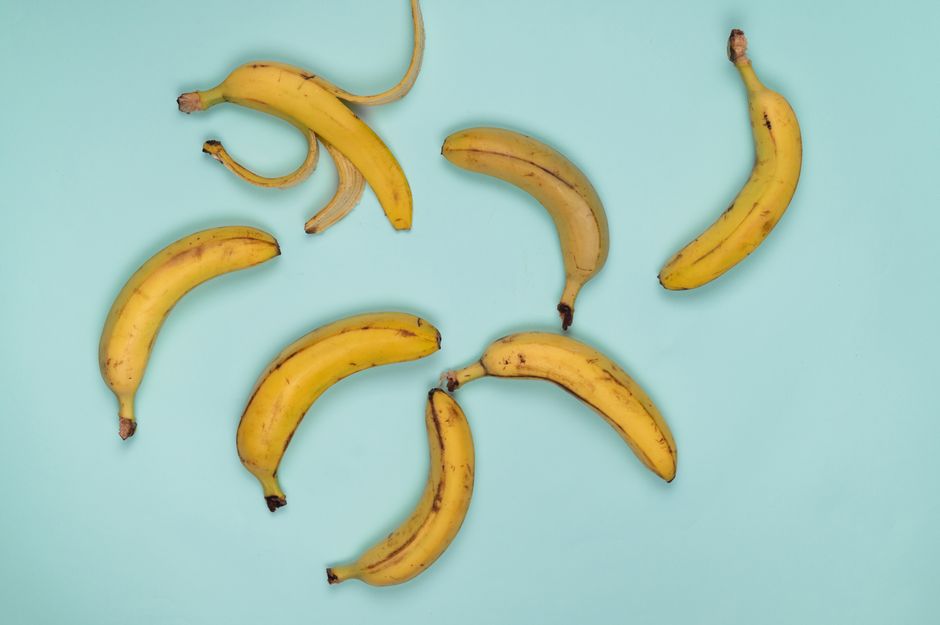
Every banana you've ever peeled shares a distinctive feature: that gentle, upward curve. It's such a familiar sight that most people never stop to wonder why. But the bananas curved science behind this everyday fruit reveals a fascinating story of plant biology, gravity, and survival strategy. Unlike most fruits that simply hang downward, bananas grow in a way that defies your expectations—turning toward the light in a process that transforms straight green fingers into the crescents we recognize instantly.

This curious trivia about banana curvature isn't just a fun fact for your next dinner party. It's a window into how plants respond to their environment, and why the bananas you buy today look nothing like their wild ancestors. Discover the amazing mechanisms that shape these fruits from flower to grocery store.

Key Takeaways

  • Bananas curve upward toward the sun through a process called negative geotropism, the opposite of how roots grow downward.
  • The banana "tree" is actually the world's largest herb, and what looks like a trunk is really tightly packed leaf stalks.
  • Wild bananas are small, straight, and packed with hard seeds—modern curved bananas are the result of thousands of years of cultivation.
  • Each banana bunch can contain 50 to 150 individual fruits, all curving upward in defiance of gravity.
  • The curvature begins within days of the flower appearing, as the fruit responds to light exposure and hormonal signals.
  • Bananas are technically berries in botanical classification, while strawberries are not.

The Bananas Curved Science: How Negative Geotropism Works

The secret to banana curvature lies in a phenomenon botanists call negative geotropism—a plant's tendency to grow away from gravitational pull and toward light. When banana flowers first emerge, they point downward due to their weight. The flowers develop into hands of bananas (yes, that's the technical term for a cluster), which initially hang below the main stalk.

Here's where it gets interesting. As the tiny bananas begin to develop, they don't passively accept their downward fate. Instead, each individual fruit responds to sunlight by growing upward, fighting against gravity. This happens because of differential growth rates on different sides of the fruit. The side facing away from the sun grows faster than the side facing toward it, creating that characteristic curve.

The process is driven by plant hormones called auxins, which accumulate on the shaded side of the developing banana. These auxins stimulate cell elongation, causing the darker side to grow more rapidly. Over the course of several days, what started as a straight, downward-pointing fruit transforms into an upward-curving crescent. It's the same basic mechanism that makes houseplants lean toward windows, but in bananas, the effect is dramatic and consistent.

The Role of Light and Gravity

Phototropism—growth toward light—combines with negative geotropism to create the banana's shape. In the tropical environments where bananas evolved, maximizing sun exposure meant better photosynthesis and faster ripening. Fruits that curved upward toward the canopy gaps received more light than those that simply hung straight down. Over countless generations, this trait became standard.

The banana plant itself displays remarkable directional growth. The pseudostem (that trunk-like structure) grows vertically upward, while the roots spread downward. The flower stalk emerges from the top, arches over, and hangs down under its own weight. Then the individual fruits stage their rebellion, curving back up toward the sky.

From Wild to Wonderful: How Cultivation Changed Banana Shape

Wild bananas tell a different story. These ancestral fruits, still found in parts of Southeast Asia, are small, stubby, and relatively straight. They're also nearly inedible by modern standards, packed with hard, pea-sized seeds that make up most of the fruit's interior. The tiny amount of flesh is often bitter and astringent.

The bananas you know today—specifically the Cavendish variety that dominates global commerce—are the product of thousands of years of selective cultivation. Ancient farmers in Papua New Guinea and Southeast Asia began choosing plants with mutations that produced seedless fruits. These sterile bananas couldn't reproduce sexually, so farmers propagated them through cuttings, creating genetic clones.

As humans selected for larger, sweeter, seedless fruits, the curvature became more pronounced. Bigger bananas had more mass to pull downward, which meant more dramatic upward growth in response. The trait that helped wild bananas catch a bit more sunlight became exaggerated in cultivated varieties, giving us those perfect crescents.

Banana Anatomy: Understanding the Structure

To truly appreciate why bananas curve, you need to understand their unusual anatomy. What most people call a banana tree isn't a tree at all. It's an herbaceous plant—the world's largest herb, in fact. The apparent trunk is a pseudostem made of tightly wrapped leaf bases, with no woody tissue inside.

The actual stem is underground. It sends up this false trunk, which grows rapidly—sometimes adding several inches per day. After about nine months, the plant produces a single enormous flower spike that emerges from the top of the pseudostem. This spike contains hundreds of flowers arranged in clusters called hands, with each individual flower developing into a single banana (technically called a finger).

A complete banana bunch might include 10 to 20 hands, each containing 10 to 20 fingers. That's potentially hundreds of bananas from one flowering. As these fruits develop simultaneously, they all respond to the same environmental cues, creating that uniform upward sweep that makes a banana bunch so visually distinctive.

Comparing Banana Varieties and Their Curves

Banana Type Curve Intensity Size Common Use
Cavendish Pronounced curve 7-8 inches Fresh eating, global export
Plantain Moderate curve 10-12 inches Cooking, staple food
Lady Finger Gentle curve 4-5 inches Fresh eating, sweeter flavor
Wild banana Minimal to no curve 2-3 inches Inedible (too many seeds)
Red banana Pronounced curve 5-6 inches Fresh eating, specialty markets

Common Myths About Banana Curvature

Several misconceptions persist about why bananas curve. Some people believe the curve is purely mechanical—that bananas hang down and then curl up as they ripen and become heavier. This gets the timeline backward. The curvature develops during growth, not after the fruit is fully formed.

Another myth suggests that bananas are deliberately curved by farmers using molds or guides. Commercial banana production involves no such manipulation. The curve happens naturally and uniformly across millions of plants growing in plantations worldwide. Trying to force bananas into a different shape would be economically impractical and agriculturally unnecessary.

Some sources claim bananas curve to fit better in shipping boxes or to make them easier to peel. These are backwards explanations. Shipping boxes are designed to accommodate the natural curve, not the other way around. The peeling convenience is a happy accident, not an evolutionary driver.

Frequently Asked Questions

Do all bananas curve in the same direction?

Yes, virtually all cultivated bananas curve upward toward what was the top of the plant when they were growing. This consistent direction results from their uniform response to light and gravity during development.

Can you grow straight bananas?

Growing straight bananas would require preventing the natural phototropic and geotropic responses, perhaps by rotating the plant constantly or growing it in complete darkness. Neither approach is practical, and the resulting fruit would likely be underdeveloped and poor quality.

Why don't other fruits curve like bananas?

Most fruits either grow upright on branches (like apples) or hang downward without the hormonal response that creates curvature (like grapes). Bananas' unique combination of hanging growth position and strong negative geotropism makes their curvature distinctive.

Are banana curves different in different countries?

Banana curvature is remarkably consistent worldwide because the dominant commercial variety—Cavendish—is genetically identical across all growing regions. Environmental factors have minimal impact on the degree of curvature, which is primarily determined by genetics.

The next time you reach for a banana, take a moment to appreciate that curve. It's not just a convenient shape for fitting in lunch boxes or hanging on display hooks. It's evidence of a plant's sophisticated response to its environment, a trait refined over millions of years of evolution and thousands of years of human cultivation. That simple crescent connects you to the fundamental ways that life on Earth responds to light, gravity, and the endless drive to grow.
Why Baseball Umpires Still Yell Strike Instead of Using Mics

Why Baseball Umpires Still Yell Strike Instead of Using Mics

Why Baseball Umpires Still Yell Strike Instead of Using Mics

By Trivia Daily, Staff Writer — Published August 16, 2026

Table of Contents

In an age when stadium announcers broadcast every play and referees in other sports wear wireless headsets, baseball umpires still bellow their calls the old-fashioned way. No microphones. No amplification. Just raw vocal power projecting across the diamond. This surprising tradition isn't just nostalgia—it's a carefully preserved element of the game rooted in practicality, tradition, and the unique rhythm of baseball itself. Discover why baseball umpires still rely on their lungs rather than technology, even as the sport embraces instant replay and electronic strike zones in training.

The answer reveals fascinating truths about communication, authority, and the human element that keeps America's pastime distinct from every other professional sport.

Key Takeaways

  • Baseball umpires use vocal calls and hand signals to maintain the game's traditional pace and minimize technological interference with play.
  • Unlike football or basketball referees who stop play frequently, baseball umpires must communicate continuously without disrupting the flow between pitches.
  • The physical act of calling strikes—complete with dramatic gestures—reinforces the umpire's authority and provides clear signals to players, coaches, and fans simultaneously.
  • Microphones would create audio delays, feedback issues, and potential distractions in ballparks where ambient noise already reaches high decibel levels.
  • Major League Baseball has tested various technologies but deliberately preserves vocal calls as an essential part of the game's character and human judgment.
  • Hand signals developed in the 1800s remain the universal language of baseball, transcending spoken words and ensuring clarity across international play.

Why Baseball Umpires Still Use Vocal Calls and Gestures

Baseball's communication system evolved from necessity. In the 1880s, when professional baseball was taking shape, umpires needed to project their decisions across noisy ballparks without any electronic assistance. They developed a combination of shouted calls and exaggerated hand signals that could be understood from the bleachers to the dugout. This dual-mode communication became so effective that it persisted even after technology made alternatives possible.

The system works because baseball, unlike football or basketball, features constant action with minimal stoppages. A single nine-inning game includes roughly 300 pitches. An umpire wearing a microphone would create a continuous audio stream that could interfere with the natural soundscape of the ballpark—the crack of the bat, the pop of the catcher's mitt, the roar of the crowd. These organic sounds form part of baseball's appeal, and amplifying umpire calls would fundamentally alter the auditory experience.

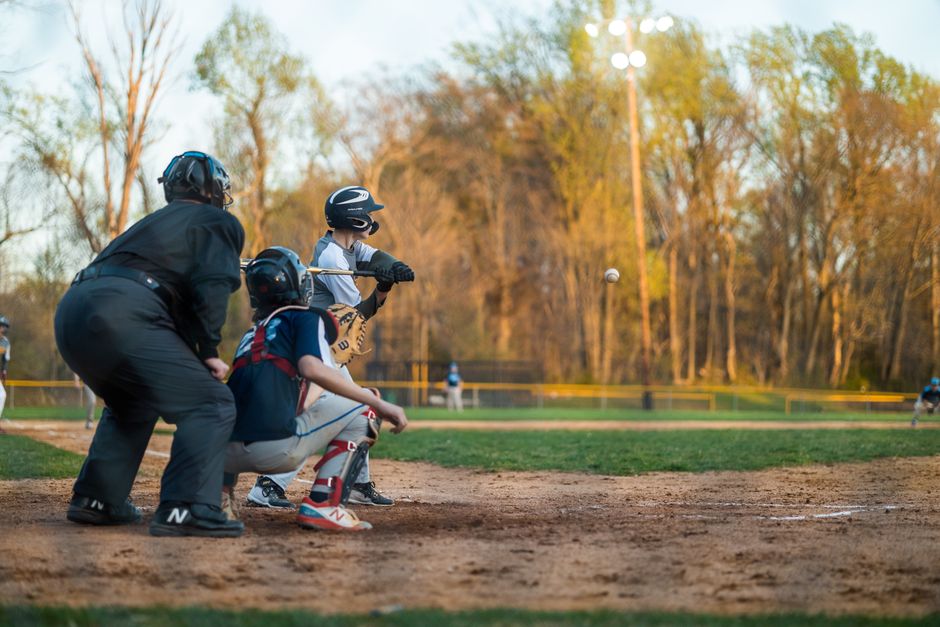
Vocal calls also serve an immediate practical function. When an umpire shouts "Strike three!" with a punching motion, everyone—the batter, catcher, pitcher, base coaches, and 40,000 fans—receives the information simultaneously. No delay. No feedback squeal. No technical malfunction. The human voice, trained and projected correctly, reaches across a baseball diamond with remarkable clarity.

The Authority Behind the Call

An umpire's strike call isn't just information—it's a declaration of authority. The physical act of calling a pitch reinforces the umpire's role as the game's ultimate arbiter. Home plate umpires develop distinctive calling styles, from subtle point-and-punch motions to theatrical full-body performances that have become part of their professional identity.

This performative aspect matters more than you might think. Baseball thrives on human judgment. Even with replay review systems now in place, the home plate umpire's strike zone remains subjective, evaluated in real-time without technological assistance during most of the game. The forceful delivery of a call—voice and gesture combined—communicates confidence and finality. It says: this is the decision, and we're moving forward.

Microphones would distance the umpire from this direct communication. Instead of a visceral shout that players feel as much as hear, a mic-amplified call would filter through speakers, processed and impersonal. The psychological impact would shift. Players and managers already argue calls passionately; removing the human element of vocal projection might paradoxically increase disputes by making decisions feel more mechanical and therefore more challengeable.

Comparing Communication Systems Across Major Sports

Sport Official Communication Method Reason for Approach
Baseball Vocal calls + hand signals, no microphones Continuous play, traditional soundscape, immediate clarity
Football Wireless microphones for referee announcements Complex rules require detailed explanations during play stoppages
Basketball Whistle + hand signals, occasional mic for explanations Fast pace with frequent stoppages; signals sufficient for most calls
Soccer Whistle + hand signals + cards, no microphones Continuous play across large field; minimal interruption philosophy
Tennis Chair umpire with microphone Quiet environment requires clear score announcements; play naturally pauses between points

The Technical Challenges of Microphones in Baseball

Even if tradition weren't a factor, outfitting umpires with microphones presents surprising practical obstacles. Baseball umpires work in physically demanding positions, particularly the home plate umpire crouching behind the catcher for hours. A microphone system would need to withstand foul balls, collisions at home plate, dust, rain, and extreme heat without failing.

Audio feedback becomes a serious concern in modern ballparks equipped with powerful sound systems. A hot mic near stadium speakers creates loops and squeals that would disrupt play. Engineers could solve this with directional microphones and careful frequency management, but the complexity increases exponentially when you consider that umpires move constantly, changing positions and distances from speakers throughout the game.

Ambient noise in ballparks already reaches 90 to 100 decibels during exciting moments. A microphone would pick up not just the umpire's voice but crowd noise, player chatter, and field sounds, requiring sophisticated filtering. All this technology to accomplish what a trained voice already does naturally seems like overengineering a solution to a problem that doesn't exist.

When Umpires Do Use Technology

Baseball hasn't entirely rejected electronic communication. Umpires wear earpieces to receive information from replay officials in New York during challenged calls. This one-way communication allows the crew chief to hear the replay decision without broadcasting it to the stadium. The official then signals the result using traditional hand gestures and announces it verbally to nearby players and coaches.

This hybrid approach preserves the human interface while leveraging technology where it adds value. The replay system corrects clear errors without fundamentally changing how umpires communicate during live play. It's a telling example of baseball's philosophy: adopt helpful innovations while protecting the game's essential character.

Minor leagues and independent baseball organizations have experimented with automated ball-strike systems, sometimes called "robot umpires." Even in these trials, a human umpire receives the electronic call via earpiece and then announces it traditionally. The vocal call remains, even when the judgment is automated. This reveals something interesting about what fans and players value—they want the human presence, the ritual of the call, regardless of how the decision is made.

Frequently Asked Questions

Do umpires receive any voice training for making calls?

Professional umpires do receive instruction on proper calling techniques during their training in umpire schools, though it's not formal voice coaching like actors receive. They learn projection, consistency, and how to develop a clear, authoritative calling style that can be heard across the field without straining their voices over a long season.

Have any professional sports leagues tried and abandoned referee microphones?

While most major leagues that adopted microphones have kept them, some lower-level leagues and international competitions have scaled back microphone use after finding it created more confusion than clarity. Soccer, in particular, has resisted widespread referee microphone adoption despite experiments in various leagues.

Can fans in the stadium actually hear umpire calls clearly?

Fans seated near the field can usually hear emphatic strike and out calls clearly, especially in quieter moments. Those in upper decks or outfield seats rely more on hand signals and scoreboard confirmation. The vocal call is primarily for players, coaches, and nearby spectators, while signals serve everyone.

Do umpires ever lose their voices during long games or doubleheaders?

Experienced umpires develop vocal endurance and technique that prevents voice loss under normal conditions. However, particularly long extra-inning games or doubleheaders in hot, dry conditions can strain even well-trained voices. Umpires stay hydrated and pace their vocal intensity to maintain clarity throughout the game.

The next time you watch a baseball game, pay attention to that split second after a pitch when the umpire's call cuts through the stadium noise. It's one of the few remaining moments in professional sports where human voice alone—unfiltered, unamplified, immediate—still carries ultimate authority. That tradition connects today's game to baseball's earliest days, when a single voice had to be enough.