









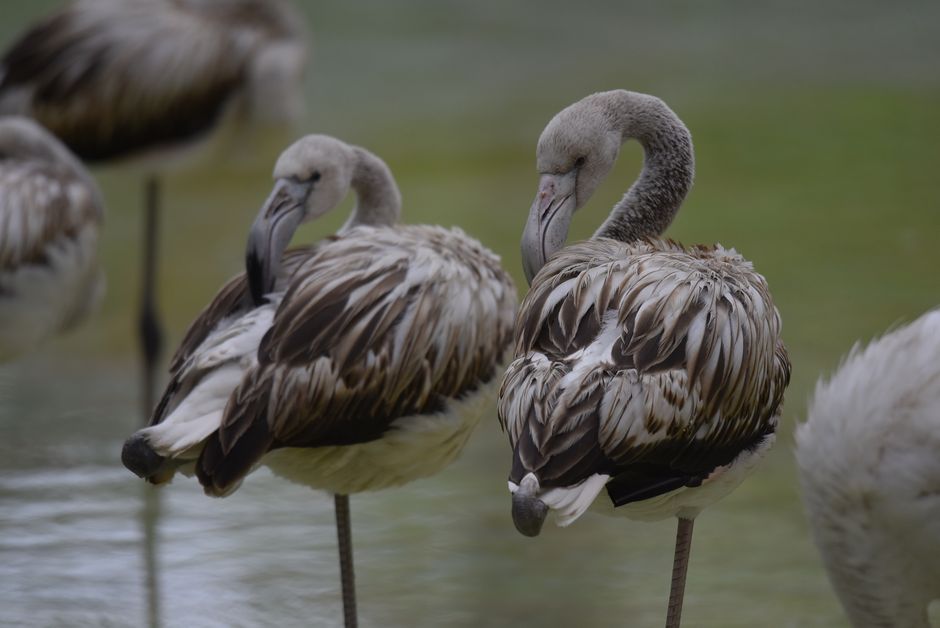
Why Flamingos Stand on One Leg: The Science Explained
By Trivia Daily, Animals Desk — Published August 2, 2026
Table of Contents
- Key Takeaways
- The Flamingo Stand: Science Behind the Balance
- Thermoregulation and Heat Conservation
- Comparing Flamingo Species and Their Habitats
- Other Animals That Stand on One Leg
- Myths and Misconceptions About Flamingo Behavior
- Frequently Asked Questions
Few sights in nature capture attention quite like a flock of flamingos balanced effortlessly on one leg. These vibrant pink birds adopt this peculiar posture for hours at a time, often while sleeping, without toppling over. For decades, scientists puzzled over why flamingos stand this way—was it to conserve body heat, reduce muscle fatigue, or something else entirely? Recent research into flamingo behavior has revealed surprising answers about how these remarkable creatures maintain their iconic stance with minimal effort.
The science behind why flamingos stand on one leg involves both thermoregulation and biomechanics. These long-legged wading birds have evolved mechanisms that make single-leg standing not just comfortable, but actually energy-efficient. Understanding this behavior offers a window into the fascinating adaptations that help wildlife thrive in their specific habitats.
Key Takeaways
- Flamingos can stand on one leg for extended periods without using muscular effort, thanks to a passive gravitational locking mechanism in their joints.
- This posture helps reduce heat loss by keeping one leg tucked into their warm plumage, especially important since flamingos often wade in cold water.
- Dead flamingos cannot balance on one leg, proving the stance requires some physiological engagement, though minimal muscular activity.
- All six flamingo species exhibit this behavior, suggesting it provides significant evolutionary advantages across different habitats.
- Flamingos alternate which leg they stand on, though individuals may show preferences for one leg over the other.
- The behavior is observed more frequently when flamingos are resting or sleeping, indicating its role in energy conservation.
The Flamingo Stand: Science Behind the Balance
Researchers studying flamingo biomechanics discovered that these birds possess a specialized passive support mechanism. When a flamingo lifts one leg and positions its body in a particular way, its skeletal structure essentially locks into place. The weight of the body settles over the standing leg in such a way that gravity holds everything stable without requiring constant muscle contraction.
Scientists tested this hypothesis using both live flamingos and deceased specimens. Living flamingos could balance effortlessly on one leg, even while asleep. When researchers attempted to position dead flamingos in the same stance, the bodies fell over immediately—demonstrating that while the posture requires minimal muscular effort, it's not entirely passive. Some physiological engagement is necessary to achieve the proper alignment.
This discovery revealed that flamingos have essentially evolved a biological kickstand. Once locked into position, they can rest without expending energy to maintain balance. For animals that spend much of their lives standing in water while feeding, this represents a significant energy-saving adaptation.
Thermoregulation and Heat Conservation
Beyond the biomechanical advantage, standing on one leg serves another crucial function: keeping warm. Flamingos frequently wade in lakes and lagoons that can be surprisingly cold, especially in high-altitude habitats or during cooler seasons. Their long, thin legs have a large surface area relative to their volume, making them vulnerable to heat loss.
By tucking one leg up into their body feathers, flamingos reduce the amount of exposed skin in contact with cold water or air. This behavior is observed more frequently in cooler conditions and less often when ambient temperatures are warm. The correlation between temperature and one-legged standing supports the thermoregulation hypothesis.
Interestingly, flamingos in warmer climates and water still exhibit the behavior, suggesting that while heat conservation may be one benefit, it's not the sole reason for this posture. The combination of energy savings and temperature regulation likely makes single-leg standing advantageous across varied environments.
Comparing Flamingo Species and Their Habitats
| Species | Primary Habitat | Typical Water Temperature | One-Leg Standing Frequency |
|---|---|---|---|
| Greater Flamingo | Coastal lagoons, mudflats | Variable (temperate to tropical) | High, especially when resting |
| Lesser Flamingo | Alkaline lakes (East Africa) | Warm to hot | High, despite warm conditions |
| Chilean Flamingo | High-altitude salt lakes | Cold to moderate | Very high, frequent in cold water |
| American Flamingo | Caribbean coastal waters | Warm | Moderate to high |
Other Animals That Stand on One Leg
Flamingos aren't alone in adopting this posture. Various bird species employ similar strategies, though perhaps none as consistently or iconically as flamingos. Herons, storks, and cranes also rest on one leg, likely for comparable reasons involving energy conservation and thermoregulation.
What sets flamingos apart is the sheer duration and frequency of the behavior. These creatures can maintain the position for hours without apparent discomfort. Some observations have documented sleeping flamingos remaining on one leg throughout the night. This extreme version of the behavior highlights how perfectly their anatomy has adapted to make it effortless.
The passive locking mechanism appears more developed in flamingos than in other wading birds, though research into the comparative anatomy of different species continues. Understanding these variations helps scientists piece together how different animals have evolved solutions to similar environmental challenges.
Myths and Misconceptions About Flamingo Behavior
One persistent myth suggests flamingos stand on one leg to prevent their feet from getting tired. While reduced muscle fatigue is a consequence of the passive locking mechanism, it's more accurate to say the posture prevents the entire body from becoming fatigued, not just the feet. The energy savings benefit the whole organism.
Another misconception holds that flamingos alternate legs according to a strict schedule or pattern. In reality, leg-switching appears somewhat random, though individual birds may show preferences. Researchers have noted that flamingos don't switch legs at regular intervals, and some may favor one leg over the other for reasons that aren't entirely clear.
Some people believe flamingos get their pink color from standing on one leg, perhaps imagining that blood pools in the standing leg. In fact, flamingo coloration comes entirely from carotenoid pigments in their diet of algae and small crustaceans. The pink hue has nothing to do with their standing posture and everything to do with what they eat.
Frequently Asked Questions
Do flamingos ever stand on both legs?
Yes, flamingos regularly stand on both legs, especially when walking, feeding, or engaging in active behaviors. They adopt the one-legged stance primarily when resting or sleeping, though they may also use it while stationary during feeding breaks.
Can flamingos sleep while standing on one leg?
Absolutely. Flamingos commonly sleep while balanced on one leg, and the passive locking mechanism in their joints makes this possible without conscious effort. They can remain in this position throughout extended rest periods without falling over.
Do baby flamingos stand on one leg?
Young flamingos begin exhibiting one-legged standing behavior as they develop, though they're less stable at it initially than adults. Like many animal behaviors, the posture appears to be instinctive but improves with practice as their skeletal structure matures.
Which leg do flamingos prefer to stand on?
Individual flamingos may show slight preferences for one leg over the other, but there's no species-wide pattern. They alternate between legs irregularly rather than following a predictable schedule, and both legs are used frequently over time.
The next time you see a flamingo balanced serenely on one leg, you're witnessing millions of years of evolution at work. What appears to be a quirky habit is actually an elegant solution to the challenges of life as a wading bird—proof that nature's most puzzling behaviors often have beautifully simple explanations once we look closely enough.