






1 / 10 Questions
0 Points

What color is airplane's black box?

Black

Orange

Yellow

Red

Points won
0
Correct score
0%

More Quizzes

More Articles

Did You Know? 12 Fun Facts About Space Travel

Did You Know? 12 Fun Facts About Space Travel

⏱️ 7 min read

Space travel represents one of humanity's most extraordinary achievements, pushing the boundaries of science, engineering, and human endurance. Since the first successful satellite launch in 1957, our journey beyond Earth's atmosphere has been filled with remarkable discoveries, surprising challenges, and fascinating phenomena that continue to captivate our imagination. The following collection reveals some of the most intriguing aspects of space exploration that demonstrate just how extraordinary venturing beyond our planet truly is.

Remarkable Discoveries About Life Beyond Earth

Astronauts Actually Grow Taller in Space

One of the most surprising physical changes astronauts experience is an increase in height. In the microgravity environment of space, the spine elongates as the vertebrae spread apart without the constant compression of Earth's gravity. Astronauts can grow up to two inches taller during extended missions. However, this change is temporary—once they return to Earth, gravity compresses the spine back to its normal length within a few months. This phenomenon can cause back pain and discomfort as the body readjusts to gravitational forces.

The International Space Station Travels at 17,500 Miles Per Hour

The ISS orbits Earth at an astounding speed of approximately 17,500 miles per hour, completing one full orbit around our planet every 90 minutes. This means astronauts aboard the station witness 16 sunrises and sunsets every single day. At this velocity, the ISS covers the distance equivalent to traveling from Earth to the Moon and back in about one day. Despite this incredible speed, astronauts don't feel the motion due to the constant velocity and the continuous state of free fall they experience while orbiting.

Space Has a Distinct Smell

Astronauts who have performed spacewalks consistently report that space has a distinctive odor. When they re-enter the airlock and remove their helmets, they notice a unique smell clinging to their spacesuits. The scent has been described as a combination of hot metal, welding fumes, and seared steak. Scientists believe this smell comes from dying stars and other high-energy particles called polycyclic aromatic hydrocarbons. These molecules are thought to be produced by the combustion of dying stars and are present throughout the universe.

Challenges of Human Survival in Space

Crying in Space Creates Water Bubbles

Tears behave very differently in the microgravity environment of space. Without gravity to pull them down, tears don't fall from the eyes. Instead, they accumulate around the eyeball, forming a liquid ball. If enough tears are produced, they can create a bubble of water that sticks to the face. This can be uncomfortable and even slightly painful, as the salty tears sting the eyes. Astronauts sometimes have to physically wipe away tears or shake their heads to remove the water bubble.

The Moon's Surface Preserves Footprints for Millions of Years

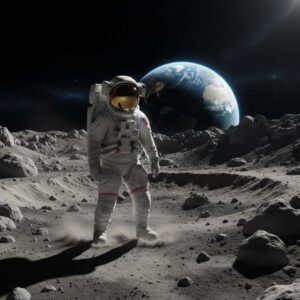
Unlike Earth, the Moon has no atmosphere, which means there's no wind or weather to erode surfaces. The famous footprints left by Neil Armstrong and Buzz Aldrin during the Apollo 11 mission in 1969 remain virtually unchanged today and could last for millions of years. The only forces that might eventually disturb them are moonquakes and micrometeorite impacts. This preservation creates a unique historical record of human exploration that will outlast most monuments on Earth.

Space Suits Are Incredibly Complex Engineering Marvels

A single space suit used for spacewalks costs approximately $12 million to produce and contains over 18,000 parts. These suits must protect astronauts from extreme temperatures that can range from -250°F in shadow to +250°F in direct sunlight. They provide pressurization, oxygen, water, temperature regulation, and protection from micrometeoroids and radiation. The suit essentially functions as a personal spacecraft, and astronauts can survive in them for up to eight hours during spacewalks.

Surprising Facts About Space Technology

The First Meal Eaten in Space Was Applesauce

When Soviet cosmonaut Yuri Gagarin became the first human in space on April 12, 1961, he also became the first person to eat in space. His meal consisted of pureed meat and chocolate sauce squeezed from toothpaste-like tubes, followed by applesauce. This historic meal proved that humans could swallow and digest food in microgravity, addressing one of the major concerns about extended space travel. Today's space food has evolved significantly, with hundreds of menu options available to astronauts.

Silence in Space Is Absolute

Space is a near-perfect vacuum, meaning there are virtually no molecules to carry sound waves. This creates absolute silence—no matter how powerful an explosion or event might be, it produces no sound in the vacuum of space. All the dramatic sounds we hear in space movies are purely creative additions for entertainment. Astronauts can only hear sounds inside their spacecraft or through vibrations conducted through their suits and equipment. This profound silence is one of the most unsettling aspects of spacewalks for many astronauts.

Fascinating Phenomena of Space Exploration

Astronauts Experience Weakened Immune Systems

Extended time in space significantly impacts the human immune system. Studies have shown that microgravity causes changes in immune cell function, making astronauts more susceptible to infections. Additionally, viruses that lie dormant in the body on Earth, such as the chickenpox virus, can reactivate during space missions. This immune suppression is one of the major health challenges that must be addressed before attempting longer missions to Mars or beyond, as astronauts would be far from medical facilities.

Velcro and Tang Were Not Invented for Space Programs

Contrary to popular belief, Velcro and Tang were not created by NASA for space travel. Velcro was invented in 1941 by Swiss engineer George de Mestral, inspired by burrs sticking to his dog's fur. Tang was developed by General Foods in 1957. However, NASA's use of these products during space missions made them famous and led to the widespread misconception about their origins. NASA has, however, developed or advanced numerous technologies including memory foam, water filtration systems, and improved solar panels.

The Largest Footprint Humans Have Made Beyond Earth

Humanity has left quite a mark on space in the form of debris. Currently, more than 34,000 pieces of space junk larger than 10 centimeters orbit Earth, traveling at speeds up to 17,500 mph. This includes defunct satellites, spent rocket stages, and fragments from collisions. Even tiny pieces pose serious threats to operational satellites and spacecraft. Space agencies worldwide are now developing technologies to remove this debris and implementing stricter guidelines for satellite disposal to preserve orbital space for future generations.

Water Recycling in Space Reaches 93% Efficiency

On the International Space Station, water is an incredibly precious resource. The station's Environmental Control and Life Support System recycles approximately 93% of all water-based liquids, including crew urine, sweat, and even moisture from the air. This highly efficient system converts waste water back into clean drinking water that exceeds the quality standards of most municipal water systems on Earth. Without this recycling capability, the cost of resupplying water from Earth would make long-term space habitation economically impossible.

Conclusion

These twelve fascinating facts about space travel reveal the incredible challenges, innovations, and surprising realities of venturing beyond Earth's protective atmosphere. From the physical changes astronauts experience to the technological marvels that keep them alive, space exploration continues to push the boundaries of human achievement. As we plan future missions to the Moon, Mars, and beyond, understanding these unique aspects of space travel becomes increasingly important. Each discovery and lesson learned brings us closer to becoming a truly spacefaring civilization, capable of exploring and potentially inhabiting worlds beyond our own. The journey has only just begun, and the future of space exploration promises even more remarkable discoveries and achievements.

Survival 101: 10 Facts You Didn’t Know You Needed

Survival 101: 10 Facts You Didn’t Know You Needed

⏱️ 6 min read

When facing unexpected emergencies or wilderness situations, knowledge can mean the difference between life and death. While many people understand basic survival concepts, there are crucial facts that often go overlooked in mainstream survival education. These lesser-known principles can provide critical advantages when facing extreme circumstances, whether you're lost in the wilderness, stranded after a natural disaster, or simply preparing for the unexpected.

The Rule of Threes Isn't Always Accurate

Most survival guides teach the Rule of Threes: you can survive three minutes without air, three hours without shelter in harsh conditions, three days without water, and three weeks without food. However, this oversimplified formula can be dangerously misleading. The actual time frames vary dramatically based on individual factors, environmental conditions, and physical exertion levels. In extreme cold, hypothermia can set in within thirty minutes rather than three hours. Conversely, in moderate conditions with proper rest, many people have survived more than ten days without water, though this is extremely dangerous and not recommended.

Cotton Clothing Can Be Your Worst Enemy

The popular phrase among experienced outdoorsmen is "cotton kills," yet many people don't understand why this common fabric poses such a threat. Cotton absorbs moisture readily and loses virtually all its insulating properties when wet, pulling heat away from the body up to twenty-five times faster than when dry. In cold or wet conditions, cotton clothing can accelerate hypothermia. Wool and synthetic materials maintain their insulating properties even when damp, making them far superior choices for survival situations. If caught in a survival scenario wearing cotton, removing the wet garments may actually be safer than keeping them on.

Fire Starting Requires More Than Just Sparks

While many survival kits include fire-starting tools like flint and steel or waterproof matches, successfully building a fire requires understanding the fire triangle: heat, fuel, and oxygen. The most critical and often overlooked element is having proper tinder. Tinder must be completely dry and fine enough to catch from a small spark or flame. Natural tinder materials include birch bark, dried grass, cattail fluff, and pine needles. However, these may be unavailable or too wet in many situations. Carrying petroleum jelly-soaked cotton balls or dryer lint in a waterproof container provides reliable tinder that can burn even in wet conditions for several minutes, giving ample time to ignite kindling.

Drinking Untreated Water Isn't Immediately Fatal

Survival education heavily emphasizes water purification, sometimes to the point where people die of dehydration rather than risk drinking questionable water. While waterborne pathogens are certainly dangerous, the reality is that most illnesses from contaminated water take days or weeks to manifest symptoms. In a true survival emergency, dying from dehydration is a far more immediate threat than giardia or other parasites. If faced with no purification method and severe dehydration, drinking unpurified water is the correct choice. Clear, flowing water from higher elevations presents lower risk than stagnant water, though all untreated water should be considered potentially contaminated.

Shelter Location Matters More Than Construction

Many survival guides focus extensively on shelter construction techniques, but choosing the right location is far more important than building the perfect structure. A well-located simple shelter will outperform an elaborately constructed shelter in a poor location. Key considerations include avoiding valley bottoms where cold air settles, staying away from dead or dying trees that might fall, positioning away from water sources that attract predators and insects, and ensuring the site has natural wind breaks. Additionally, being visible to potential rescuers should factor into location decisions unless there are specific security concerns.

Your Body Position While Sleeping Affects Warmth Retention

Heat loss during sleep can be life-threatening in survival situations, and body position significantly impacts thermal retention. Sleeping in a fetal position reduces surface area exposure and conserves body heat far more effectively than sleeping stretched out. Placing insulation beneath the body is more important than covering above, as ground conduction can draw away heat rapidly. Even in seemingly mild conditions, sleeping directly on the ground can lead to dangerous heat loss. Using leaves, pine needles, grass, or any available material to create a thick barrier between the body and ground is essential.

Signaling Rescuers Requires Contrast and Pattern

Creating signals for rescue teams involves more than just making something visible. Rescuers look for patterns and contrasts that don't occur naturally. Three of anything—three fires, three rock piles, three whistle blasts—is universally recognized as a distress signal. Bright colors stand out against natural backgrounds, but arrangement matters equally. A straight line, perfect triangle, or other geometric shape catches attention because nature rarely creates such patterns. Ground-to-air signals should be as large as possible, with at least three feet in width for each line or letter, and positioned in open areas visible from above.

Edible Plants Are Less Important Than You Think

Wilderness survival guides often dedicate extensive content to identifying edible plants, yet in most short-term survival situations, foraging provides minimal benefit. The human body can function for weeks without food, and the energy expended searching for and gathering wild edibles often exceeds the caloric value obtained. More critically, the risk of misidentification and consuming toxic plants poses serious danger. Unless you have extensive botanical knowledge of the specific region, focusing energy on shelter, water, signaling, and fire provides far better survival outcomes than foraging for food.

Panic Is the Most Dangerous Threat

While not typically listed among survival priorities, psychological factors often determine outcomes more than physical skills or equipment. Panic leads to poor decision-making, wasted energy, and dangerous actions. The acronym STOP—Stop, Think, Observe, Plan—provides a framework for managing emergency stress. Taking even sixty seconds to calm down, assess the situation objectively, and formulate a rational plan dramatically increases survival likelihood. Many outdoor fatalities result from panicked individuals making irrational choices like abandoning vehicles or hiking away from trails, rather than from the initial emergency itself.

Navigation Without a Compass Is More Reliable Than Most Realize

While GPS devices and compasses provide accurate navigation, understanding natural navigation methods offers backup options that don't depend on equipment. The sun rises generally in the east and sets generally in the west, providing reliable directional information throughout the day. At night in the Northern Hemisphere, locating the North Star (Polaris) using the Big Dipper constellation provides accurate northern bearings. Moss growing on trees doesn't reliably indicate north despite popular belief, but understanding that prevailing winds and sun exposure create asymmetric growth patterns on vegetation can provide directional clues when multiple observations are combined. These methods require practice but work regardless of equipment failure or battery depletion.

Survival knowledge extends far beyond basic skills taught in most courses. Understanding these often-overlooked facts provides crucial advantages when facing life-threatening situations. Whether you're an outdoor enthusiast, emergency prepper, or simply want to be better prepared for unexpected circumstances, integrating this knowledge into your survival understanding creates a more comprehensive and realistic foundation for handling emergencies effectively.