











1 / 10 Questions
0 Points

What iconic snack was invented by accident in a hotel kitchen?

Potato chips

Pretzels

Crackers

Popcorn

Points won
0
Correct score
0%

More Quizzes

More Articles

Why Trends Rise and Fall So Fast

Why Trends Rise and Fall So Fast

⏱️ 5 min read

The entertainment landscape has transformed dramatically over the past two decades, with viral sensations emerging overnight and disappearing just as quickly. What once took months or years to gain mainstream attention now captures global consciousness in mere hours, only to fade into obscurity by the following week. This acceleration of trend cycles has fundamentally altered how content is created, consumed, and remembered in the digital age.

The Digital Infrastructure Behind Rapid Trend Cycles

Social media platforms have engineered an ecosystem where content spreads at unprecedented velocities. Algorithmic recommendation systems prioritize engagement metrics, pushing trending content to millions of users simultaneously. When a song, dance challenge, or meme begins gaining traction, these algorithms amplify its reach exponentially, creating the appearance of overnight success. However, this same mechanism that propels content to viral status also contributes to its rapid decline.

The infrastructure of modern entertainment consumption relies on constant novelty. Streaming services, social media feeds, and content aggregators continuously refresh their offerings, creating an environment where users expect new material every time they open an app. This expectation has compressed attention spans and reduced the cultural shelf life of entertainment products significantly compared to pre-digital eras.

The Psychology of Oversaturation

Human psychology plays a crucial role in the fleeting nature of entertainment trends. The phenomenon known as "mere exposure effect" suggests that people develop preferences for things they encounter repeatedly, but only up to a certain threshold. Beyond that point, overexposure leads to satiation and eventual aversion. In today's hyper-connected world, this threshold is reached much faster than ever before.

When a trend goes viral, it becomes inescapable across multiple platforms simultaneously. Users encounter the same content on TikTok, Instagram, Twitter, YouTube, and traditional media outlets within the same day. This multi-platform saturation accelerates the fatigue cycle, causing audiences to tire of trends before they would have in a slower-paced media environment.

The Fear of Missing Out and Bandwagon Effects

The rapid adoption of entertainment trends is partly driven by social pressures and the fear of being left out of cultural conversations. When everyone appears to be watching the same show, listening to the same artist, or participating in the same challenge, individuals feel compelled to join quickly or risk social irrelevance. This creates intense but shallow engagement, where participation is motivated more by social currency than genuine interest.

Content Creation in the Age of Speed

The production side of entertainment has adapted to accommodate rapid trend cycles, fundamentally changing how content is developed and distributed. Studios, record labels, and content creators now operate with dramatically shortened timelines, producing material designed for immediate impact rather than lasting influence.

Several factors characterize this new production paradigm:

  • Reduced production timelines to capitalize on current cultural moments
  • Emphasis on shareability and memetic potential over artistic depth
  • Data-driven decision making based on real-time engagement metrics
  • Iterative content strategies that quickly pivot based on audience response
  • Lower barriers to entry allowing amateur creators to compete with established entities

The Economic Incentives Driving Rapid Turnover

Entertainment platforms profit from user engagement, not from the longevity of individual trends. The business model of most social media and streaming services depends on keeping users active on their platforms for extended periods. Fresh, trending content serves this purpose more effectively than sustained engagement with older material.

Advertisers and marketers also benefit from rapid trend cycles. Short-lived trends create more opportunities for timely, relevant advertising campaigns. Brands can associate themselves with what's current, generate buzz, and move on to the next trend before audience sentiment sours. This economic structure incentivizes the creation and promotion of disposable content over enduring cultural artifacts.

The Fragmentation of Shared Cultural Experiences

Unlike the monoculture of previous decades, where a limited number of television channels and radio stations created unified cultural moments, contemporary entertainment exists in a fragmented landscape. Audiences are divided across countless niches, platforms, and subcultures. What appears to be a massive trend may only be popular within specific demographic segments or platform ecosystems.

This fragmentation means that trends can rise to prominence within their target audiences very quickly, but their overall cultural footprint remains shallow. The lack of depth and broad cultural penetration contributes to their rapid disappearance, as they never establish the foundation necessary for lasting relevance.

The Role of Novelty-Seeking Behavior

The human brain is wired to respond to novelty, releasing dopamine when encountering new and unexpected stimuli. Entertainment platforms have optimized their content delivery to exploit this neurological response, creating feedback loops that reinforce constant novelty-seeking behavior. Users develop habits of perpetually searching for the next viral sensation, quickly discarding what was popular just days earlier.

This neurological hijacking creates a culture of permanent impermanence, where nothing is designed to last and everything is designed to generate immediate reactions. The entertainment value of content increasingly derives from its newness rather than its quality, creativity, or cultural significance.

Long-Term Implications for Cultural Memory

The acceleration of trend cycles raises important questions about cultural memory and artistic legacy. When entertainment products are designed for immediate consumption and rapid obsolescence, fewer works achieve the staying power necessary to become true cultural touchstones. The archives of internet culture are vast but shallow, containing countless forgotten viral moments that once dominated attention but left no lasting impact.

This environment challenges traditional notions of artistic success and cultural influence, creating a landscape where visibility is abundant but significance is rare. Understanding these dynamics helps explain not only why trends rise and fall so quickly but also what this means for the future of entertainment as a cultural force.
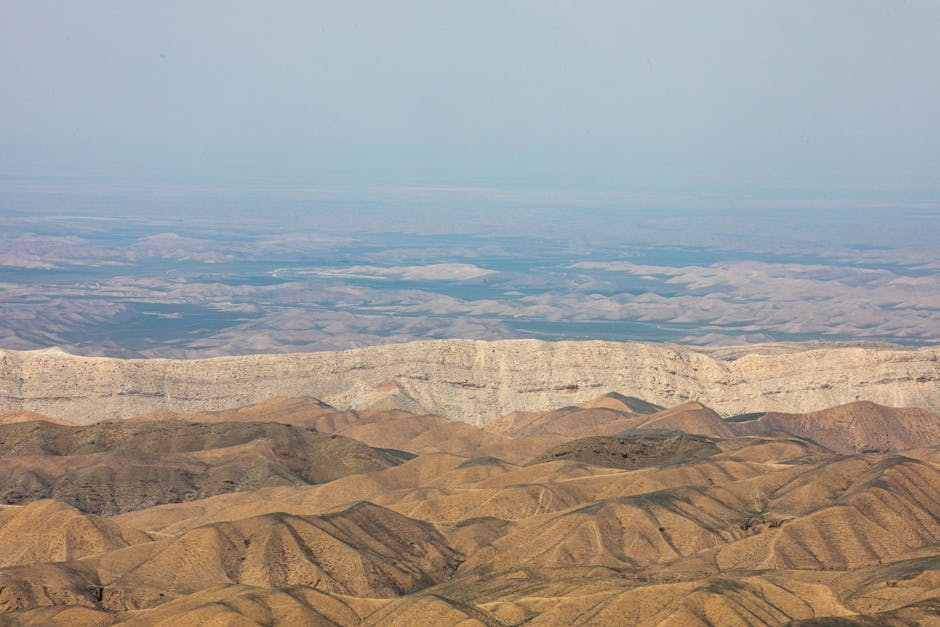
Geographical Borders That Make No Sense

Geographical Borders That Make No Sense

⏱️ 5 min read

Throughout history, political boundaries have been drawn for countless reasons—colonial ambitions, military conquests, diplomatic negotiations, and arbitrary decisions made thousands of miles away from the affected territories. While some borders follow natural features like rivers and mountain ranges, others seem to defy logic, cutting through communities, ignoring cultural boundaries, and creating administrative nightmares. These puzzling divisions continue to impact millions of people today, serving as reminders of historical decisions that often prioritized politics over geography and human concerns.

The Straight Lines Across Africa

Perhaps no continent better illustrates the absurdity of artificial borders than Africa, where European colonial powers carved up the land with little regard for existing kingdoms, ethnic groups, or natural boundaries. During the Berlin Conference of 1884-1885, European nations literally used rulers to draw straight lines across maps, creating borders that would cause conflicts for generations to come.

The borders of Libya stand out as particularly egregious examples. The country's southern boundaries with Chad, Niger, and Sudan consist almost entirely of straight lines that ignore the diverse tribal territories of the Sahara Desert. Similarly, the border between Egypt and Sudan contains a peculiar anomaly—the Bir Tawil triangle, a 795-square-mile patch of desert that neither country claims due to conflicting colonial-era border definitions.

The Western Sahara region presents another geographical oddity, where Morocco's southern border includes a long straight line through the desert, cutting through nomadic territories that had existed for centuries without regard for such arbitrary divisions.

The Diomede Islands: A Time Travel Border

In the Bering Strait between Alaska and Russia sit two small islands separated by just 2.4 miles of water—yet they exist 21 hours apart in time. Big Diomede belongs to Russia, while Little Diomede is part of the United States. The international date line runs between them, meaning residents can literally see "tomorrow" from one island and "yesterday" from the other.

This border makes little geographical sense, as the islands share the same climate, wildlife, and indigenous Inuit culture. The division stems from the 1867 Alaska Purchase, when Russia sold Alaska to the United States, creating one of the world's most unusual temporal borders. During the Cold War, this became known as the "Ice Curtain," with families separated by both politics and time zones.

Belgium and the Netherlands: Border Complexity at Its Finest

The border between Belgium and the Netherlands features the town of Baarle, which contains one of the world's most complicated territorial arrangements. Baarle-Hertog (Belgian) and Baarle-Nassau (Dutch) create a geographic puzzle with 30 separate pieces of Belgian territory surrounded by the Netherlands, and some Dutch territory even exists within the Belgian enclaves.

This confusing situation dates back to medieval land agreements and treaties that were never simplified. Houses can straddle the border, with the front door in one country and the back door in another. The official rule states that the location of the front door determines which country's laws apply. This creates amusing situations where:

  • Shops on one side of the street close earlier due to different national regulations
  • Residents might need to follow different tax codes depending on where their bedroom is located
  • Building permits must be obtained from different national authorities for different parts of the same structure
  • COVID-19 lockdown rules varied within the same street during the pandemic

The Wakhan Corridor: Afghanistan's Geographic Oddity

Afghanistan's Wakhan Corridor is a narrow strip of territory extending eastward between Tajikistan and Pakistan to touch China. At its narrowest point, this mountainous panhandle is barely 10 miles wide, stretching for nearly 200 miles through some of the world's most inhospitable terrain in the Pamuir Mountains.

This peculiar appendage exists purely as a product of 19th-century "Great Game" politics between the British and Russian empires. The British wanted a buffer zone between Russian-controlled territory and British India, so they negotiated this corridor in 1893. The result is a geographic absurdity that serves no practical purpose, remains sparsely populated by Wakhi and Kyrgyz people, and creates significant administrative challenges for Afghanistan.

India and Bangladesh: The World's Most Complicated Border

Until 2015, the India-Bangladesh border featured one of the most byzantine territorial arrangements in history—nearly 200 enclaves (territory of one country completely surrounded by another). Some of these enclaves contained counter-enclaves, and at least one location featured a counter-counter-enclave: Indian territory, within Bangladeshi territory, within Indian territory, within Bangladesh.

These enclaves resulted from chess games played by local princes in the 18th century, where territories were won and lost in matches. The residents of these enclaves lived in legal limbo for decades, unable to access services from either country. A 2015 land swap treaty finally resolved most of these issues, with residents given the choice of which nationality to adopt, but the situation remains a prime example of how historical accidents can create lasting geographic nonsense.

The Caprivi Strip: Namibia's Access to Nowhere

Namibia features a peculiar eastern protrusion known as the Caprivi Strip, a 280-mile-long and 20-mile-wide panhandle that seems completely disconnected from the country's main geography. This narrow corridor extends toward Zimbabwe, separating Botswana from Zambia and Angola.

German colonizers created this strip in 1890 through the Heligoland-Zanzibar Treaty with Britain, intending to provide German South West Africa with access to the Zambezi River and ultimately the Indian Ocean. The plan failed because they didn't account for Victoria Falls blocking river navigation. Today, the Caprivi Strip remains an administrative oddity, culturally and ethnically distinct from the rest of Namibia, serving as a reminder of colonial ambitions that ignored geographic reality.

These illogical borders demonstrate how political decisions, colonial legacy, and historical accidents continue to shape our world in ways that often conflict with geographic common sense, cultural cohesion, and practical governance.