








1 / 10 Questions
0 Points

What Is The Center Of An Atom Called?

Proton

Electron

Neutron

Nucleus

Points won
0
Correct score
0%

More Quizzes

More Articles

The Most Influential Movie Scenes Ever Filmed

The Most Influential Movie Scenes Ever Filmed

⏱️ 5 min read

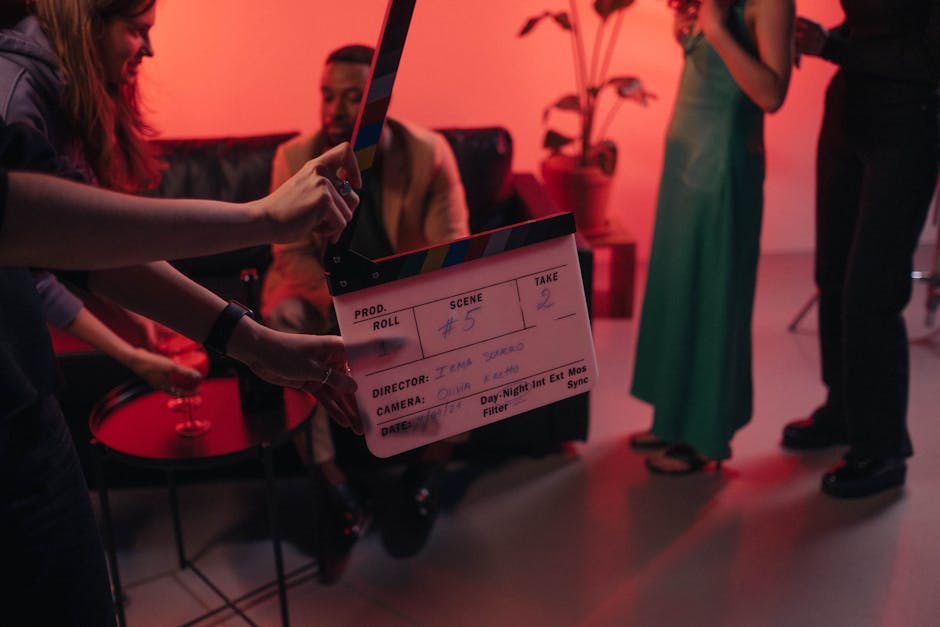
Cinema has the power to shape culture, influence future filmmakers, and create moments that transcend the screen to become part of our collective consciousness. Throughout film history, certain scenes have revolutionized storytelling techniques, pushed the boundaries of special effects, or captured the zeitgeist so perfectly that they changed cinema forever. These pivotal moments have inspired countless homages, parodies, and imitations, proving their lasting impact on the art form.

The Odessa Steps Massacre: Revolutionary Montage

Sergei Eisenstein's 1925 masterpiece "Battleship Potemkin" features what many film scholars consider the most influential sequence in cinema history. The Odessa Steps scene, depicting Tsarist soldiers brutally suppressing civilians, introduced the world to revolutionary editing techniques that would define filmmaking for generations. Eisenstein's use of rhythmic montage—cutting between soldiers marching down steps, fleeing citizens, and a baby carriage tumbling into chaos—created an emotional intensity that silent cinema had never before achieved.

This six-minute sequence demonstrated how editing could manipulate time and space to heighten dramatic tension. Directors from Alfred Hitchcock to Brian De Palma have paid homage to this scene, with "The Untouchables" featuring perhaps the most famous recreation. The techniques Eisenstein pioneered here became foundational principles taught in film schools worldwide.

The Shower Scene: Redefining Horror

Alfred Hitchcock's "Psycho" shocked audiences in 1960 with its infamous shower scene, forever changing the horror genre and audience expectations. The 45-second sequence required seven days to film and used 77 different camera angles, creating a masterclass in visual storytelling and editing. Bernard Herrmann's shrieking violin score became inseparable from the imagery of Janet Leigh's character meeting her shocking demise.

What made this scene truly revolutionary was its willingness to kill off the apparent protagonist only one-third into the film. This narrative audacity, combined with Hitchcock's technical brilliance in suggesting violence without explicitly showing it, established new possibilities for cinematic storytelling. The scene's influence extends beyond horror, demonstrating how editing and sound design could be weaponized to manipulate audience emotions.

The Star Gate Sequence: Pushing Visual Boundaries

Stanley Kubrick's "2001: A Space Odyssey" culminates in the Star Gate sequence, a mind-bending journey through space and time that redefined what special effects could achieve. Created in 1968, decades before computer-generated imagery, this psychedelic voyage used innovative slit-scan photography and practical effects that had never been attempted at such scale. The sequence's abstract imagery and philosophical implications challenged audiences to engage with cinema on a deeper, more contemplative level.

This scene influenced science fiction filmmaking immeasurably, proving that the genre could be both visually spectacular and intellectually ambitious. Directors like Ridley Scott, Christopher Nolan, and Denis Villeneuve have all cited this sequence as inspirational, particularly its commitment to creating awe through visual storytelling rather than dialogue or exposition.

The Opening of "Jaws": Building Suspense Through Sound

Steven Spielberg's 1975 thriller "Jaws" opens with a scene that masterfully demonstrates the power of suggestion in horror. The nighttime beach attack combines John Williams' iconic two-note theme with the victim's perspective to create terror from what audiences cannot see. Spielberg, working around mechanical shark failures that plagued production, turned limitation into innovation by keeping the threat invisible.

This scene established principles that horror and thriller directors still follow: sometimes what you don't show is more frightening than what you do. The use of point-of-view shots from the shark's perspective, combined with Williams' unforgettable score, created a template for building suspense that has been studied and replicated countless times across multiple genres.

The French Connection Chase: Gritty Realism in Action

William Friedkin's "The French Connection" features a car chase sequence that brought unprecedented realism and danger to action filmmaking. Shot guerrilla-style on New York City streets in 1971, with Gene Hackman's character pursuing an elevated train, the scene featured real traffic, genuine pedestrians, and actual collisions. The raw, documentary-style cinematography and legitimately perilous stunts created visceral excitement that studio-controlled action scenes couldn't match.

This sequence influenced action filmmaking by proving audiences craved authenticity and practical stunts over controlled safety. Directors from Peter Yates to Christopher Nolan have embraced practical effects and location shooting partly due to the standard this scene established.

The Copacabana Shot: The Power of the Long Take

Martin Scorsese's "Goodfellas" features a three-minute unbroken shot following Henry Hill and his date through the Copacabana nightclub's back entrance. This virtuoso steadicam sequence, moving through kitchens, corridors, and crowds before arriving at a specially-placed table, immerses viewers in Henry's world of privilege and power. The technical achievement is remarkable, but the scene's true genius lies in how it uses cinematic technique to convey character and story.

This long take inspired filmmakers to embrace extended shots as storytelling tools rather than mere technical showpieces. Films like "Children of Men," "Birdman," and "1917" have pushed this technique even further, but Scorsese's Copacabana shot remains the gold standard for combining technical prowess with narrative purpose.

The Lasting Legacy of Influential Cinema

These scenes represent more than memorable moments; they are turning points where filmmakers discovered new possibilities for the medium. Each pushed boundaries—whether technical, narrative, or emotional—in ways that expanded what cinema could achieve. They remind us that filmmaking is both an art and a craft, requiring innovation, courage, and vision to create moments that resonate across generations. As technology evolves and storytelling techniques advance, these scenes continue to serve as touchstones, inspiring new filmmakers to take risks and redefine what's possible on screen.
Discoveries Made Completely by Accident

Discoveries Made Completely by Accident

⏱️ 5 min read

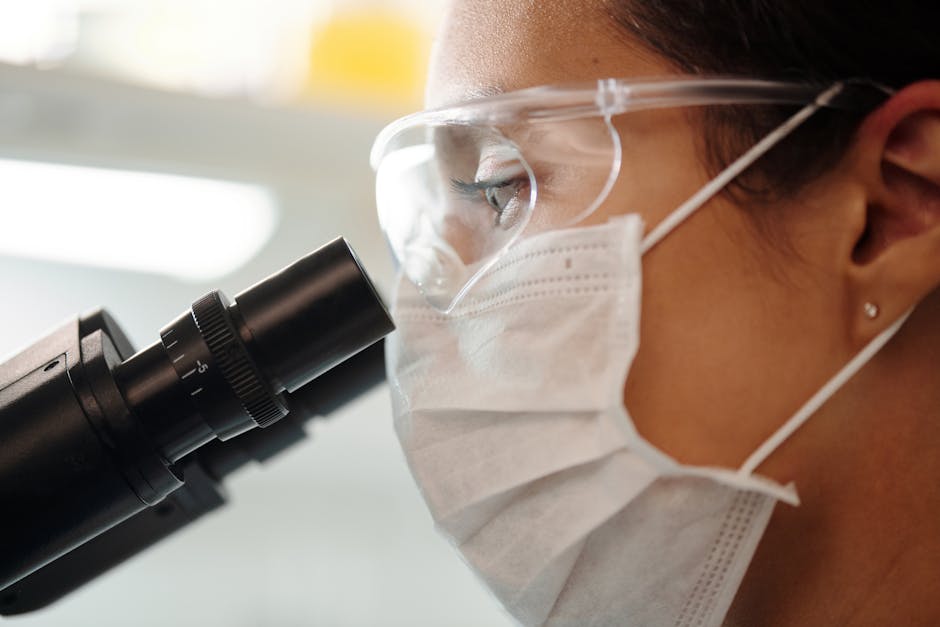
Throughout the history of science, some of the most groundbreaking discoveries have emerged not from meticulous planning or deliberate experimentation, but from pure chance. These serendipitous moments have revolutionized medicine, technology, and our understanding of the natural world. While scientists often credit preparation meeting opportunity, these accidental breakthroughs remind us that keeping an open mind and recognizing the significance of unexpected results can lead to extraordinary innovations that change humanity forever.

Penicillin: The Mold That Saved Millions

Perhaps the most famous accidental discovery in medical history occurred in 1928 when Scottish bacteriologist Alexander Fleming returned from vacation to find his laboratory in disarray. A petri dish containing Staphylococcus bacteria had been accidentally contaminated with mold, and Fleming noticed something remarkable: the bacteria surrounding the mold had been destroyed. This mold, later identified as Penicillium notatum, produced a substance that would become penicillin, the world's first widely used antibiotic.

Fleming's discovery revolutionized medicine and has since saved countless millions of lives. What made this discovery particularly fortuitous was Fleming's decision not to immediately discard the contaminated dish. His keen observation skills and scientific curiosity transformed what most would consider a ruined experiment into one of the most significant medical breakthroughs of the 20th century. By the 1940s, penicillin was being mass-produced and used to treat wounded soldiers during World War II.

Microwave Ovens: From Radar to Kitchen Appliance

In 1945, engineer Percy Spencer was working on radar technology for the Raytheon Corporation when he experienced an unusual incident. While standing near a magnetron, the device that generates microwaves for radar systems, Spencer noticed that a chocolate bar in his pocket had melted. Intrigued rather than annoyed, he began experimenting with other foods, including popcorn kernels, which popped, and an egg, which exploded.

Spencer's accidental discovery led to the development of the microwave oven, which would eventually become a staple in kitchens worldwide. The first commercial microwave oven, called the "Radarange," stood nearly six feet tall and weighed over 750 pounds. Today's compact and efficient microwave ovens represent a direct lineage from that chance observation in a radar laboratory nearly eight decades ago.

Saccharin: Sweet Discovery in the Laboratory

In 1879, chemist Constantine Fahlberg was working at Johns Hopkins University on coal tar derivatives when he made an unexpectedly sweet discovery. After a long day in the laboratory, Fahlberg sat down to dinner without washing his hands thoroughly. He noticed that his bread tasted unusually sweet, and after determining that the bread itself wasn't the source, he realized the sweetness came from a chemical compound on his hands.

Returning to his laboratory, Fahlberg tasted various compounds he had been working with until he identified the source: a substance later named saccharin. This artificial sweetener became particularly valuable during sugar shortages in World Wars I and II and continues to be used today as a sugar substitute, demonstrating how a simple oversight in laboratory hygiene led to a product used by millions.

Vulcanized Rubber: A Hot Accident

Charles Goodyear spent years trying to make rubber more durable and useful. Natural rubber became sticky in heat and brittle in cold, limiting its practical applications. In 1839, after numerous failed experiments, Goodyear accidentally dropped a mixture of rubber and sulfur onto a hot stove. Rather than melting into a useless mess, the rubber charred like leather while maintaining its flexibility.

This accidental discovery led to the process of vulcanization, which transforms natural rubber into a stable, durable material. Vulcanized rubber became essential for countless applications, most notably automobile tires, and formed the foundation of the modern rubber industry. Goodyear's accidental breakthrough demonstrates how persistence combined with fortunate mishaps can yield transformative results.

X-Rays: Seeing Through the Invisible

German physicist Wilhelm Röntgen was experimenting with cathode rays in 1895 when he noticed something peculiar. A fluorescent screen across his laboratory glowed even though it was separated from his cathode ray tube by heavy black cardboard. Röntgen realized he had discovered a new type of ray that could penetrate solid objects. He called them "X-rays" because their nature was unknown.

Within weeks, Röntgen had taken the first X-ray photograph—an image of his wife's hand showing her bones and wedding ring. This accidental discovery revolutionized medical diagnostics, allowing doctors to see inside the human body without surgery. X-ray technology has since expanded into numerous fields, including security screening, materials testing, and astronomical observation.

The Post-it Note: A Failed Adhesive's Success Story

In 1968, chemist Spencer Silver at 3M was attempting to develop a super-strong adhesive but instead created a weak, pressure-sensitive adhesive that could stick to surfaces but be easily removed without leaving residue. For years, this "failed" adhesive had no practical application until 1974, when Silver's colleague Arthur Fry became frustrated with bookmarks falling out of his church hymnal.

Fry realized that Silver's weak adhesive could create repositionable bookmarks. This insight led to the development of Post-it Notes, which launched commercially in 1980 and became one of 3M's most successful products. The story illustrates how a failed experiment, when viewed from a different perspective, can become an invaluable innovation.

Lessons from Serendipity

These accidental discoveries share common elements that offer valuable lessons for scientific research. First, they required researchers who were observant enough to recognize that something unusual had occurred. Second, these scientists possessed the curiosity and open-mindedness to investigate unexpected results rather than dismissing them as mere anomalies. Finally, they had sufficient knowledge and preparation to understand the significance of what they had stumbled upon and to develop these accidents into practical applications.

While modern science relies heavily on systematic research and controlled experiments, these serendipitous discoveries remind us that breakthrough innovations can emerge from the most unexpected circumstances. They underscore the importance of maintaining flexibility in research, carefully observing all experimental outcomes, and remaining open to possibilities that may initially appear to be mistakes or failures.