







1 / 10 Questions
0 Points

What metal makes up 97.5% of a US penny since 1982?

Nickel

Zinc

Aluminum

Copper

Points won
0
Correct score
0%

More Quizzes

More Articles

14 Fascinating Facts About the Middle Ages

14 Fascinating Facts About the Middle Ages

⏱️ 6 min read

The Middle Ages, spanning roughly from the 5th to the 15th century, remains one of history's most misunderstood periods. Often dismissed as the "Dark Ages," this era was actually a time of remarkable innovation, cultural development, and social complexity. From groundbreaking inventions to surprising hygiene practices, the medieval period shaped the modern world in ways that continue to influence us today. Let's explore fourteen remarkable aspects of medieval life that challenge common misconceptions and reveal the true character of this transformative epoch.

Medieval Innovation and Daily Life

1. Medieval People Bathed Regularly

Contrary to popular belief, medieval Europeans maintained relatively good hygiene practices. Public bathhouses were common in many towns and cities, with people bathing several times per week. These establishments served as social gathering places where people could relax, conduct business, and maintain cleanliness. The stereotype of filthy medieval peasants is largely a myth perpetuated by later periods. It wasn't until the Renaissance, when physicians mistakenly believed that water opened pores to disease, that bathing frequency actually declined significantly.

2. The Invention of Eyeglasses Revolutionized Learning

Around 1286, Italian craftsmen invented the first wearable eyeglasses, marking a revolutionary advancement in medieval technology. This innovation extended the productive years of scholars, scribes, and craftsmen who previously had to cease detailed work as their vision deteriorated with age. The development of corrective lenses represented sophisticated understanding of optics and transformed intellectual life, enabling the preservation and transmission of knowledge across generations.

3. Medieval Universities Established Modern Education

The first universities emerged during the Middle Ages, with the University of Bologna founded in 1088, followed by Oxford, Cambridge, and the Sorbonne. These institutions created the academic structure still used today, including lectures, examinations, degrees, and academic regalia. Students studied the liberal arts—grammar, rhetoric, logic, arithmetic, geometry, music, and astronomy—establishing educational foundations that persist in contemporary curricula.

4. Cats Were Both Revered and Persecuted

Medieval attitudes toward cats were paradoxically complex. While valued for controlling rodent populations that threatened grain stores, cats were also associated with witchcraft and pagan practices, leading to periodic persecution. Some historians suggest that the mass killing of cats in certain regions may have inadvertently allowed rat populations to flourish, contributing to the rapid spread of the Black Death. Despite persecution, cats remained essential to daily life, especially in monasteries where they protected precious manuscripts from mice.

Social Structure and Surprising Rights

5. Women Could Own Property and Run Businesses

Medieval women enjoyed more economic rights than commonly believed. Widows frequently inherited and managed their deceased husbands' businesses, from breweries to textile operations. Women worked as merchants, innkeepers, and artisans, with some guilds specifically for female workers. While certainly not equal to men by modern standards, medieval women's economic participation was often greater than in subsequent centuries, particularly during the Victorian era.

6. Peasants Had More Free Time Than Modern Workers

Medieval peasants observed numerous religious holidays and feast days, resulting in approximately 150 to 180 days off per year. While their work was physically demanding during planting and harvest seasons, they enjoyed significantly more leisure time than contemporary workers typically receive. These breaks allowed for festivals, celebrations, and community gatherings that strengthened social bonds and provided essential rest.

7. Medieval Cuisine Was Surprisingly Sophisticated

Medieval cooking was far more refined than often portrayed. Wealthy households employed skilled cooks who created elaborate dishes using exotic spices like saffron, cinnamon, and ginger imported via extensive trade routes. Cookbooks from the period reveal complex recipes involving multiple cooking methods and artistic presentation. Even common people enjoyed flavorful meals seasoned with herbs, featuring vegetables, grains, legumes, and occasional meat, challenging the notion of bland, monotonous medieval diets.

Technological and Agricultural Advances

8. The Heavy Plow Transformed European Agriculture

The introduction of the heavy plow during the Middle Ages revolutionized farming in Northern Europe. Unlike earlier scratch plows, the heavy plow could turn the dense, wet soils of the region, dramatically increasing agricultural productivity. This innovation supported population growth and urbanization, fundamentally altering European society's structure and enabling the rise of medieval civilization.

9. Windmills and Watermills Powered Medieval Industry

By the 11th century, thousands of mills dotted the European landscape, harnessing natural power for grinding grain, sawing wood, fulling cloth, and pumping water. The Domesday Book of 1086 recorded over 6,000 watermills in England alone. This mechanical revolution reduced human labor requirements and increased production efficiency, representing a significant step toward industrialization centuries before the Industrial Revolution.

10. Medieval Surgeons Performed Complex Operations

Medieval surgery was surprisingly advanced, with practitioners performing cataract removal, hernia repairs, and even rudimentary brain surgery. Surgeons understood the importance of cleanliness, often using wine as an antiseptic. They developed specialized instruments and techniques, with medical texts documenting procedures and treatments. While lacking modern anesthesia and antibiotics, medieval medicine was far more sophisticated than stereotypes suggest.

Cultural and Religious Life

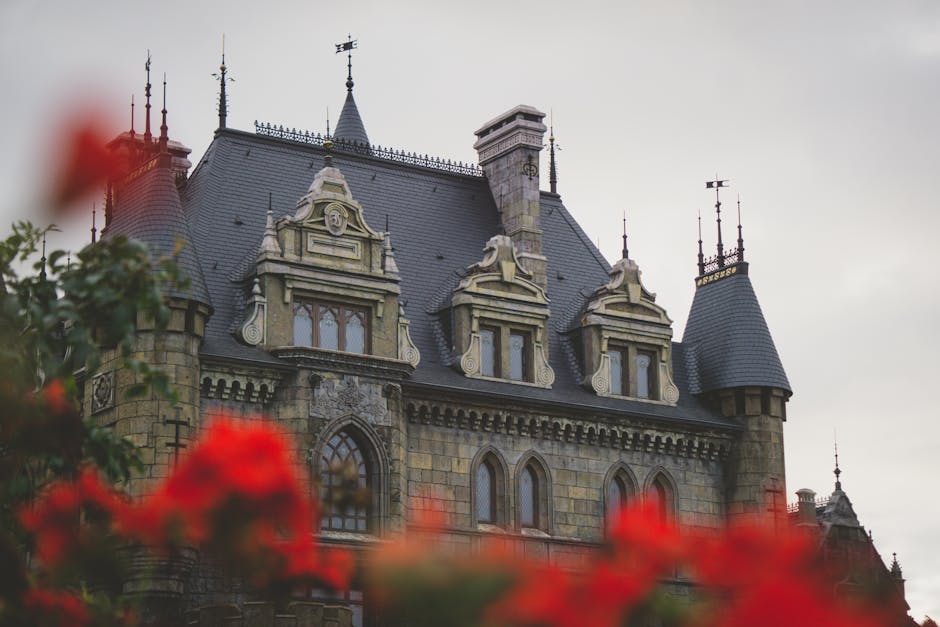
11. Gothic Cathedrals Showcased Engineering Mastery

The construction of Gothic cathedrals represented medieval engineering at its finest. These massive structures, featuring soaring vaults, flying buttresses, and intricate stained glass windows, required advanced mathematical knowledge and construction techniques. Buildings like Notre-Dame de Paris and Chartres Cathedral demonstrated medieval architects' sophisticated understanding of physics, geometry, and materials science, creating structures that have endured for centuries.

12. Monks Preserved Classical Knowledge

Medieval monasteries served as repositories of learning, with monks painstakingly copying ancient texts from Greek and Roman civilizations. Without their dedicated work, countless classical works would have been lost forever. Monastic scriptoria preserved not only religious texts but also scientific, philosophical, and literary works, creating beautiful illuminated manuscripts that remain artistic treasures today.

13. Trial by Ordeal Had Practical Purposes

While trial by ordeal seems barbaric today, recent research suggests these practices may have functioned as effective lie detectors in societies lacking forensic science. The psychological pressure of undergoing ordeal by fire or water likely prompted guilty parties to confess or settle disputes beforehand. Additionally, priests administering these ordeals sometimes manipulated outcomes to ensure justice, suggesting a more nuanced system than pure superstition.

14. The Magna Carta Established Rule of Law

Signed in 1215, the Magna Carta established the revolutionary principle that even monarchs must obey the law. While initially protecting only noble rights, this document laid the groundwork for constitutional governance and individual liberties. Its concepts influenced democratic development worldwide, including the United States Constitution, making it one of the Middle Ages' most enduring contributions to modern civilization.

The Medieval Legacy

The Middle Ages were far from the backward, superstitious period often portrayed in popular imagination. This era witnessed remarkable technological innovations, from eyeglasses to mechanical mills; established educational institutions that persist today; developed sophisticated legal and social systems; and preserved the knowledge that would fuel the Renaissance. Medieval people bathed regularly, ate well-seasoned food, enjoyed considerable leisure time, and created architectural and artistic masterpieces that continue to inspire awe. Understanding these fourteen facts reveals the Middle Ages as a dynamic period of human achievement, challenging us to reconsider historical stereotypes and appreciate the medieval world's profound influence on contemporary society. The legacy of medieval innovation, law, education, and culture continues shaping our lives in countless ways, demonstrating that this "middle" period was anything but a dark age.
Top 10 Most Realistic Historical Movies

Top 10 Most Realistic Historical Movies

⏱️ 6 min read

Historical films have long captivated audiences by bringing pivotal moments from the past to life on the silver screen. While Hollywood often takes creative liberties for dramatic effect, certain filmmakers have committed themselves to exceptional historical accuracy, meticulously recreating events, costumes, dialogue, and settings with remarkable fidelity. These productions stand as testament to what cinema can achieve when entertainment meets rigorous scholarship. The following films represent the pinnacle of historical authenticity in moviemaking, each earning praise from historians and critics alike for their dedication to depicting the past as it truly was.

Films That Brought History to Life with Unprecedented Accuracy

1. Apollo 13 (1995) - NASA's Finest Hour Recreated

Ron Howard's gripping account of the ill-fated 1970 moon mission stands as a masterclass in historical filmmaking. The production team went to extraordinary lengths to ensure accuracy, filming scenes in NASA's actual zero-gravity training aircraft to achieve authentic weightlessness effects. Technical advisors, including the real Jim Lovell, provided constant consultation. The dialogue incorporated actual transcripts from mission control, and the spacecraft interior was reconstructed with meticulous attention to detail. NASA officials have praised the film for its faithful representation of the crisis, the problem-solving processes employed, and the genuine spirit of the era's space program.

2. Downfall (2004) - Hitler's Final Days in the Bunker

Oliver Hirschbiegel's German-language film depicts the last days of Adolf Hitler's regime with chilling accuracy. Based on firsthand accounts from Hitler's secretary Traudl Junge and historian Joachim Fest's research, the film recreates the claustrophobic atmosphere of the Führerbunker. Historians have commended the production for its authentic portrayal of the Nazi leadership's final moments, avoiding both glorification and caricature. The bunker set was constructed based on original architectural plans, costumes matched photographic evidence from the period, and the timeline of events corresponds precisely with historical records.

3. Master and Commander: The Far Side of the World (2003) - Napoleonic Naval Warfare

Peter Weir's seafaring epic earned widespread acclaim for its authentic depiction of early 19th-century naval life. The production consulted extensively with naval historians and the Royal Navy Museum. The HMS Surprise replica was built using period-accurate techniques, incorporating working cannons and rigging systems true to the era. The film accurately portrays navigation methods, medical practices including the gruesome reality of ship surgery without anesthesia, naval tactics, and the rigid hierarchy aboard warships. Even the language and naval terminology remain faithful to Patrick O'Brian's extensively researched source material.

4. Schindler's List (1993) - The Holocaust's Stark Reality

Steven Spielberg's powerful drama about Oskar Schindler's efforts to save Jews during the Holocaust stands as one of cinema's most historically rigorous works. Filmed in actual locations including the Kraków-Płaszów concentration camp site, the production incorporated testimony from Schindler survivors. The attention to detail extends to accurate German and Polish dialogue, period-appropriate costumes sourced from actual wartime garments, and faithful recreation of the Kraków ghetto. Historians have verified the film's portrayal of events, timelines, and the complex character of Schindler himself, making it an invaluable educational resource.

5. All the President's Men (1976) - Watergate Investigation Unveiled

Alan J. Pakula's thriller about the Washington Post's investigation into the Watergate scandal achieved remarkable authenticity by involving the actual journalists portrayed. Bob Woodward and Carl Bernstein served as consultants, ensuring dialogue accuracy and proper journalistic procedures. The production recreated the Washington Post newsroom with such precision that real Post employees couldn't distinguish it from their actual office. The film adheres strictly to the known timeline of events, and many conversations are based on recordings and contemporaneous notes, creating a documentary-like quality within its dramatic framework.

6. Tora! Tora! Tora! (1970) - Pearl Harbor from Both Perspectives

This unique joint American-Japanese production presents the attack on Pearl Harbor with unprecedented balance and accuracy. The film employed teams of historians from both nations to ensure factual precision. Real battleships and aircraft carriers were used where possible, with period-accurate aircraft replicas built for aerial sequences. The timeline of events matches military records precisely, from the failure of intelligence warnings to the exact sequence of the attack waves. Unlike many war films, it avoids propaganda, presenting Japanese military planning with the same detailed accuracy as American defensive failures.

7. Gandhi (1982) - India's Path to Independence

Richard Attenborough's epic biography of Mahatma Gandhi meticulously chronicles the Indian independence movement. The production consulted extensively with Gandhi scholars and Indian government archives. Filming at actual historical locations, including Gandhi's ashram, added authenticity. The film accurately depicts Gandhi's philosophy of nonviolent resistance, key events like the Salt March and Jallianwala Bagh massacre, and the complex political negotiations leading to independence. Historical consultants ensured that costumes, settings, and the portrayal of historical figures from Nehru to Churchill maintained factual integrity.

8. The Right Stuff (1983) - America's Early Space Race

Philip Kaufman's adaptation of Tom Wolfe's book captures the dawn of American space exploration with exceptional historical fidelity. The film consulted with original Mercury Seven astronauts and recreated test flights using actual flight data. Locations included real Air Force bases and Cape Canaveral facilities. The portrayal of Chuck Yeager breaking the sound barrier, the selection and training of the first astronauts, and the competition with the Soviet Union all correspond with documented history. Technical details, from aircraft specifications to spaceflight procedures, underwent rigorous verification by aerospace experts.

9. Bloody Sunday (2002) - Northern Ireland's Darkest Day

Paul Greengrass employed his documentary-style approach to recreate the 1972 massacre in Derry with haunting accuracy. The film drew from the Saville Inquiry testimony, eyewitness accounts, and extensive research into that day's events. Many scenes were shot at the actual locations in Derry, and the timeline follows the established sequence of events minute by minute. The handheld camera work and naturalistic performances create an almost documentary feel. Historians and participants have praised the film for fairly representing the civil rights march, the British paratroopers' actions, and the tragic escalation that left thirteen dead.

10. 12 Years a Slave (2013) - Slavery's Brutal Truth

Steve McQueen's adaptation of Solomon Northup's memoir depicts American slavery with unflinching historical accuracy. The film drew directly from Northup's 1853 narrative, verified by historians as a reliable firsthand account. Production designers recreated Louisiana plantations based on architectural records and archaeological evidence. The portrayal of slavery's daily brutalities, from cotton picking techniques to punishment methods, reflects extensive historical research. Consultants ensured authentic depiction of enslaved people's living conditions, the economics of the slave trade, and the legal framework that enabled kidnapping of free Black citizens.

The Enduring Value of Historical Accuracy

These ten films demonstrate that historical accuracy and compelling cinema need not be mutually exclusive. Through meticulous research, consultation with experts, use of primary sources, and filming at actual locations, these productions achieved both critical acclaim and educational value. They serve not merely as entertainment but as accessible windows into pivotal moments of human history, preserving these stories with dignity and authenticity. By prioritizing truth over convenient fiction, these filmmakers created works that stand as both artistic achievements and valuable historical documents, proving that the most powerful stories are often those that remain faithful to the remarkable reality of the past.