







































1 / 40 Questions
0 Points

What percentage of broccoli is typically thrown away despite being edible?

0.4

0.25

0.5

0.65

Points won
0
Correct score
0%

More Quizzes

More Articles

15 Hidden Facts About The Simpsons

15 Hidden Facts About The Simpsons

⏱️ 7 min read

Since its debut in 1989, "The Simpsons" has become the longest-running American sitcom and animated program in television history. While millions of fans have followed the adventures of Homer, Marge, Bart, Lisa, and Maggie over more than three decades, the show harbors countless secrets and surprising details that even devoted viewers might not know. From production challenges to celebrity cameos that never happened, these lesser-known facts reveal the fascinating history behind America's favorite animated family.

Behind-the-Scenes Secrets That Shaped Television History

1. The Show Was Born from Crude Sketches in a Lobby

Matt Groening created the Simpson family in just 15 minutes while waiting in producer James L. Brooks's lobby. He was originally supposed to pitch his comic strip "Life in Hell," but fearing he'd lose the rights to his characters, he quickly sketched out a new family. Groening named most of the characters after his own family members—his parents Homer and Margaret (Marge), and sisters Lisa and Maggie—though he substituted "Bart" as an anagram of "brat" instead of using his own name.

2. Homer's Signature "D'oh!" Was Scripted Differently

The now-iconic exclamation "D'oh!" was originally written in scripts as "annoyed grunt." Voice actor Dan Castellaneta drew inspiration from Jimmy Finlayson, a Scottish actor who appeared in Laurel and Hardy films and would say "Doooh!" when frustrated. Castellaneta shortened it to make it punchier, and it eventually became so culturally significant that the Oxford English Dictionary added "d'oh" as an official entry in 2001.

3. The Characters Only Have Four Fingers for an Economic Reason

The decision to draw characters with only four fingers instead of five wasn't arbitrary—it was a practical animation choice. Drawing four fingers saved time and money during production. This practice actually dates back to early Disney cartoons, and "The Simpsons" continued the tradition. The animators discovered that five fingers made hands look too crowded, while four fingers appeared more natural on the characters' proportions.

4. Bart's Voice Comes from a Surprising Source

Nancy Cartwright, the voice of Bart Simpson, originally auditioned for the role of Lisa. However, when she saw the character description for Bart, she felt she could bring more to the troublemaking son. At her audition, she performed Bart's lines and immediately won over the casting directors. Remarkably, Cartwright has never changed her voice over decades of recording—that's genuinely her natural vocal register when performing the character.

5. The Town of Springfield's Location Is Deliberately Mysterious

Despite countless clues dropped throughout the series, Matt Groening has confirmed that Springfield's state location is intentionally ambiguous. He chose the name "Springfield" specifically because it's one of the most common city names in America, appearing in 33 states. The show has included contradictory geographical references throughout its run to maintain the mystery, making Springfield a true "Everytime, USA."

Celebrity Connections and Rejected Guest Stars

6. Michael Jackson Appeared Under a Pseudonym

The King of Pop guest-starred in the season three episode "Stark Raving Dad" as a character who claimed to be Michael Jackson. Due to contractual obligations with his record label, Jackson was credited under the pseudonym "John Jay Smith." While Jackson voiced the speaking parts, he wasn't allowed to sing, so a soundalike named Kipp Lennon performed the musical numbers. This episode was later pulled from circulation following the controversial "Leaving Neverland" documentary.

7. The Show Has Been Rejected by Major Stars

Despite its cultural cachet, several A-list celebrities have turned down opportunities to appear on "The Simpsons." Notably, Prince refused multiple invitations, and Bruce Springsteen declined an offer. The show's producers have stated that securing guest stars became easier over time as the series' legendary status grew, but early seasons faced more rejections than fans might expect from what would become such a prestigious gig.

8. The Beatles Connection That Almost Happened

The producers spent years trying to get all the surviving Beatles members to appear together on the show. While George Harrison and Ringo Starr each made individual appearances, and Paul McCartney and Linda McCartney appeared in a memorable vegetarian-themed episode, the dream of having all the living Beatles in one episode never materialized before Harrison's death in 2001.

Animation Techniques and Creative Decisions

9. The Opening Sequence Changes Cost a Fortune

The show's opening credits cost approximately $50,000 to $75,000 per episode when they're modified or updated. Due to this expense, the production team uses the same opening for multiple episodes and only creates new couch gags or seasonal variations periodically. This is why keen-eyed viewers notice the opening sequence remains largely consistent throughout each season, with only minor variations for special occasions.

10. Characters' Yellow Skin Was a Strategic Decision

Matt Groening wanted his characters to be immediately recognizable and stand out when viewers flipped through channels. The bright yellow skin tone was chosen deliberately to grab attention—when someone channel-surfing passed by "The Simpsons," the unusual color would make them stop and look. This distinctive choice has become one of the show's most recognizable visual trademarks and has been maintained consistently across all merchandise and promotional materials.

11. Episodes Are Produced Nearly a Year in Advance

The production timeline for a typical "Simpsons" episode spans approximately nine months from initial concept to finished product. This lengthy process includes writing, table reads, multiple revisions, recording sessions, animation (often done overseas), and post-production. This extended timeline occasionally causes challenges when the show attempts to incorporate timely references or current events, as the cultural landscape may shift dramatically between production and air date.

Cultural Impact and Record-Breaking Achievements

12. The Show Has Predicted the Future with Eerie Accuracy

Over its decades-long run, "The Simpsons" has seemingly predicted numerous real-world events, including Donald Trump's presidency (mentioned in a 2000 episode), the Disney-Fox merger, smartwatches, autocorrect technology, and even the discovery of the Higgs boson particle. While some attribute this to coincidence given the show's massive episode count, the writers' ability to satirize contemporary trends has occasionally resulted in storylines that later became reality.

13. The Writers' Room Is Remarkably Educated

The writing staff of "The Simpsons" includes several Harvard graduates and individuals with advanced degrees in mathematics, computer science, and physics. This explains the show's frequent mathematical jokes, scientific references, and sophisticated wordplay that operates on multiple levels. The term "Simpsons paradox" in statistics has even been referenced in episodes, showcasing the writers' impressive academic backgrounds.

14. Bleeding Gums Murphy Was a Tribute That Became Something More

Lisa's jazz mentor, Bleeding Gums Murphy, was partially inspired by blues legend Blind Lemon Jefferson and jazz musician Sonny Rollins. However, after the character's death episode aired in season six, many viewers and critics noted similarities to blues musician Bleeding Gums Anderson. The character became a touching recurring element in Lisa's development and represented the show's ability to handle serious topics like death and loss within its comedic framework.

15. The Show Has Earned More Emmy Awards Than Any Other Animated Series

As of recent counts, "The Simpsons" has won 34 Emmy Awards and received over 90 nominations, making it the most Emmy-awarded animated series in television history. The show has won in categories ranging from Outstanding Animated Program to Outstanding Voice-Over Performance. This recognition from the Television Academy underscores the series' consistent quality and cultural significance across multiple decades of production.

A Legacy Built on Hidden Details

These fifteen facts merely scratch the surface of the rich history surrounding "The Simpsons." From its humble beginnings as a series of shorts on "The Tracey Ullman Show" to its status as a cultural institution, the program has maintained relevance through clever writing, memorable characters, and countless details that reward attentive viewers. The combination of intelligent humor, social satire, and genuine heart has allowed the show to remain on the air for over 750 episodes, influencing generations of viewers and creators alike. Whether it's the economic decisions behind the animation style, the celebrity stories that never made it to air, or the highly educated team crafting each script, these hidden facts demonstrate that "The Simpsons" success stems from far more than just good jokes—it represents decades of creative dedication, strategic choices, and an unwavering commitment to quality entertainment that continues to resonate with audiences worldwide.
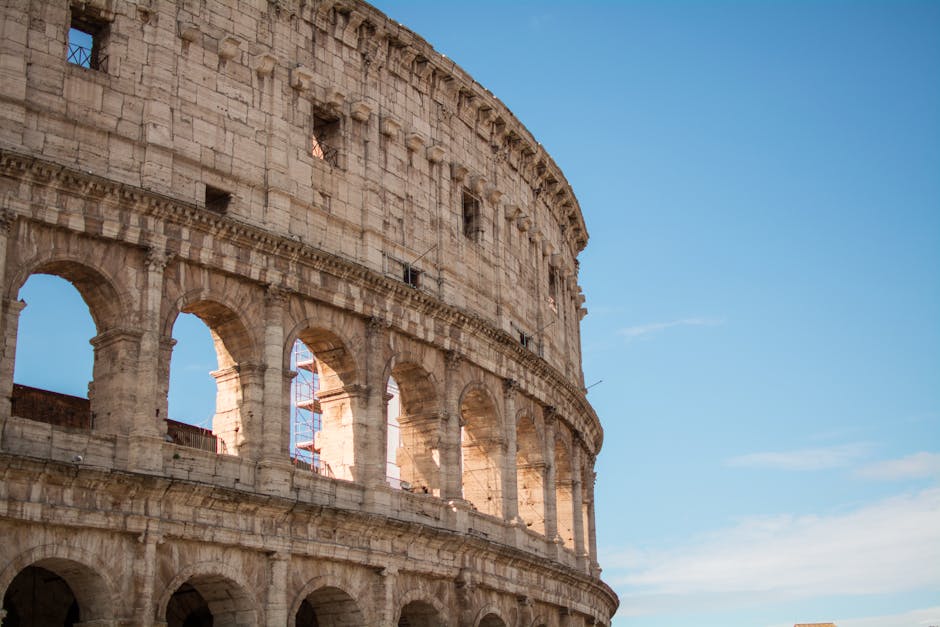
Top 10 Ancient Civilizations You Should Know About

Top 10 Ancient Civilizations You Should Know About

⏱️ 7 min read

The story of human civilization spans thousands of years, marked by remarkable societies that laid the foundations for modern life. From revolutionary architectural achievements to groundbreaking legal systems, ancient civilizations shaped everything from mathematics and astronomy to politics and philosophy. Understanding these influential societies provides crucial insights into how humanity evolved culturally, technologically, and socially. The following ancient civilizations represent some of the most significant contributors to human progress, each leaving an indelible mark on history that continues to influence our world today.

The Most Influential Ancient Civilizations

1. Mesopotamian Civilization: The Cradle of Civilization

Mesopotamia, meaning "land between rivers," flourished between the Tigris and Euphrates rivers in what is now modern-day Iraq from approximately 3500 BCE to 500 BCE. This civilization is credited with numerous firsts that fundamentally changed human society. The Sumerians, who inhabited southern Mesopotamia, developed one of the world's earliest writing systems called cuneiform around 3200 BCE, enabling the recording of history, laws, and literature. Mesopotamians also created the first known legal code under King Hammurabi, established the concept of the 60-minute hour and 60-second minute, and made significant advances in mathematics, including the use of a base-60 number system. Their architectural achievements included the famous ziggurats, massive stepped temples that dominated city skylines. The Epic of Gilgamesh, one of humanity's oldest literary works, originated from this civilization.

2. Ancient Egypt: Masters of Monumentality and Eternity

Ancient Egyptian civilization, which thrived along the Nile River from around 3100 BCE to 30 BCE, created some of history's most iconic monuments and developed a complex understanding of the afterlife. The Egyptians constructed the Great Pyramids of Giza, including the Great Pyramid of Khufu, which remained the world's tallest man-made structure for nearly 4,000 years. Their hieroglyphic writing system combined logographic and alphabetic elements, preserving extensive records of their culture. Egyptians made remarkable advances in medicine, performing surgeries and understanding anatomy through mummification practices. They developed sophisticated agricultural techniques, harnessing the Nile's annual floods through irrigation systems. Egyptian contributions to mathematics, particularly geometry, were essential for their architectural achievements and influenced later Greek mathematicians.

3. The Indus Valley Civilization: Urban Planning Pioneers

The Indus Valley Civilization, also known as the Harappan Civilization, existed from approximately 3300 BCE to 1300 BCE in what is now Pakistan and northwest India. This civilization demonstrated remarkable urban planning sophistication, with cities like Mohenjo-daro and Harappa featuring grid-pattern streets, advanced drainage systems, and standardized brick sizes. The Indus Valley people created one of the world's earliest forms of writing, though it remains undeciphered today. They developed precise weights and measures, facilitating extensive trade networks that reached Mesopotamia. Archaeological evidence suggests a relatively egalitarian society with impressive public baths, granaries, and uniform housing. Their decline remains mysterious, with theories ranging from climate change to river system alterations.

4. Ancient China: Innovators of Technology and Philosophy

Ancient Chinese civilization, beginning with the Xia Dynasty around 2070 BCE and continuing through successive dynasties, made extraordinary contributions to technology, philosophy, and governance. The Chinese invented paper, gunpowder, the compass, and printing—innovations collectively known as the Four Great Inventions that revolutionized global civilization. The construction of the Great Wall, spanning thousands of miles, represents one of humanity's most ambitious defensive projects. Chinese philosophy, particularly Confucianism and Taoism, provided ethical frameworks that continue influencing billions of people. The development of silk production and the establishment of the Silk Road created vast trade networks connecting East and West. Chinese advances in astronomy, mathematics, and medicine, including acupuncture, demonstrated sophisticated scientific understanding.

5. Ancient Greece: Birthplace of Western Philosophy and Democracy

Ancient Greek civilization, flourishing from around 800 BCE to 146 BCE, fundamentally shaped Western thought, politics, and culture. Athens developed democracy, creating a system where citizens participated directly in governmental decisions—a revolutionary concept that influences modern governance. Greek philosophers including Socrates, Plato, and Aristotle established foundational questions and methods for Western philosophy, ethics, and logic. The Greeks made groundbreaking contributions to mathematics through figures like Pythagoras and Euclid, and to medicine through Hippocrates, the "Father of Medicine." Greek architecture, exemplified by the Parthenon, established design principles still used today. Their Olympic Games, dramatic traditions, and epic literature including Homer's Iliad and Odyssey continue resonating through contemporary culture.

6. The Roman Empire: Engineers of Administration and Infrastructure

The Roman Empire, lasting from 27 BCE to 476 CE in the West, created an unprecedented political and administrative system that governed millions across three continents. Romans excelled in engineering, constructing extensive road networks totaling over 250,000 miles that facilitated trade and military movement. Their architectural innovations included concrete, the arch, and the dome, enabling structures like the Colosseum and the Pantheon. Roman law, particularly the concept of "innocent until proven guilty," formed the basis for many modern legal systems. They developed sophisticated aqueduct systems delivering fresh water to cities, and established public health measures including public baths and sewage systems. Latin, the Roman language, evolved into Romance languages and influenced English vocabulary significantly.

7. The Maya Civilization: Astronomical and Mathematical Geniuses

The Maya civilization, which flourished in Mesoamerica from around 2000 BCE to 1500 CE, achieved remarkable sophistication in astronomy, mathematics, and architecture. The Maya developed a complex writing system using hieroglyphics, the most advanced in pre-Columbian Americas, recording historical events, astronomical observations, and religious texts. They created an accurate calendar system based on careful celestial observations, including the famous Long Count calendar. Maya mathematicians independently developed the concept of zero, crucial for advanced calculations. Their architectural achievements included towering pyramids like those at Tikal and Chichen Itza, astronomical observatories, and elaborate palace complexes. The Maya established city-states with sophisticated political systems and extensive trade networks throughout Mesoamerica.

8. The Persian Empire: Masters of Tolerance and Administration

The Persian Empire, particularly under the Achaemenid dynasty from 550 BCE to 330 BCE, created the largest empire of the ancient world, stretching from the Indus Valley to Greece. Persian emperors, notably Cyrus the Great, practiced religious tolerance and allowed conquered peoples to maintain their customs and beliefs—unusual for ancient empires. They established an efficient administrative system dividing the empire into provinces called satrapies, each governed by a satrap. The Persians built the Royal Road, an extensive highway system facilitating communication and trade across their vast territories. They developed an early postal system, allowing messages to travel quickly across the empire. Persian art, architecture, and gardens influenced surrounding cultures, and Zoroastrianism, their primary religion, influenced later monotheistic faiths.

9. The Phoenician Civilization: Traders and Alphabet Creators

The Phoenician civilization, centered in coastal Lebanon from around 1500 BCE to 300 BCE, dominated Mediterranean trade and created one of history's most influential innovations: the alphabet. Unlike complex hieroglyphic or cuneiform systems, the Phoenician alphabet consisted of 22 consonant characters, making writing accessible and adaptable. This alphabet became the ancestor of Greek, Latin, Arabic, and Hebrew scripts, fundamentally transforming human communication. Phoenicians were master sailors and traders, establishing colonies throughout the Mediterranean, including Carthage. They developed the production of Tyrian purple, a highly valued dye made from murex shells, creating a luxury trade commodity. Their shipbuilding expertise and navigational skills enabled them to conduct trade routes extending beyond the Mediterranean to the Atlantic.

10. The Aksumite Empire: African Power and Christian Kingdom

The Aksumite Empire, located in present-day Ethiopia and Eritrea from approximately 100 CE to 940 CE, represented one of the ancient world's major powers and an important trading hub. Aksum controlled trade routes connecting the Roman Empire with India, dealing in ivory, gold, emeralds, and incense. The empire was among the first major civilizations to officially adopt Christianity in the 4th century CE, establishing a unique African Christian tradition that persists today. Aksumites developed their own script, Ge'ez, still used in Ethiopian Orthodox Church liturgy. They erected massive stone obelisks, some reaching over 100 feet tall, demonstrating advanced engineering capabilities. The Kingdom of Aksum minted its own coins, one of the few African civilizations to do so, facilitating international trade and asserting political authority.

Lasting Legacy of Ancient Civilizations

These ten ancient civilizations collectively shaped fundamental aspects of modern society, from writing systems and legal frameworks to architectural principles and philosophical traditions. Their innovations in agriculture, engineering, mathematics, astronomy, and governance solved challenges that remain relevant today. Understanding these societies provides perspective on human ingenuity, cultural diversity, and the interconnectedness of global development. The knowledge, technologies, and ideas generated by these civilizations continue influencing contemporary life, demonstrating that while these societies have vanished, their contributions remain eternally relevant to understanding human achievement and potential.