









7 Surprising Facts About Hollywood Walk of Fame Stars
By Trivia Daily, Staff Writer — Published September 10, 2026
Table of Contents
- Key Takeaways
- The Hollywood Walk of Fame Isn't Free for Celebrities
- Fictional Characters Earn Real Recognition
- Five Categories Determine Star Placement
- Some Celebrities Have Refused Their Stars
- The Walk Began as Urban Renewal
- Frequently Asked Questions
Embedded in the sidewalks of Hollywood Boulevard and Vine Street, more than 2,700 terrazzo and brass stars honor entertainment legends. Yet the Hollywood Walk of Fame holds secrets that even devoted movie buffs rarely discover. From the surprising cost of immortality to the celebrities who've refused their stars, these facts reveal a side of Hollywood's most iconic landmark that guidebooks don't often share.
What began in 1960 as a plan to revitalize a declining neighborhood has become one of the world's most photographed tourist attractions. But the stories behind those pink stars are far more interesting than most visitors realize as they snap selfies above their favorite names.
Key Takeaways
- Celebrities must pay a substantial fee to receive and maintain their Walk of Fame stars, not the other way around
- Multiple stars honor fictional characters, including Bugs Bunny and Mickey Mouse
- Several famous personalities have declined their stars, including Julia Roberts and Bruce Springsteen
- Five different categories determine where stars are placed along the sidewalk
- The Walk of Fame was originally conceived as an urban renewal project for Hollywood's struggling business district
- Stars can be removed or relocated under specific circumstances, though this rarely happens
The Hollywood Walk of Fame Isn't Free for Celebrities
Most people assume that Hollywood honors its stars with free tributes. The reality flips that assumption on its head. The Hollywood Chamber of Commerce requires a sponsorship fee of $75,000 for each star installation. This fee covers the creation, installation, and ongoing maintenance of the star. Typically, a celebrity's studio, record label, or fan club foots the bill, though some recipients pay out of their own pockets.
This pay-to-play system explains why some deserving entertainers lack stars while others with shorter careers have them. Financial backing matters as much as talent. The Chamber reviews hundreds of nominations annually but only approves twenty to thirty new stars each year. Even after approval, recipients have five years to schedule their ceremony before the nomination expires.
Fictional Characters Earn Real Recognition
Walk down Hollywood Boulevard and you'll spot stars honoring characters who never drew a breath. Mickey Mouse received his star in 1978, making him one of the first fictional characters immortalized in terrazzo. Bugs Bunny, Kermit the Frog, Big Bird, Donald Duck, Woody Woodpecker, The Simpsons, and even Godzilla have joined him over the decades.
These character stars recognize the cultural impact of entertainment icons that transcend their creators. The Hollywood Chamber of Commerce treats them like any other nominee, requiring the same application process and sponsorship fee. Studios typically sponsor these stars as publicity events, drawing crowds of families and generating media coverage. Shrek holds a star. So does Tinker Bell. The Walk of Fame acknowledges that sometimes the character becomes more famous than the actor who voices them.
Five Categories Determine Star Placement
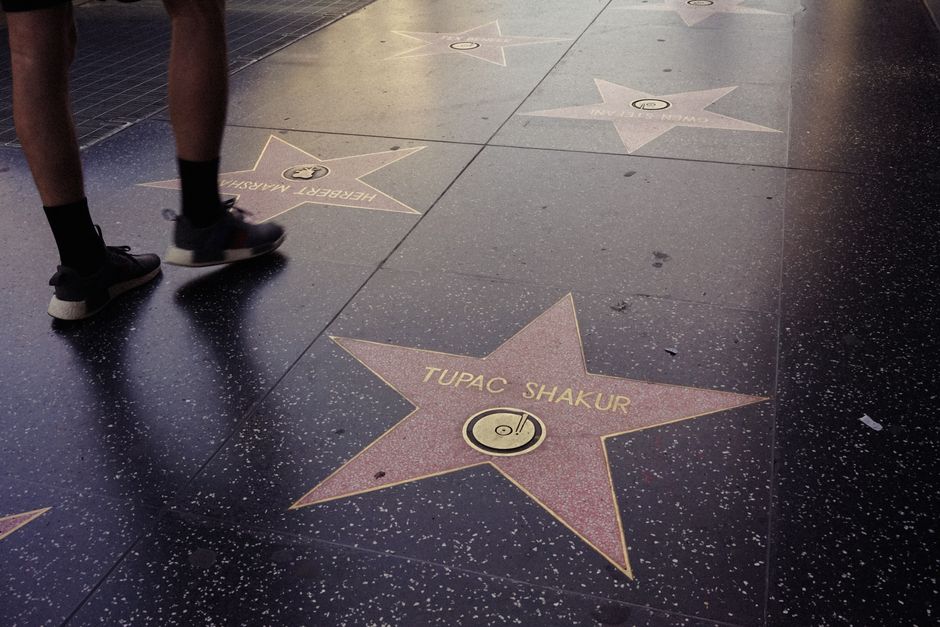
Each star features one of five emblems that classify the recipient's primary contribution to entertainment. These categories help organize the Walk of Fame and guide where stars are placed along the route.
| Category | Emblem | Primary Location |
|---|---|---|
| Motion Pictures | Film Camera | Hollywood Boulevard |
| Television | TV Set | Hollywood Boulevard |
| Recording | Phonograph Record | Vine Street |
| Radio | Microphone | Vine Street |
| Live Theatre/Performance | Comedy/Tragedy Masks | Hollywood Boulevard |
Gene Autry remains the only person honored with stars in all five categories, reflecting his remarkable versatility across entertainment media. A handful of other performers have earned multiple stars for excellence in different fields, but none match Autry's five-category sweep.
Some Celebrities Have Refused Their Stars
Not everyone wants their name underfoot on a busy sidewalk. Julia Roberts turned down her nomination, reportedly uncomfortable with the idea of people walking on her name. Bruce Springsteen declined, preferring to avoid what he considered commercial hype. Clint Eastwood initially refused but eventually accepted years later.
Other notable refusals include George Clooney, Al Pacino, and Madonna. Some cite privacy concerns. Others object to the sponsorship fee requirement, viewing it as paying for your own honor. A few simply don't want the publicity or the obligation to attend a ceremony. The Hollywood Chamber of Commerce respects these decisions, though nominations can be resubmitted if circumstances change. Refusal doesn't diminish a career, but it does leave a gap in Hollywood's sidewalk tribute to entertainment history.
The Walk Began as Urban Renewal
By the late 1950s, Hollywood had lost its glamorous sheen. Television was keeping people home. The neighborhood faced economic decline. The Hollywood Chamber of Commerce needed a plan to draw tourists and revitalize local businesses. Artist Oliver Weismuller proposed embedding stars in the sidewalk to create a permanent attraction.
The first stars were installed in 1960, initially honoring 1,558 performers from film, television, radio, and recording industries. The project worked. Tourists began arriving to see their favorite names immortalized in terrazzo. Local businesses benefited from increased foot traffic. What started as a desperate attempt to save a struggling commercial district became one of the most successful tourist attractions in the United States, drawing an estimated ten million visitors annually.
1. Muhammad Ali's Star Sits on a Wall, Not the Sidewalk
Boxing legend Muhammad Ali accepted his star in 2002 with one non-negotiable condition: it couldn't be placed on the sidewalk. Ali's Islamic faith teaches that the name Muhammad, shared by the Prophet, should never be walked upon. The Hollywood Chamber of Commerce honored this request by installing Ali's star on the wall of the Dolby Theatre, where it hangs at eye level.
This unique placement makes Ali's star the only one not embedded in the pavement. It represents a rare accommodation in the Walk of Fame's history, demonstrating respect for religious conviction while still honoring athletic and humanitarian achievement. Visitors can view the star without stepping on it, and Ali's legacy remains intact both literally and figuratively.
2. Stars Can Be Relocated or Removed
Though permanent in appearance, Walk of Fame stars have occasionally moved. Construction projects, building renovations, and street improvements sometimes require relocation. When this happens, the Chamber carefully removes and reinstalls stars in nearby locations, maintaining their presence along the route.
Removal for misconduct remains extremely rare but possible. The Chamber has discussed removing stars following criminal convictions or public scandals, though they've historically resisted this action. Bill Cosby's star, for example, remains in place despite his conviction, with the Chamber stating that stars commemorate professional achievement rather than personal character. Vandalism is more common than official removal, with controversial stars occasionally defaced by protesters or activists.
3. The First Eight Stars Were Installed as a Test
Before committing to the full Walk of Fame, the Hollywood Chamber of Commerce installed eight stars in 1958 as a trial run. These prototype stars honored Olive Borden, Ronald Colman, Louise Fazenda, Preston Foster, Burt Lancaster, Edward Sedgwick, Ernest Torrence, and Joanne Woodward. The test allowed officials to evaluate durability, public response, and installation techniques.
The experiment succeeded, leading to the official dedication ceremony in 1960. Interestingly, these eight original stars were later relocated when the full Walk of Fame layout was finalized. Today, they're distributed along the route like any other stars, with only historical records noting their pioneering status.
4. Blank Stars Exist for Future Honorees
Sharp-eyed visitors occasionally spot blank stars embedded in the sidewalk without names or emblems. These aren't mistakes or oversights. The Hollywood Chamber of Commerce installs blank terrazzo stars as placeholders during construction or repair work, ensuring the Walk of Fame's distinctive pattern remains unbroken.
When a new honoree is selected, workers can inscribe and customize one of these blank stars rather than creating a new one from scratch. This system streamlines the installation process and maintains the Walk of Fame's visual consistency. The blanks blend seamlessly with named stars, going unnoticed by most tourists focused on finding their favorite celebrities.
5. Temperature Affects Star Appearance
The Walk of Fame's terrazzo stars expand and contract with temperature changes, occasionally causing cracks or separation from the surrounding concrete. Southern California's climate is generally mild, but summer heat can cause the brass emblems to expand faster than the terrazzo, creating stress fractures.
The Hollywood Historic Trust, which maintains the Walk of Fame, employs specialized repair techniques to preserve stars damaged by thermal expansion, foot traffic, or weathering. Each star requires periodic maintenance, with some needing complete replacement after decades of wear. The original installation techniques from the 1960s have been refined over time to improve durability and reduce temperature-related damage.
6. Location Requests Are Usually Honored
Celebrities can request their star's specific location, and the Chamber typically accommodates these wishes when possible. Many choose spots near theaters where their films premiered, studios where they worked, or alongside stars of friends and collaborators. Some request placement near their favorite restaurants or landmarks along Hollywood Boulevard.
These location choices add personal significance to the honor. When restrictions prevent exact placement, such as existing stars or construction zones, the Chamber works with recipients to find nearby alternatives. This flexibility makes each star dedication more meaningful, connecting the honoree's professional history with physical geography along Hollywood's most famous street.
7. The Walk of Fame Has Expanded Multiple Times
The original 1960 Walk of Fame covered fifteen blocks. As demand for stars increased and space filled up, the Hollywood Chamber of Commerce expanded the route several times. Extensions added blocks along Hollywood Boulevard and Vine Street, increasing capacity while maintaining the Walk's concentrated tourist appeal.
Despite these expansions, space remains limited. With new stars added monthly and more than 300 celebrities nominated annually, the Chamber faces ongoing pressure to balance preservation of the Walk's intimate scale with growing demand for recognition. Future expansions are possible, but each addition requires careful planning to avoid diluting the Walk of Fame's concentrated impact and tourist accessibility.
Frequently Asked Questions
How long does a Walk of Fame star last?
Stars are designed to last indefinitely with proper maintenance. The terrazzo and brass construction withstands decades of foot traffic, though individual stars require periodic cleaning and occasional repair or replacement due to wear, weather damage, or vandalism.
Can anyone nominate a celebrity for a star?
Yes, anyone can submit a nomination to the Hollywood Chamber of Commerce, including fans, publicists, studios, or the celebrities themselves. However, the nominee must agree to attend the dedication ceremony if selected, and someone must commit to paying the sponsorship fee.
Why do some major celebrities lack Walk of Fame stars?
Several reasons explain missing stars: the celebrity declined the honor, no one has sponsored their nomination, they haven't been nominated yet, or they were nominated but not selected by the Chamber's committee. The selection process is competitive, with far more nominees than available slots each year.
What happens to a star if a celebrity's name changes?
Stars display the name the celebrity used when they received the honor. If a performer legally changes their name after receiving a star, the original star typically remains unchanged, preserving the historical record of their career at that moment.
The Hollywood Walk of Fame transforms ordinary sidewalks into a museum of entertainment history, one terrazzo star at a time. Next time you visit, look beyond the famous names and consider the hidden decisions, refused honors, and unusual accommodations that make this tourist attraction far more complex than it appears.