










⏱️ 7 min read
The story of human civilization spans thousands of years, marked by remarkable societies that laid the foundations for modern life. From revolutionary architectural achievements to groundbreaking legal systems, ancient civilizations shaped everything from mathematics and astronomy to politics and philosophy. Understanding these influential societies provides crucial insights into how humanity evolved culturally, technologically, and socially. The following ancient civilizations represent some of the most significant contributors to human progress, each leaving an indelible mark on history that continues to influence our world today.
The Most Influential Ancient Civilizations
1. Mesopotamian Civilization: The Cradle of Civilization
Mesopotamia, meaning "land between rivers," flourished between the Tigris and Euphrates rivers in what is now modern-day Iraq from approximately 3500 BCE to 500 BCE. This civilization is credited with numerous firsts that fundamentally changed human society. The Sumerians, who inhabited southern Mesopotamia, developed one of the world's earliest writing systems called cuneiform around 3200 BCE, enabling the recording of history, laws, and literature. Mesopotamians also created the first known legal code under King Hammurabi, established the concept of the 60-minute hour and 60-second minute, and made significant advances in mathematics, including the use of a base-60 number system. Their architectural achievements included the famous ziggurats, massive stepped temples that dominated city skylines. The Epic of Gilgamesh, one of humanity's oldest literary works, originated from this civilization.
2. Ancient Egypt: Masters of Monumentality and Eternity
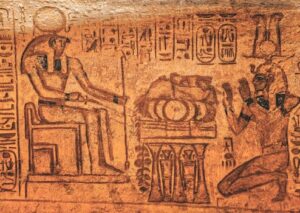
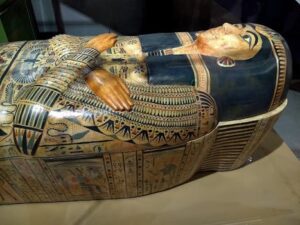
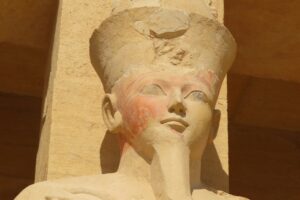
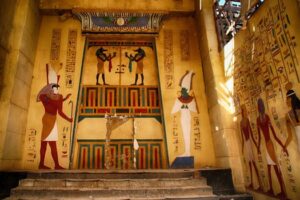
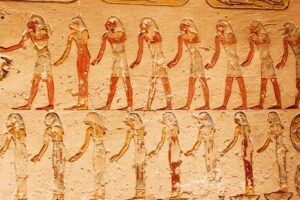
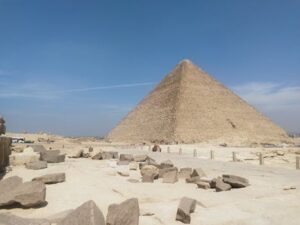
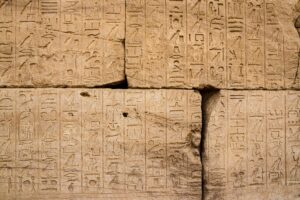
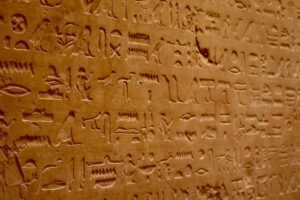
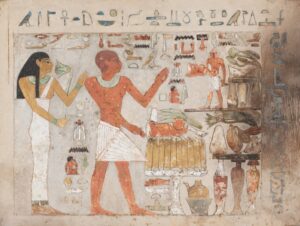
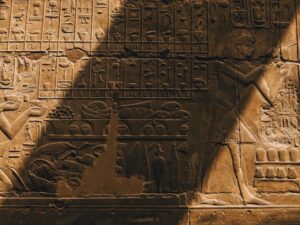
Ancient Egyptian civilization, which thrived along the Nile River from around 3100 BCE to 30 BCE, created some of history's most iconic monuments and developed a complex understanding of the afterlife. The Egyptians constructed the Great Pyramids of Giza, including the Great Pyramid of Khufu, which remained the world's tallest man-made structure for nearly 4,000 years. Their hieroglyphic writing system combined logographic and alphabetic elements, preserving extensive records of their culture. Egyptians made remarkable advances in medicine, performing surgeries and understanding anatomy through mummification practices. They developed sophisticated agricultural techniques, harnessing the Nile's annual floods through irrigation systems. Egyptian contributions to mathematics, particularly geometry, were essential for their architectural achievements and influenced later Greek mathematicians.
3. The Indus Valley Civilization: Urban Planning Pioneers
The Indus Valley Civilization, also known as the Harappan Civilization, existed from approximately 3300 BCE to 1300 BCE in what is now Pakistan and northwest India. This civilization demonstrated remarkable urban planning sophistication, with cities like Mohenjo-daro and Harappa featuring grid-pattern streets, advanced drainage systems, and standardized brick sizes. The Indus Valley people created one of the world's earliest forms of writing, though it remains undeciphered today. They developed precise weights and measures, facilitating extensive trade networks that reached Mesopotamia. Archaeological evidence suggests a relatively egalitarian society with impressive public baths, granaries, and uniform housing. Their decline remains mysterious, with theories ranging from climate change to river system alterations.
4. Ancient China: Innovators of Technology and Philosophy
Ancient Chinese civilization, beginning with the Xia Dynasty around 2070 BCE and continuing through successive dynasties, made extraordinary contributions to technology, philosophy, and governance. The Chinese invented paper, gunpowder, the compass, and printing—innovations collectively known as the Four Great Inventions that revolutionized global civilization. The construction of the Great Wall, spanning thousands of miles, represents one of humanity's most ambitious defensive projects. Chinese philosophy, particularly Confucianism and Taoism, provided ethical frameworks that continue influencing billions of people. The development of silk production and the establishment of the Silk Road created vast trade networks connecting East and West. Chinese advances in astronomy, mathematics, and medicine, including acupuncture, demonstrated sophisticated scientific understanding.
5. Ancient Greece: Birthplace of Western Philosophy and Democracy
Ancient Greek civilization, flourishing from around 800 BCE to 146 BCE, fundamentally shaped Western thought, politics, and culture. Athens developed democracy, creating a system where citizens participated directly in governmental decisions—a revolutionary concept that influences modern governance. Greek philosophers including Socrates, Plato, and Aristotle established foundational questions and methods for Western philosophy, ethics, and logic. The Greeks made groundbreaking contributions to mathematics through figures like Pythagoras and Euclid, and to medicine through Hippocrates, the "Father of Medicine." Greek architecture, exemplified by the Parthenon, established design principles still used today. Their Olympic Games, dramatic traditions, and epic literature including Homer's Iliad and Odyssey continue resonating through contemporary culture.
6. The Roman Empire: Engineers of Administration and Infrastructure
The Roman Empire, lasting from 27 BCE to 476 CE in the West, created an unprecedented political and administrative system that governed millions across three continents. Romans excelled in engineering, constructing extensive road networks totaling over 250,000 miles that facilitated trade and military movement. Their architectural innovations included concrete, the arch, and the dome, enabling structures like the Colosseum and the Pantheon. Roman law, particularly the concept of "innocent until proven guilty," formed the basis for many modern legal systems. They developed sophisticated aqueduct systems delivering fresh water to cities, and established public health measures including public baths and sewage systems. Latin, the Roman language, evolved into Romance languages and influenced English vocabulary significantly.
7. The Maya Civilization: Astronomical and Mathematical Geniuses
The Maya civilization, which flourished in Mesoamerica from around 2000 BCE to 1500 CE, achieved remarkable sophistication in astronomy, mathematics, and architecture. The Maya developed a complex writing system using hieroglyphics, the most advanced in pre-Columbian Americas, recording historical events, astronomical observations, and religious texts. They created an accurate calendar system based on careful celestial observations, including the famous Long Count calendar. Maya mathematicians independently developed the concept of zero, crucial for advanced calculations. Their architectural achievements included towering pyramids like those at Tikal and Chichen Itza, astronomical observatories, and elaborate palace complexes. The Maya established city-states with sophisticated political systems and extensive trade networks throughout Mesoamerica.
8. The Persian Empire: Masters of Tolerance and Administration
The Persian Empire, particularly under the Achaemenid dynasty from 550 BCE to 330 BCE, created the largest empire of the ancient world, stretching from the Indus Valley to Greece. Persian emperors, notably Cyrus the Great, practiced religious tolerance and allowed conquered peoples to maintain their customs and beliefs—unusual for ancient empires. They established an efficient administrative system dividing the empire into provinces called satrapies, each governed by a satrap. The Persians built the Royal Road, an extensive highway system facilitating communication and trade across their vast territories. They developed an early postal system, allowing messages to travel quickly across the empire. Persian art, architecture, and gardens influenced surrounding cultures, and Zoroastrianism, their primary religion, influenced later monotheistic faiths.
9. The Phoenician Civilization: Traders and Alphabet Creators
The Phoenician civilization, centered in coastal Lebanon from around 1500 BCE to 300 BCE, dominated Mediterranean trade and created one of history's most influential innovations: the alphabet. Unlike complex hieroglyphic or cuneiform systems, the Phoenician alphabet consisted of 22 consonant characters, making writing accessible and adaptable. This alphabet became the ancestor of Greek, Latin, Arabic, and Hebrew scripts, fundamentally transforming human communication. Phoenicians were master sailors and traders, establishing colonies throughout the Mediterranean, including Carthage. They developed the production of Tyrian purple, a highly valued dye made from murex shells, creating a luxury trade commodity. Their shipbuilding expertise and navigational skills enabled them to conduct trade routes extending beyond the Mediterranean to the Atlantic.
10. The Aksumite Empire: African Power and Christian Kingdom
The Aksumite Empire, located in present-day Ethiopia and Eritrea from approximately 100 CE to 940 CE, represented one of the ancient world's major powers and an important trading hub. Aksum controlled trade routes connecting the Roman Empire with India, dealing in ivory, gold, emeralds, and incense. The empire was among the first major civilizations to officially adopt Christianity in the 4th century CE, establishing a unique African Christian tradition that persists today. Aksumites developed their own script, Ge'ez, still used in Ethiopian Orthodox Church liturgy. They erected massive stone obelisks, some reaching over 100 feet tall, demonstrating advanced engineering capabilities. The Kingdom of Aksum minted its own coins, one of the few African civilizations to do so, facilitating international trade and asserting political authority.
Lasting Legacy of Ancient Civilizations
These ten ancient civilizations collectively shaped fundamental aspects of modern society, from writing systems and legal frameworks to architectural principles and philosophical traditions. Their innovations in agriculture, engineering, mathematics, astronomy, and governance solved challenges that remain relevant today. Understanding these societies provides perspective on human ingenuity, cultural diversity, and the interconnectedness of global development. The knowledge, technologies, and ideas generated by these civilizations continue influencing contemporary life, demonstrating that while these societies have vanished, their contributions remain eternally relevant to understanding human achievement and potential.