






1 / 9 Questions
0 Points

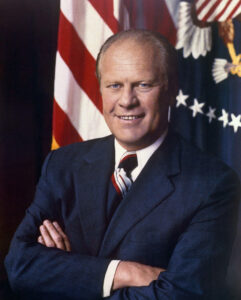
Which president was impeached for lying under oath about an affair with White House intern Monica Lewinsky?

George W. Bush

Jimmy Carter

Bill Clinton

Ronald Reagan

Points won
0
Correct score
0%

More Quizzes

More Articles

How Science Challenges Common Beliefs

How Science Challenges Common Beliefs

⏱️ 5 min read

Throughout history, scientific discoveries have repeatedly overturned deeply held beliefs and assumptions about the world. From the structure of the universe to the nature of disease, science has consistently challenged what people once accepted as absolute truth. This ongoing process of questioning, testing, and revising our understanding represents one of science's most valuable contributions to human knowledge and progress.

The Scientific Method as a Tool for Questioning Assumptions

The foundation of science's ability to challenge beliefs lies in the scientific method itself. This systematic approach to inquiry demands empirical evidence, reproducible results, and peer review before accepting any claim as valid. Unlike belief systems based on tradition, intuition, or authority, science requires that all assertions withstand rigorous testing and scrutiny. This methodological framework creates an environment where even the most widely accepted ideas remain open to revision when new evidence emerges.

The scientific method explicitly recognizes human fallibility and cognitive biases. By requiring multiple independent observations, controlled experiments, and statistical analysis, science builds safeguards against the confirmation bias, wishful thinking, and pattern-seeking tendencies that can lead individuals astray. This structured skepticism has proven essential in separating genuine knowledge from comfortable misconceptions.

Historical Examples of Overturned Beliefs

The Earth-Centered Universe

Perhaps no scientific revolution better illustrates the power of evidence over intuition than the shift from geocentric to heliocentric models of the solar system. For centuries, the belief that Earth occupied the center of the universe aligned perfectly with human perception and religious doctrine. The sun appeared to rise and set, moving across the sky while the ground beneath remained stationary. When Copernicus, Galileo, and later Kepler presented evidence that Earth orbited the sun, they faced fierce resistance despite the mathematical elegance and predictive power of their models.

This transformation in understanding required people to accept that their direct sensory experience could be misleading and that the universe did not necessarily conform to human-centered perspectives. The eventual acceptance of heliocentrism represented a fundamental shift in how humanity viewed both the cosmos and our place within it.

Disease and the Germ Theory

Before the development of germ theory in the nineteenth century, most people attributed illness to miasmas, imbalanced humors, or divine punishment. The idea that invisible microorganisms could cause disease seemed far-fetched to many medical professionals of the era. When Ignaz Semmelweis proposed that doctors washing their hands could prevent childbed fever, his colleagues ridiculed him, despite the dramatic reduction in mortality rates his practice achieved.

The gradual acceptance of germ theory, supported by the work of Louis Pasteur, Robert Koch, and others, revolutionized medicine and public health. This shift in understanding led to practices like sterilization, vaccination, and sanitation that have saved countless lives. Yet it required overcoming the deeply ingrained belief that diseases arose from internal imbalances or environmental conditions rather than external pathogens.

Modern Misconceptions Confronted by Science

Quantum Mechanics and Everyday Intuition

Contemporary physics continues to challenge common-sense beliefs about reality. Quantum mechanics reveals that particles can exist in multiple states simultaneously, that observation affects outcomes, and that entangled particles influence each other instantaneously across vast distances. These phenomena contradict everyday experience and classical physics, yet they have been confirmed through countless experiments and underpin technologies like transistors, lasers, and medical imaging devices.

The quantum world demonstrates that nature operates according to principles fundamentally different from those governing the macroscopic realm humans evolved to navigate. Accepting these counterintuitive realities requires trusting mathematical models and experimental results over intuitive assumptions about how the universe should work.

Evolution and Human Origins

The theory of evolution by natural selection challenges beliefs about human uniqueness and purposeful design in nature. Evidence from paleontology, comparative anatomy, genetics, and molecular biology overwhelmingly supports the conclusion that all life on Earth shares common ancestry and that humans evolved through the same processes as other organisms. Despite this robust scientific consensus, many people struggle to reconcile evolutionary theory with preexisting beliefs about human nature and origins.

Evolution illustrates how scientific findings can challenge not just factual beliefs but also deeply held values and self-concepts. The resistance to evolutionary theory often stems less from scientific objections than from its perceived implications for meaning, purpose, and human dignity.

Why People Resist Scientific Findings

Understanding why scientific evidence sometimes fails to change minds requires examining the psychology of belief formation and maintenance. Cognitive scientists have identified several factors that contribute to resistance against scientific findings. Confirmation bias leads people to preferentially notice and remember information supporting existing beliefs while dismissing contradictory evidence. Cultural cognition theory suggests that people interpret scientific information through the lens of their group identities and values.

Additionally, the Dunning-Kruger effect demonstrates that individuals with limited knowledge in a domain often overestimate their understanding, making them more confident in rejecting expert consensus. The complexity of modern science can also create barriers, as non-specialists may lack the background knowledge necessary to evaluate technical evidence properly.

The Ongoing Process of Scientific Refinement

Science remains a self-correcting enterprise that continues challenging not only popular beliefs but its own previous conclusions. When new evidence emerges or better explanatory frameworks develop, scientific consensus shifts accordingly. This willingness to revise understanding in light of evidence represents a strength rather than a weakness of the scientific approach.

From Newtonian mechanics being supplemented by relativity and quantum theory to the recognition that stomach ulcers result from bacterial infection rather than stress, science demonstrates an ongoing commitment to following evidence wherever it leads. This process ensures that scientific knowledge becomes increasingly accurate and comprehensive over time, even when that progress requires abandoning comfortable or long-standing assumptions.

The history of science reveals a consistent pattern: methodical investigation, rigorous testing, and honest evaluation of evidence ultimately yield more reliable knowledge than intuition, tradition, or authority alone. By maintaining this commitment to evidence-based reasoning, science continues to expand human understanding and challenge beliefs that cannot withstand empirical scrutiny.

Art That Was Created Under Extreme Conditions

Art That Was Created Under Extreme Conditions

⏱️ 5 min read

Throughout history, some of the most profound and emotionally resonant artwork has emerged from the most challenging circumstances imaginable. Artists working under extreme conditions—whether facing war, imprisonment, natural disasters, or severe poverty—have created works that not only document their struggles but also demonstrate the indomitable human spirit. These pieces serve as powerful testaments to creativity's ability to flourish even in the darkest moments of human experience.

Art Born in the Shadows of War

Conflict has paradoxically inspired some of humanity's most moving artistic expressions. During World War I, soldiers in the trenches created art amidst unimaginable horror. Otto Dix, a German artist who served on both the Western and Eastern fronts, produced haunting etchings and paintings that captured the brutality of mechanized warfare. His works, created partly from memory and partly from sketches made in the trenches, became defining images of the war's devastation.

Similarly, during World War II, artists continued to create despite extraordinary danger. Pablo Picasso remained in Nazi-occupied Paris, where he painted "The Charnel House" in response to the concentration camp atrocities. Meanwhile, in the Pacific theater, both Allied and Japanese soldiers documented their experiences through sketches and paintings, often using whatever materials they could salvage from their surroundings.

Creative Expression Behind Prison Walls

Incarceration has never successfully suppressed artistic expression. Political prisoners throughout history have used art as a form of resistance and survival. During apartheid in South Africa, prisoners on Robben Island, including Nelson Mandela, created artworks using smuggled materials. These pieces served both as personal therapy and as historical documentation of their struggle against oppression.

In more recent times, Chinese artist and activist Ai Weiwei created numerous works during his 81-day detention in 2011, relying entirely on memory and later recreating scenes from his imprisonment. His experience demonstrates how extreme conditions can sharpen an artist's focus and message, transforming personal suffering into universal statements about human rights and freedom.

Holocaust Art: Bearing Witness Through Creation

Perhaps no artistic corpus created under extreme conditions carries more historical weight than that produced in Nazi concentration camps. Artists like Felix Nussbaum, who perished at Auschwitz, left behind paintings that documented the persecution of Jews with haunting precision. Prisoners created secret artworks using scraps of paper, coal, and any materials they could find, knowing discovery could mean death.

Charlotte Salomon produced an extraordinary autobiographical series of 769 paintings titled "Life? or Theatre?" while hiding in southern France before her deportation to Auschwitz. This remarkable work, created under constant fear of discovery, combines images with text and musical references to tell her life story and serves as an irreplaceable historical document.

Natural Disasters and Environmental Extremes

Artists have also created significant works while facing natural disasters and harsh environmental conditions. During the 1906 San Francisco earthquake, photographer Arnold Genthe captured the devastating aftermath despite having his studio destroyed. The resulting images became crucial historical records of one of America's worst natural disasters.

In contemporary times, climate change has pushed artists to work in increasingly extreme environments to document ecological transformation. Photographers and installation artists venture into melting Arctic regions, drought-stricken landscapes, and disaster zones to create works that bear witness to environmental crisis. These artists often work in physically dangerous conditions, enduring extreme temperatures and unstable terrain to capture their subjects.

Poverty and Material Deprivation

Economic hardship has forced countless artists to innovate with limited resources, often resulting in remarkable creativity. During the Great Depression, American artists working for the Works Progress Administration created murals, sculptures, and prints that defined an era, often working for minimal pay and using whatever materials were available.

In developing nations, artists have long created powerful works using recycled materials and found objects. El Anatsui, a Ghanaian sculptor, transforms discarded bottle caps and metal scraps into stunning large-scale installations that are now displayed in major museums worldwide. His work exemplifies how material constraints can inspire innovation rather than limitation.

Exile and Displacement

Political exile has forced numerous artists to work far from their homelands, often in difficult circumstances. During the Syrian Civil War, artists continued creating in refugee camps and temporary shelters, using their work to process trauma and maintain cultural identity. These works, created with minimal resources and under uncertain conditions, document one of the 21st century's greatest humanitarian crises.

The Vietnamese artist Dinh Q. Lê, who fled Vietnam as a child during the fall of Saigon, creates works that reflect the displaced person's experience. His art, which weaves together photography and traditional Vietnamese craft techniques, was influenced by his family's harrowing escape and subsequent life in refugee camps.

The Enduring Legacy of Adversity-Born Art

Art created under extreme conditions possesses a unique authenticity and emotional power. These works transcend mere aesthetic appreciation, serving as historical documents, acts of resistance, and affirmations of human dignity. They remind viewers that creativity cannot be extinguished by oppression, disaster, or deprivation.

Museums and galleries worldwide increasingly recognize the importance of preserving and exhibiting art created under duress. Institutions like the United States Holocaust Memorial Museum and the Imperial War Museum maintain extensive collections of such works, ensuring that future generations can witness these testimonies of human resilience.

The continued creation of art under extreme conditions in contemporary conflict zones, prisons, and disaster areas demonstrates that this phenomenon is not merely historical. It represents an ongoing testament to art's essential role in human survival and expression, proving that creativity flourishes not despite adversity, but often because of the urgency and clarity that extreme circumstances bring to artistic vision.