



















1 / 20 Questions
0 Points

Which car brand has a prancing horse as its logo?

Ferrari

Maserati

Porsche

Lamborghini

Points won
0
Correct score
0%

More Quizzes

More Articles

Did You Know Some Reality Shows Are Fully Scripted?

Did You Know Some Reality Shows Are Fully Scripted?

⏱️ 5 min read

The concept of "reality television" promises viewers an authentic glimpse into unscripted moments, genuine emotions, and spontaneous interactions. However, the television industry harbors a controversial secret that challenges this fundamental premise: many shows marketed as reality programming are, in fact, carefully scripted productions. This revelation has sparked debates about truth in advertising, viewer trust, and the ethical boundaries of entertainment.

The Blurred Lines Between Reality and Fiction

Reality television emerged as a genre promising authenticity in contrast to traditional scripted programming. Yet the distinction between these categories has become increasingly murky. While some reality shows do capture genuine moments, others operate with detailed scripts, predetermined outcomes, and carefully choreographed scenarios that rival traditional sitcoms and dramas in their level of planning.

The industry employs various techniques to maintain the illusion of spontaneity while controlling narratives. These methods range from heavily edited footage that misrepresents actual events to fully written dialogue that participants must memorize and deliver. Understanding where different shows fall on this spectrum requires examining the production practices that have become standard in reality television.

Legal Loopholes and Industry Classifications

Television networks exploit a significant legal gray area that allows scripted content to be marketed as reality programming. The classification system for television shows does not require programs to meet strict criteria for the "reality" label. This regulatory gap means producers can script entire seasons while still promoting their shows as unscripted entertainment.

The Writers Guild of America has repeatedly attempted to address this issue, arguing that writers working on reality shows deserve the same protections and credits as those writing for scripted series. These efforts have revealed the extent to which professional writers are employed to craft storylines, dialogue, and character arcs for reality show participants. Despite these revelations, many networks continue to classify such programs as reality television, avoiding the obligations associated with scripted content.

Common Scripting Techniques in Reality Television

Reality show producers employ several sophisticated methods to control narratives while maintaining the appearance of authenticity:

  • Frankenbiting: This editing technique involves splicing together audio clips from different conversations to create entirely new dialogue that was never actually spoken in sequence.
  • Storyline Production: Writers create narrative arcs for entire seasons, then direct participants to engage in specific conversations or activities that advance predetermined plots.
  • Retakes and Re-enactments: Participants are frequently asked to repeat conversations or actions multiple times, with specific instructions about what to say or do differently.
  • Coaching and Direction: Producers provide detailed guidance to cast members about how to react, what topics to discuss, and which emotions to display during filming.

Notable Examples and Insider Revelations

Several reality television personalities have come forward to expose the scripted nature of their shows. Former cast members from various dating shows, home renovation programs, and competition series have described receiving scripts, being told to manufacture conflicts, and participating in scenes that were entirely fabricated for dramatic effect.

One particularly revealing case involved a popular home hunting show where participants were contractually required to have already purchased their homes before filming began. The "decision-making process" viewers watched was entirely staged, with the featured properties carefully selected to create artificial drama about choices that had already been made.

Similarly, several cooking competition shows have faced scrutiny after participants revealed that challenges were rigged, certain contestants received preferential treatment based on predetermined storylines, and eliminations were sometimes decided before the actual competitions took place.

The Impact on Viewer Trust and Perception

The revelation that reality shows employ scripting has significant implications for audience trust. Viewers invest emotionally in these programs under the assumption that they are witnessing authentic human experiences. When this assumption proves false, it can create feelings of betrayal and skepticism that extend beyond individual shows to the entire television industry.

Research into viewer attitudes has shown that audiences generally tolerate some level of production manipulation in reality television. However, there exists a threshold beyond which viewers feel deceived. The challenge lies in the fact that this threshold varies among individuals, and networks rarely provide transparent information about their production practices.

The Economics Behind Scripted Reality

Financial incentives drive the trend toward scripting reality television. Scripted reality shows offer networks the best of both worlds: the lower production costs associated with reality programming combined with the narrative control and dramatic reliability of scripted content. This economic model has proven incredibly profitable, generating billions in advertising revenue annually.

Additionally, cast members in reality shows typically do not receive the same compensation, residuals, or union protections as actors in scripted series. By maintaining the "reality" classification, networks significantly reduce labor costs while still producing content with predetermined storylines and outcomes.

Moving Toward Greater Transparency

Consumer advocacy groups and industry critics have called for greater transparency in reality television programming. Proposals include requiring networks to disclose the extent of scripting, providing more detailed information about production practices, and establishing clearer definitions for what constitutes "reality" content.

Some networks have begun responding to these pressures by offering more candid acknowledgments of their production methods. However, comprehensive industry-wide standards remain elusive, leaving viewers to navigate an entertainment landscape where the line between reality and fiction continues to blur.

Understanding the scripted nature of many reality shows empowers viewers to consume this content more critically, recognizing it as a hybrid entertainment form rather than authentic documentation of real events. This awareness does not necessarily diminish the entertainment value of these programs, but it does allow audiences to engage with them from a more informed perspective.
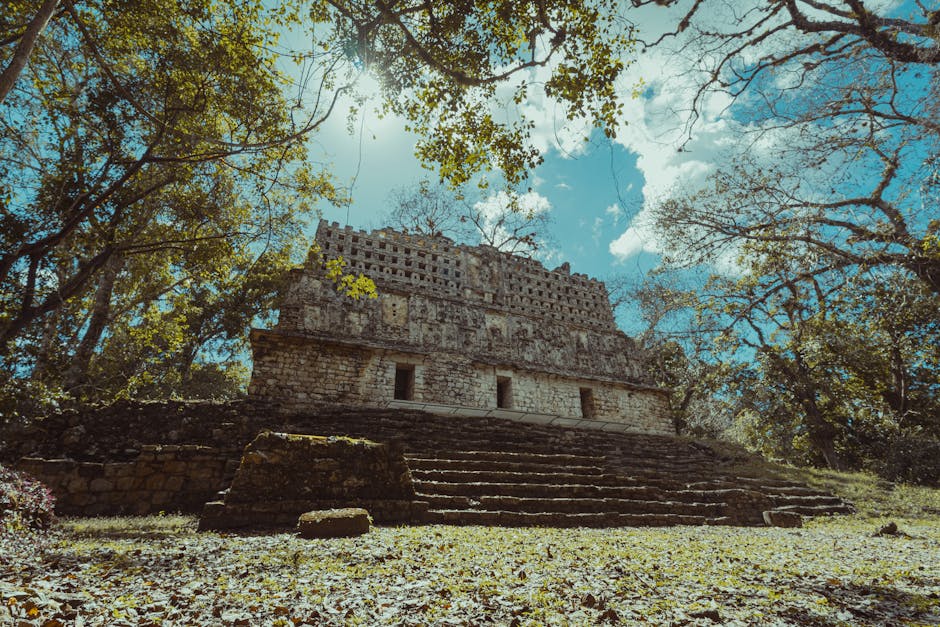
10 Facts About the Discovery of America

10 Facts About the Discovery of America

⏱️ 7 min read

The discovery of America represents one of the most transformative events in world history, reshaping global trade, culture, and civilization in ways that continue to resonate today. While the narrative of Christopher Columbus arriving in 1492 dominates popular understanding, the true story is far more complex and fascinating. From ancient voyagers who may have reached the Americas centuries earlier to the profound consequences of European contact with indigenous peoples, the history of America's discovery encompasses numerous remarkable facts that challenge conventional wisdom and reveal the intricate web of exploration, ambition, and consequence that defined this pivotal era.

The Historical Context of American Discovery

1. The Vikings Arrived Five Centuries Before Columbus

Contrary to popular belief, Christopher Columbus was not the first European to reach the Americas. Norse explorer Leif Erikson established a settlement in North America around 1000 CE, nearly 500 years before Columbus's voyage. Archaeological evidence from L'Anse aux Meadows in Newfoundland, Canada, confirms the presence of Norse settlements, making the Vikings the first documented Europeans to set foot on American soil. These expeditions, detailed in Icelandic sagas, describe a land they called "Vinland" due to its abundant grapevines and favorable conditions. However, unlike Columbus's voyages, the Viking settlements were temporary and did not lead to sustained contact between the continents.

2. Columbus Never Actually Reached Mainland North America

Despite receiving credit for discovering America, Christopher Columbus never set foot on the North American mainland during any of his four voyages. His explorations took him to various Caribbean islands, including the Bahamas, Cuba, and Hispaniola, as well as parts of Central and South America. Columbus died in 1506 still believing he had reached the eastern shores of Asia, specifically the Indies, which is why he called the indigenous people he encountered "Indians." The explorer who would later lend his name to the continents, Amerigo Vespucci, was among the first to recognize that these lands constituted a separate continent altogether.

3. Indigenous Peoples Had Inhabited the Americas for Over 15,000 Years

When Europeans arrived in the Americas, they encountered a land that was anything but "new" or "discovered." Indigenous peoples had inhabited the Americas for at least 15,000 to 20,000 years, with some archaeological evidence suggesting even earlier migration dates. These civilizations had developed sophisticated societies, including the Maya, Aztec, and Inca empires, with advanced knowledge of astronomy, mathematics, architecture, and agriculture. The population of the Americas before European contact is estimated to have been between 50 and 100 million people, with complex trade networks, political systems, and cultural traditions that had evolved over millennia.

4. The Voyage Was Funded by Spanish Royalty After Multiple Rejections

Columbus's famous 1492 voyage almost never happened due to repeated rejections from various European monarchs. He spent years seeking financial backing for his westward expedition to reach Asia, facing rejection from Portugal's King John II and initially from Spain's Catholic Monarchs, Ferdinand and Isabella. The Spanish royalty finally agreed to fund the expedition after the conquest of Granada in January 1492, seeing it as an opportunity to expand their empire and spread Christianity. The total cost of the expedition was approximately 2 million maravedis, equivalent to about $500,000 in today's currency, with the Spanish crown providing most of the funding.

The Journey and Its Immediate Consequences

5. The Expedition Consisted of Three Ships and Only 87 Men

Columbus's first voyage to the Americas was undertaken with remarkably modest resources by modern standards. The expedition consisted of three ships: the Santa María, the Pinta, and the Niña, with a total crew of approximately 87 to 90 men. The Santa María, the largest vessel, was only about 62 feet long and served as Columbus's flagship. The journey across the Atlantic took 36 days, departing from the Canary Islands on September 6, 1492, and making landfall in the Bahamas on October 12, 1492. This relatively small expedition would trigger one of the most significant exchanges of people, goods, diseases, and ideas in human history.

6. The Columbian Exchange Transformed Global Agriculture and Diet

The contact between the Old World and the New World initiated what historians call the Columbian Exchange, a massive transfer of plants, animals, diseases, and technologies between the hemispheres. From the Americas to Europe, crops such as potatoes, tomatoes, corn, cacao, tobacco, and various beans revolutionized European agriculture and cuisine. Conversely, Europeans introduced wheat, rice, sugarcane, horses, cattle, and pigs to the Americas. This biological exchange fundamentally altered diets, economies, and populations on both sides of the Atlantic. The introduction of the potato alone is credited with supporting significant population growth in Europe and Asia over subsequent centuries.

7. Disease Devastated Indigenous Populations

Perhaps the most catastrophic consequence of European contact was the introduction of diseases to which indigenous peoples had no immunity. Smallpox, measles, typhus, and influenza decimated Native American populations, with some estimates suggesting that up to 90 percent of the indigenous population died within a century of first contact. This demographic catastrophe was far more deadly than any military conquest and fundamentally altered the balance of power between European colonizers and indigenous peoples. The disease transmission was largely unintentional, though some colonizers later deliberately used disease as a weapon of conquest.

Lesser-Known Aspects of Discovery

8. A Lunar Eclipse Helped Columbus Survive in Jamaica

During his fourth voyage in 1504, Columbus found himself stranded in Jamaica with a hostile relationship developing between his crew and the indigenous Taíno people who were refusing to provide food. Having an almanac that predicted a lunar eclipse on February 29, 1504, Columbus told the indigenous leaders that his god would show displeasure by making the moon disappear. When the eclipse occurred as predicted, the frightened Taíno agreed to continue supplying provisions. Columbus then "interceded" with his god to restore the moon, cementing his position and ensuring his crew's survival until rescue arrived. This incident demonstrates both the astronomical knowledge available to explorers and the manipulation tactics employed during early contact.

9. The Name "America" Comes from an Italian Explorer, Not Columbus

The continents of North and South America derive their name from Italian explorer Amerigo Vespucci, not Christopher Columbus. Vespucci made several voyages to the New World between 1497 and 1504 and was the first European to propose that the lands discovered were not part of Asia but constituted a separate continent. In 1507, German cartographer Martin Waldseemüller created a world map that labeled the new continent "America" in Vespucci's honor, using the Latinized feminine form of his first name. Despite Columbus's earlier voyages, the name stuck, and by the time Columbus's priority was widely recognized, the nomenclature was too established to change.

10. Multiple Nations Launched Competing Exploration Expeditions

Columbus's successful voyage triggered an age of exploration as multiple European nations competed to claim territories and resources in the Americas. Spain and Portugal led initial efforts, dividing the non-European world between them through the Treaty of Tordesillas in 1494. England sponsored John Cabot's 1497 voyage to North America, France sent Jacques Cartier to explore Canada in the 1530s, and the Dutch established their own colonial presence in the early 17th century. This competition for resources, trade routes, and territorial control shaped the political landscape of the Americas and contributed to centuries of conflict between European powers and with indigenous peoples. The race for exploration and colonization fundamentally altered global power dynamics and established colonial patterns that influenced world history for centuries.

Conclusion

The discovery of America encompasses far more than a single voyage or explorer. From pre-Columbian Viking settlements to the catastrophic impact of disease, from the deliberate misnaming of continents to the revolutionary biological exchanges that transformed global cuisine, these facts reveal the complexity and profound significance of this historical epoch. Understanding these nuances helps us appreciate that the "discovery" was neither simple nor singular but rather a complex series of encounters, exchanges, and consequences that reshaped the entire world. The legacy of these events continues to influence modern society, from the foods we eat to the languages we speak, making this period one of the most consequential in human history. Recognizing both the achievements and the tragedies associated with this era provides a more complete and honest understanding of how our modern world came to be.