










1 / 10 Questions
0 Points

Which Cartoon Family Lives In Bedrock?

The Flintstones

The Simpsons

The Griffins

The Jetsons

Points won
0
Correct score
0%

More Quizzes

More Articles

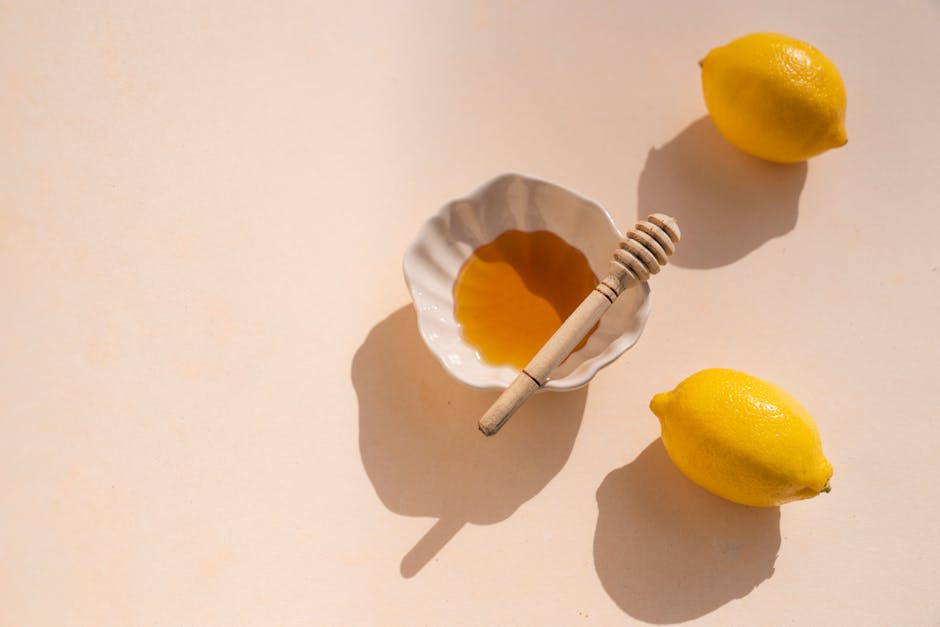
Did You Know Honey Never Spoils?

Did You Know Honey Never Spoils?

⏱️ 5 min read

Among nature's most remarkable foods, honey stands out not just for its sweet taste but for its extraordinary ability to remain edible indefinitely. Archaeologists have discovered pots of honey in ancient Egyptian tombs that are over 3,000 years old and still perfectly preserved. This fascinating characteristic makes honey one of the few foods that truly never spoils, and understanding the science behind this phenomenon reveals the incredible properties of this natural sweetener.

The Science Behind Honey's Eternal Shelf Life

Honey's immortality stems from a unique combination of chemical and physical properties that create an inhospitable environment for bacteria and microorganisms. The primary factor is its extremely low moisture content, typically around 17-18%. This minimal water availability creates what scientists call a low water activity environment, where microorganisms cannot absorb enough moisture to survive, grow, or reproduce.

Additionally, honey is highly acidic, with a pH level between 3 and 4.5. This acidity further prevents the growth of most bacteria and pathogens, which prefer neutral or slightly alkaline environments. The combination of low moisture and high acidity creates a double barrier against spoilage that few foods can match.

The Role of Hydrogen Peroxide in Preservation

One of honey's most surprising defensive mechanisms involves the production of hydrogen peroxide, a natural antiseptic. When bees collect nectar and transform it into honey, they add an enzyme called glucose oxidase. This enzyme breaks down glucose sugars in the honey, producing gluconic acid and hydrogen peroxide as byproducts.

The hydrogen peroxide content, though present in small amounts, provides antimicrobial properties that help protect honey from contamination. This natural preservative works continuously to eliminate any potential threats, ensuring the honey remains pure and unspoiled. Interestingly, this is also why honey has been used throughout history for medicinal purposes, particularly in wound care.

How Bees Engineer an Imperishable Food

The remarkable preservation of honey begins with the meticulous work of honeybees. After collecting nectar, bees deposit it into hexagonal wax cells within their hives. The newly collected nectar contains about 60-80% water content, far too much for long-term storage. Through a sophisticated process, bees reduce this moisture content dramatically.

Worker bees fan their wings vigorously over the nectar-filled cells, creating air circulation that evaporates excess moisture. They also repeatedly consume and regurgitate the nectar, adding enzymes that further break down complex sugars and reduce water content. Once the honey reaches the optimal moisture level of approximately 18%, bees seal the cells with beeswax, creating an airtight environment that prevents moisture reabsorption.

Historical Evidence of Honey's Longevity

Archaeological discoveries provide compelling evidence of honey's incredible preservation abilities. When Howard Carter opened King Tutankhamun's tomb in 1922, among the treasures were sealed jars containing honey that had been entombed for over 3,000 years. Remarkably, the honey was still in edible condition, though crystallized.

Similar discoveries have been made in other ancient sites across the Middle East and Mediterranean regions. These findings not only demonstrate honey's longevity but also highlight its value to ancient civilizations, who recognized its unique properties and included it among precious burial goods.

Crystallization Versus Spoilage

Many people mistake crystallization for spoilage, but this natural process doesn't indicate that honey has gone bad. Crystallization occurs when glucose, one of the main sugars in honey, separates from water and forms crystals. This process is influenced by several factors:

  • Temperature fluctuations and storage conditions
  • The ratio of glucose to fructose in the honey
  • The presence of pollen particles and other natural elements
  • The specific floral source of the nectar

Crystallized honey remains perfectly safe to consume and retains all its nutritional properties. The process can be easily reversed by gently warming the honey in a water bath, which dissolves the crystals and returns the honey to its liquid state.

Proper Storage for Indefinite Preservation

While honey naturally resists spoilage, proper storage ensures it maintains its quality indefinitely. The key factors for optimal honey storage include keeping it in an airtight container to prevent moisture absorption from the air, as increased water content can lead to fermentation. Honey should be stored at room temperature, away from direct sunlight and heat sources.

Glass or food-grade plastic containers work best for storage, and honey should never be refrigerated, as cold temperatures accelerate crystallization. When stored correctly in sealed containers, honey can remain in perfect condition for decades, centuries, or even millennia.

The Nutritional Immortality Factor

Beyond its physical preservation, honey also maintains its nutritional value over extended periods. The natural sugars, enzymes, antioxidants, and trace minerals present in honey remain stable throughout its indefinite shelf life. This stability is due to the same properties that prevent spoilage: low moisture content and high acidity create an environment where even beneficial compounds remain protected from degradation.

Raw honey, which hasn't been heat-treated or filtered, retains more of its natural enzymes and beneficial compounds than processed varieties. However, both types maintain their fundamental preservation properties and remain safe to consume indefinitely when properly stored.

The Exception: When Honey Can Spoil

While pure honey never spoils under normal conditions, there is one scenario where fermentation can occur. If honey absorbs significant moisture from the environment, typically reaching moisture levels above 19-20%, naturally present yeasts can begin to ferment the diluted sugars. This process produces alcohol and carbon dioxide, causing the honey to develop an off taste and fermented smell.

However, this situation is entirely preventable through proper storage and only occurs when honey is exposed to humid conditions without adequate sealing. Commercial honey is typically processed to ensure moisture content stays well below the threshold for fermentation, and proper home storage practices maintain this safe level indefinitely.

The Real King Arthur: Myth or Reality?

The Real King Arthur: Myth or Reality?

⏱️ 5 min read

The legend of King Arthur has captivated imaginations for over 1,500 years, weaving tales of chivalry, magic, and heroism into the fabric of Western culture. From the Knights of the Round Table to the mystical sword Excalibur, these stories have become deeply embedded in literature, film, and popular culture. Yet beneath the layers of medieval romance and fantastical embellishment lies a persistent question that has puzzled historians for centuries: was there a real King Arthur, or is he purely a product of myth and legend?

The Historical Context of Post-Roman Britain

To understand the potential reality behind the Arthurian legend, one must first examine the tumultuous period in which he allegedly lived. Following the collapse of Roman rule in Britain around 410 CE, the island entered a period often called the Dark Ages—a time of political fragmentation, economic decline, and invasion. The Romano-British population faced increasing pressure from Anglo-Saxon settlers arriving from continental Europe, leading to centuries of conflict and cultural transformation.

Historical records from this period are frustratingly sparse. The withdrawal of Roman administration meant the end of systematic record-keeping, leaving historians with limited contemporary sources. This documentary vacuum creates an environment where legend and history become difficult to separate, and where a figure like Arthur could emerge from the shadows of uncertainty.

Early Written References to Arthur

The earliest potential reference to a historical Arthur appears in the "Historia Brittonum," compiled around 830 CE by a Welsh monk named Nennius. This text describes a warrior named Arthur who led the Britons in twelve battles against Saxon invaders, culminating in a decisive victory at Mount Badon. Significantly, Nennius does not call Arthur a king but rather a "dux bellorum"—a war leader or commander.

Another early source, the "Annales Cambriae" (Welsh Annals) from the 10th century, mentions Arthur twice: once at the Battle of Badon in 516 CE and again at the Battle of Camlann in 537 CE, where "Arthur and Medraut fell." These brief entries suggest that by the 10th century, Arthur was remembered as a significant military figure, though the accuracy of these chronicles remains debated.

The writings of Gildas, a 6th-century British monk, present a curious omission. His work "De Excidio et Conquestu Britanniae" (On the Ruin and Conquest of Britain) discusses the Battle of Badon but mentions no leader by name. Some scholars argue this silence undermines Arthur's historicity, while others suggest Gildas may have had political or personal reasons to exclude him.

The Transformation into Legend

The Arthur we recognize today emerged primarily through the work of Geoffrey of Monmouth, whose "Historia Regum Britanniae" (History of the Kings of Britain), written around 1136, transformed Arthur from a possible war leader into a magnificent king. Geoffrey's work introduced many elements now considered central to Arthurian legend:

  • Arthur's conception at Tintagel through Merlin's magic
  • The sword Excalibur and the Lady of the Lake
  • The establishment of a royal court at Caerleon
  • Conquest of a vast empire stretching across Europe
  • Betrayal by Mordred and the final battle

While Geoffrey claimed to have translated an ancient British source, most historians believe he largely invented his narrative, drawing upon Welsh traditions, classical histories, and his own imagination. His work proved enormously influential, inspiring French romances by Chrétien de Troyes, which added the Round Table, Lancelot, and the quest for the Holy Grail.

Archaeological and Geographical Evidence

Archaeological investigations have attempted to identify locations associated with Arthur, with mixed results. Cadbury Castle in Somerset has been proposed as the site of Camelot, and excavations have revealed it was indeed refortified during the late 5th or early 6th century—consistent with the supposed Arthurian period. However, no definitive evidence links this site specifically to Arthur.

Tintagel Castle in Cornwall, traditionally associated with Arthur's birth, has yielded archaeological evidence of a high-status settlement from the relevant period, including Mediterranean pottery suggesting international trade connections. Yet again, nothing directly connects these findings to Arthur himself.

The problem facing archaeologists is fundamental: even if a historical Arthur existed, identifying his physical remains or possessions after 1,500 years, without contemporary inscriptions naming him, is virtually impossible.

Theories About Arthur's Historical Basis

Scholars who believe Arthur has some historical basis propose various theories. Some suggest he was a Romano-British military commander who achieved temporary success against Saxon expansion. Others propose he represents a composite figure—multiple successful war leaders whose deeds were consolidated into a single legendary hero. This pattern of mythmaking is well-documented in other cultures.

Alternative theories identify Arthur with known historical figures. Candidates have included Ambrosius Aurelianus, a Romano-British leader mentioned by Gildas; Riothamus, a British king who campaigned in Gaul during the 5th century; or various Welsh princes and warriors whose names might have evolved into "Arthur."

The Verdict: Separating Fact from Fiction

The current scholarly consensus suggests that while a definitive answer remains elusive, some historical figure or figures likely inspired the Arthurian legends. The consistent association with the Battle of Badon—a real historical event that temporarily halted Saxon expansion—suggests a kernel of truth beneath the mythological layers.

However, the King Arthur of popular imagination—ruling from Camelot with his Knights of the Round Table, wielding Excalibur, and guided by Merlin's wisdom—is certainly mythological. These elements were added centuries after any historical Arthur would have lived, reflecting the values and concerns of medieval society rather than 5th-century Britain.

Ultimately, Arthur's enduring power lies not in historical verification but in his symbolic significance. Whether myth or reality, he represents the hope for heroic leadership during times of chaos, the appeal of noble ideals, and the timeless human desire for stories that inspire and unite us. In this sense, the question of Arthur's historical existence may be less important than understanding why his legend has survived and flourished for over a millennium.