








1 / 10 Questions
0 Points

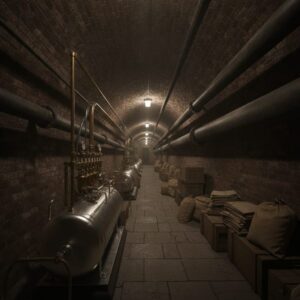
Which City Once Shot Mail Through Underground Pneumatic Tubes?

Boston

Philadelphia

Chicago

New York City

Points won
0
Correct score
0%

More Quizzes

More Articles

12 Surprising Facts About the Roman Empire

12 Surprising Facts About the Roman Empire

⏱️ 8 min read

The Roman Empire stands as one of history's most influential civilizations, shaping law, language, architecture, and governance for centuries to come. While many are familiar with gladiators, Julius Caesar, and the fall of Rome, the empire's thousand-year history contains countless lesser-known details that reveal just how advanced, peculiar, and fascinating this ancient superpower truly was. From unexpected technological innovations to bizarre social customs, these remarkable aspects of Roman civilization challenge our preconceptions and demonstrate why this empire continues to captivate historians and enthusiasts alike.

Unexpected Revelations from Ancient Rome

1. Romans Invented the First Form of Concrete

Ancient Romans developed a revolutionary building material that was, in many ways, superior to modern concrete. Their formula included volcanic ash, lime, and seawater, creating structures that have lasted over two millennia. Remarkably, Roman concrete actually strengthens over time when exposed to seawater, unlike modern concrete which deteriorates. The Pantheon's massive unreinforced concrete dome, built in 126 AD, remains the world's largest of its kind and is still intact today. Scientists only recently discovered the secret to its durability: the volcanic ash reacted with seawater to create rare crystalline structures that prevented cracking.

2. Purple Dye Was Worth More Than Gold

The color purple held such prestige in Roman society that laws restricted its use to emperors and high-ranking officials. This wasn't arbitrary snobbery—Tyrian purple dye was extracted from the mucus glands of sea snails, requiring approximately 10,000 snails to produce just one gram of dye. The process was labor-intensive and produced an overwhelmingly foul odor, making the dye extraordinarily expensive. Wearing purple became synonymous with imperial power, and unauthorized use could result in execution. This ancient luxury was so valuable that "born to the purple" became a phrase describing children born to reigning monarchs.

3. Ancient Rome Had a 24-Hour Fast Food Culture

Contrary to romanticized images of lavish home-cooked meals, most Romans living in cities ate out regularly at establishments called "thermopolia"—the ancient equivalent of fast food restaurants. Archaeological excavations in Pompeii have uncovered over 80 of these establishments, which served hot food and drinks from large earthenware jars built into stone counters. Most urban Romans lived in cramped apartments called "insulae" without kitchens, making these eateries essential. The menu included items like bread with various toppings, lentils, hot wine, and even dormice—considered a delicacy at the time.

4. Romans Used Urine as Mouthwash and Laundry Detergent

In one of the more unappetizing practices of Roman hygiene, both human and animal urine was collected, aged, and used for multiple purposes. The ammonia in decomposed urine made it an effective cleaning agent for laundering togas and other garments. Even more surprisingly, Romans gargled with urine to whiten their teeth, believing it was an effective dental treatment. This practice was so common that Emperor Nero actually imposed a tax on urine collection from public latrines. Portuguese urine was particularly prized, supposedly for its superior quality, and was imported specifically for dental purposes.

5. The Empire Had an Extensive Postal System Rivaling Modern Mail

The "cursus publicus," Rome's state-run courier and transportation service, was remarkably sophisticated. Established by Emperor Augustus around 20 BC, this network included relay stations every 7-12 miles along major roads where messengers could change horses. At its peak, the system could deliver messages up to 50 miles per day using horse relays, and even faster in emergencies—news of Emperor Nero's death traveled 332 miles in 36 hours. The service included rest houses, stables, and even vehicles for transporting officials. This infrastructure wouldn't be matched in Europe until the 19th century.

6. Romans Believed Gladiator Blood Was Medicinal

Roman citizens, including the wealthy and educated, genuinely believed that gladiator blood possessed healing properties, particularly for treating epilepsy. Spectators would rush into arenas to soak bread in the blood of fallen gladiators or even drink it warm directly from wounds. This practice stemmed from the belief that consuming the blood of a strong, brave warrior would transfer their vitality and cure ailments. Some Romans also believed that gladiator sweat, collected and sold in vials, could serve as an aphrodisiac. These superstitions persisted despite objections from physicians who considered such practices barbaric.

7. The Romans Nearly Wiped Out Mediterranean Wildlife

The Roman appetite for exotic animal spectacles had devastating ecological consequences. During the inaugural games at the Colosseum in 80 AD, 9,000 animals were killed over 100 days. Throughout the empire's history, hundreds of thousands of lions, elephants, bears, leopards, hippopotamuses, and other species were captured and transported to arenas across Roman territories. This industrial-scale hunting led to the regional extinction of elephants in North Africa and lions in Mesopotamia. The Romans established a vast network of trappers, shippers, and holding facilities to supply their insatiable demand for "venationes"—wild animal hunts staged as public entertainment.

8. Roman Emperors Included a Teenage Priest Who Married a Vestal Virgin

Elagabalus, who became emperor at age 14 in 218 AD, ranks among Rome's most controversial rulers. A hereditary priest of the Syrian sun god, he attempted to make his deity supreme over Jupiter and scandalized Rome by marrying a Vestal Virgin—priestesses sworn to 30 years of celibacy under penalty of death. He reportedly married and divorced five times during his four-year reign, and ancient sources claim he offered physicians vast sums to transform him anatomically into a woman. While historical accounts may be exaggerated by hostile historians, Elagabalus was assassinated at age 18, and the Senate ordered his memory condemned and erased from official records.

9. Romans Recycled Their Monuments and Statues

Ancient Romans practiced extensive recycling, particularly of bronze statues and marble monuments. When an emperor fell from favor through "damnatio memoriae"—condemnation of memory—their statues were melted down or recarved with new faces. This practical approach meant that very few original bronze statues survive today, as they were continuously recycled for currency, weapons, or new monuments. Even architectural elements were repurposed: many Renaissance and medieval buildings in Rome incorporate columns, marble, and stones from ancient structures. The practice became so common that lime kilns near Roman ruins operated for centuries, burning ancient marble into quicklime for construction.

10. The Empire Had a Female Gladiator Division

While rare, female gladiators called "gladiatrices" did exist and fought in Roman arenas. Archaeological evidence, including a relief from Halicarnassus showing two female fighters named Amazon and Achillia, confirms their existence. These women typically fought other women, sometimes topless to prove their gender to the audience. Historical accounts mention Emperor Nero and Domitian particularly enjoying these spectacles. However, female gladiators were controversial and considered scandalous—many were slaves or criminals, though some free women volunteered for the fame and prize money. Emperor Septimius Severus eventually banned female gladiatorial combat in 200 AD.

11. Ancient Rome Suffered From Severe Lead Poisoning

Romans unknowingly poisoned themselves through widespread lead usage. They lined aqueducts with lead pipes, cooked in lead pots, and used lead acetate as a sweetener called "sugar of lead" in wine and food. Wealthy Romans were particularly affected, as they had greater access to lead-contaminated products. Some historians have speculated that chronic lead poisoning among the ruling class contributed to erratic behavior, decreased fertility, and even the empire's decline, though this theory remains debated. Analysis of ancient Roman skeletons reveals lead levels far exceeding what modern medicine considers safe, with some individuals showing concentrations 100 times higher than contemporary humans.

12. The Empire Technically Continued Until 1453

While the Western Roman Empire fell in 476 AD—the date typically cited as Rome's end—the Eastern Roman Empire, known as the Byzantine Empire, continued for nearly another thousand years. Byzantine emperors considered themselves legitimate Roman emperors, maintained Roman law, and preserved classical knowledge through the medieval period. Constantinople, the Byzantine capital, was originally called "New Rome." The empire only ended when Ottoman Sultan Mehmed II conquered Constantinople in 1453. The last Byzantine emperor, Constantine XI, died defending the city walls, and reportedly told his officers: "The city is fallen and I am still alive." Thus, the Roman Empire's true lifespan exceeded 2,000 years.

The Enduring Legacy of Roman Innovation and Peculiarity

These twelve facts reveal an empire far more complex, innovative, and strange than popular imagination often suggests. From engineering marvels that surpass modern capabilities to social practices that seem incomprehensible today, Rome's legacy encompasses both brilliance and barbarism. The Romans pioneered technologies and systems that shaped Western civilization—concrete construction, postal services, and legal frameworks—while simultaneously engaging in practices modern society finds abhorrent. Understanding these contradictions provides crucial context for appreciating how this ancient superpower influenced language, law, architecture, and governance across continents and centuries. The Roman Empire's full story encompasses not just military conquest and political drama, but also daily life, technological achievement, and cultural practices that continue to fascinate and occasionally horrify us two millennia later.

Did You Know Queen’s “Bohemian Rhapsody” Was Nearly Cut from Radio?

Did You Know Queen’s “Bohemian Rhapsody” Was Nearly Cut from Radio?

⏱️ 5 min read

In the pantheon of rock music, few songs command the reverence and cultural impact of Queen's "Bohemian Rhapsody." Yet this six-minute opera-rock masterpiece nearly never made it to radio airwaves. The song that would eventually become one of the most celebrated recordings in music history faced significant resistance from record executives and radio programmers who deemed it too long, too complex, and too unconventional for commercial success. The story of how "Bohemian Rhapsody" overcame these obstacles reveals much about the music industry's gatekeeping practices and the power of artistic vision.

The Unconventional Creation of a Masterpiece

Freddie Mercury began developing "Bohemian Rhapsody" in 1968, but the song didn't fully materialize until 1975. Recorded at six different studios over a three-week period, the track represented a bold departure from conventional rock music. Mercury meticulously crafted a composition that defied categorization, seamlessly blending ballad, opera, and hard rock segments into a single, cohesive narrative.

The recording process itself was groundbreaking. Queen spent weeks perfecting the operatic section alone, with Mercury, Brian May, and Roger Taylor recording their vocal parts repeatedly to create the layered, multi-voice effect. In an era before digital recording, the band pushed analog technology to its absolute limits, bouncing tracks so many times that the tape became virtually transparent in places.

Industry Resistance and the Length Problem

When Queen presented "Bohemian Rhapsody" to EMI executives and their management, the response was overwhelmingly negative. The primary concern centered on the song's 5 minute and 55 second runtime—nearly twice the length of typical radio singles. Radio programmers operated under strict formatting rules, with most stations refusing to play songs longer than three and a half minutes. The prevailing industry wisdom held that listeners would lose interest in anything longer, and that extended tracks would disrupt the carefully timed programming schedules that included news, weather, and advertising segments.

Record executives pressured Queen to edit the song, suggesting cuts to the operatic middle section or the removal of entire movements. Some recommended releasing only portions of the song as a single while keeping the full version as an album track. The band faced a critical decision: compromise their artistic vision for commercial viability or risk commercial failure by maintaining the song's integrity.

The DJ Who Changed Everything

The turning point came through Kenny Everett, a popular BBC Radio 1 DJ and friend of Freddie Mercury. Mercury gave Everett a copy of "Bohemian Rhapsody" with explicit instructions not to play it on air, as the band hadn't officially released it as a single. Everett, recognizing the song's brilliance, couldn't resist. He played the track on his show—not once, but fourteen times over a single weekend in October 1975.

The public response was immediate and overwhelming. Listeners flooded the station with calls requesting the song, and record stores reported customers seeking a single that hadn't yet been released. The grassroots enthusiasm generated by Everett's broadcasts forced EMI's hand. Faced with undeniable public demand, the label agreed to release "Bohemian Rhapsody" as a single in its entirety, abandoning their insistence on editing.

Breaking the Three-Minute Barrier

The release of "Bohemian Rhapsody" in November 1975 represented a watershed moment for radio programming. The song's success challenged long-held assumptions about commercial radio formats and listener attention spans. It topped the UK Singles Chart for nine weeks and achieved significant success in markets worldwide, proving that audiences would embrace complex, lengthy compositions if the quality justified the runtime.

The impact extended beyond Queen's immediate success. "Bohemian Rhapsody" opened doors for other artists who wanted to create ambitious, unconventional singles. Radio stations began reconsidering their rigid time restrictions, recognizing that exceptional songs deserved airplay regardless of length. The track demonstrated that listeners possessed more sophisticated tastes than industry gatekeepers had assumed.

The Revolutionary Music Video

Faced with the logistical challenges of performing such a complex song live, Queen created one of rock music's first true promotional videos. Shot in just four hours for approximately £4,500, the video featured innovative visual effects and the now-iconic shot of the four band members' faces emerging from darkness in a diamond formation. When the video aired on BBC's "Top of the Pops," it introduced a new promotional model that would eventually evolve into the MTV era.

Lasting Legacy and Cultural Impact

The vindication of Queen's artistic choices came gradually but definitively. "Bohemian Rhapsody" returned to number one in the UK following Freddie Mercury's death in 1991, and experienced another resurgence after the 2018 biographical film of the same name. The song has been inducted into the Grammy Hall of Fame, and polls consistently rank it among the greatest songs ever recorded.

The near-rejection of "Bohemian Rhapsody" serves as a cautionary tale about the limitations of industry conventional wisdom. The executives and programmers who initially dismissed the song based on arbitrary rules about length and format were proven spectacularly wrong by public reception. The track's success demonstrated that authenticity and artistic excellence resonate with audiences in ways that calculated commercial formulas cannot predict.

Today, "Bohemian Rhapsody" stands as testament to the importance of artistic integrity and the potential rewards of refusing to compromise vision for perceived marketability. The song that was nearly cut from radio became one of the most played tracks in broadcasting history, reminding the music industry that sometimes the greatest risks yield the most extraordinary rewards.