










⏱️ 7 min read
Throughout history, countless stories have been passed down through generations, becoming accepted as fact despite lacking historical evidence. These misconceptions have shaped popular understanding of significant events, figures, and eras. By examining these widely believed myths through the lens of modern scholarship and historical evidence, we can gain a clearer, more accurate understanding of the past. The following examination reveals the truth behind some of history's most persistent falsehoods.
Common Historical Misconceptions Revealed
1. Napoleon Bonaparte's Height
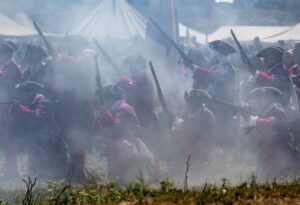
One of the most persistent myths in history is that French Emperor Napoleon Bonaparte was exceptionally short. Popular culture has immortalized him as a diminutive figure with a "Napoleon complex," but this portrayal is fundamentally inaccurate. Napoleon stood approximately 5 feet 7 inches tall, which was actually above average height for French men during his lifetime. The confusion arose from differences between French and British measurement systems, as well as British propaganda during the Napoleonic Wars that deliberately portrayed him as small to diminish his stature both literally and figuratively. His nickname "le petit caporal" (the little corporal) was actually a term of endearment from his soldiers, referring to his camaraderie rather than his physical height.
2. Viking Horned Helmets
The iconic image of Vikings wearing horned helmets is deeply embedded in popular culture, appearing in countless films, television shows, and illustrations. However, there is no archaeological evidence that Vikings ever wore such headgear in battle. This myth originated in 19th-century Romanticism, particularly through costume designer Carl Emil Doepler's creations for Wagner's opera cycle "Der Ring des Nibelungen." Horned helmets would have been impractical in combat, providing opponents with easy grip points and adding unnecessary weight. Archaeological findings show that Viking warriors wore simple, rounded iron helmets, often with nose guards for facial protection.
3. Medieval Belief in a Flat Earth
Contrary to popular belief, educated people during the Middle Ages did not think the Earth was flat. Ancient Greek scholars, including Pythagoras and Aristotle, had established Earth's spherical nature centuries before medieval times, and this knowledge persisted throughout the medieval period. The myth that medieval Europeans believed in a flat Earth was largely popularized in the 19th century by writers like Washington Irving and was perpetuated to portray the Middle Ages as a time of ignorance. Medieval scholars, sailors, and educated clergy understood Earth's spherical shape, though they debated its exact size. Christopher Columbus's voyage was controversial not because people feared he would fall off the edge, but because experts disagreed about the distance to Asia.
4. Marie Antoinette's "Let Them Eat Cake"
The phrase "Let them eat cake" has become synonymous with Marie Antoinette's alleged indifference to the plight of starving French citizens. However, there is no credible evidence that the French queen ever uttered these words. The phrase first appeared in Jean-Jacques Rousseau's "Confessions," written when Marie Antoinette was only eleven years old and not yet in France. Rousseau attributed the quote to "a great princess," but never named Marie Antoinette specifically. This statement was likely propaganda used to vilify the queen during the French Revolution, painting her as callous and out of touch with her subjects' suffering. While Marie Antoinette was certainly extravagant, this particular quote represents revolutionary propaganda rather than historical fact.
5. The Great Wall of China's Visibility from Space
It is commonly claimed that the Great Wall of China is the only human-made structure visible from space with the naked eye. Astronauts and scientific evidence have repeatedly debunked this myth. While the Great Wall is an impressive architectural achievement spanning thousands of miles, it is relatively narrow—typically 15-30 feet wide—and blends with the natural landscape. Astronauts report that from low Earth orbit, no human-made structures are clearly visible without magnification, though cities are visible at night due to their lights. This myth likely originated from exaggerated claims about the Wall's magnificence and was perpetuated before space travel made verification possible.
6. Benjamin Franklin's Kite and Key Experiment
While Benjamin Franklin did conduct experiments with electricity and may have performed a kite experiment, the popular story of him flying a kite with a metal key during a thunderstorm is largely mythologized. If Franklin had actually been struck by lightning in the manner commonly depicted, he would likely have been killed. Historical evidence suggests that if the experiment occurred, it was conducted more cautiously, with Franklin observing electrical charge collection from storm clouds rather than experiencing a direct lightning strike. Some historians question whether the experiment happened at all as Franklin described it, noting that he only documented it in a letter and that no witnesses were mentioned. Regardless, Franklin's contributions to understanding electricity were substantial and based on numerous safer experiments.
7. Columbus Discovering America
Christopher Columbus is often credited with discovering America in 1492, but this narrative ignores both the indigenous peoples who had inhabited the continents for thousands of years and earlier European expeditions. Norse explorer Leif Erikson established settlements in North America around 1000 CE, nearly 500 years before Columbus. Additionally, the Americas were home to sophisticated civilizations with millions of inhabitants when Columbus arrived. Columbus never actually set foot on mainland North America during his voyages, exploring primarily Caribbean islands and parts of Central and South America. His significance lies not in "discovery" but in initiating sustained European contact and colonization of the Americas, fundamentally altering world history.
8. Medieval Torture Device Prevalence
Popular museums and media depictions suggest that medieval Europe was filled with elaborate torture devices like the Iron Maiden. However, many of these supposed medieval torture instruments are either exaggerated, misrepresented, or outright fabrications from later periods. The Iron Maiden, for example, was likely constructed in the 18th or 19th century for sensationalist exhibitions rather than actual medieval use. While torture certainly existed in medieval times, it was less common and less elaborate than popular culture suggests. Many "torture museums" display reproductions or devices created for entertainment rather than authentic historical artifacts. The myth of widespread, creative torture reflects Victorian-era fascination with the "Dark Ages" more than historical reality.
9. George Washington's Wooden Teeth
The first President of the United States did suffer from dental problems throughout his life and wore dentures, but they were never made of wood. Washington's dentures were crafted from various materials including human teeth, animal teeth (horse and cow), ivory, and lead-tin alloy, secured with gold wire and brass screws. The myth of wooden teeth may have originated from the ivory staining and appearing wood-like over time. Washington's dental issues caused him significant pain and self-consciousness, affecting his appearance in portraits and his public speaking. The reality of his dental prosthetics reveals both the primitive state of 18th-century dentistry and Washington's personal struggles, making him a more relatable historical figure than the wooden teeth myth suggests.
10. The Library of Alexandria's Destruction
Popular accounts often describe the Library of Alexandria being destroyed in a single catastrophic fire, with centuries of accumulated knowledge lost in one tragic event. The reality is far more complex and gradual. The Library likely suffered damage from multiple incidents over several centuries, including Julius Caesar's fire in 48 BCE, which may have destroyed some warehouses containing scrolls. However, the Library continued functioning for centuries afterward. Its decline was a gradual process involving reduced funding, political instability, the rise of competing institutions, and changing priorities. The complete loss of the Library occurred through neglect and systematic dismantling rather than one dramatic conflagration. This myth of sudden destruction reflects our tendency to prefer simple, dramatic narratives over complex historical processes.
Understanding Historical Truth
These debunked myths demonstrate how historical inaccuracies become accepted as fact through repetition, propaganda, and cultural storytelling. Many of these misconceptions served specific purposes—propaganda during conflicts, entertainment value, or simplifying complex historical events into memorable narratives. Understanding the truth behind these myths not only provides more accurate historical knowledge but also teaches critical thinking about how information is transmitted and transformed over time. By questioning commonly accepted stories and seeking evidence-based understanding, we develop a more nuanced appreciation of history's complexity and avoid perpetuating falsehoods to future generations. Historical accuracy matters because these stories shape our understanding of human nature, cultural development, and the lessons we draw from the past.