







1 / 10 Questions
0 Points

Which Four Letters Were Stolen From The Hollywood Sign?

WOOD

HILL

LAND

WEST

Points won
0
Correct score
0%

More Quizzes

More Articles

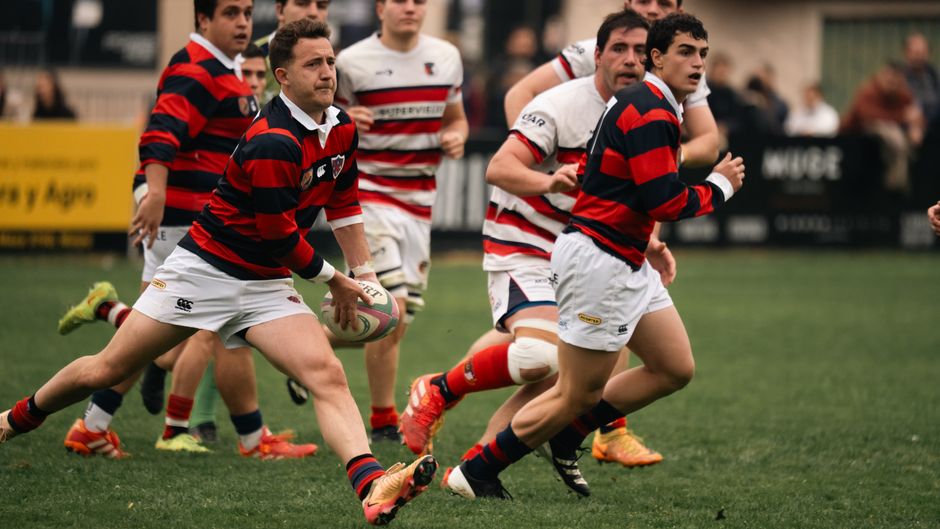
Why Rugby Players Don’t Wear Padding

Why Rugby Players Don’t Wear Padding

⏱️ 5 min read

When spectators first witness a rugby match, one of the most striking observations is the apparent lack of protective equipment worn by players. Unlike American football athletes who are encased in helmets, shoulder pads, and various protective gear, rugby players take the field in little more than a jersey, shorts, and boots. This stark difference raises an important question about safety, tradition, and the fundamental nature of the sport itself.

The Philosophy of Tackling Technique Over Protection

Rugby's approach to player safety fundamentally differs from sports that rely heavily on protective equipment. The absence of padding directly influences how players approach physical contact, particularly tackling. Without the false sense of security that padding provides, rugby players must execute tackles using proper technique, wrapping their arms around opponents and using controlled force rather than leading with their heads or shoulders as projectile weapons.

This emphasis on technique begins at the earliest levels of rugby training. Young players learn that improper tackling form not only risks injuring their opponents but also exposes themselves to serious harm. The International Rugby Board (now World Rugby) has established strict guidelines on tackling form, penalizing dangerous high tackles and reckless challenges that endanger player welfare.

Historical Context and Traditional Values

Rugby's origins trace back to 1823 at Rugby School in England, where the sport developed organically without protective equipment. As the game evolved and spread globally, this tradition remained largely unchanged. The sport's governing bodies have maintained this approach, viewing it as integral to rugby's identity and character.

The cultural ethos of rugby emphasizes toughness, resilience, and respect for opponents. These values are deeply intertwined with the minimal-equipment approach. Players take pride in the physical demands of the sport while maintaining a culture of sportsmanship that discourages unnecessarily dangerous play. This combination creates an environment where self-preservation through proper technique becomes paramount.

The Paradox of Padding and Injury Risk

Contrary to intuitive assumptions, research suggests that extensive padding may actually increase certain types of injuries rather than prevent them. This phenomenon, known as risk compensation or the Peltzman effect, occurs when individuals feel more protected and consequently take greater risks.

In American football, despite extensive protective equipment, concussion rates and severe injuries remain significant concerns. The hard shell helmets and rigid padding can transform players into more dangerous projectiles, leading to higher-impact collisions. Studies have shown that players wearing more protection often tackle with their heads, creating dangerous situations for both the tackler and the ball carrier.

Rugby's padding-free approach naturally limits the velocity and force of collisions. Players instinctively protect themselves by avoiding head-first contact and maintaining awareness of their body positioning. This self-regulating mechanism may contribute to different injury patterns compared to heavily padded sports.

Limited Protective Gear That Is Permitted

While rugby players don't wear padding in the traditional sense, World Rugby does permit certain minimal protective equipment:

  • Thin headgear or scrum caps made of soft material, primarily protecting against cuts and abrasions rather than concussions
  • Mouthguards, which are mandatory in many competitions to protect teeth and potentially reduce concussion severity
  • Shoulder padding not exceeding specific thickness limitations, typically worn by players in forward positions
  • Shin guards, though rarely used except by some players in kicking positions

These items are strictly regulated in terms of thickness and material composition. Any protective gear must be made of soft, thin materials that don't provide significant impact resistance or create an advantage for the wearer. The regulations ensure that permitted equipment doesn't fundamentally alter the nature of physical contact in the game.

Biomechanical Advantages of Unrestricted Movement

The absence of bulky padding provides rugby players with superior mobility, flexibility, and body awareness. The sport requires constant dynamic movement—running, passing, kicking, and changing direction rapidly. Heavy protective equipment would significantly impair these essential skills.

Rugby players need full range of motion in their shoulders for passing, their hips for running and kicking, and their entire body for the various technical aspects of rucks, mauls, and scrums. Padding would restrict this movement and potentially alter the fundamental skills that define rugby excellence. The sport's continuous flow and limited stoppages mean players must maintain high mobility throughout the match.

Modern Safety Improvements Without Padding

Rather than introducing extensive padding, rugby has evolved its safety protocols through rule modifications, improved medical protocols, and enhanced coaching education. Recent law changes have focused on reducing dangerous play through:

  • Stricter penalties for high tackles and head contact
  • Comprehensive concussion protocols requiring mandatory removal and assessment
  • Lowering the legal tackle height in community rugby
  • Enhanced referee training to identify and penalize dangerous play

World Rugby has invested heavily in research, studying injury patterns and implementing evidence-based interventions. These efforts include tackle technique workshops, injury surveillance programs, and ongoing rule evaluations to enhance player welfare without fundamentally changing the sport's character.

The Future of Rugby Safety

As understanding of sports injuries, particularly concussions, continues to evolve, rugby faces ongoing discussions about player safety. However, the consensus within the rugby community remains that proper technique, rule enforcement, and medical protocols represent more effective safety strategies than introducing extensive padding.

The sport continues to balance its traditional values with modern safety science, seeking innovations that protect players without compromising rugby's essential nature. This approach has maintained rugby's distinctive identity while demonstrating that athlete safety and minimal protective equipment are not mutually exclusive when combined with proper education, technique, and regulatory oversight.

Why Van Gogh Only Sold One Painting in His Lifetime

Why Van Gogh Only Sold One Painting in His Lifetime

⏱️ 5 min read

Vincent van Gogh stands today as one of the most celebrated and influential artists in history, with his works commanding tens of millions of dollars at auction. Yet during his lifetime, the Dutch post-impressionist painter struggled in obscurity, selling only a single confirmed painting before his death in 1890. This stark contrast between his current fame and his lifetime obscurity offers a fascinating glimpse into the art world of the late 19th century and the challenges faced by innovative artists who dared to break from convention.

The Revolutionary Style That Was Too Ahead of Its Time

Van Gogh's artistic approach was dramatically different from what the art-buying public expected during the 1880s. While the established art world favored highly polished academic paintings with smooth brushwork and realistic renderings, Van Gogh employed thick, expressive brushstrokes and bold, unconventional color choices. His impasto technique, where paint was applied so thickly that it created texture on the canvas, was considered crude and unfinished by contemporary standards.

The late 19th-century art market was dominated by conservative tastes that preferred classical subjects, historical scenes, and idealized landscapes. Van Gogh's raw emotional intensity and his focus on ordinary subjects—peasants, workers, simple rooms, and everyday objects—held little appeal for wealthy collectors who decorated their homes with prestigious, traditional artwork. His swirling skies, vibrant yellows, and intense blues were too jarring for audiences accustomed to more subdued palettes.

Limited Professional Networks and Social Isolation

Success in the 19th-century art world depended heavily on personal connections, social standing, and relationships with influential dealers and critics. Van Gogh, however, was notoriously difficult in social situations, suffered from mental health issues, and often alienated potential supporters with his intense personality and erratic behavior. His struggles with depression, anxiety, and what many historians believe was bipolar disorder made it challenging to maintain the professional relationships necessary for commercial success.

Unlike many successful artists of his era who cultivated relationships with wealthy patrons and moved in elite social circles, Van Gogh spent much of his career in relative isolation. His time in Arles, where he produced some of his most famous works, was marked by loneliness and mental breakdowns. His infamous incident of cutting off part of his own ear further damaged his reputation and made potential buyers wary of associating with him.

The Dominance of the Paris Salon System

The Paris Salon, the official art exhibition of the Académie des Beaux-Arts, was the primary gateway to success for artists in the 19th century. Acceptance into the Salon meant visibility, prestige, and potential sales. However, Van Gogh's work was repeatedly rejected by this establishment, effectively shutting him out of the most important marketplace for art.

The Salon jury favored technically precise, conventionally beautiful works that adhered to established academic principles. Van Gogh's paintings, with their emotional rawness and technical unconventionality, stood little chance of acceptance. Without this crucial platform, he remained largely unknown to the collectors and critics who could have championed his work.

Financial Dependence and Limited Marketing Ability

Throughout his career, Van Gogh relied almost entirely on financial support from his younger brother Theo, an art dealer who sent him a monthly allowance. This arrangement, while allowing Vincent to continue painting, also meant he had limited resources for self-promotion or establishing his own gallery presence. He couldn't afford to frame his paintings properly or rent exhibition space, both essential for attracting serious buyers.

Van Gogh's brief career as a professional artist—he only painted seriously for about a decade—also worked against him. Building a reputation and collector base typically required years of consistent exhibition and gradual recognition. Van Gogh's frequent relocations between the Netherlands, Belgium, and various locations in France further disrupted any momentum he might have built in establishing himself in a particular art community.

The One Confirmed Sale: The Red Vineyard

The single painting Van Gogh definitively sold during his lifetime was "The Red Vineyard" (also known as "The Red Vines"), purchased by the Belgian painter and collector Anna Boch for 400 francs in 1890, just months before Van Gogh's death. The sale occurred at an exhibition in Brussels organized by Les XX, a group of avant-garde Belgian artists who were more receptive to innovative approaches than the conservative Paris establishment.

This lone transaction, while modest, represented a small breakthrough that came too late in Van Gogh's life to provide any real relief from his financial struggles or to build meaningful momentum for his career. Some art historians suggest there may have been one or two other informal sales or exchanges, but "The Red Vineyard" remains the only documented commercial sale confirmed by historical records.

The Ironic Legacy of Posthumous Fame

The factors that made Van Gogh's work unsellable during his lifetime—the emotional intensity, bold colors, expressive brushwork, and rejection of academic conventions—became precisely the qualities that made him celebrated after his death. As artistic tastes evolved in the early 20th century, collectors and critics began to appreciate the raw emotion and innovative techniques that Van Gogh had pioneered.

His sister-in-law Johanna van Gogh-Bonger played a crucial role in this transformation, tirelessly promoting his work and carefully organizing exhibitions after both Vincent and Theo had died. Her dedication, combined with changing artistic sensibilities and the rise of movements like Expressionism that valued emotional authenticity over technical perfection, gradually elevated Van Gogh to the status he holds today.

Van Gogh's story serves as a powerful reminder that artistic merit and commercial success don't always align, particularly for innovators whose vision extends beyond their era's conventional understanding. His lonely struggle and posthumous triumph continue to inspire artists who work outside mainstream acceptance, offering hope that truly original work may eventually find its audience, even if that recognition comes too late for the creator to witness.