









⏱️ 5 min read
As global populations surge toward 10 billion by 2050 and climate change threatens traditional agriculture, vertical farming has emerged as a revolutionary approach to food production. This innovative method of growing crops in vertically stacked layers within controlled indoor environments represents a fundamental shift in how humanity might feed itself in the coming decades. By combining advanced technologies with agricultural science, vertical farming offers solutions to some of the most pressing challenges facing food security worldwide.
Understanding Vertical Farming Technology
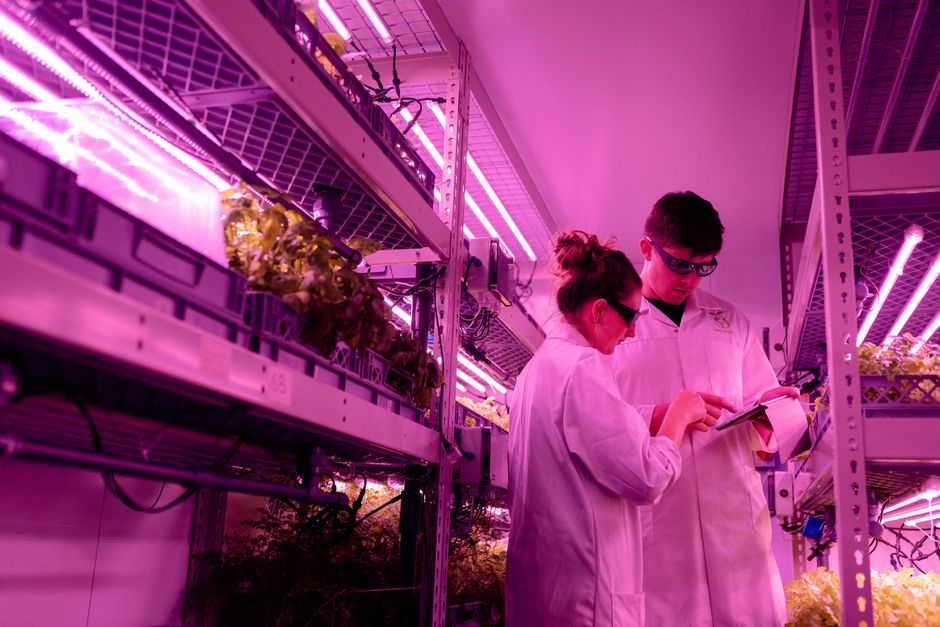
Vertical farming utilizes controlled-environment agriculture (CEA) technology to optimize plant growth conditions. These facilities employ artificial lighting systems, typically LED arrays calibrated to specific wavelengths that maximize photosynthesis while minimizing energy consumption. Climate control systems maintain precise temperature and humidity levels, while hydroponic, aeroponic, or aquaponic systems deliver nutrients directly to plant roots without soil.
Modern vertical farms integrate sophisticated sensors and automation systems that continuously monitor growing conditions. Internet of Things (IoT) devices track variables including pH levels, nutrient concentrations, carbon dioxide levels, and plant growth rates. This data feeds into artificial intelligence algorithms that adjust environmental parameters in real-time, ensuring optimal growing conditions and maximizing yields.
Economic Viability and Market Growth
The global vertical farming market has experienced exponential growth, with projections estimating the industry will reach $20 billion by 2026. This expansion reflects increasing investment from both private venture capital and established agricultural corporations recognizing the technology's potential. Several factors drive this economic momentum, including decreasing costs for LED lighting systems, which have fallen by approximately 90% over the past decade, and improvements in automation technology that reduce labor costs.
Commercial vertical farms are achieving profitability in specific crops, particularly leafy greens, herbs, and microgreens that command premium prices and have short growing cycles. Companies operating large-scale facilities report yields 100 to 400 times higher per square foot compared to traditional farming methods. However, challenges remain for crops requiring significant vertical space or those with longer growing periods, where energy costs still exceed economic feasibility thresholds.
Environmental Impact and Sustainability Benefits
Vertical farming offers compelling environmental advantages that position it as a crucial component of sustainable food systems. Water usage represents one of the most dramatic improvements, with vertical farms consuming up to 95% less water than conventional agriculture through closed-loop recirculation systems. In regions facing severe water scarcity, this efficiency could prove transformative for local food production capabilities.
The elimination of pesticides and herbicides in controlled indoor environments produces cleaner crops while avoiding agricultural runoff that pollutes waterways. Additionally, vertical farms can operate in urban centers, drastically reducing transportation distances and associated carbon emissions from food distribution networks. Some facilities even achieve carbon-neutral operations by integrating renewable energy sources and capturing waste heat for facility operations.
Challenges in Energy Consumption
Despite these benefits, energy consumption remains the most significant environmental concern for vertical farming. Artificial lighting systems, climate control, and water circulation require substantial electricity inputs. Critics argue that in regions where electricity generation relies heavily on fossil fuels, the carbon footprint of vertical farming may exceed that of traditional agriculture when all factors are considered. The industry's sustainability credentials ultimately depend on transitioning to renewable energy sources and continuing to improve energy efficiency through technological innovation.
Technological Innovations Shaping the Future
Emerging technologies promise to address current limitations and expand vertical farming capabilities. Advanced lighting systems now incorporate dynamic spectral control, adjusting light wavelengths throughout growth cycles to optimize nutritional content and flavor profiles. Research into specialized LED configurations has demonstrated the ability to enhance specific plant characteristics, from increased vitamin content to improved shelf life.
Robotics and automation continue advancing, with autonomous systems now capable of:
- Planting seeds with precise spacing and depth
- Monitoring individual plant health through computer vision
- Harvesting crops at optimal ripeness
- Packaging produce with minimal human intervention
- Conducting predictive maintenance on facility systems
Machine learning algorithms process vast datasets from multiple growing cycles, identifying optimal conditions for different crop varieties and predicting yields with increasing accuracy. These systems enable continuous improvement in operational efficiency and crop quality.
Expanding Crop Diversity and Nutritional Enhancement
While vertical farming currently focuses predominantly on leafy greens and herbs, research initiatives are expanding the range of viable crops. Scientists are developing dwarf varieties of traditionally tall plants, including tomatoes, peppers, and even dwarf fruit trees optimized for vertical growing systems. Genetic selection programs target traits such as compact growth habits, accelerated maturation, and enhanced nutritional profiles.
Controlled environments enable biofortification strategies where nutrient concentrations in growing media are adjusted to increase vitamin and mineral content in harvested crops. This capability could address micronutrient deficiencies affecting billions of people globally, producing vegetables with enhanced nutritional value beyond what traditional farming achieves.
Integration with Urban Planning and Food Systems
Urban planners increasingly incorporate vertical farming into smart city designs, envisioning integrated food production within residential and commercial developments. Rooftop farms, building-integrated agriculture, and dedicated vertical farming complexes could transform cities into partially self-sufficient food production centers. This localization of food systems enhances resilience against supply chain disruptions while creating new employment opportunities in urban areas.
The technology also holds particular promise for regions with challenging growing conditions, including arctic communities, desert areas, and densely populated nations with limited arable land. Countries like Singapore, Japan, and the United Arab Emirates have invested heavily in vertical farming infrastructure to enhance food security and reduce dependence on imports.
Looking Ahead: The Next Decade
The trajectory of vertical farming over the next decade will likely determine its role in global food systems. Success depends on continued innovation driving down operational costs, particularly energy expenses, while expanding the range of economically viable crops. Integration with renewable energy systems, development of more efficient growing techniques, and supportive policy frameworks will prove critical factors in scaling the technology to meaningfully impact global food production.
As climate change intensifies pressure on traditional agriculture and urban populations continue expanding, vertical farming stands as a promising complement to conventional farming methods rather than a complete replacement. Its evolution represents humanity's capacity to reimagine fundamental systems through technological innovation, offering a pathway toward more resilient and sustainable food security for future generations.