










1 / 10 Questions
0 Points

Which President Is Called The Father Of Our Country?

Benjamin Franklin

John Adams

Thomas Jefferson

George Washington

Points won
0
Correct score
0%

More Quizzes

More Articles

Top 10 Fastest Animals on the Planet

Top 10 Fastest Animals on the Planet

⏱️ 6 min read

Speed in the animal kingdom is a remarkable adaptation that has evolved over millions of years, enabling creatures to hunt prey, escape predators, and survive in competitive environments. From the skies to the savannah, from ocean depths to desert plains, nature has engineered some truly extraordinary speedsters. Understanding which animals hold speed records provides fascinating insights into biology, physics, and the incredible diversity of life on Earth.

The World's Most Incredible Speed Champions

1. The Peregrine Falcon: Unmatched Aerial Velocity

Claiming the title of fastest animal on the planet, the peregrine falcon reaches astonishing speeds of up to 242 miles per hour during its hunting dive, known as a stoop. This raptor achieves these incredible velocities by tucking its wings close to its body and plummeting toward prey from great heights. The peregrine falcon's respiratory system is specially adapted to breathe at such extreme speeds, with bony tubercles in its nostrils that slow incoming air and prevent lung damage. Its keen eyesight allows it to spot prey from over a mile away, and specialized third eyelids protect its eyes during high-speed dives.

2. The Golden Eagle: Powerful Mountain Hunter

The golden eagle ranks as the second-fastest bird in the world, capable of reaching speeds up to 200 miles per hour in a dive. These magnificent raptors combine power with precision, using their speed to hunt prey ranging from rabbits to young deer in mountainous terrain. Unlike the peregrine falcon, golden eagles are built more robustly and can carry prey that weighs up to half their body weight while flying. Their hunting technique involves spotting prey from high altitudes, then diving at tremendous speeds while adjusting trajectory with remarkable accuracy.

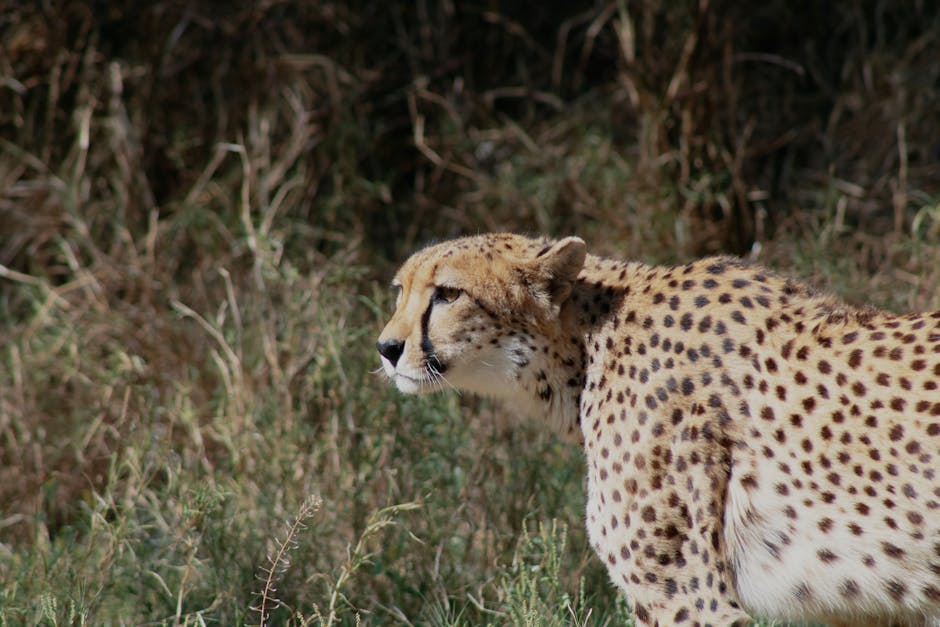
3. The Cheetah: Land Speed Supremacy

On land, no animal matches the cheetah's acceleration and top speed of 70 miles per hour. This big cat can accelerate from 0 to 60 mph in just three seconds, rivaling most sports cars. The cheetah's body is a masterpiece of evolutionary engineering: an extremely lightweight build, large nasal passages for increased oxygen intake, a flexible spine that acts like a spring, and semi-retractable claws that provide traction like track cleats. However, this incredible speed comes at a cost—cheetahs can only maintain their maximum velocity for about 20-30 seconds before their body temperature becomes dangerously high.

4. The Pronghorn Antelope: Endurance Speed Runner

While the cheetah wins in pure sprint speed, the pronghorn antelope of North America is the fastest land animal over long distances, sustaining speeds of 55 miles per hour for several miles. Capable of reaching 60 mph in short bursts, pronghorns possess exceptionally large hearts and lungs relative to their body size, enabling sustained high-speed running. This endurance evolved as a defense against now-extinct American cheetahs, making modern pronghorns seemingly over-engineered for their current predators. Their speed, combined with exceptional eyesight equivalent to 8x binoculars, makes them extremely difficult prey.

5. The Springbok: Agile Desert Sprinter

Native to southern Africa, the springbok can reach speeds of 55 miles per hour while performing spectacular leaps up to 13 feet high, a behavior called "pronking." These medium-sized antelopes use their speed not only to escape predators like cheetahs and lions but also to demonstrate fitness to potential mates. Springboks have evolved to thrive in arid environments, and their speed allows them to cover large distances quickly in search of scarce water and vegetation. Their acceleration and ability to change direction while running at high speed make them challenging targets for even the fastest predators.

6. The Sailfish: Ocean's Supreme Speedster

In aquatic environments, the sailfish claims the speed record, reaching velocities up to 68 miles per hour. This billfish uses its spectacular dorsal fin not just for display but also for rapid direction changes while hunting. The sailfish's streamlined body, powerful crescent-shaped tail, and specialized bill work together to reduce drag and maximize thrust through water. When hunting schools of sardines or anchovies, sailfish often work cooperatively, using their speed and bills to stun prey. Their upper jaw extends into a distinctive bill that slashes through fish schools at incredible speeds.

7. The Black Marlin: Powerful Oceanic Athlete

The black marlin is another contender for fastest fish, with recorded speeds reaching 65 miles per hour. These massive fish, which can weigh over 1,500 pounds, generate tremendous power through their crescent-shaped tails and torpedo-shaped bodies. Black marlins migrate vast distances across oceans, using their speed both for efficient travel and for hunting tuna and other large fish. Sport fishermen prize them for their speed and fighting ability, often requiring hours to land a single specimen. Their dark blue-black coloration provides camouflage when viewed from above in deep ocean waters.

8. The Brazilian Free-Tailed Bat: Mammalian Flight Record Holder

Holding the record for fastest flying mammal, the Brazilian free-tailed bat can reach horizontal flight speeds of 99 miles per hour. These small bats achieve such velocities using long, narrow wings and flying at high altitudes where air resistance is lower. Unlike birds that can dive at extreme speeds, bats achieve their velocity through powered flight, making this accomplishment even more remarkable. Brazilian free-tailed bats emerge from caves by the millions at dusk, creating spectacular wildlife displays while departing to hunt insects across vast territories.

9. The Spur-Winged Goose: Heavyweight Speed Champion

The spur-winged goose of Africa is the world's fastest waterfowl and one of the heaviest flying birds, reaching speeds of 88 miles per hour. Weighing up to 15 pounds, these geese achieve remarkable velocity despite their substantial mass. They inhabit wetlands and grasslands across sub-Saharan Africa, using their speed to travel between water sources and feeding areas. The sharp spurs on their wings, from which they derive their name, serve as weapons for territorial disputes. Their powerful flight muscles comprise a large percentage of their body weight, enabling sustained high-speed flight.

10. The Anna's Hummingbird: Relative Speed Champion

While not the fastest animal in absolute terms, the Anna's hummingbird achieves the highest speed relative to body length of any vertebrate. During courtship dives, males reach 385 body lengths per second—if a human could match this ratio, they would be traveling at approximately 1,300 miles per hour. These tiny birds, weighing about as much as a nickel, perform spectacular aerial displays, diving at speeds exceeding 60 miles per hour before pulling up with g-forces that would cause most animals to lose consciousness. Their specially adapted physiology, including a unique cardiovascular system and metabolism, enables them to survive these extreme maneuvers.

The Physics and Biology of Speed

These remarkable animals demonstrate that speed evolves in response to specific environmental pressures and ecological niches. Whether diving through air, sprinting across plains, or swimming through oceans, each speedster has developed unique anatomical and physiological adaptations. From streamlined bodies that reduce drag to specialized respiratory and cardiovascular systems that support intense exertion, evolution has fine-tuned these creatures for velocity. Understanding these adaptations not only satisfies our curiosity about the natural world but also inspires human engineering and technology, from aircraft design to athletic training methods. The diversity of speed champions across different environments reminds us of nature's endless capacity for innovation and the remarkable ways life has adapted to survive and thrive on our planet.
Top 10 Animals with Incredible Superpowers

Top 10 Animals with Incredible Superpowers

⏱️ 6 min read

Nature has engineered some of the most extraordinary abilities imaginable, far surpassing human capabilities and often inspiring technological innovations. Throughout millions of years of evolution, certain creatures have developed remarkable adaptations that seem almost superhuman—or rather, super-animal. From regenerating entire body parts to surviving in the vacuum of space, these biological marvels demonstrate the incredible diversity and ingenuity of life on Earth.

Remarkable Creatures with Extraordinary Abilities

1. The Immortal Jellyfish's Age-Reversing Ability

Turritopsis dohrnii, commonly known as the immortal jellyfish, possesses perhaps the most enviable superpower of all—biological immortality. When faced with physical damage, starvation, or other environmental stress, this tiny jellyfish can revert its cells back to their earliest form and restart its life cycle. Through a process called transdifferentiation, the jellyfish transforms its adult cells into juvenile cells, essentially aging backward. This remarkable ability allows it to bypass death and theoretically live forever, making it the only known animal capable of completely reversing its life cycle.

2. The Axolotl's Regeneration Powers

The Mexican axolotl stands as one of nature's most impressive healers, capable of regenerating entire limbs, portions of its brain, heart, and spinal cord without any scarring. Unlike most animals that form scar tissue when injured, the axolotl can perfectly reconstruct complex structures including bones, muscles, nerves, and blood vessels. Scientists have discovered that special cells called blastemal cells enable this regeneration, holding the genetic blueprint to rebuild lost body parts. This extraordinary ability has made the axolotl a crucial subject in regenerative medicine research, offering hope for future human therapeutic applications.

3. The Mantis Shrimp's Devastating Punch

Despite measuring only a few inches long, the mantis shrimp delivers one of the most powerful strikes in the animal kingdom. Its club-like appendages accelerate with the same velocity as a bullet from a gun, striking prey with forces exceeding 1,500 newtons. This punch generates cavitation bubbles that collapse with such intensity they produce brief flashes of light and temperatures approaching that of the sun's surface. The impact is so powerful it can shatter aquarium glass and split open crab shells with ease. The mantis shrimp's eyes also possess another superpower—they can detect polarized light and see more colors than any other animal, with 16 color receptors compared to humans' three.

4. The Tardigrade's Indestructibility

Tardigrades, also called water bears, are microscopic animals that possess near-indestructibility under extreme conditions. These tiny creatures can survive temperatures ranging from near absolute zero to 300 degrees Fahrenheit, withstand pressure six times greater than the deepest ocean trenches, and endure radiation levels hundreds of times higher than the lethal dose for humans. Most remarkably, tardigrades have survived exposure to the vacuum of space. They achieve this through cryptobiosis, a state where they expel nearly all water from their bodies and reduce their metabolism to 0.01% of normal levels, essentially suspending animation until conditions improve.

5. The Electric Eel's High-Voltage Shock

The electric eel generates powerful electrical discharges of up to 860 volts—enough to stun a horse or cause cardiac arrest in humans. Specialized cells called electrocytes stack like batteries throughout 80% of the eel's body, enabling it to produce both low-voltage pulses for navigation and communication, and high-voltage blasts for hunting and self-defense. The eel can even leap out of water to deliver more powerful shocks to threats above the surface. This bioelectric system operates with remarkable efficiency, and researchers are studying it to develop better batteries and bioelectric devices.

6. The Lyrebird's Perfect Mimicry

Australia's superb lyrebird possesses arguably the most sophisticated vocal abilities in the animal kingdom. This remarkable bird can accurately mimic not only the calls of dozens of other bird species, but also artificial sounds from its environment including chainsaws, car alarms, camera shutters, and even human speech. The lyrebird's syrinx, the avian vocal organ, is extraordinarily complex with multiple independently controlled sound-producing membranes. Males use this ability to create elaborate soundscapes during courtship displays, sometimes incorporating over 20 different bird species' songs into a single performance lasting up to 20 minutes.

7. The Archerfish's Precision Water Shooting

The archerfish has mastered the physics of optics and ballistics to hunt prey above the water's surface. By forming its mouth into a tube and forcefully compressing its gill covers, this fish shoots a precisely aimed jet of water up to two meters high to knock insects off overhanging vegetation. Remarkably, the archerfish compensates for light refraction at the water's surface, adjusting its aim to account for the apparent versus actual position of its prey. It can also regulate the force of its water jet based on prey size and distance, demonstrating sophisticated problem-solving abilities and spatial awareness.

8. The Gecko's Gravity-Defying Adhesion

Geckos can effortlessly scale smooth vertical surfaces and even walk upside down on ceilings thanks to millions of microscopic hairs called setae on their toe pads. Each seta splits into hundreds of even smaller branches ending in spatulae, creating extensive contact with surfaces at the molecular level. This generates van der Waals forces—weak intermolecular attractions that collectively produce powerful adhesion. A gecko's feet can support over 130 times its body weight, yet the animal can detach and reattach each foot in milliseconds. This remarkable adhesive system works on virtually any surface and has inspired the development of powerful synthetic adhesives.

9. The Mimic Octopus's Shape-Shifting Abilities

The mimic octopus demonstrates the most sophisticated camouflage and impersonation abilities in the animal kingdom. Beyond simply changing color and texture like other octopuses, this species can alter its shape, movement, and behavior to impersonate at least 15 different marine animals including lionfish, flatfish, sea snakes, and jellyfish. It selects its disguise based on the specific threat it faces—impersonating venomous sea snakes when threatened by damselfish, for instance. The octopus achieves this through exceptional muscular control, specialized pigment cells called chromatophores, and remarkable intelligence that allows it to assess situations and choose appropriate responses.

10. The Peregrine Falcon's Supersonic Speed

The peregrine falcon holds the title of fastest animal on Earth, reaching speeds exceeding 240 miles per hour during its hunting dive, called a stoop. At these velocities, the falcon experiences forces that would cause other animals to lose consciousness or suffer severe physiological damage. However, specialized adaptations including reinforced bones, powerful cardiovascular systems, and uniquely shaped nostrils that divert high-pressure air away from the lungs enable these aerial hunters to survive and maintain control. The falcon's visual system processes images at extraordinary speeds, allowing it to track and strike prey with pinpoint accuracy even at terminal velocity.

Nature's Engineering Marvels

These ten remarkable animals demonstrate that reality can be far more extraordinary than fiction. Their superpowers—from immortality to supersonic speed, from regeneration to perfect mimicry—represent millions of years of evolutionary refinement. Each adaptation serves crucial survival purposes while simultaneously pushing the boundaries of what seems biologically possible. As scientists continue studying these creatures, their extraordinary abilities inspire innovations in medicine, materials science, robotics, and engineering, proving that nature remains humanity's greatest teacher and source of innovation.