






1 / 10 Questions
0 Points

Which President Poured Drinks Behind The Bar Before The White House?

Abraham Lincoln

Andrew Jackson

Harry Truman

Theodore Roosevelt

Points won
0
Correct score
0%

More Quizzes

More Articles

Top 10 Fun Facts About the Film Editing Process

Top 10 Fun Facts About the Film Editing Process

⏱️ 6 min read

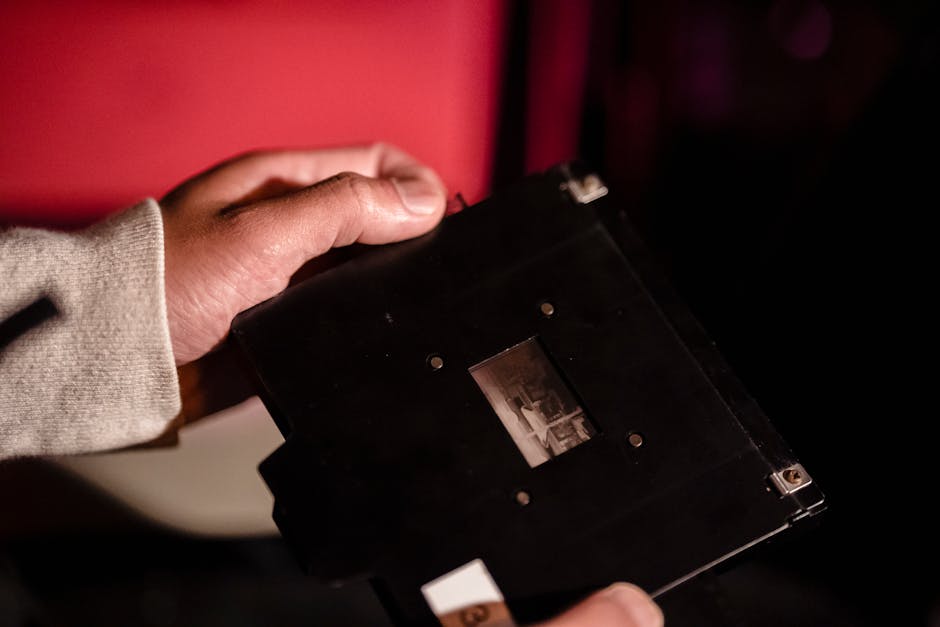
Film editing is often called the "invisible art" of cinema, where magic happens in the cutting room long after the cameras stop rolling. While audiences marvel at stunning performances and breathtaking cinematography, the editing process remains one of the most crucial yet least understood aspects of filmmaking. This transformative stage can make or break a film, turning raw footage into compelling narratives that captivate millions. Here are ten fascinating insights into this essential craft that shapes the movies we love.

The Hidden Craft Behind Movie Magic

1. Editors Often Work with a 20:1 Shooting Ratio

For every minute of finished film that appears on screen, editors typically sift through approximately 20 minutes of raw footage. Major Hollywood productions can generate hundreds of hours of material that must be meticulously reviewed, organized, and trimmed down. This means a standard two-hour feature film might originate from 40 hours or more of filmed content. Editors must possess incredible patience and organizational skills to manage this overwhelming amount of material, tagging and cataloging each shot for easy retrieval during the creative process.

2. The First Female Oscar Winner Was a Film Editor

Margaret Booth revolutionized film editing in Hollywood's golden age, but it was Anne Bauchens who made history as the first woman to win an Academy Award in a technical category. She won the Oscar for Best Film Editing in 1940 for Cecil B. DeMille's "North West Mounted Police." Women have historically dominated the editing field since cinema's earliest days, as the meticulous work was initially considered similar to sewing and threading—stereotypically "women's work." This created unexpected opportunities for female artists in an otherwise male-dominated industry.

3. Walter Murch Edited While Standing Up

Legendary editor Walter Murch, known for his work on "Apocalypse Now" and "The English Patient," developed a unique editing philosophy that included standing at his workstation rather than sitting. Murch believed this physical approach kept him more alert and engaged with the material, allowing for better decision-making. He also pioneered the concept of editing with his eyes closed during certain moments, relying purely on the rhythm and sound to guide his cuts. His unconventional methods challenged traditional editing practices and influenced an entire generation of editors.

4. Some Films Are Completely Restructured in the Editing Room

The original cut of a film can be drastically different from what audiences eventually see. "Star Wars: A New Hope" underwent massive restructuring during editing, with George Lucas's then-wife Marcia Lucas making crucial changes that transformed the pacing and narrative flow. The Death Star assault sequence was completely rearranged, and entire character arcs were repositioned. Similarly, "Fatal Attraction" originally ended with Glenn Close's character committing suicide, but test audiences responded so negatively that the entire ending was reshot and re-edited, changing the film's message entirely.

5. The Kuleshov Effect Proves Editing Creates Meaning

Soviet filmmaker Lev Kuleshov conducted experiments in the 1920s that fundamentally changed how we understand film editing. He intercut the same expressionless shot of an actor's face with different images—a bowl of soup, a child's coffin, and an attractive woman. Audiences insisted the actor displayed different emotions in each sequence, though the facial shot was identical. This demonstrated that meaning in film comes not from individual shots but from their juxtaposition. The Kuleshov Effect remains a foundational principle in editing theory, proving that editors don't just assemble footage—they create emotional and psychological responses.

6. Editors Have Their Own Secret Language

The editing bay has developed its own specialized vocabulary over decades. Terms like "jump cut," "match cut," "J-cut," and "L-cut" describe specific techniques that editors use daily. A "Frankenbite" refers to splicing together different audio takes to create a statement someone never actually said in one take—common in reality television. "Temp love" describes a director's unhealthy attachment to temporary music or effects used during rough cuts. This specialized jargon allows editing teams to communicate complex ideas quickly and precisely, though it can sound like complete gibberish to outsiders.

7. Digital Editing Generated Millions of Deleted Files

The transition from physical film cutting to digital editing systems like Avid and Final Cut Pro revolutionized the industry in the 1990s and 2000s. However, it also created new challenges. Editors could now make unlimited versions and experiments without destroying original footage, leading to exponential growth in file management issues. Major productions now employ dedicated data managers to organize terabytes of footage. The non-destructive nature of digital editing means editors can be more experimental, but it also means they can spend weeks exploring options that would have been impossible in the linear, destructive world of physical film cutting.

8. The Average Shot Length Has Decreased Dramatically

Film scholars have documented a significant trend in editing pace over cinema history. In the 1930s and 1940s, the average shot length in Hollywood films was 8-11 seconds. By the 2000s, that average had dropped to 2-4 seconds, with action films often featuring shots that last less than two seconds. This acceleration reflects changing audience attention spans, technological capabilities, and aesthetic preferences. Directors like Michael Bay and Paul Greengrass popularized rapid-fire editing styles, though some filmmakers like Paul Thomas Anderson deliberately use longer takes as an artistic counterpoint to this trend.

9. Sound Editing Is Completely Separate from Picture Editing

Many people don't realize that film editing actually encompasses two distinct disciplines. Picture editors focus on visual storytelling, while sound editors work on dialogue, sound effects, and audio atmosphere. These teams work in parallel, with sound editors often starting their work while picture editing is still ongoing. A major film might employ dozens of sound editors specializing in different areas—dialogue editing, Foley effects, ambient sound, and sound effects creation. Both disciplines are honored separately at the Academy Awards, recognizing that each requires entirely different skill sets and artistic sensibilities.

10. The First Cut Is Often Unwatchably Long

Directors' first assemblies of films are notoriously lengthy and rough. The initial cut of "Apocalypse Now" was over seven hours long. "The Wolf of Wall Street" started at four and a half hours before being trimmed to three. These early versions include every potentially useful scene, allowing filmmakers to see all their options before making difficult decisions about what to cut. This is why the editing process can take many months, with editors and directors gradually refining the material through multiple passes. Studios typically mandate specific running times, forcing editors to make strategic choices about pacing and story emphasis.

The Art of Invisible Storytelling

Film editing remains one of cinema's most powerful yet underappreciated crafts. From the organizational challenges of managing vast amounts of footage to the creative decisions that fundamentally shape how stories are told, editors serve as the final rewriters of every film. Their choices about timing, rhythm, juxtaposition, and structure determine whether audiences laugh, cry, or sit on the edge of their seats. As technology continues to evolve and storytelling techniques develop, the editing process will undoubtedly continue to surprise and innovate, proving that this invisible art is essential to the magic of movies.
Top 10 Animals with the Longest Lifespans

Top 10 Animals with the Longest Lifespans

⏱️ 6 min read

The natural world is filled with remarkable creatures that have evolved to survive for extraordinary lengths of time. While humans consider a century-long life exceptional, numerous species across our planet routinely surpass this milestone, with some living for several centuries or even millennia. These remarkable animals have developed unique biological adaptations that allow them to resist aging, repair cellular damage, and thrive in environments that would be inhospitable to shorter-lived species. Understanding these creatures provides valuable insights into longevity, cellular regeneration, and the diverse strategies life has developed to persist through time.

The Ancient Ocean Dwellers and Land Giants

1. The Immortal Jellyfish - Turritopsis dohrnii

The Turritopsis dohrnii holds the distinction of being biologically immortal. This tiny jellyfish, measuring only 4.5 millimeters in diameter, possesses an extraordinary ability to revert its cells back to their earliest form and restart its life cycle when faced with stress, injury, or old age. Through a process called transdifferentiation, the jellyfish transforms its adult cells back into polyps, essentially resetting its biological clock. While individual specimens can still die from predation or disease, theoretically, this species has no natural lifespan limit, making it one of nature's most fascinating biological phenomena.

2. The Ocean Quahog Clam - Arctica islandica

The ocean quahog clam represents one of the longest-lived non-colonial animals ever documented. The oldest known specimen, nicknamed "Ming," was discovered to be 507 years old when researchers examined its shell growth rings. These bivalve mollusks inhabit the cold waters of the North Atlantic Ocean, where slow metabolic rates and frigid temperatures contribute to their exceptional longevity. Their shells contain annual growth rings similar to tree rings, providing scientists with valuable data about historical ocean conditions and climate patterns spanning centuries.

3. The Greenland Shark - Somniosus microcephalus

Lurking in the frigid Arctic and North Atlantic waters, the Greenland shark can live for approximately 400 years, making it the longest-lived vertebrate known to science. These massive predators grow at an incredibly slow rate of about one centimeter per year and don't reach sexual maturity until they're approximately 150 years old. Scientists determine their age through radiocarbon dating of eye lens nuclei, a technique that has revealed individuals born as far back as the 1600s still swimming in today's oceans. Their extreme longevity is attributed to their slow metabolism and the cold-water environment they inhabit.

4. The Bowhead Whale - Balaena mysticetus

The bowhead whale of the Arctic and sub-Arctic waters can live for more than 200 years, with some estimates suggesting certain individuals may reach 268 years. These massive marine mammals possess unique genetic adaptations related to DNA repair, cell cycle regulation, and cancer resistance, which researchers believe contribute to their exceptional lifespan. Evidence of their longevity includes the discovery of old harpoon fragments embedded in whales caught in recent decades, indicating these individuals survived whaling attempts from the 1800s.

5. The Galápagos Giant Tortoise - Chelonoidis niger

The iconic Galápagos giant tortoise regularly exceeds 100 years of age, with many individuals living well beyond 150 years. The most famous example was Harriet, who lived to approximately 175 years old, and Lonesome George, who lived past 100. These remarkable reptiles possess slow metabolic rates, efficient organ systems, and exceptional cellular repair mechanisms. Their isolated island habitats, with minimal predation and stable climates, have allowed them to evolve longevity as a successful survival strategy. Conservation efforts continue to protect these ancient creatures from extinction.

6. The Rougheye Rockfish - Sebastes aleutianus

Inhabiting the deep waters of the Pacific Ocean, the rougheye rockfish can live for more than 200 years, with the oldest recorded specimen reaching 205 years. These fish thrive in cold, deep waters where slow growth rates and minimal metabolic demands contribute to their extended lifespans. Their longevity makes them particularly vulnerable to overfishing, as populations take many decades to recover. Scientists study these fish to understand how cold-water species develop resistance to oxidative stress and maintain cellular health throughout their extended lives.

7. The Tuatara - Sphenodon punctatus

The tuatara, a reptile endemic to New Zealand, represents a living fossil that has remained virtually unchanged for over 200 million years. Individual tuataras can live for more than 100 years, with some specimens documented at over 110 years old. These unique creatures continue growing throughout their lives and don't reach sexual maturity until age 10-20. Their slow metabolism, low body temperature, and ability to enter extended periods of inactivity contribute to their remarkable longevity. The tuatara's ancient lineage and extended lifespan make it invaluable for evolutionary biology research.

8. The Red Sea Urchin - Strongylocentrotus franciscanus

The red sea urchin of the Pacific Ocean coastline can live for over 200 years, showing minimal signs of aging throughout its life. These echinoderms demonstrate what scientists call "negligible senescence," meaning they maintain reproductive capability and show little evidence of age-related decline even at advanced ages. Research has revealed that their cells possess extraordinary regenerative capabilities and resistance to oxidative damage. Their remarkable longevity challenges traditional understanding of aging and provides insights into cellular maintenance mechanisms.

9. The Koi Fish - Cyprinus carpio

Japanese koi, a domesticated variety of common carp, can live for over 200 years under optimal conditions. The oldest verified koi, named Hanako, lived to 226 years, as confirmed through analysis of her scales. These ornamental fish thrive in carefully maintained ponds where water quality, nutrition, and protection from predators contribute to their longevity. Their extended lifespans have made them symbols of perseverance and longevity in Japanese culture, often being passed down through multiple generations of families.

10. The Antarctic Sponge - Anoxycalyx joubini

The Antarctic sponge represents one of the longest-lived organisms on Earth, with some specimens estimated to be over 1,550 years old. These simple animals live in the frigid waters surrounding Antarctica, where extremely cold temperatures result in remarkably slow growth rates—some growing less than a millimeter per year. Their longevity is attributed to their minimal metabolic activity, stable environment, and simple body structure that requires minimal cellular maintenance. These ancient organisms provide scientists with long-term records of ocean conditions and demonstrate that complexity isn't necessary for extreme longevity.

Understanding Exceptional Longevity

The animals on this list demonstrate that longevity occurs across diverse species, from simple sponges to complex vertebrates. Common factors contributing to extended lifespans include cold environments that slow metabolism, efficient cellular repair mechanisms, resistance to oxidative stress, and stable habitats with minimal predation. Studying these remarkable creatures offers valuable insights into aging processes, potential interventions for age-related diseases, and the diverse strategies evolution has produced for surviving across centuries. These ancient animals remind us of the incredible adaptability of life and the mysteries that still remain in understanding the fundamental processes of aging and longevity.