







⏱️ 5 min read
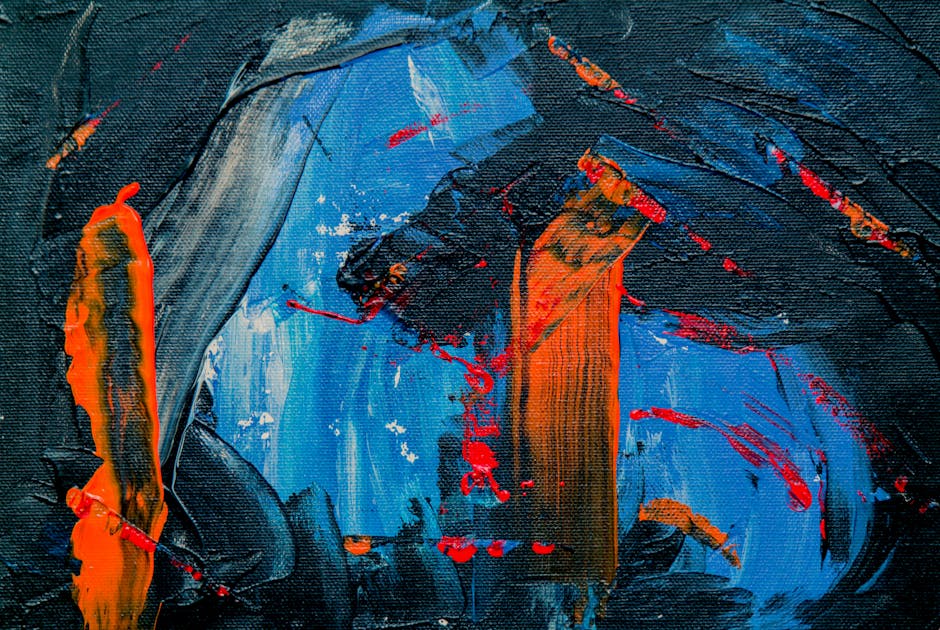
Abstract art has captivated audiences and puzzled critics for over a century, challenging traditional notions of representation and meaning in visual expression. Unlike realistic paintings that depict recognizable subjects, abstract works rely on colors, shapes, lines, and textures to communicate emotions and ideas. The human response to these non-representational forms reveals fascinating insights into how our brains process visual information and construct meaning from seemingly chaotic arrangements.
How the Brain Interprets Non-Representational Forms
When viewing abstract art, the human brain engages in a fundamentally different process than when observing realistic imagery. Neurological studies have shown that abstract art activates regions of the brain associated with pattern recognition, emotional processing, and personal memory retrieval. The prefrontal cortex, responsible for complex cognitive behavior and decision-making, works overtime to find meaning and structure in compositions that lack obvious subject matter.
This cognitive engagement creates what psychologists call "perceptual ambiguity," a state where the brain must work harder to organize visual information. Rather than simply identifying a landscape or portrait, viewers of abstract art become active participants in creating meaning. The visual cortex searches for familiar patterns, while the emotional centers of the brain respond to color combinations, compositional balance, and the energy conveyed through brushstrokes or geometric arrangements.
Emotional Responses and Color Theory
Color plays a pivotal role in the psychological impact of abstract art. Research in color psychology demonstrates that different hues trigger distinct emotional and physiological responses. Warm colors like reds, oranges, and yellows tend to evoke feelings of energy, passion, or warmth, while cool blues and greens often produce calming, contemplative states. Abstract artists like Mark Rothko and Wassily Kandinsky deliberately exploited these psychological associations to create powerful emotional experiences.
The intensity, saturation, and combinations of colors in abstract compositions can influence heart rate, blood pressure, and even hormone levels in viewers. Bold, contrasting color schemes activate the amygdala, the brain's emotional processing center, more intensely than subtle, harmonious palettes. This physiological reality explains why some abstract works feel aggressive or energizing, while others appear meditative and soothing.
The Role of Personal Interpretation and Projection
One of the most psychologically significant aspects of abstract art is its reliance on subjective interpretation. Without a predetermined subject matter, viewers project their own experiences, emotions, and associations onto the artwork. This psychological phenomenon, known as the "Rorschach effect," transforms each viewing experience into a unique interaction between the artwork and the individual's psyche.
Studies have shown that personal background, cultural context, and current emotional state significantly influence how individuals interpret abstract compositions. A viewer experiencing grief might perceive dark, heavy forms as expressions of sorrow, while someone in a joyful state might interpret the same elements as mysterious or intriguing. This subjective nature makes abstract art a powerful tool for self-reflection and psychological exploration.
Gestalt Principles and Visual Organization
The human tendency to seek patterns and organize visual information stems from Gestalt psychology principles, which explain how the mind naturally groups elements into cohesive wholes. Abstract artists often employ these principles, whether consciously or intuitively, to create compositions that feel balanced despite their non-representational nature.
Key Gestalt principles at work in abstract art include:
- Proximity: Elements placed close together are perceived as related groups
- Similarity: Similar shapes, colors, or textures are mentally grouped together
- Continuity: The eye follows lines and curves to create implied connections
- Closure: The brain fills in gaps to complete incomplete shapes
- Figure-ground relationships: The mind distinguishes between foreground and background elements
These organizing principles explain why even the most chaotic-appearing abstract compositions often possess an underlying structure that the brain finds satisfying or compelling.
Therapeutic Applications and Mental Health Benefits
The psychological engagement required by abstract art has led to its widespread use in art therapy and mental health treatment. Creating abstract art allows individuals to express emotions and experiences that might be difficult to verbalize. The non-judgmental nature of abstract expression—where there is no "right" or "wrong" representation—provides a safe outlet for processing trauma, anxiety, and complex feelings.
Research indicates that both creating and viewing abstract art can reduce cortisol levels, the hormone associated with stress. The meditative state induced by contemplating abstract compositions activates the default mode network in the brain, associated with self-reflection and psychological restoration. This neurological response explains why many people find spending time with abstract art both relaxing and energizing.
Cognitive Challenge and Aesthetic Appreciation
The "processing fluency theory" in psychology suggests that people generally prefer images that are easy to process and understand. However, abstract art presents an interesting paradox: despite requiring significant cognitive effort, many viewers develop deep appreciation for non-representational works. This contradiction reveals that the human mind finds satisfaction not just in easy comprehension, but also in the challenge of interpretation.
The reward system in the brain activates when viewers successfully derive meaning or emotional connection from abstract art, even if that meaning is entirely personal. This neurological reward reinforces engagement and can lead to increased appreciation over time. Repeated exposure to abstract art has been shown to enhance cognitive flexibility, creative thinking, and tolerance for ambiguity.
Cultural and Educational Influences on Perception
While certain responses to abstract art appear universal—such as basic color associations—cultural background and art education significantly shape how individuals engage with non-representational works. Western audiences, more frequently exposed to abstract art through museums and education, often approach these works with different expectations than those from cultures with stronger representational traditions.
Education in art history and theory can deepen appreciation by providing context for understanding artistic movements, techniques, and intentions. However, psychological studies also confirm that emotional and aesthetic responses to abstract art occur independently of intellectual knowledge, suggesting that the power of abstract expression transcends cultural and educational boundaries.