




















⏱️ 10 min read
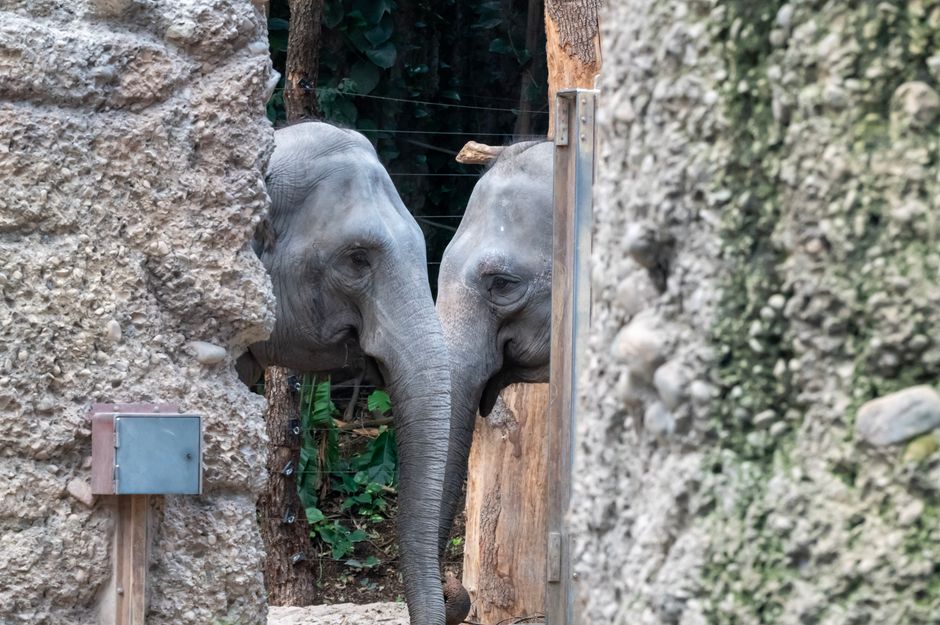
When a herd of elephants suddenly freezes in unison, lifting their massive feet and extending their trunks toward the ground, they're not posing for a photograph—they're listening. Through bone conduction and specialized receptor cells in their feet, these giants are detecting warning calls from relatives up to 6 miles away, transmitted as vibrations through the earth itself. This remarkable ability has allowed elephant families to coordinate movements, avoid predators, and find mates across vast African and Asian landscapes for millions of years.
Quick Facts
- African elephants can detect seismic signals traveling through the ground from distances exceeding 10 kilometers (6.2 miles).
- Elephants produce infrasonic calls as low as 14-24 Hz, below the threshold of human hearing, which travel farther through soil than through air.
- Specialized fat pads in elephant feet and trunk tip contain thousands of Pacinian corpuscles that sense minute ground vibrations.
- Female elephants produce distinct seismic "let's go" rumbles that coordinate herd movements with 70-90% accuracy.
- Seismic communication allows elephants to maintain social bonds with family members separated by terrain obstacles that would block airborne sounds.
The Physics Behind Ground-Traveling Elephant Calls
When an elephant produces its characteristic low-frequency rumble, the sound energy travels through two distinct pathways simultaneously. The airborne component disperses relatively quickly, remaining audible to other elephants within approximately 2 kilometers under ideal conditions. The seismic component, however, converts into Rayleigh waves—surface waves that ripple through the upper layers of soil much like ripples across water. Research conducted by Caitlin O'Connell-Rodwell at Stanford University demonstrated that these waves can propagate efficiently through moist, compact soil, losing far less energy than airborne sound over equivalent distances.
The frequency range matters enormously. Elephants deliberately vocalize between 14-35 Hz for long-distance communication because this infrasonic range encounters less atmospheric absorption and can couple more effectively with ground substrates. Studies using geophone arrays around Namibian waterholes recorded elephant-generated seismic signals maintaining detectable amplitudes at distances where the airborne calls had long since faded into background noise. The velocity of these seismic waves varies by soil composition—traveling at roughly 240 meters per second through sandy Kalahari soils but accelerating to 320 meters per second in denser clay substrates.
Weather conditions dramatically affect transmission efficiency. Following rainfall, when soil particles bind together through moisture tension, seismic signals can travel 30-40% farther than through dry, loose sand. This phenomenon explains why elephant herds in the Amboseli ecosystem of Kenya demonstrate increased long-distance coordination during and immediately after the rainy season, when family groups spread across wider foraging territories yet maintain cohesive social structures.
Anatomical Adaptations for Detecting Vibrations
The elephant's foot contains a remarkable piece of biological engineering specifically evolved for seismic reception. Behind the five toenails visible on the exterior lies a large fatty-fibrous pad that cushions the massive skeletal structure above. This pad isn't merely protective—it's packed with mechanoreceptors, particularly Pacinian corpuscles, which are exquisitely sensitive to pressure changes and vibrations. When seismic waves reach the elephant's foot, they cause infinitesimal compression of these sensors, generating neural signals that travel to the brain for interpretation.
Researchers at the University of California, Berkeley used laser vibrometry to measure how elephant feet respond to seismic frequencies. They discovered that the foot pad acts as a natural impedance matcher, efficiently coupling ground vibrations to the skeletal system. Vibrations transfer from the pad through the leg bones, eventually reaching the middle ear via bone conduction, bypassing the air-filled ear canal entirely. This dual-pathway system—both through neural signals from foot receptors and through bone-conducted vibrations reaching the auditory system—provides elephants with directional information about the signal source.
The trunk tip contains a similar concentration of Pacinian corpuscles. Elephants frequently lower their trunks to the ground when "listening" to seismic signals, a behavior called "freezing." During freezing episodes documented in Etosha National Park, elephants maintained this posture for 10-45 seconds while processing incoming signals. Electromyography readings show that elephants contract specific muscles during this behavior, possibly adjusting internal tension to optimize their sensitivity to particular frequency ranges.
Message Content and Social Coordination
Elephant seismic vocabulary extends far beyond simple alarm calls. Beth Mortimer's research team in Oxford catalogued 47 distinct call types that elephants produce, at least 18 of which generate detectable seismic components. The "let's go" rumble, typically produced by the matriarch when initiating herd movement, contains specific acoustic signatures—a fundamental frequency around 19 Hz with harmonic overtones extending to 60 Hz. Playback experiments revealed that family members respond to recorded "let's go" calls with coordinated movement initiation within 90 seconds, even when visual contact with the matriarch was blocked by vegetation.
Male elephants employ seismic communication during musth, a period of heightened testosterone and aggressive behavior when bulls actively seek mating opportunities. Musth rumbles differ acoustically from female calls, containing more abrupt onset characteristics and lower fundamental frequencies (occasionally reaching 12 Hz). These calls advertise the bull's reproductive status and dominance to potential rivals and receptive females across territorial ranges exceeding 4,000 square kilometers in places like Kruger National Park.
Warning calls triggered by predators or human threats contain distinct temporal patterns—shorter duration rumbles repeated in rapid succession. Analysis of 156 alarm events in Amboseli revealed that elephants distinguish between different threat types through subtle variations in call structure. Seismic warnings about lions prompted herds to bunch together defensively, while warnings associated with human activity more frequently triggered rapid directional movement away from the threat source.
Environmental Factors Affecting Signal Range
Terrain composition creates a patchwork landscape of communication capability. Seismic signals attenuate rapidly when crossing boundaries between different substrate types—a call traveling efficiently through compact mud will lose 60-80% of its energy when encountering a band of loose gravel or sand. This attenuation explains why elephants in fragmented habitats show reduced long-distance coordination compared to populations in continuous ecosystems. A 2017 study across 12 elephant populations found significant correlation between habitat fragmentation and decreased herd cohesion, suggesting that seismic communication breakdown contributes to social disruption.
Human infrastructure creates additional barriers. Paved roads effectively block seismic signals due to the impedance mismatch between asphalt and natural soil. Measurements taken across Kenya's major highways showed that elephant-generated seismic waves lost 95% or more of their amplitude when attempting to cross 10-meter-wide paved surfaces. This finding has profound implications for elephant conservation, as road networks increasingly bisect traditional elephant ranges in countries like Botswana, where the road system expanded by 240% between 1990 and 2015.
Anthropogenic noise adds another layer of interference. Industrial activities, mining operations, and even heavy vehicle traffic generate seismic noise pollution in the same frequency ranges elephants use for communication. Geophone recordings near Zambian copper mines documented background seismic noise levels 40 decibels above natural ambient levels, effectively reducing the communication range available to nearby elephant populations by an estimated 70%. Elephants in these areas compensated partially by increasing call repetition rates, but at an energetic cost—vocalizing requires significant caloric expenditure for animals already challenged by habitat degradation.
Evolutionary Origins and Comparative Biology
Seismic communication likely evolved in the elephant lineage 20-30 million years ago, when proboscideans diversified into numerous species occupying varied ecological niches. The adaptive advantage becomes obvious when considering the African savanna ecosystem where modern elephants evolved—a landscape where tall grasses, scattered trees, and rolling terrain frequently obstruct visual and airborne acoustic signals. Seismic channels provided reliable information transfer regardless of these obstacles.
Elephants aren't alone in exploiting this communication channel. At least 200 vertebrate species demonstrate seismic sensitivity, including kangaroo rats, golden moles, and certain frog species. However, elephants represent perhaps the most sophisticated example due to their combination of powerful signal generation, sensitive reception apparatus, and complex social behavior dependent on long-distance coordination. Cape golden moles detect seismic signals from prey insects 30 centimeters away; elephants coordinate family reunions across 10 kilometers—a difference of five orders of magnitude in functional range.
Recent phylogenetic analyses suggest that hyraxes and manatees, the elephant's closest living relatives, possess similar foot pad structures with elevated Pacinian corpuscle densities, though neither demonstrates the complex seismic communication behaviors of elephants. This suggests the sensory apparatus evolved before the sophisticated behavioral repertoire, with social complexity driving elaboration of the communication system once the basic hardware was in place.
Conservation Implications and Future Research
Understanding elephant seismic communication has direct conservation applications. Wildlife corridors designed purely on movement pattern data may inadvertently neglect acoustic connectivity—the ability of separated populations to maintain information exchange. Conservation biologists now advocate for "acoustic corridors" that preserve seismic transmission pathways between fragmented populations. In southern India, where Asian elephant habitat has been divided into isolated forest patches, identifying and protecting continuous soil transmission pathways has become a priority for maintaining meta-population coherence.
Climate change introduces new uncertainties. As rainfall patterns shift and desertification expands in critical elephant habitats, soil moisture regimes will change, potentially degrading seismic transmission efficiency. Predictive models suggest that if East African precipitation decreases by the projected 20-30% over the next 50 years, effective seismic communication ranges could contract by 35-40%, forcing elephants into tighter groupings and intensifying human-wildlife conflict as ranges compress.
Emerging monitoring technologies offer new research possibilities. Fiber-optic cables, originally installed for telecommunications, can function as distributed seismic sensors when interrogated with laser pulses—a technique called Distributed Acoustic Sensing. Pilot projects in Botswana have successfully detected and classified elephant calls using existing fiber-optic infrastructure, potentially enabling continent-wide, non-invasive population monitoring at minimal additional cost. Such systems could track population movements, identify poaching events (gunshots produce distinctive seismic signatures), and assess habitat connectivity simultaneously.
Frequently Asked Questions
Can elephants communicate through concrete or buildings?
No, concrete and building foundations effectively block seismic signals due to extreme impedance mismatch with natural soil. Research shows 90-95% signal loss when elephant-generated vibrations encounter man-made structures, which is why urbanization severely disrupts elephant communication networks.
Do baby elephants learn seismic communication or is it instinctive?
Both innate and learned components exist. Calves instinctively freeze and adopt listening postures when feeling vibrations, but they require 3-5 years to learn the meaning of different call types and produce appropriate responses, as documented in longitudinal studies of Amboseli family groups.
How do researchers measure elephant seismic signals?
Scientists use geophones—ground-contact sensors that convert vibrations to electrical signals—arranged in arrays around elephant habitats. These record vibrations across relevant frequencies (5-100 Hz), which researchers then correlate with observed elephant behaviors and GPS tracking data to decode message content.
Can other animals detect elephant seismic communications?
Yes, several species with seismic sensitivity likely detect elephant signals. Research indicates that ungulates like zebras and wildebeest sometimes respond to elephant alarm calls, potentially using elephants as sentinel species for predator detection, though this cross-species communication remains understudied.
Key Takeaways
- Elephants exploit seismic waves propagating through soil to communicate across distances up to 10 kilometers, far exceeding airborne sound transmission under equivalent conditions.
- Specialized anatomical features—particularly Pacinian corpuscle-rich foot pads and bone conduction pathways—enable elephants to both generate powerful low-frequency calls and detect minute ground vibrations with directional accuracy.
- Habitat fragmentation, road construction, and seismic noise pollution from human activities significantly degrade elephant communication capabilities, with direct consequences for social cohesion and population viability.
- Conservation strategies must account for acoustic connectivity in addition to physical corridors, preserving continuous soil transmission pathways between elephant populations to maintain information exchange critical for coordinated behavior and genetic diversity.